A HEATHEN temple is as different from a Christian church as heathen worship is different from the worship of the true God. There is nothing like "the communion of saints" among Buddhists and Shintoists. So a Buddhist or a Shinto temple is not primarily a meeting place for public worship, but is open every day, early and late; and the worshipers come, singly or in small groups, flip a coin into the money-box, say their prayers, and go their ways.
At the large Buddhist temple in Asakusa Park one has a good opportunity to watch the people at their devotions. Privacy in one's private devotions, so much prized by Christians, is unknown in heathen worship. The main shrine of this temple occupies the central position; and before it the people kneel, or stand with bowed heads, while they say their prayers. To right and left are other smaller shrines, and before these also the people worship. There is also the wooden image of the god of healing. The worshiper who wishes to cure or prevent some disease, first rubs some part of this image with the hand, and then rubs the corresponding part of his own body. The face of this particular image has been rubbed till it is as featureless as this piece of wood is powerless to do what the deluded expect of it.
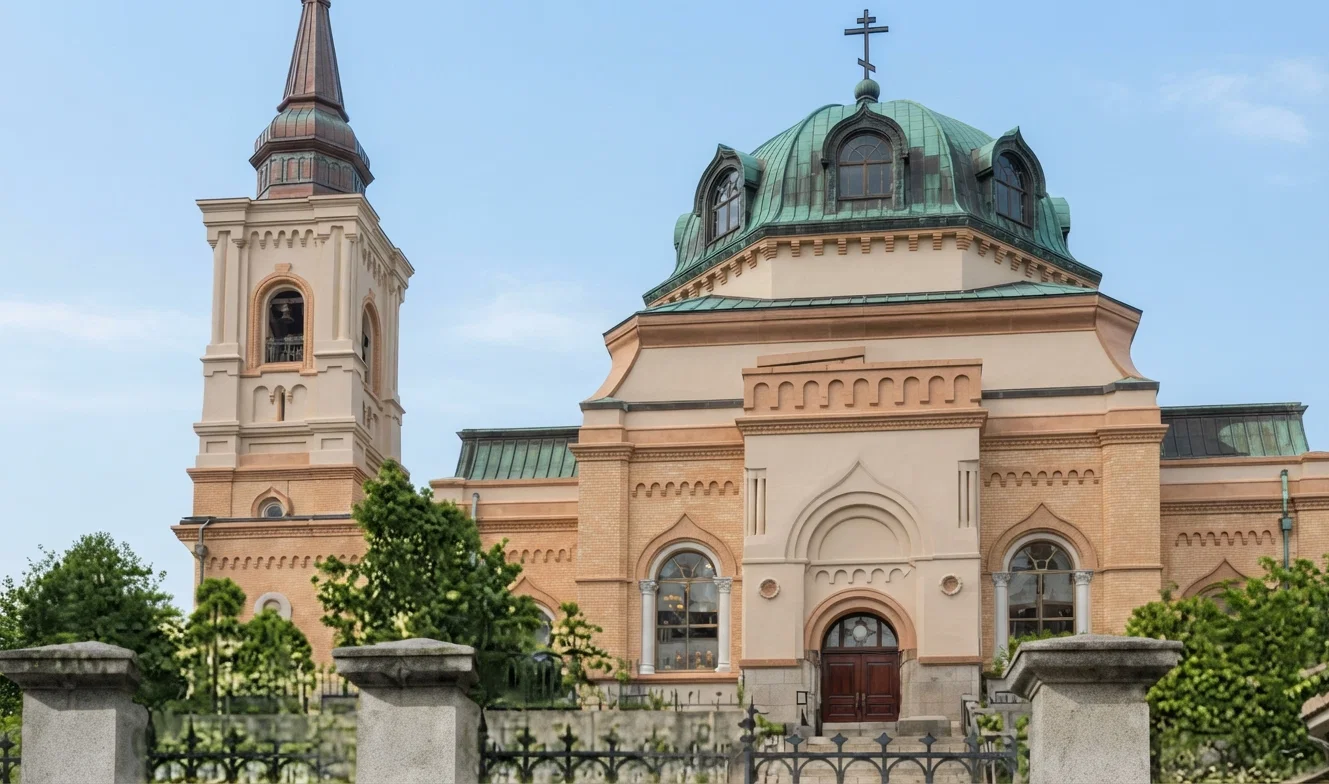
Russian Cathedral, Tokyo, Japan
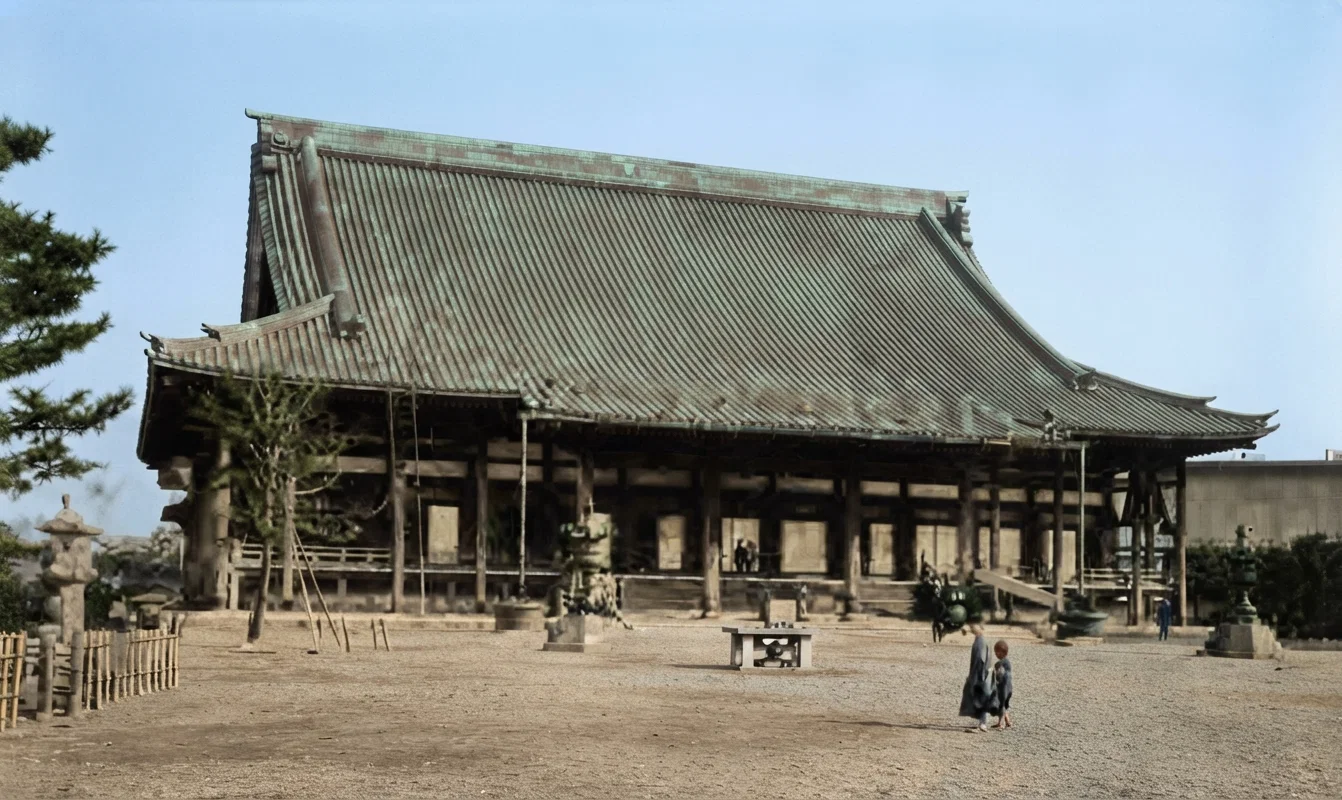
The Buddhist temple in Tsukiji is one of the largest in the city. The temple building on this site was burned down several times. Finally the augurs divined that the temple had been set at an unfortunate angle with surrounding objects, or with the points of the compass. So when the present building was erected, its foundation was laid at a different angle, as may be plainly seen; and the only proof needed by the superstitious that the divination was correct, is the fact that the temple still stands.
The Yasukuni Jinja is a well-known Shinto temple on Kudan Hill. Here are enshrined the names of thousands of soldiers who have died while serving in their country's defense. Once a year a great festival is held at this temple, and at this time it is visited by the usual throngs of people. The devotion paid to these dead heroes is closely allied to ancestor worship, and tends to preserve the military spirit of the living.
Coming to the Christian churches of Tokyo, there is not much of interest that can be said. In number they are mournfully few compared with the multitude of temples and shrines. The Central Tabernacle of the Canadian Methodists in Hongo, the Baptist Church in Shiba, the Methodist Church on Kudan Hill, and the Tsukiyabashi Church, where the union services of the missionary community are held, are the largest and best-known Protestant churches in the city. The Tokyo Y. M. C. A. has a substantial brick building in Kanda, a very central location. The assembly hall is often used for large gatherings.
A Very Large Buddhist Temple
But the one remarkable church building in Tokyo is the cathedral of the Russian mission, said to be the largest church building in the Far East. It occupies one of the most sightly eminences in the city, being in plain view even from the emperor's palace. The services of the Russian church are conducted with elaborate forms, that must appeal strongly to converts from the heathen religions.
One other church building in Tokyo that we hope the readers of the SIGNS OF THE TIMES will be especially interested in, is the one that is not yet built on our plot of ground in Hommura-cho, Yotsuya. We shall call this the Tokyo Memorial Church, erected to the memory of all who assist in the good work of providing a place where the people of Tokyo may listen to the closing Gospel message.