THE prophet Joel mentioned a time when great trouble would exist among the different nations, a time when plowshares would be beaten into swords, and pruning-hooks into spears. This would be an era in which the weak state would exclaim, "I am strong," without a doubt having caught the war contagion from other mightier nations. Every evidence is pointing to the present as the epoch in which the prophecy is meeting its exact fulfilment.
The great European powers, the United States, and Japan, have set before the world the bad example of preparing for war in time of peace. The fact that weaker countries have also adopted this policy as their own should occasion no unusual surprise, but instead should be received as a matter of logical sequence. Weakness usually looks to strength for models to copy from. A strong power always wields more or less of a telling influence over a weaker one. Take the Sunday laws as an excellent illustration. The United States began to pass them, and now every country in Latin America is patterning after her. In the Americas the United States has for some time been equipping a very powerful navy. Now the Latin American republics have caught the germ of war infection, a microbe which will probably continue to prey on its victims and sap their life-blood until the Battle of Armageddon in the Valley of Jehoshaphat puts an end to all feverish war preparations.
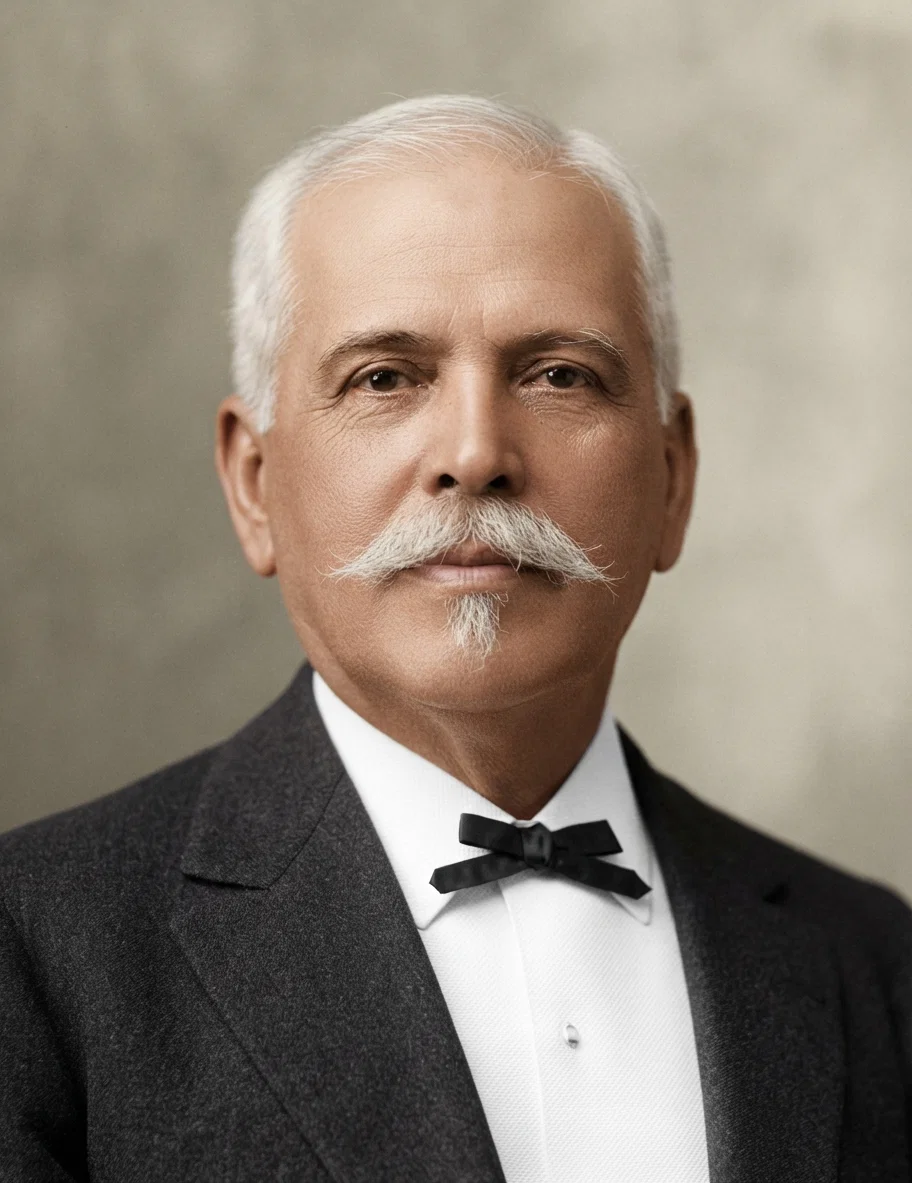
General Eloy Alfaro, President of Ecuador
Ecuador, one of the smallest and consequently one of the weakest South American countries, is actively occupied at present in getting ready for a war with Peru, her neighbor on the south, in case the Spanish king fails to favor her in his verdict concerning the boundary dispute between the two nations. This decision should be made public almost any day. The Ecuadorian minister in Madrid has urged the king to make known the settlement he has arrived at, as soon as convenient, since commerce in Ecuador and Peru is suffering a bit, as always occurs when relations between countries are strained.
Ecuador, in shape like a triangle, finds itself both north and south of the equator. Quito, the capital city, is situated a few leagues to the south of the line. The extension of the country from north to south along the coast, or, in other words, from Colombia to Peru, is about 480 miles. The best salt water harbors are those of Port Bolivar and Santa Elena. Some day in the near future the Bay of Caraquez will be perhaps the principal one, as the government has voted to expend a considerable sum of money on it. From this port a railroad is being constructed by a French company to Quito. Guayaquil, the second city in size in Ecuador, is really a river port, the river at this point being about as far across as the Mississippi at New Orleans.
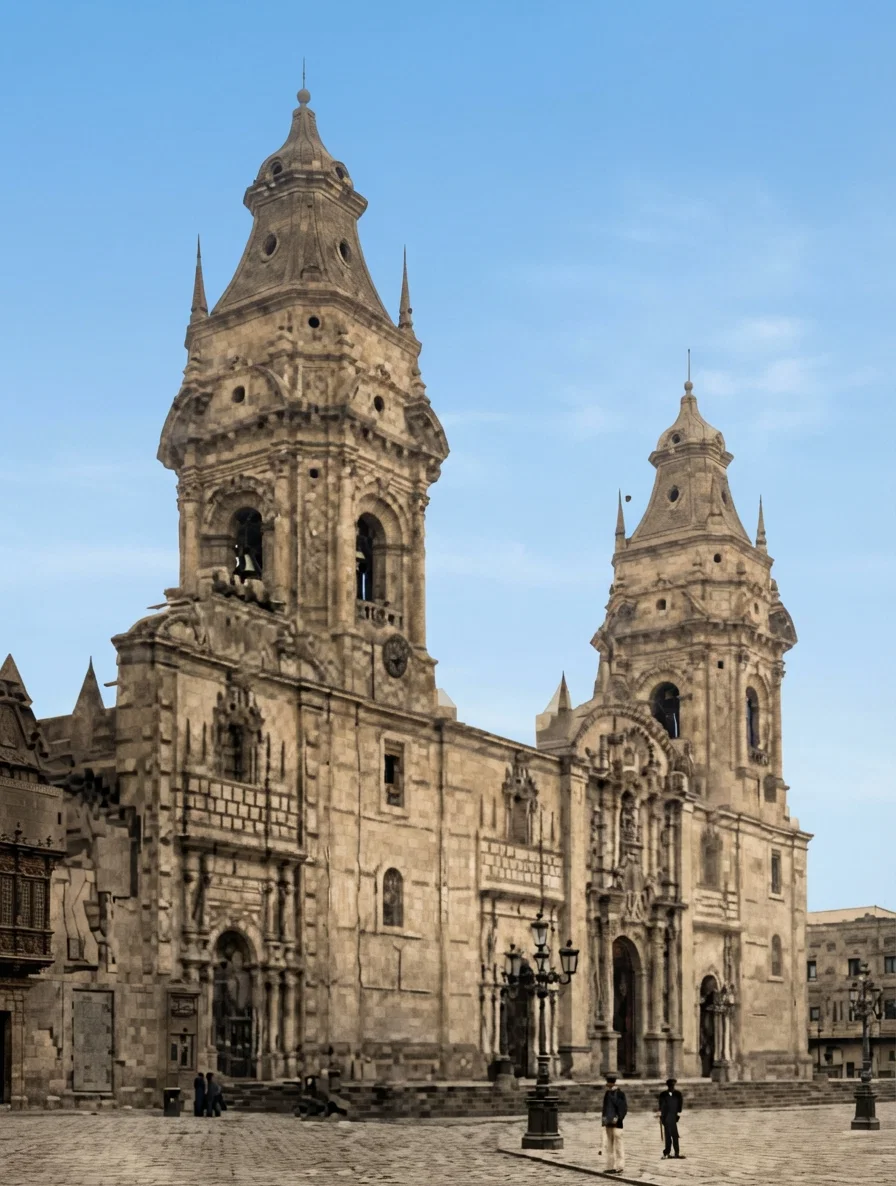
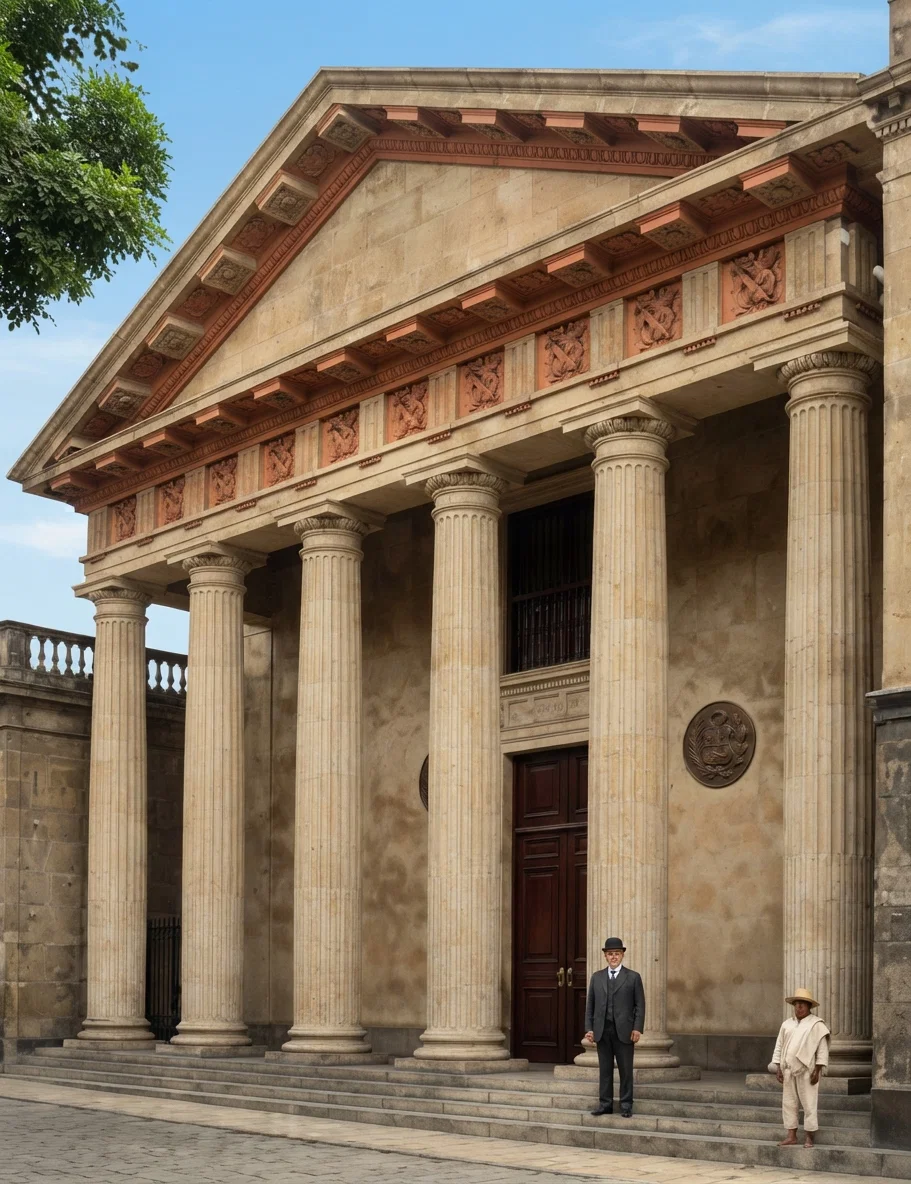
St. John's Cathedral, Lima, Peru. The facade is 480 feet wide; the central portion between the towers, 120 feet wide.
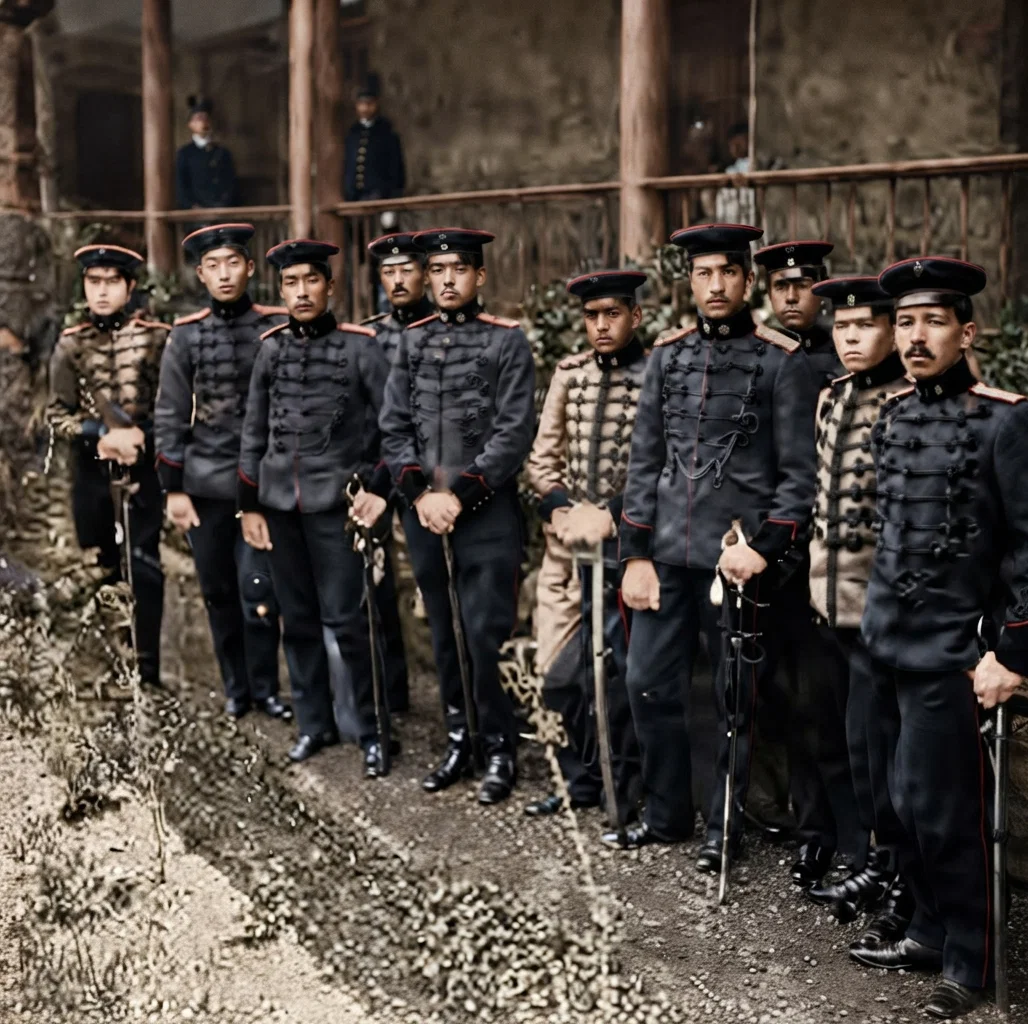
Group of instructors at the Ecuador National Military School. Notice their comparative youth.
Ecuador claims all territory embraced between the Pacific Ocean on the west and Brazil on the east, and between the Maranan River—another name for the Amazon—on the south, and Colombia on the north, a total area estimated at 250,000 square miles. Peru, however, only concedes her neighbor 49,626 square miles. One can see at a glance how great the disputed territory is. As Peru already has colonies planted in the lower part of the disputed territory, she has in this particular a considerable advantage over Ecuador. Iquitos, a populous city situated near the Amazon River, and noted for its large output of rubber, is the largest of these Peruvian colonies. From present appearances it seems probable that King Alfonso in his verdict will award to Ecuador that portion of the Amazon Valley territory which is already under her jurisdiction, and to Peru the portion which at the present moment is under her control. Whether Ecuador will abide by this decision, no one at present is capable of saying definitely; but it seems to me that history may repeat itself, and that the same scenes which were enacted in Bolivia may occur in this country as soon as the decision is made public.
Ecuador is drilling all her available men. Pure Indians, priests, and men physically unable to take part in the maneuvers, are excepted. There is a law that lawyers or doctors who refuse to sign for service will be subject to imprisonment for a year's time; furthermore, they must pay a heavy fine and suffer the loss of their citizenship, besides not being able to practise their profession any more in this country. In other words, they are to be completely ostracized. Boys in the high school, only sixteen or seventeen years old, falsely swear that they are eighteen, sign for active service, and begin to drill. The time for the military exercises is Sunday, in the afternoon. Sunday, all over South America, is also the official election day.
Ecuador's Strength
It is calculated that on very short notice Ecuador could rush 60,000 men into the field. I am inclined to think that this is a low estimate. In case of war these men would be hastened to the frontier. A train traveling night and day, in less than twenty-four hours could reach Guayaquil. From that city to Tumbes, the nearest center of population in Peruvian territory, a steamer can go in seventeen hours. Quite frequently, however, landslides delay trains for hours, and sometimes even days. A month ago we had no mail for about two weeks. Landslides over a11distance of fifteen miles covered the tracks and completely paralyzed traffic.
The railroad between Quito and Guayaquil is an American enterprise, but has not met with ready acceptance from the people in general. The freight tariff is very high; and as grades are as steep as seven per cent, accidents are not uncommon. A single engine could only haul 300 men at a time, but in case of war all trains on the entire line would be immediately pressed into service. The railroad is called the "tapeworm of the nation," but in case of trouble the people would very likely change their ideas regarding it. The trains could transport soldiers quickly and safely to Guayaquil. In the winter season it is extremely difficult to go on foot or on horseback to the coast, because of the swamps that cover the lowlands during the rainy months from January to June.
The standing army of Ecuador is composed of 3,200 men, 600 of whom are officers, usually graduates of the Quito Military School. As there is a very close alliance between Chile and Ecuador, Chilean officials are brought to this country to put the army on the best possible footing. The Chilean army is generally considered to be best drilled in South America.
Besides the men of the regular army, there are in Guayaquil twenty companies of firemen, composed of 2,100 men. These are organized like soldiers, and form a sort of militia. There are 500 policemen in Guayaquil, and an equal number more in Quito. These, including the rural and urban police of other provinces, bring the total number of men that can be called on for service at a moment's notice, up to somewhere near 10,000. These 10,000 men usually are considered as the army in time of peace. These soldiers quite often are called upon to quell insurrections, which are frequent. Luis Martinez, a noted painter, author, and politician, has well said that it is easier to start a rebellion in Ecuador than cook a pot of mush. However, at present, for a wonder, all parties have stopped their quarreling, and are preparing to stand united against the common foe, Peru.
The Two Nations Compared
Ecuador has a population of 1,500,000. This number is only an approximate estimate. For a half century or more, it has been placed at this figure. Nobody knows how many Indians there are in the Amazon Valley, so this vague census will have to remain until the statistics of the country are more accurately known. Peru has twice as many inhabitants as Ecuador. In both republics one can find every shade of color imaginable. The Negroes and Chinese incline to the warmer coast region; the Indians cling to the Andean hills and valleys. In Ecuador about 600,000 of the 1,500,000 inhabitants belong to the mixed race; 30,000 are whites, descended from the Spaniards who came to the country during colonial times. The white race only has a taint of Indian blood; they are the ones who own most of the property in the country. There are about 10,000 pure Negroes in Ecuador. Many Jamaicans have come here to work for the railroad.
The soldiers are usually recruited from the mixed classes. If a soldier does not know how to read when he enters the army, he is taught how to do so before he ends his term of service. This is true not only of Ecuador, but of the Argentine and other countries of South America as well. The soldiers stationed at Ambato often come to our house for our Spanish "Signs of the Times" to read. Paid as they are to fight for a liberal government, they are not usually very much inclined to Catholicism. The officers are more generally Spiritualists or atheists, altho there are some who look upon Protestant ideas with favor.
Internal Conditions
During the last fourteen years there has been considerable warring in Ecuador between the Church and the Liberal parties. The latter has been victorious, but usually a reaction follows the advent of radical principles. Now is a very favorable time for us to work in this country. When the Catholic Church regains its influence over the people, it will be forever too late. The thought of a conflict with Peru has brought the people together as never before during the last fourteen years. Whereas formerly churchman and liberal have fought against each other, now they are offering to fight side by side in a common cause.
The sum voted for the army every year is $828,300. The common soldier receives a daily wage of about thirty-four cents of American money. During a civil war, the quickest way for a rival candidate for the presidency to get into power, is to issue a decree advancing the soldiers' pay five cents, and he is almost certain to win all the army over to his side. The one who has the soldiers behind him is the one to be elected.
DELWIN REES BUCKNER.
(Concluded next week)
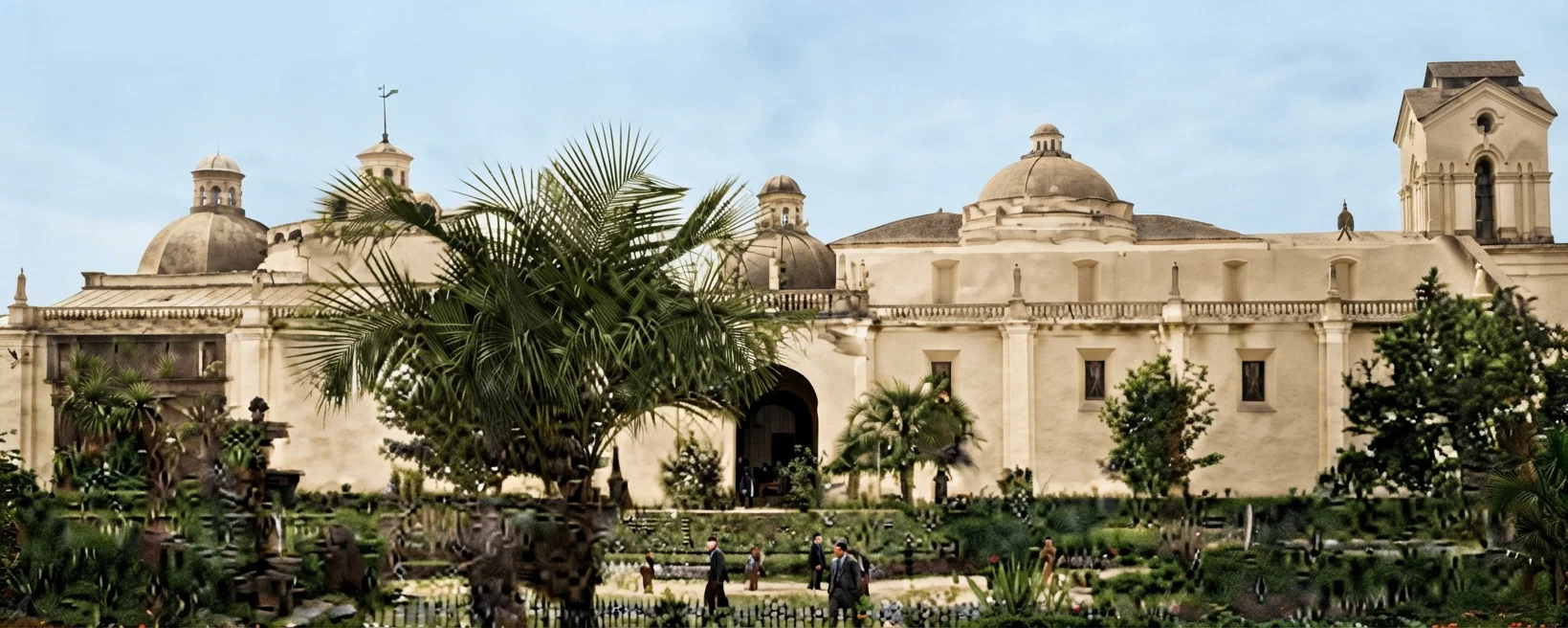
The cathedral, Quito, Ecuador. The bishopric to which this cathedral belongs was founded in 1545, and the cathedral built shortly after. It has a fine marble porch.
The Senate Chamber, Lima, Peru. The upper house of the Peruvian Congress consists of 51 senators elected by direct votes for a period of six years. Congress meets annually on July 28, and sits for 90 days only. Special sessions must be limited to 45 days. Senators must have an income of at least 100 pounds a year or be members of a scientific profession.