Among the Kavirondos

5%

Pacific Press Publishing Company · Mountain View, California · Jun 3, 1908

FromSigns of the Times, Vol. 34, No. 23.

Read the full edition

Among the Kavirondos.

ABOUT eighteen months ago a mission station was opened by the British Union Conference among the Kavirondos in British East Africa. This station is situated on the southern shore of Kavirondo Bay, the northeastern arm of Lake Victoria Nyanza, and is sixteen miles southwest of Kisumu, the lake terminus of the Uganda Railway.
The Kavirondos are a large tribe but are divided into two distinct branches, the Bantu and Nilotic. The Bantu branch speaks a dialect closely allied to that great family of languages, while the Nilotic branch speaks a dialect similar to that of the tribes along the Nile. Aside from the difference in language, these tribes are alike in looks, manners, and customs. Our work is confined to the Nilotic branch. These people live on the hills and in the valleys near the lake. The country is very thickly populated, two hundred villages being easily counted from the station, each of which contains from five to twenty-five huts. For miles beyond the country is as thickly populated. These are a semi-pastoral people, having large herds of cattle and flocks of sheep and goats. The land is also cultivated, but
hardly sufficiently to supply food to last from season to season; so often thru lack of rain there is a great scarcity of food. Those living nearest the lake shore are fishermen, and secure their grain by barter.
The Kavirondos have been described as naked savages; and so far as lack of clothes goes, this is perfectly true. If by savages we mean a fierce, wild, and bloodthirsty people, the term savage can not be applied to them. They appear, in contrast to the surrounding tribes, a peaceful and contented people. Indeed they are heathen, and until this mission was established, had never heard the name of Jesus. Because their language is not a Bantu dialect, the many missionaries passing thru on their way to Uganda, seem to have neglected them. Probably for the same reason that great curse of northern Africa, Mohammedanism, has not to be reckoned with, either. Our work, therefore, enters on virgin soil. The people still remain in the midst of their heathen superstitions, and the more we learn of these, the more we realize how dark Africa really is. They worship the sun and their dead ancestors.
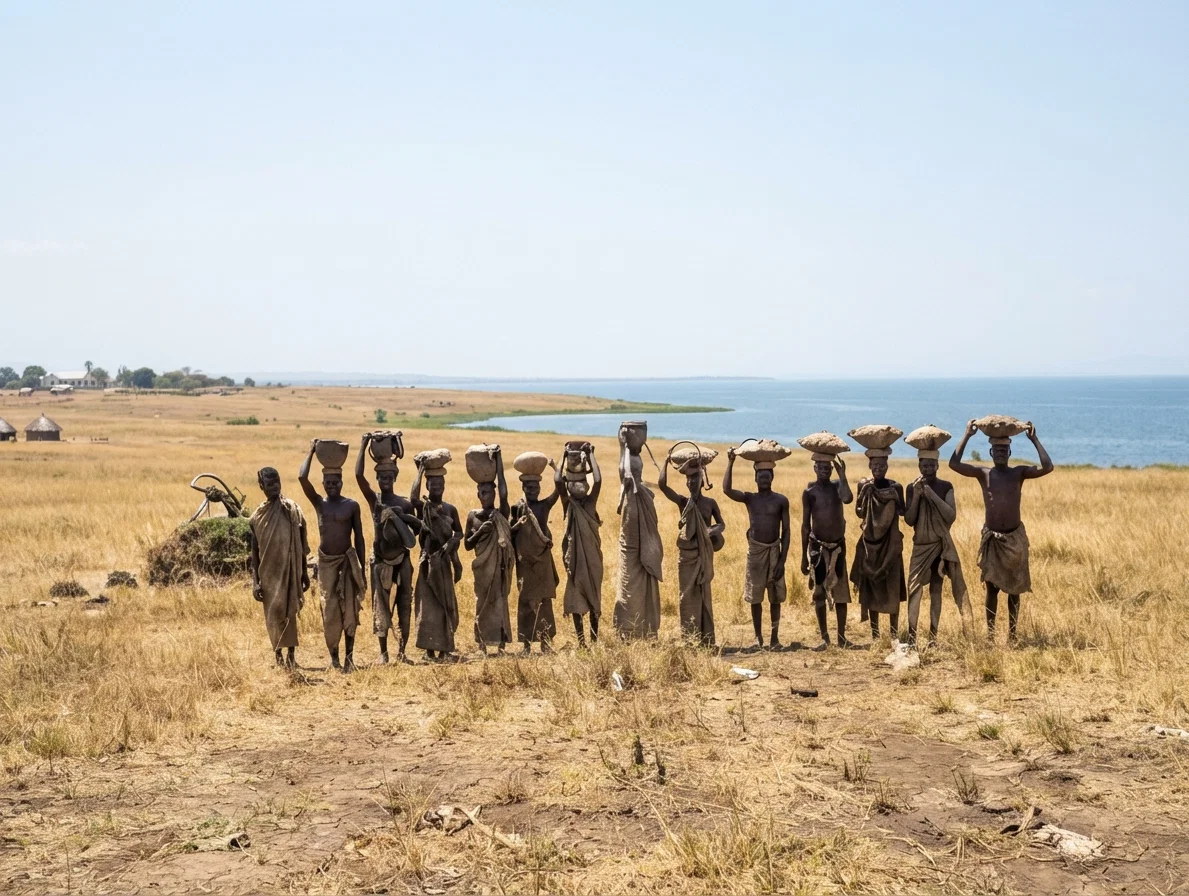
A Company of Workmen Carrying Clay for the Floor of the School.
As a protection from intruders or wild beasts, each village is surrounded by a peculiar kind of tree which secretes a milky fluid.
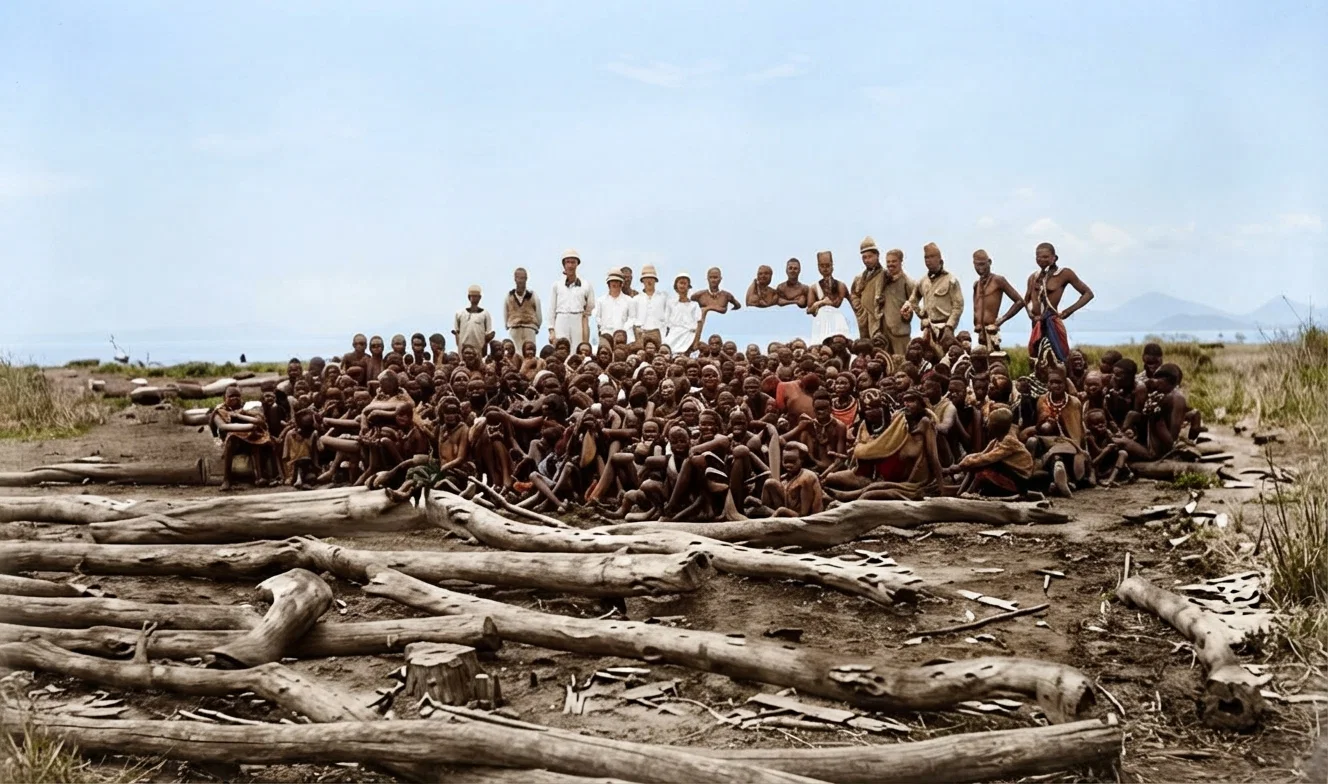
Congregation of Kavirondos Meeting Outdoor Previous to the Erection of School Buildings.
If this fluid gets into the eyes, it causes great pain and nearly blinds one. The cattle are kept in a pen in the center of the village. The small round huts are built close together. Small storehouses are also built, in which the grain is stored. The sheep and chickens are kept in the houses at night.
The principal articles of food are bel, the native grain from which they make bread and gruel, sweet potatoes, and curdled milk. They are also flesh-eaters, and will eat meat in an advanced stage of decomposition. The women are not allowed to eat chicken or mutton, nor do they drink milk. The little children are given eggs, grasshoppers, and rats. The women and girls, as well as the men and boys, smoke and chew tobacco. They also smoke a kind of hemp which has a very intoxicating effect upon them. A kind of beer is made from their grain.
Life is not valued very highly, suicide being common among the children as well as the older ones. A child may hang himself if scolded by his parents or if teased by others. A native policeman committed suicide because some one owed him three pice (less than two cents). An old man was thrown into the river because he was getting too old to do much work.
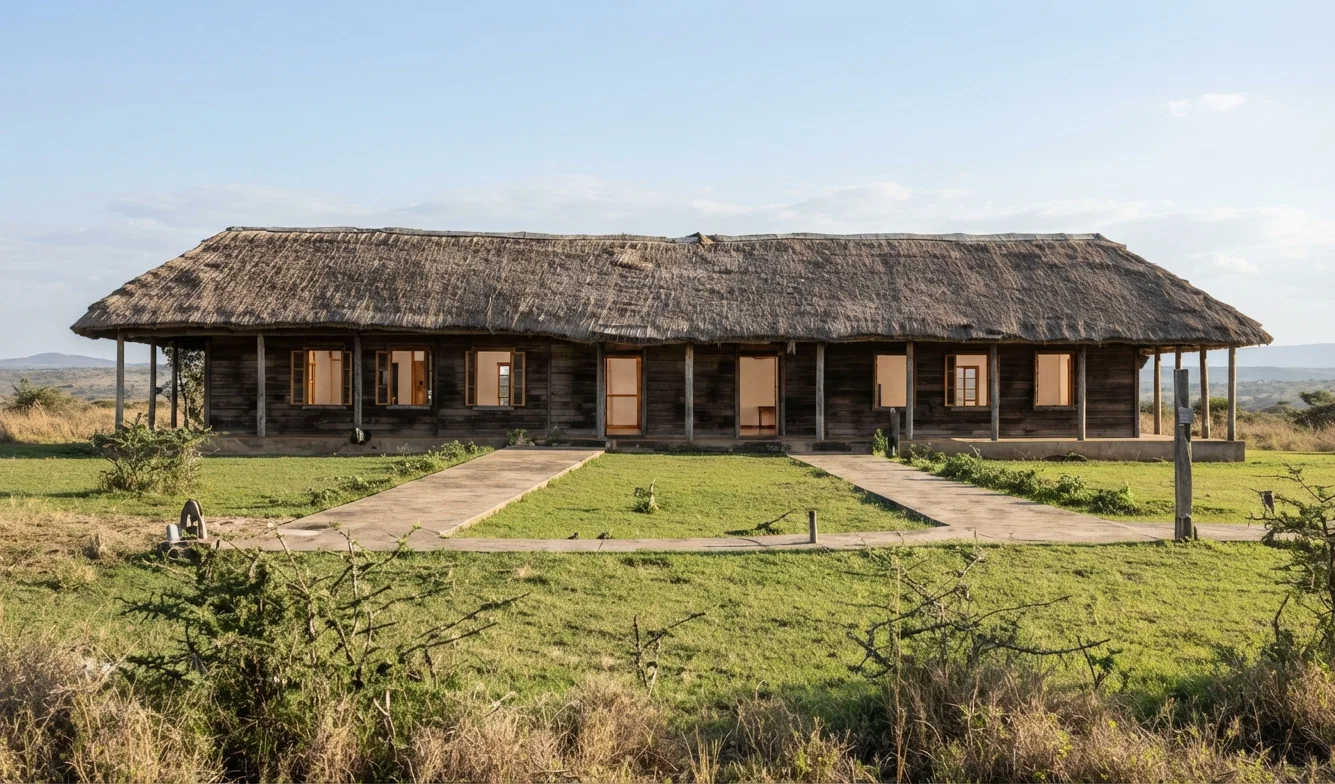
The House Erected by Brother Baker and His Associates, in Which They Live While Carrying on Their Work.
There is a great deal of sickness among the people, the natives not being immune from the fevers. Pneumonia is also very common. Many have large ulcers which are very difficult to heal. There is a small "jigger" which works its way into the toes, and if not taken out immediately eats the toes away altogether. Sore eyes are very prevalent, but they heal readily after they are cleansed carefully with a saline solution. The natives plaster mud and clay over their small wounds, but the large ones are covered with leaves or a piece of skin for protection. In case of illness, a row of parallel cuts is made over the affected part in order to allow the evil spirits to leave the body.
The dead are buried in the huts, the other members of the families still occupying them.
The whole village mourns for the dead. This mourning is usually at night, and the noise can be heard several miles away. The third day the friends of the deceased gather from miles around to take part in the death-dance. Dressed in their feathers and paints, with their swords, spears, shields, and bows and arrows, they go thru imaginary fights, sing and dance, beat their drums, and blow their horns. Altogether they appear very warlike and sav-age, but if you should go among them on such occasions, you would be led to believe that this is one of the happiest times in their lives; more like a holiday than a time for mourning.
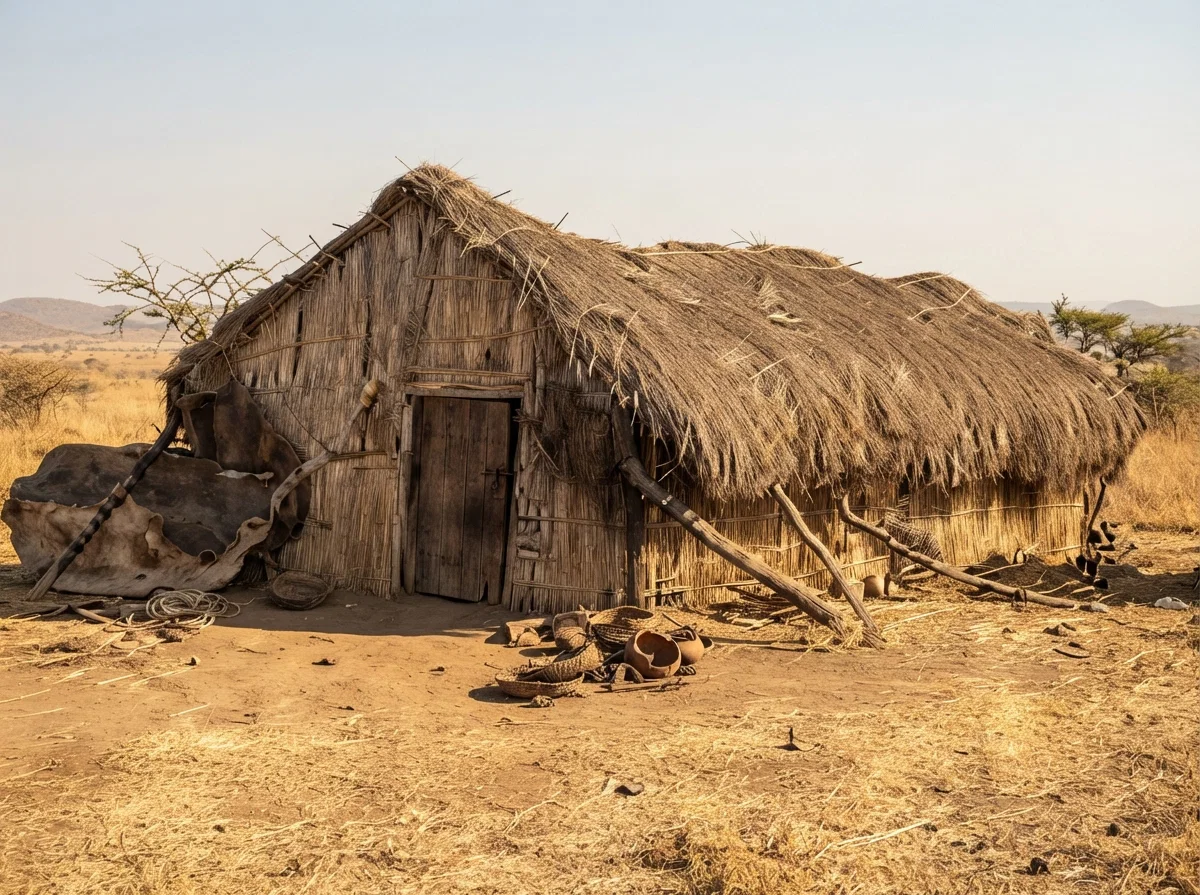
Grass House That Was on the Grounds When the Mission Was Started. It Is Now Used as a Workshop and Boys' Sleeping Quarters.
The natives appreciate the efforts we have made to help their sick and afflicted. Our work consists principally in looking after sore eyes and dressing wounds. Several natives living ten or twelve miles away have come, staying at the villages near, in order that their wounds may be looked after. A short time ago a boy about fifteen years old came to see us. A cataract covered one eye, and the other eye was rapidly being covered by another. We told him we were sorry, but we could not do anything to help him. He was much disappointed, saying, "They told me if I came to you, you would give me some good medicine so I could see better."
So far our time has been spent principally in learning the language, and in erecting necessary buildings—houses, workshop, and also a school which is used for Sabbath services. These buildings are nearly completed. Our Sabbath services are largely attended, the average attendance being over three hundred. Last Sabbath between six and seven hundred were present. The Lord's Prayer, a few texts, and a number of songs have been translated into their own language. The natives are rapidly learning to sing our old favorites, such as, "I Love to Tell the Story," "I Am so Glad that Our Father in Heaven," "Nothing but the Blood of Jesus," and "There Is a Happy Land." I am sure you would enjoy hearing them sing and ask questions about Jesus and heaven. They are beginning to know which day is the Sabbath, and often on Friday we are asked, "Is to-morrow Jesus?" "Is to-morrow the Sabbath?" or "Do we sing to-morrow?" Thus we see an impression being made upon the people, and we long for the time when souls will be gathered into the fold. Truly Africa is the "Dark Continent," and we pray for more workers so that the light of this Gospel may shine into its darkest corners.
J. D. BAKER.