Our London Letter

3%

Pacific Press Publishing Company · Mountain View, California · Jun 3, 1908

FromSigns of the Times, Vol. 34, No. 23.

Read the full edition

Our London Letter

THE last few weeks have witnessed changes of moment in British politics. In the midst of the furor and noisy demonstrations against the government's Licensing Bill, came the news first of the resignation, and then of the death of the late premier. Sir Henry Campbell-Bannerman leaves many capable men behind him, but none able to take his place in the hearts of the people. He possessed in a remarkable degree the confidence of men of widely-differing shades of political belief. As his successor has said, he was a "cementing and a unifying force."

Respect for the Late Premier.

The Liberals loved him as the stanch leader who, during the dark days when the South African conflict aroused the war spirit thruout the country and Liberalism was at its lowest ebb, stood unflinchingly at his post of duty, and upheld the principles of his party, even at temporary cost of personal popularity, never once truckling to the loud-voiced outcries of a cheap imperialism even when some of his chief supporters deserted him. Conservatives held Sir Henry in the highest respect as a man who fought hard but fairly; who knew his mind, and clearly defined his position, and withal as a possessor of a remarkably winsome personality. He was also popular with the labor party and the Irish Nationalists. These radical wings of Liberalism were not possessed of any deep sense of loyalty to the government as such, but they entertained the kindliest personal feelings for Bannerman, regarding him as in sympathy with their general aims, and doing about as much for them as could be expected under the circumstances.
The late premier was the father of the House of Commons, having represented the district of Stirling ever since 1868. He had a singularly modest opinion of himself, and it was his sterling character and generally acknowledged parliamentary efficiency rather than any special efforts on his part that put him in the highest office. In politics he was without doubt something of an idealist. As one of his friends expressed it, "great causes appealed to him, and he was not ashamed, even on the verge of old age, to see visions and dream dreams." Had he had his way, the late Peace Conference at The Hague would have been something more than an abortive failure. He was ready to go as far as the safety of Great Britain permitted in the direction of the reduction of armaments. He was eminently a peace man. Jingoism had no keener, more merciless critic than he. The peace advocates sustain an irreparable loss in the death of this high-minded statesman.
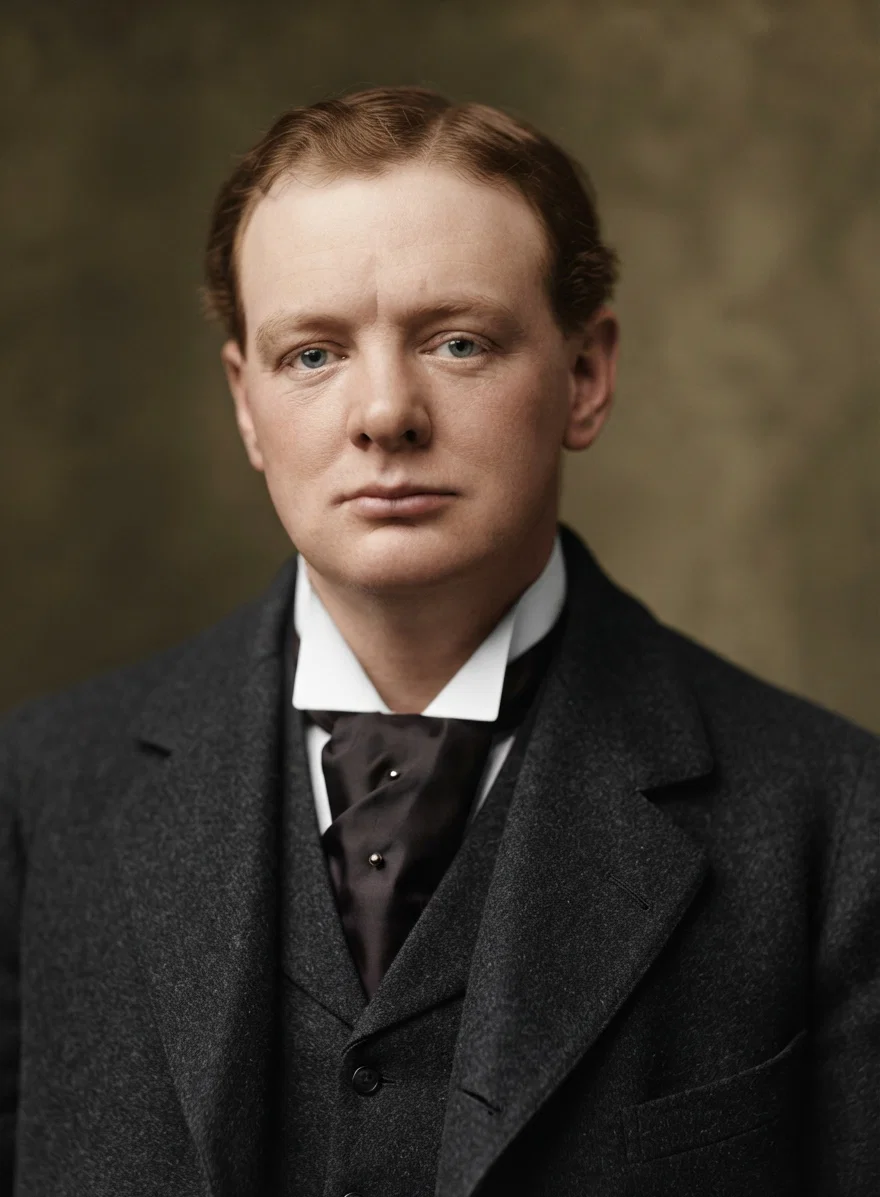
Winston Spencer Churchill, Esq., M.P., the New President of the Board of Trade.
What is the present situation of the government?—It is passing thru a crisis. There are some serious elements of weakness. It will be remembered that the Liberal party proper was split over Home Rule, Joseph Chamberlain raising the standard of revolt against Gladstone, and taking with him into the Tory camp a party of his own known as the Unionists. The South African War caused a further split, at least for a time, and when the Liberal cabinet was made up two years ago last winter, it embraced men who had widely differing views on some fundamental questions. Sir Henry Campbell-Bannerman's admirable tact resulted in the formation and maintenance of a strong government; his untimely removal is an inestimable loss to the party.
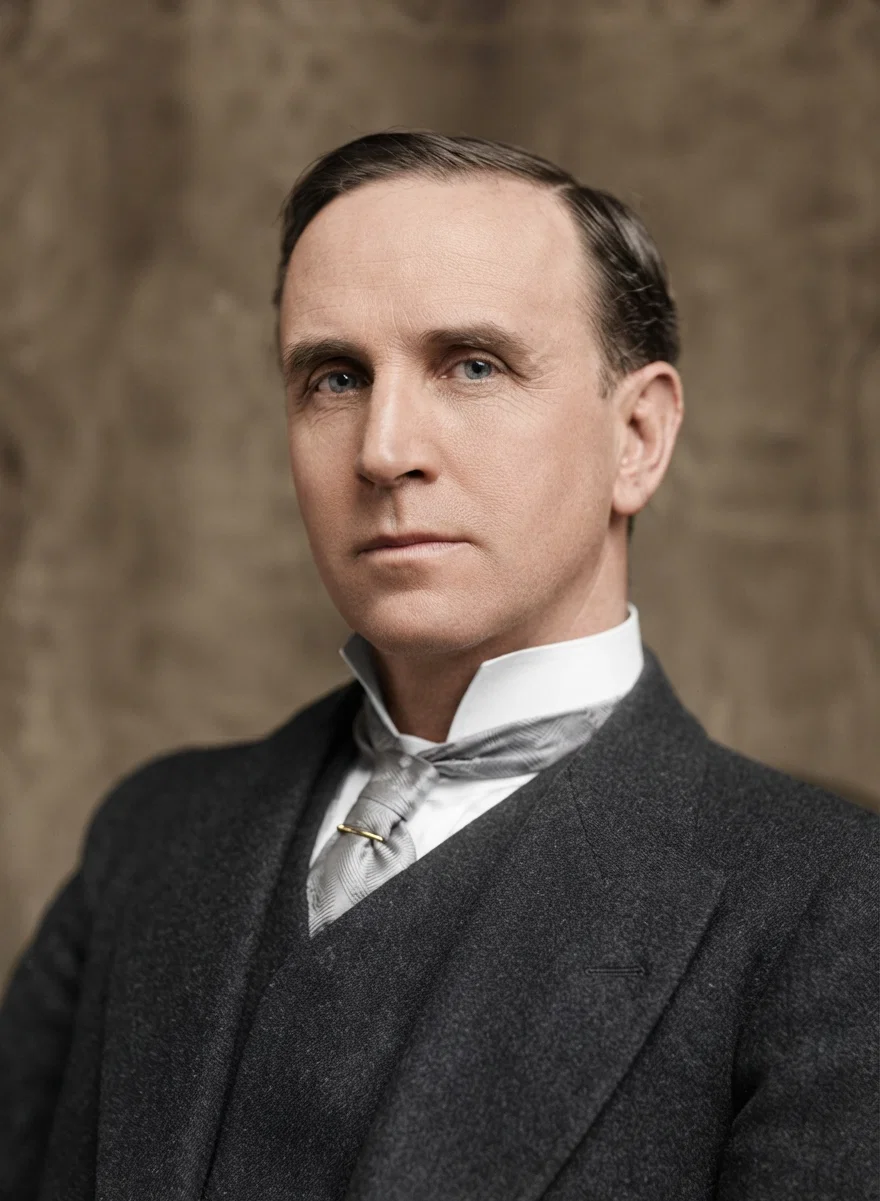
The Right Hon. John Morley, Who Now Becomes a Peer.

The New Premier.

Mr. Asquith, his successor, is a man of splendid ability, an orator and a finished statesman; but he lacks the wide sympathies and unfailing urbanity of the late premier. As one of his friends put it, he has not learned to "suffer fools gladly." He was born of Non-Conformist parents, and received his first education in a little Moravian school. Later he passed thru the City of London School and Balliol College, Oxford, distinguishing himself in both places. He became a barrister in 1876, and fourteen years later "took silk" (became a king's counsel). He fought his way to the front without money, thru sheer ability and force of character. He entered Parliament for East Fife (Scotland) in 1886, and became home secretary under Gladstone in 1892. Chamberlain's tariff reform proposals met his uncompromising opposition; and the weak, vacillating policy of the Balfour government found in him an unsparing critic. He scored a success as Chancellor of the Exchequer, and enters upon the duties of his new office with
the confidence of his party and the respect of the opposition. Whether he will hold together the various elements of which the present government is made up remains to be seen. Of course the large majority will insure safety for a time; but the present premier is not popular with the Irish nor with the labor party. His democratic sympathies being less marked than those of his predecessor, he is less likely to push the battle against the House of Lords. Indeed, Sir Henry himself would find the present situation, with important by-elections going against the government, a difficult one to handle.

Would Strengthen the House of Lords.

The Liberal government has based its position on popular support. It has accused the Hereditary chamber of being out of touch with the people, and standing in the way of carrying out the people's will. But when the people, speaking thru by-elections, indicate that they are getting tired of Liberal rule, and want a change, the position of the House of Lords is immeasurably strengthened.
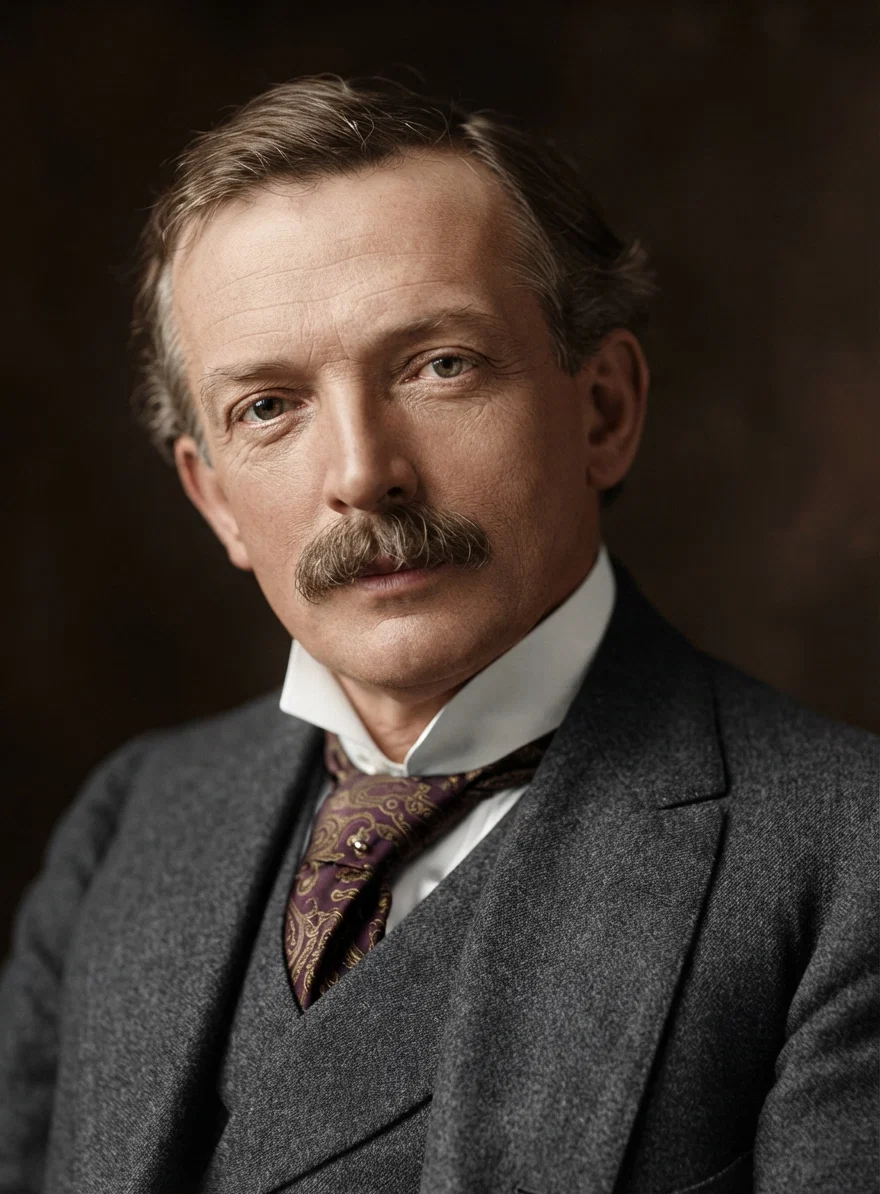
The other changes in the cabinet have been favorably received. John Morley goes to the House of Lords, retaining his position of secretary for India. Mr. Lloyd-George scored a marked success as president of the Board of Trade, and naturally succeeds to the Chancellorship of the Exchequer, the highest position next to the premiership. He is the most universally popular member in the cabinet, altho a young man. Winston Churchill, the new president of the Board of Trade, and one of the most brilliant men in the party, made a plucky fight in northwest Manchester, but was defeated by a decisive majority. He is now contesting Dundee, which is believed to be a safe seat. It is an awkward arrangement in British politics that makes it necessary for a member of Parliament who is promoted to cabinet rank, to seek reelection from his constituency. Of course Mr. Churchill was severely handicapped in Manchester. His constituency had always been conservative until 1906, when disgust with Tory misrule led it, with many other conservative boroughs, to vote for the Liberal candidate.

An Ominous Cloud.

An ominous cloud on the government's political horizon just now is the much-hated and condemned Licensing Bill. I explained itschief provisions in my letter of a month or so ago. It aims to reduce the public houses (saloons) by about one-third, and by its time limit do away with monopoly values in the liquor trade. If the bill is passed, after fourteen years there will be no compensation when a license is not renewed. In other words, the publican (saloon-keeper) when taking out a license knows that it is good for one year only, and there is no assurance whatever that it may be extended even for one year more. Thus the power of the trade will be greatly crippled. In fact, at the end of the fourteen years, the way is fully open for Prohibition if the country wants it, or for Local Option.
D. Lloyd-George, M.P., the New Chancellor of the Exchequer,
No wonder the forces of evil have been let loose, and the country is stirred from one end to the other. Not a few Liberals have deserted their party to support the liquor trade. The bill is denounced as socialistic, financially ruinous, and nothing less than confiscatory. It is represented that the funds of poor widows and orphans have been invested in brewery shares and public houses (saloons), and it is a cruel thing to rob them by lessening the value of the shares thru unfavorable legislation.
Fortunately everybody's eyes are not shut to the real animus of the opposition which the bill is meeting. The labor members, almost to a man, have given it their hearty support. In the House of Commons yesterday, Mr. Will Crooks made a moving speech on behalf of the little children "who lead lives in homes you would not keep your dogs in because of the vicious habits of their parents." Temperance workers of opposite political views are doing their utmost to support this bill, for they realize that the fight is to be a hard one at the best, and that if the present government is put out of office because of its attempted temperance legislation, there will not arise a government for many years to come with sufficient courage to tackle the question.

The New Prime Minister Favors Temperance.

The new prime minister has taken a bold stand. In his speech of yesterday at the headquarters of the Reform Club, in which he formally accepted the leadership of the Liberal Party, he announced his intention to stake all on this bill; and he knows what he has to face. It is a fight against the most powerful trade monopoly in the United Kingdom, which has had its way for many years back, and has been growing stronger year by year. The outcome can not but be watched with the deepest concern by all lovers of humanity. The question is whether the nation shall rule or be ruled.

The Bishops Have Taken Their Stand.

Fortunately the bishops, with hardly an exception, have announced their intention to support the bill. The Archbishop of Canterbury, and especially the Bishop of London, who is by far the strongest personality on the Bench, have taken their stand squarely with the government in this matter, altho the brewers have threatened to discontinue all donations to church funds if the bill passes into law. Of course such threats really do the trade more harm than the bishops; but brewers are not noted for controlling their tempers, and with large numbers of the clergy holding brewery shares, and giving general countenance to the trade, it does seem rather aggravating that the bishops should take the other side.

Old-Age Pensions.

Another measure which promises to be more popular with the masses is the scheme for old-age pensions, which will be brought before Parliament when the budget is submitted next week. This is not the place to go fully into social questions, but the situation is really an urgent one. Millions live on the starvation line; labor conditions tend to grow worse
rather than better. Trouble has been brewing for months past in the great ship-building industries on the Tyne, and unless an understanding is reached shortly, strikes and lockouts involving upward of 80,000 men will take place within the next few weeks. Trade upheavals of this kind are the more disastrous because the ordinary wage is so low as to make it almost impossible to lay by anything. Thus we have workhouses crammed to their utmost capacity, and a poor-rate which weighs heavily upon the shoulders of the struggling working man.

The Churches Losing in Membership.

Turning our eyes for a moment to the religious situation, the outlook is anything but encouraging. Churchmen and non-conformists alike bewail the religious indifference of all classes. Scarcely one fifth of the population of London go to church or chapel. The poor often harbor bitter feelings toward the church. The middle and upper classes go into the country for week-ends, or play golf. The Bible, tho found everywhere, even in the guest rooms of commercial hotels, is unread. Pastor J. H. Shakespeare, for ten years secretary of the Baptist Union, remarked the other day that "the ignorance of the Bible even among candidates for the ministry, was simply appalling."
Wesleyans, Methodists, and Baptists report large decreases of membership during 1907. The "Methodist Recorder," in announcing a loss of 4,392, the largest since 1854, the time of the great disruption in the Methodist ranks, says frankly that it was expected, the news of revival being scarcer than for a generation past. With "record bazaar proceeds" and "unprecedented collections," attendance at prayer-meetings and communion-services has been growing steadily smaller. Baptists report a decrease of some 5,000 members, due partly, it is explained, to a revision of membership rolls, and partly to the failure of some of the converts in the Welsh revival to "stand the test of time." After making all allowances, the figures certainly do not point to a near realization of the millennium. If a really thoroughgoing revision of the membership rolls were to be undertaken, the results would be nothing less than appalling.
In the annals of the British navy, April, 1908, will go down to history as a black month. On the second of the month the destroyer "Sizer" collided with "H. M. S. Berwick" and was sunk, with the loss of thirty-five men; on the 25th, the cruiser "Gladiator" was rammed by the "St. Paul" in The Solent, 27 lives being lost; then the torpedo-destroyer "Gala" was cut in two by the scout "Attentive;" and a serious explosion occurred on board the battle-ship "Britannia," thus making a unique record of disasters. M. ELLSWORTH OLSEN. London, May 1.