Shiloh: the Man of Sorrows

4%

Pacific Press Publishing Association · Mountain View, California · Aug 2, 1910

FromSigns of the Times, Vol. 37, No. 30.

Read the full edition

Shiloh: the Man of Sorrows

Copyright 1910, Pacific Press Publishing Association
By Mrs. L. D. Avery-Stuttle

Chapter XXII.—Imprisonment of the Baptist
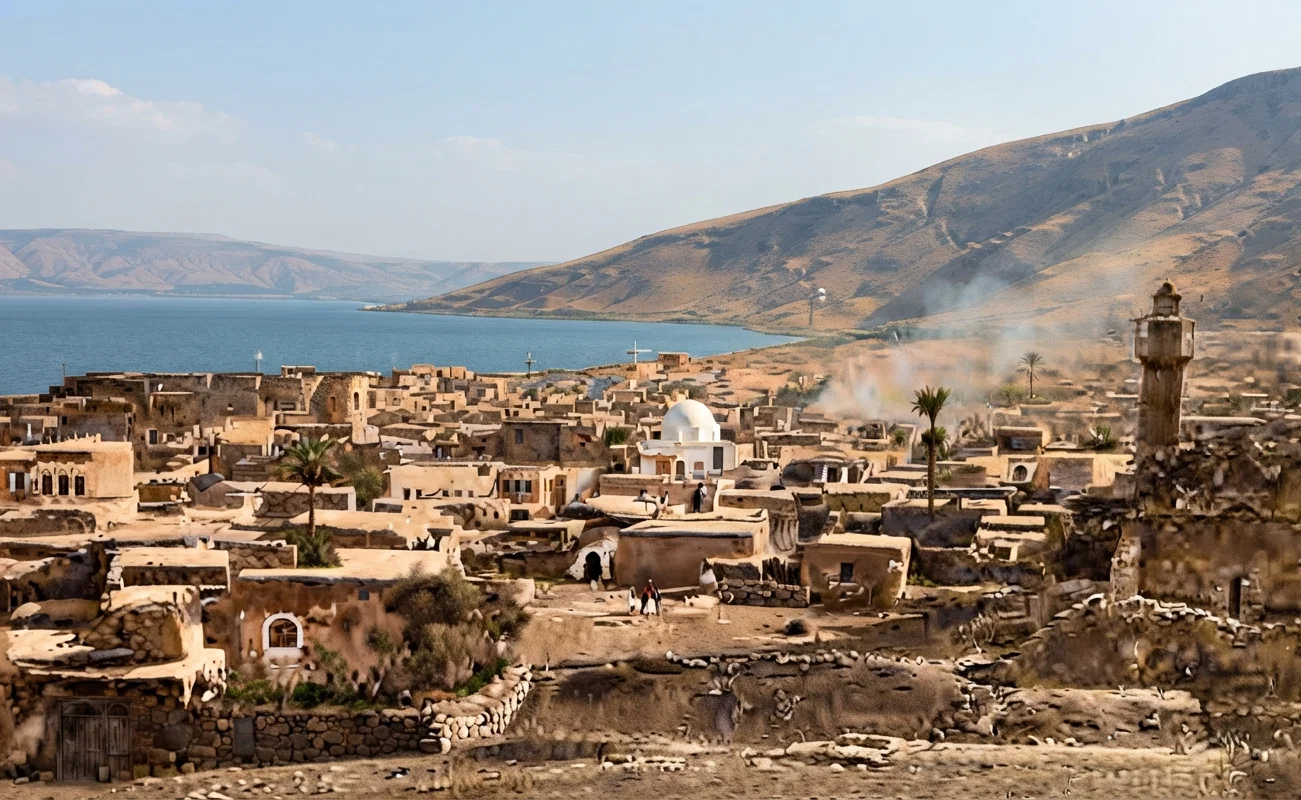
Go with me to the lordly city of Tiberias, upon the western shores of the Galilee. Let us visit the palace of Herod Antipas the tetrarch. He has returned from Bethabara, beyond Jordan, from his conference with the Baptist of the wilderness.
The distance between the two points was long enough to have cooled an ordinary outburst of passion. But the haughty ruler of Galilee felt that his pride had been humbled. That he, Herod Antipas, by whose royal might the beautiful city of Tiberias had been builded in honor of Cæsar — that he had been utterly unable to gain one word of praise from the mouth of the stern Baptizer, or to win one syllable of approval from his lips, was exasperating, and quite without a parallel. But that he, the princely tetrarch, should have been sternly rebuked for leading his dissolute and shameless life, was not to be silently endured.
Still he was unwilling to imprison or to punish the prophet in any way. The craven heart of the tetrarch felt a wholesome fear of the people, and, were the truth really known, he was troubled by an uneasy conscience.
But the inflammable anger, caused by the outraged pride of the worldly prince, required but a touch of flame to kindle, and that touch was supplied at once by the fiery tongue of the irate and unscrupulous Herodias.
Wounded pride, hot indignation, and the desire for revenge, struggled for ascendancy in the depraved and sensual heart of the woman.
"Who am I," she exclaimed bitterly, at the conclusion of the recital of his story by her unlawful spouse, describing his reception by the prophet, "who am I, that I should quietly endure the reproach of this man! And thou, O Antipas, thou art not a
true son of thy father, even of Herod the Great, if thou dost submit to be scorned and insulted by this lawless peace-breaker, clad in his ugly raiment of camel’s hair. Ugh! verily I shall have vengeance! O Antipas! canst thou say thou lovest me, and yet hesitate to punish this lawless son of a priest?"
The beautiful, cruel eyes of the woman were bedewed with tears — but they were the tears of a monster!
"Command me, O Herodias! behold, I am thy slave; for thou dost bind me as with chains of enchantment, with one glance of thy starlit eyes! What wouldst thou that I should do unto him, even unto this Baptizer?"
"Imprison him!" hissed the woman. "Verily, Antipas, thou hast not even the spirit of that weakling Philip, thy brother, if thou failest to imprison this son of an ignorant priest! Why shall he taunt thee concerning the daughter of Aretas, the Arabian? Verily I doubt not he doeth worse than thou, in his scandalous garments. If he hath done no evil, why dwelleth he in the wilderness? why hideth he himself, even from his youth, as I have heard that he hath? Of a truth, this fellow is a companion of robbers!" and a shudder of pretended fear shook the graceful form, as she glanced appealingly at the king.
But sin-hardened as he was, Antipas could scarcely listen to such condemnation, such slander, so unjust, against one whom he knew to be the prophet of the Almighty, one whose life of purity and virtue was never before spoken against.
"How canst thou speak words of such bitterness, O mine enchantress? for of a truth the man hath done me no harm, even if he were emboldened to speak the words of the law unto me. Surely, O my Herodias, thy woman’s heart doth not counsel me to deeds of violence. Verily, I repent even now of mine own anger. Why should I have spoken at all these words concerning this prophet, who is indeed a just man? for of a truth I have caused thee to rise up against him!" and an expression of real regret crossed the dark face of the king.
"O mine Antipas! surely thou art false unto me, and thou lovest me not. Go again even into Arabia, and fetch from thence the daughter of Aretas, the angry emir, thy father-in-law, and let me take my beautiful daughter Salome, who, thou sayest, is the light of thine eyes; behold, I will take her and depart, and go again to Philip; for of a truth thy brother at least sought to please me, and verily he loved me. I will return unto him!"
"Say not so, O my princess! what wilt thou that I should do unto the prophet of the Lord, thine enemy?"
The city of Tiberias on the Sea of Galilee, where Herod’s palace was
"Have I not said unto thee that the man should be imprisoned? And surely, O my Antipas," continued the woman, her cruel eyes wet with false tears, "thou knowest not the pain it giveth me, — for it grieveth me to do harm to any creature; but this man verily belongeth to the horde of robbers who are led by Barabbas, and so, for the good of all the people, he must be safely lodged. Behold, the prison that thou hast already builded even here in Tiberias, waiteth for robbers and malefactors! but if thou lovest me not," and the cruel eyes again shone with tears, "if thou hast no love for me, then let this mine enemy and thine go in peace."
For a moment Herod hesitated. In that moment the fate of the prophet was sealed.
The tetrarch felt a pair of soft, white arms about him, and warm, sensuous, seductive lips pressed close to his. The woman realized that she had triumphed.
"Behold, it shall be even as thou sayest. I will send and fetch the man."
The gloomy fortress at Tiberias has closed its iron doors upon him who was commissioned by the Eternal to prepare the way before the Anointed of God, the Shiloh of Jacob.
To gratify the wicked caprice and revenge of a vile woman, the faithful prophet of the Most High must languish in prison.
Meanwhile, Herodias bides her time. She can afford to wait, now that her victim is in her power; for she is certain of complete revenge.
(To be continued)