Progress in China

5%

Pacific Press Publishing Association · Mountain View, California · Aug 2, 1910

FromSigns of the Times, Vol. 37, No. 30.

Read the full edition

Progress in China

I. Our Work in Shanghai
SHANGHAI, the New York of China, is without doubt the most cosmopolitan of any city in the world. Here may be found representatives of nearly every nation in Europe, Asia, and America engaged in business, side by side with the dark-skinned Indians, the yellow, slant-eyed Chinamen, and the little brown men from Japan.
A half hour's walk along the "Bund" (as the main street is called) will serve to show a person the most remarkable contrasts of people, costumes, and buildings.
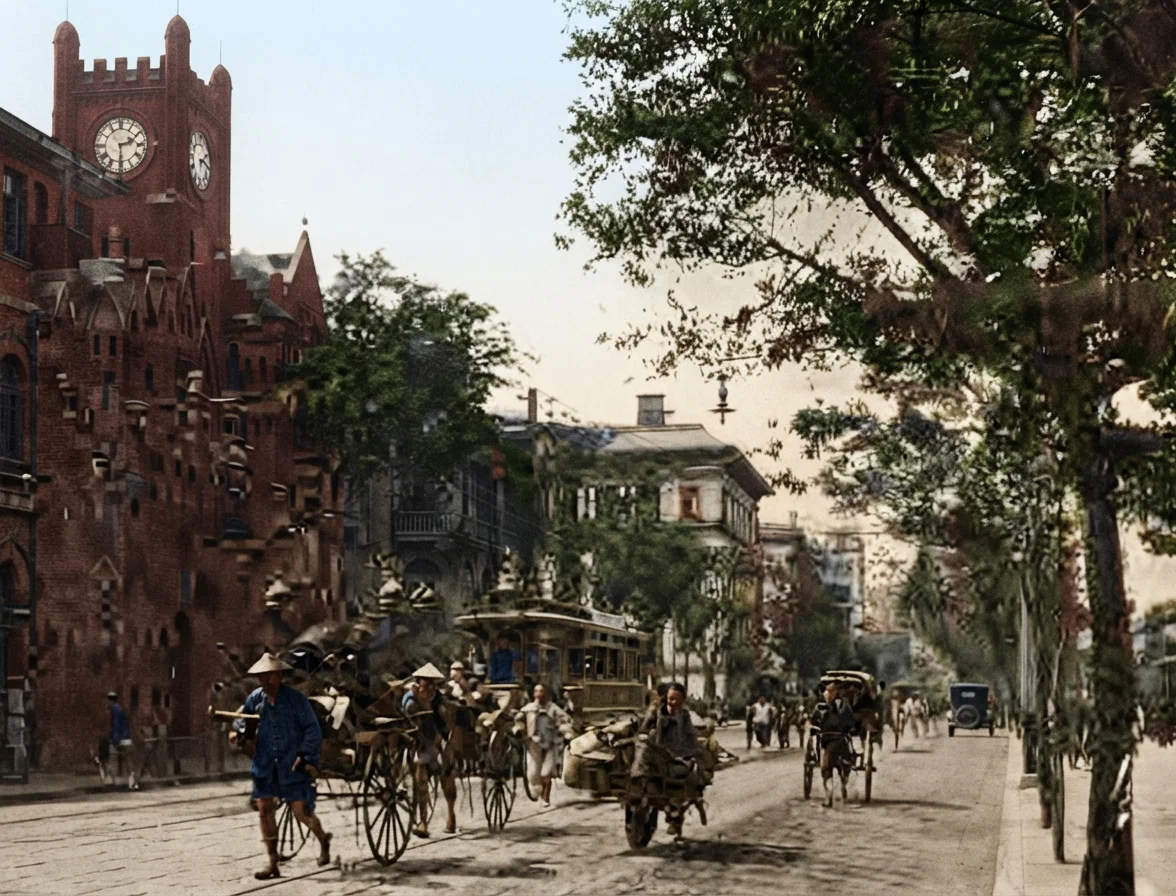
The tall, stalwart Seik policemen with their heads wrapped in red and yellow turbans, guard every street corner, and do not hesitate to use their clubs on the Chinese coolies who swarm along the roads with their bamboo baskets, wheelbarrows, and rickshaws, in close proximity to the modern electric street-cars and swiftly speeding automobiles.
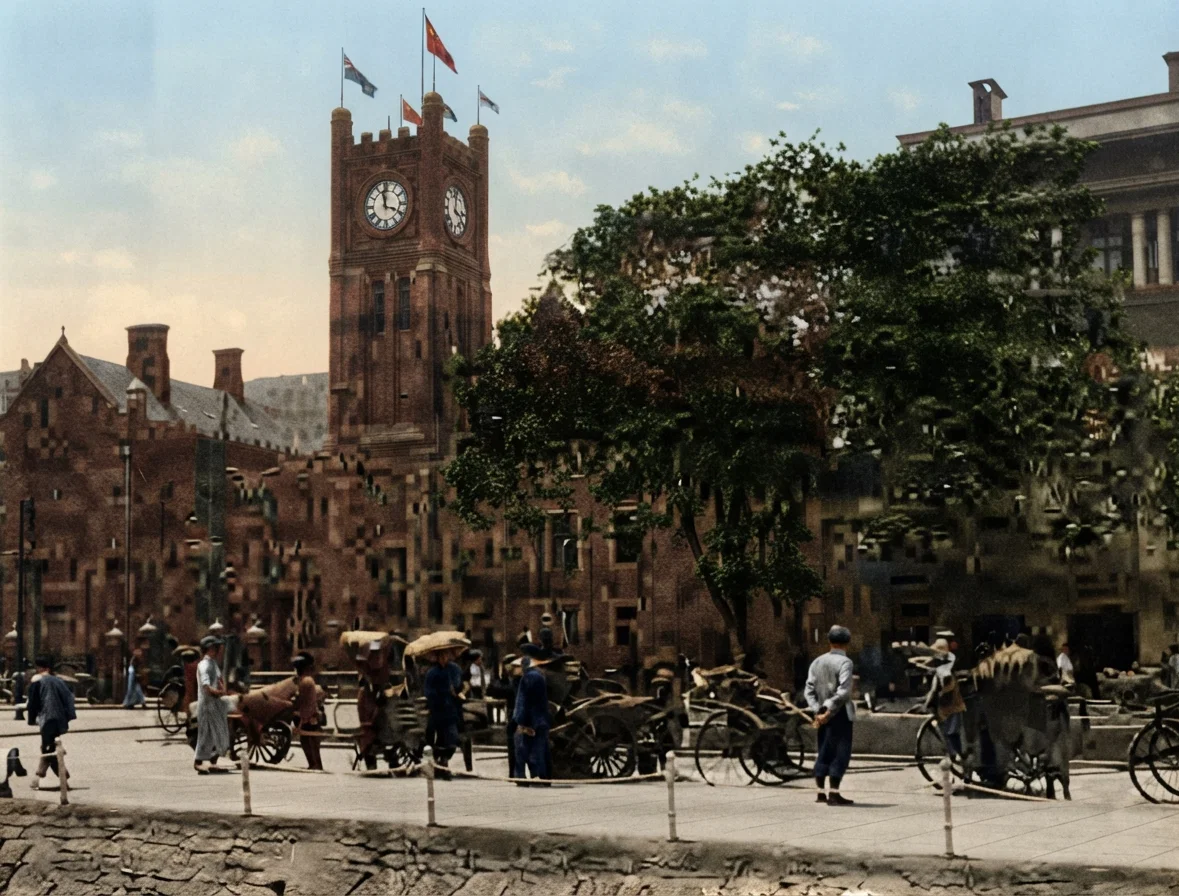
A View on the Shanghai Bund. Note the well-paved street, and also the wheelbarrow load of baggage.
A Custom-House on the Bund, Shanghai. All passengers from foreign parts land at the jetty just opposite this building.
The fashionably dressed rich English lords and ladies come dashing down the street with their beautiful carriages and spirited horses, passing en route the ancient Chinese ox-cart and water-buffalo, and running down without a thought the poor cripples and beggars who lie by the wayside clothed in rags, asking for a few cash pieces with which to buy food.
In the busy markets the rough be-whiskered Russian brushes his shoulders against the Japanese and Korean, while the Philippino, Jew, Spaniard, Portuguese, and French and German meet together on equal terms.
Leaving the beautiful modern brick and stone five-story and six-story buildings, such as the Astor House, the Palace Hotel, the German Club, the custom-house, and the consulate buildings, one has only a walk of half a mile to find himself in the original Chinese city of Shanghai, in an atmosphere as different as night is from day.
Here dark, narrow, dirty alleys and small one-story shops prevail everywhere; and here business is carried on much the same way as it was one thousand years ago. To get into the city it is necessary to go through a winding passage in the wall. At every turn of the way there are heavy iron gates, and some of the ancient spears and battle-axes which the guards used are still there. Thus did the Chinese fortify themselves against their enemies. Every city in China of any importance has the same kind of wall around it. They average from twenty-five to forty feet high and about fifteen or twenty feet thick, being much wider at the gates to allow for a passage of several turns. They usually have four gates, and these are called after the four directions of the compass.
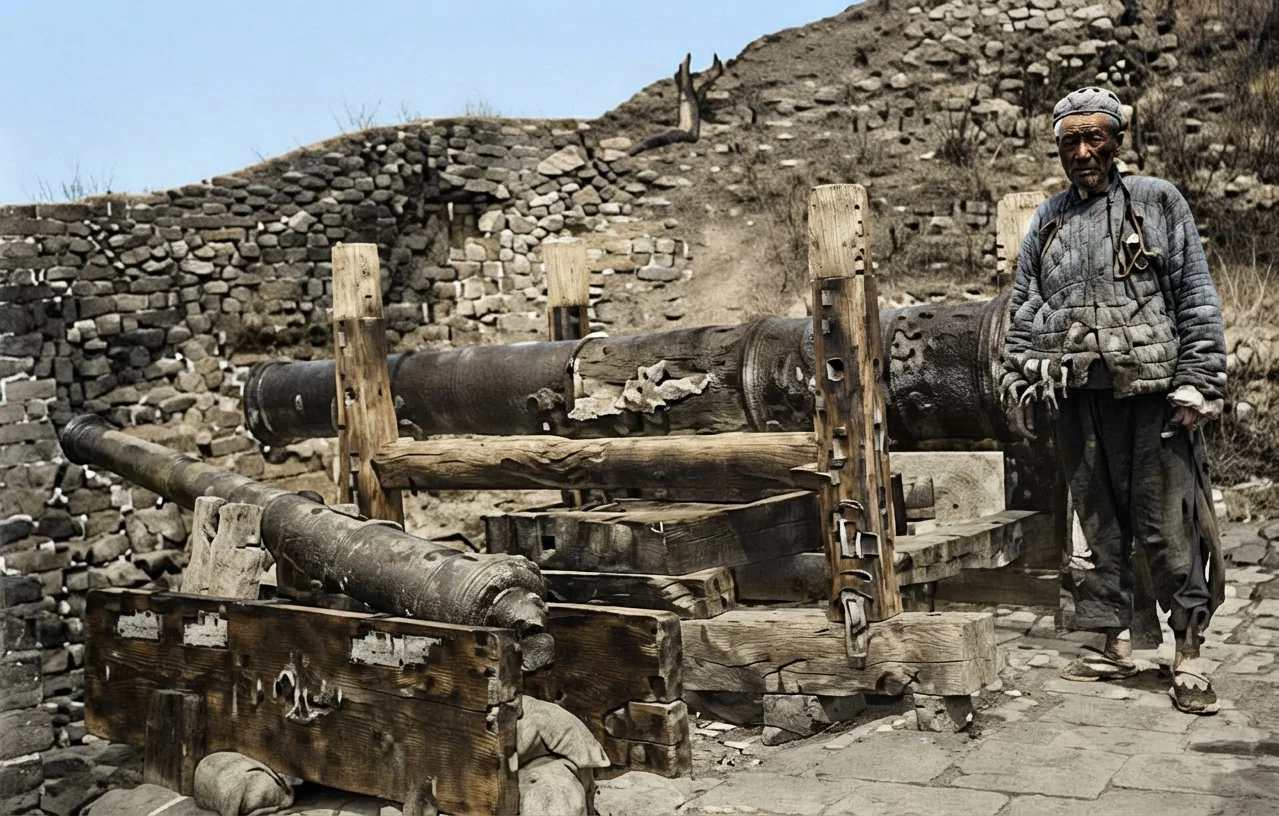
On top of the wall can still be seen many of the old cannons. I am sending a picture of one on which the date 1843 can be clearly seen.
This one is British make, and was no doubt placed there when Shanghai was first opened, as a treaty port, to foreign trade, which was one of the conditions of the first treaty between China and Great Britain, which was called the treaty of Nanking, and was signed August 29, 1842.
Cannon on the great wall of China. This is not only common as regards the great wall, but they may be seen on walls around the city of Shanghai.
At the time of the Tai-ping Rebellion against the imperial government, in 1850-64, the whole eastern part of China was captured by the Tai-pings, with the exception of Shanghai; and here the European troops in garrison mounted the wall, and with these same guns repulsed the attacks, and thus saved this city from the terrible devastation which all the surrounding country suffered.
Much has been said about the open door of China, and I believe it could be truthfully said that Shanghai is that open door. Situated at the center of the east coast of China, almost at the mouth of the Yang-tse River, with good natural waterways and excellent docking facilities for landing and shipping, it is recognized at once as the key to Western Asia; and in a few years, with the opening of the railroads now proposed to Peking, Szechuen, and Canton, it is destined to become the greatest shipping center and base of supplies for all the Orient.
It is indeed fitting that a place like this should have been chosen for the headquarters of our work in this field.
All out-coming missionaries must stop here before going to their stations in the interior; and it is right that they should find here a comfortable place where they can secure rest after their long sea voyage, and receive courage and instruction before facing the privations and hardships of the inland stations.
There are many articles of necessity which can not be bought in China; and as our missionaries have orders of freight coming out continually, it is well that we have a representative here who can see these orders through the custom-house and get them transshipped properly, thus avoiding many mistakes which would happen if left to disinterested parties.
All mail and money-orders reach Shanghai first; and as the banking facilities are good here, it is possible to handle the troublesome exchange in a way that would be impossible in an interior city.
All these advantages and many more were recognized by our brethren when two years ago they moved our small printing-office from the interior to Shanghai, and established the mission headquarters here.
F. E. STAFFORD.