The Spanish People

4%

Pacific Press Publishing Company · Mountain View, California · Jun 24, 1908

FromSigns of the Times, Vol. 34, No. 26.

Read the full edition

The Spanish People.

Their Customs and Conditions in General.
SHOULD one endeavor to describe in detail the races which have in different times peopled the Iberian peninsula, he must not hope to stop short of numerous thrilling volumes. From the earliest dawn of history, this sunny portion of Europe was known as Iberia, and its inhabitants as Iberians. It is believed that the earliest inhabitants came from the South, and that they had been allied with the Libians who inhabited the northern coast of Africa.
How long this fair peninsula was the undisturbed home of the Iberians no one knows. Behind the rocky ramparts of the Pyrenees, they may have remained for centuries unconscious of the Aryan torrent which was flooding Western Europe as far as the British Isles. Nothing has been discovered by which we may reconstruct this prehistoric people and (perhaps) civilization. But their physical characteristics we are able to guess; for just as we find in Cornwall, England, lingering traces of the ancient Britons, so in the mountain fastnesses of northern Spain linger the Basques, who are by many supposed to be the last survivors of that mysterious primitive race.
The Phenicians, who were attracted to the Iberian peninsula by its gold and silver as early as 1300 B.C., soon began to establish permanent settlements and build cities. As early as 1100 B.C., they had founded the city of Gades (Cadiz), which is to-day quite an important seaport and educational center of southwestern Spain. It was in the year 850 B.C. that the Assyrians came down with "their cohorts all gleaming with purple and gold," and the power of the Phenicians was partly broken.
Just about this time the Phenicians founded the city of Carthage upon the northern coast of Africa, and for several hundred years a torrent of Carthaginian life was pouring into the Iberian peninsula.
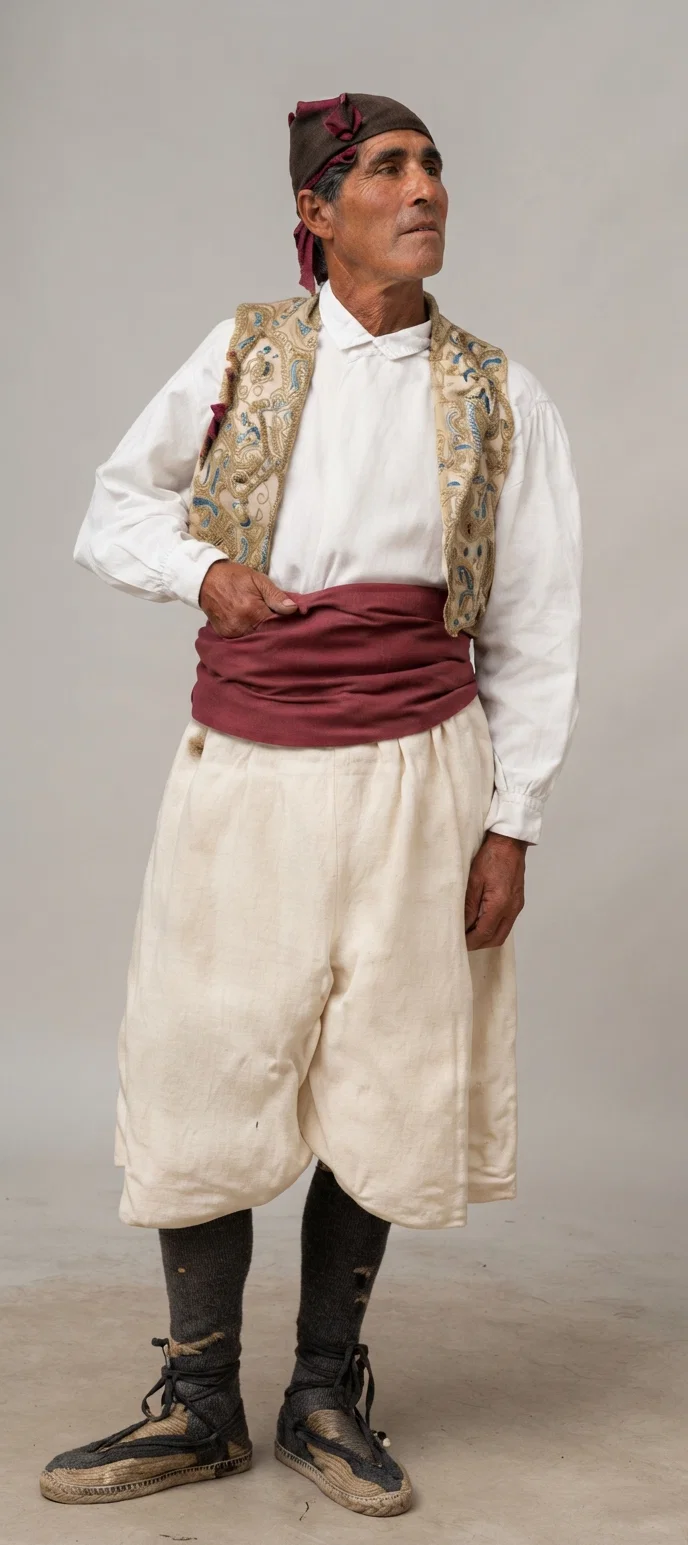
A Valencia Farmer.
A Valencia Farmer.
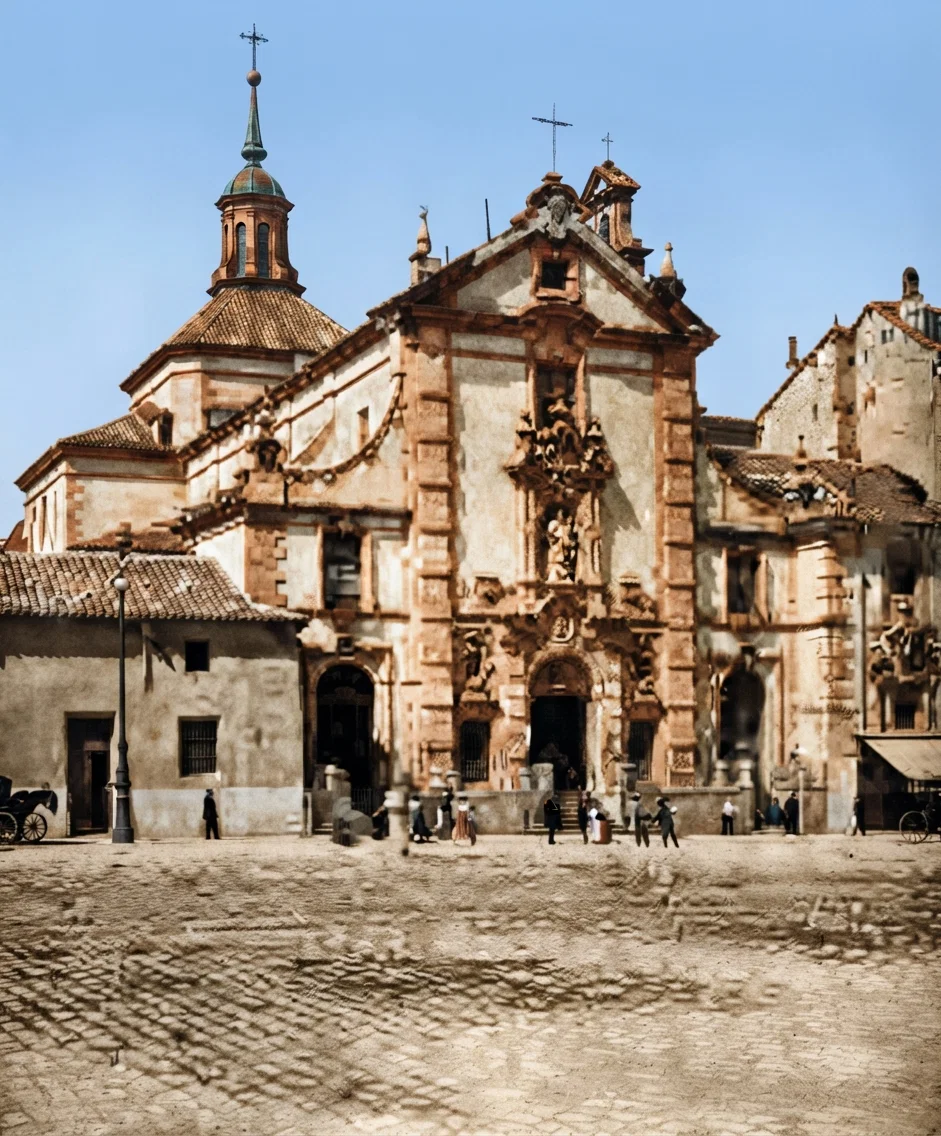
Church of San Jose, Madrid.
The city of Barcelona was named after the powerful family of Barca, in Carthage, to which Hannibal belonged. It was from the millions of Spain that Hamilcar recruited his army. It was on the eastern shores of Spain that Hannibal carried on one of the most determined and desperate struggles the world has ever seen.

Roman Domination.

It was in the year 206 B.C. that Cadiz, the last stronghold of this peninsula while under Carthaginian rule, surrendered to the Romans. In the year 197 B.C. the entire peninsula was organized into a Roman province, thenceforth known not as Iberia but Spain, and its people, Spaniards. The Romans held sway until 412 A.D., when Ataulphus had established his court in Barcelona, and Romanized Spain became Gothic Spain. Just three centuries later, or in "711 A.D., the Visigoth king had disappeared, and a Mohammedan empire was fastened upon Europe." The descendants of the Visigoth kings never lost their patriotism; and altho for several centuries their power did not extend beyond a few mountains of northwestern Spain, they did not fail to keep up an unbroken chain of kings. The ruling power in Spain to-day, the Castilians, are descendants of these mountaineers.
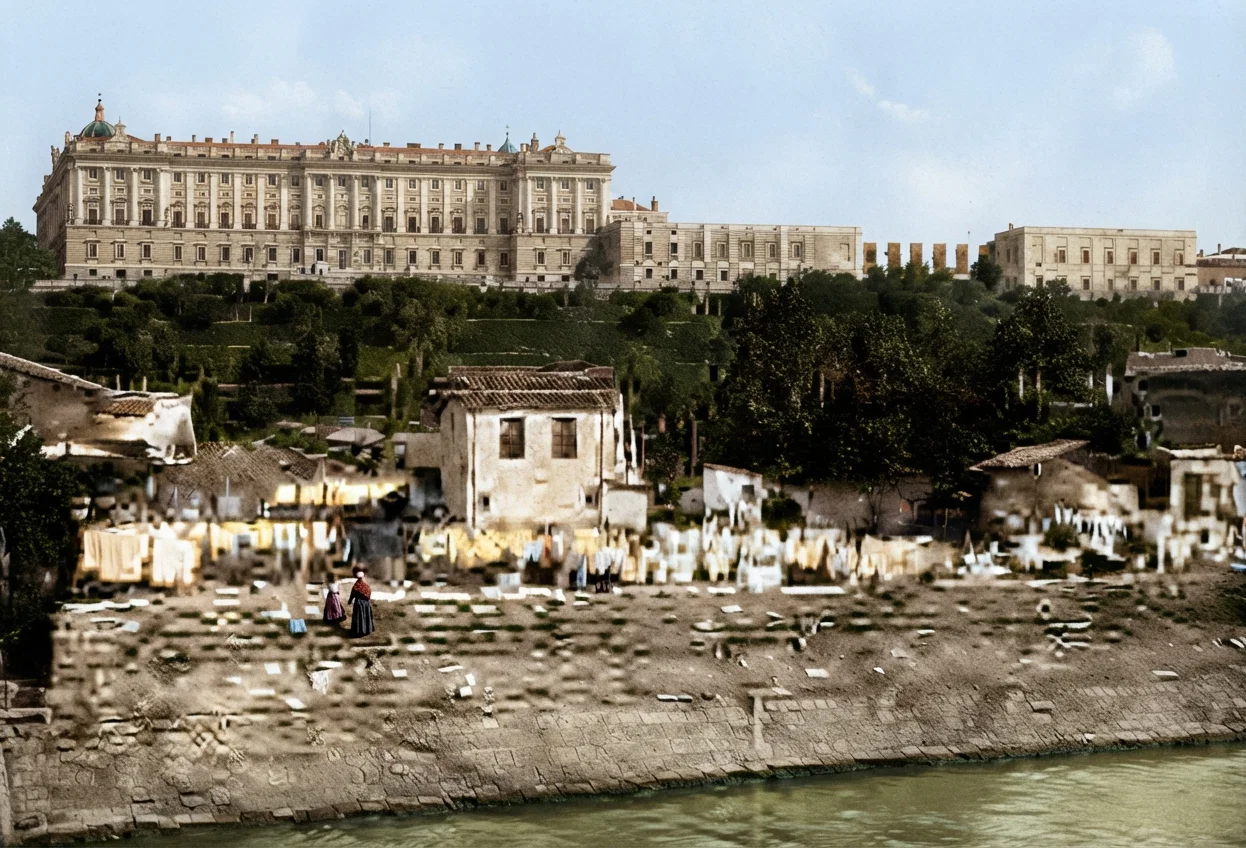
The Royal Palace at Madrid.

Last Moorish Stronghold.

It was in the year 1212, that under the command of Alfonso IX, King of Castile, the power of the Moors in Spain was broken, and most of them were driven from the country. Thus, the once great Mohammedan empire in this country was reduced to the single province of Granada, where the Moors entrenched themselves in their last stronghold. As monuments of the superior intelligence and advancement of that people, there remain to-day the excellent irrigation system of Valencia, the beautiful and artistic Alcazar of Seville, and the splendid Alhambra of Granada.
The Spaniards of to-day are the result of the intermingling of these different peoples for so many centuries. As a result of this peninsula's having been occupied by many different races of people, we find to-day in this country a number of distinct types with reference to physical features. Especially are the Roman and the Arabian elements very prominent. Likewise there are several distinct dialects spoken in different parts of Spain. While the Castilian is the official language of the country, there are thousands of Spaniards who are able to speak but very little of that, the most musical of all languages. The Basques have a dialect which seems very unlike any other known language. In the four northeastern provinces the Catalan is spoken. This is similar to the Patois of southern France. The Valencian dialect is quite similar to the Catalan but is a little more like the Castilian.

Condition of People.

It is conceded by the best authorities that not more than about fifty per cent of the Spanish people are able to read and write. This is a deplorable condition; and because it exists, the problem of getting the Gospel into the homes of this people is a difficult one to solve.
The great majority of the people have very limited means; many are in extreme poverty. Truly the prophecy of James 5 with reference to the last days is being fulfilled in this country. Laboring classes here are terribly oppressed. Farm-hands work long hours and receive from thirty to fifty cents a day for their work. Some may receive a little more than this in harvest-time, but it is a rare thing. Mechanics and other high-class laborers receive from fifty to eightycents a day, and if one gets a dollar a day, he considers himself extremely fortunate.
We find living expenses here just about as high, and perhaps a little higher, than in California, so one can readily see what a struggle these people must have in order to exist. The prophet, in speaking of the time when these conditions would exist, exclaims: "Be ye also patient; stablish your hearts: for the coming of the Lord draweth nigh."

The National Sport.

While Spanish people as a rule are high-tempered and easily excited, we find them to be courteous and very hospitable.
The national sport is the bull-fight. This is the most barbarous custom existing in Spain. The masses are simply carried away with it. Its influence upon the people is very depressing; but just as the fiend takes another and still another dose of opium or morphin, so the Spaniard keeps on returning to the arena. This has undoubtedly been one of the most powerful elements in producing the decline in Spanish power.
We hope to deal with another of those elements in a future letter.
"Is not My word like as a fire? saith the Lord; and like a hammer that breaketh the rock in pieces?" The only remedy for the evils of Spain, and for the individual Spaniard, is the unadulterated word of God. I am thankful for a part in making known the power of the Gospel. FRANK S. BOND.