Shall Finite Man Correct the Infinite God?—Striking at the Very Foundations of Divine Government
By Milton C. Wilcox
IT goes without saying, that God's government is the basis of all stability in the universe; and it is further evident, to the thinking man, that the basis of His government rests in the righteousness, the justice, the completeness, of His holy law, the principles on which His government is based.
I need not take time to say that the law of God has been generally understood to be summarized in the Decalogue, which has been held as the compendium of all morality. It is so regarded in the word of God. It is the law which points out sin. "Nay," says the apostle to the gentiles, "I had not known coveting, except the law had said, Thou shalt not covet." We all know that it is the Decalogue that says, "Thou shalt not covet." It is the Decalogue, therefore, that points out sin. The same thing is taught in the second chapter of the epistle of James. The Ten Commandments are there called "the royal law," given by the great King. Reference is made to two of its ten words, "Thou shalt not kill," and "Thou shalt not commit adultery." It is also there affirmed that by that law we shall be judged,—a perfectly reasonable thing, for we must be judged by that which it is our duty to obey. And this passage by the apostle is but an echo of that which was taught by the wise man in the Old Testament: "Fear God, and keep His commandments: for this is the whole duty of man. For God shall bring every work into judgment, with every secret thing, whether it be good, or whether it be evil." Eccl. 12: 13, 14. The Bible is a unit regarding the law of the Most High.
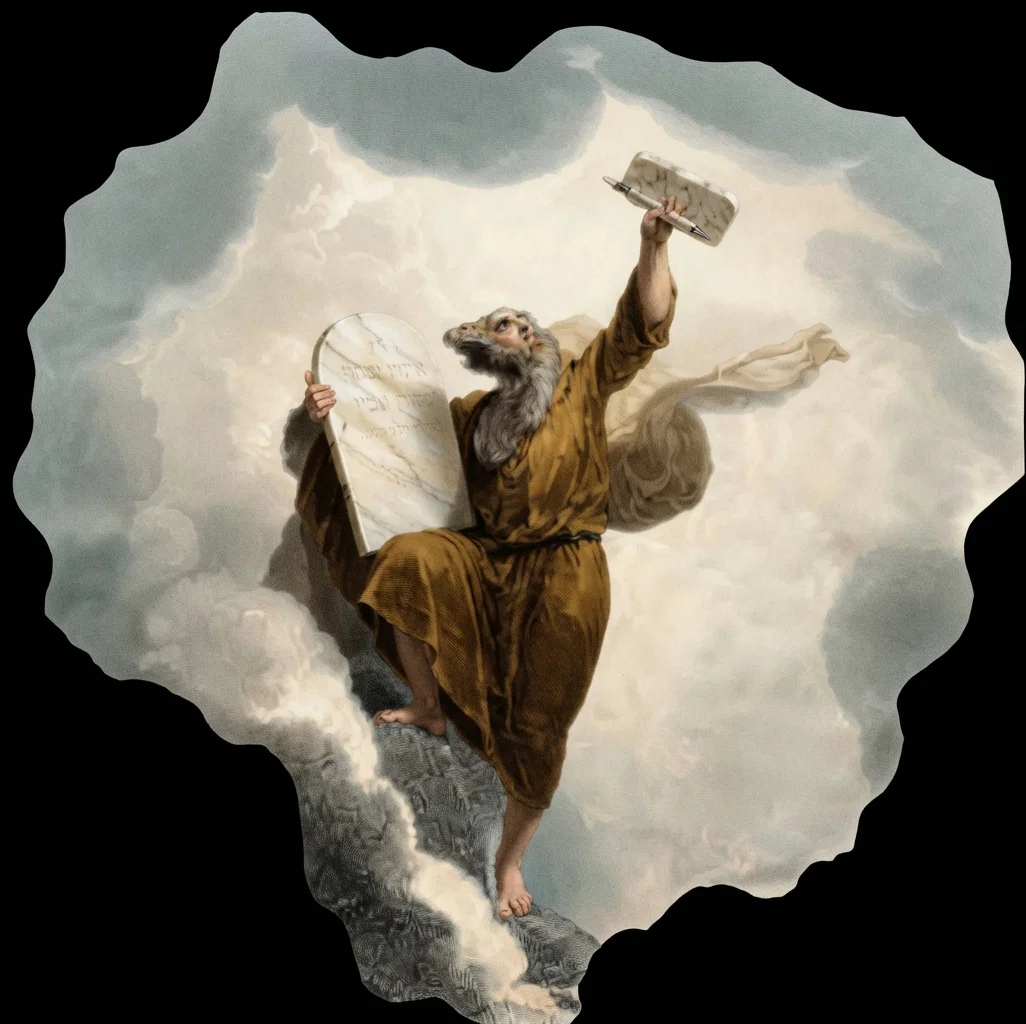
The Ten Commandment law, as found in the twentieth chapter of Exodus, has been generally accepted through all the past by Christians, as the unchangeable law of God. It is prefaced by this statement: "And God spake all these words, saying." Moses believed that the law as there recorded was given of God. He furthermore declared the importance of holding that law in its integrity; for thus spoke Jehovah through His servant: "Ye shall not add unto the word which I command you, neither shall ye diminish from it, that ye may keep the commandments of Jehovah your God which I command you." Deut. 4: 2.
This principle is absolutely essential to the perpetuity of God's government; because if we can add to the commandment, and change its thought, or take from it, and make it less effective, we are striking at the very government of God.
All the great worthies of the Old Testament believed in the integrity and righteousness of God's law. Joshua believed it; Samuel believed it; Solomon believed it; David declared, "The law of the Lord is perfect"; and one of the great psalms, probably written by Daniel, refers, in almost every verse, to some phase of the great Decalogue. Isaiah believed God's law; Jeremiah and Ezekiel held to its perpetuity and integrity. Yet above all these, Jesus, the Son of the Most High, in whom dwelt all the fullness of wisdom and knowledge, received the law as God's law without question. Not only did He receive it into His life, and live it in His character, but He taught it, and declared that "it is easier for heaven and earth to pass away, than for one tittle of the law to fall." Luke 16: 17. In the great Sermon on the Mount, He said: "Think not that I came to destroy the law or the prophets: I came not to destroy, but to fulfill. For verily I say unto you, Till heaven and earth pass away, one jot or one tittle shall in no wise pass away from the law, till all things be accomplished." Matt. 5: 17, 18.
Not all things of the prophets are accomplished. The integrity of the law yet remains in every jot and tittle. A jot, it may be recalled, is the smallest letter in the Hebrew alphabet. A tittle is a little distinguishing mark of a letter. Neither jot nor tittle must be changed that would in any wise change the meaning of the law of God.
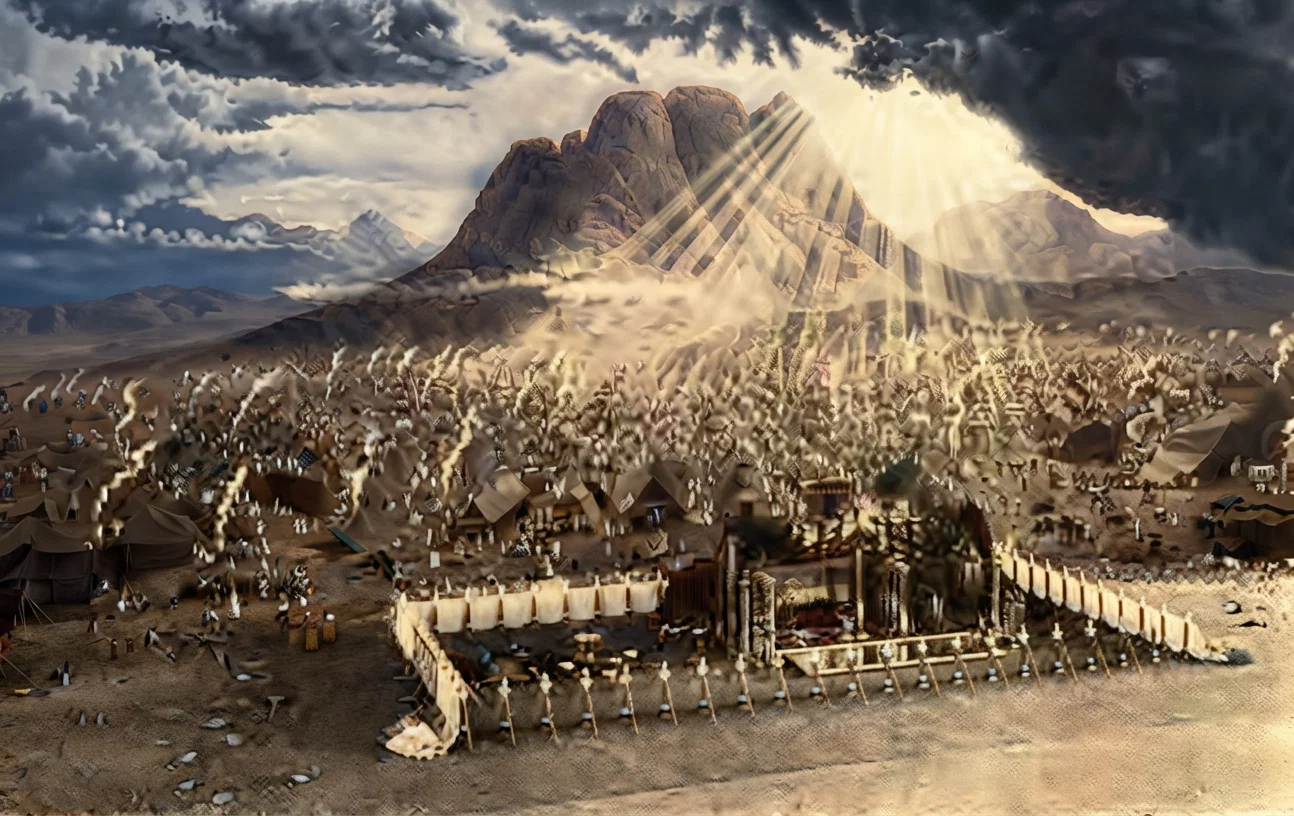
“Giving this commandment . . . out in the great desert.”
Modern Sadducees at Work
SINCE the time the law was given, it has had two enemies among the professed people of God: one, the traditions of men; the other, unbelief. Tradition has manifested itself in holding the hoary opinions of great teachers as superior to the simple Word; or, in other words, it has allowed the opinions of these men to interpret God's law, rather than accept it as God has given it. So the Jews made void the law of God that they might keep their own tradition. Yet the very sect among the Jews that did this were those who prided themselves on their correctness and faithfulness. They were the Pharisees. In later Christian times, tradition did the same thing. It virtually set aside the fourth commandment by adding the traditions of the fathers, who taught that the command could be made to cover the first day of the week instead of the day which God Himself gave.
Our modern Sadducee is doing business under the title "higher critic." He is telling us that the law as we have it in the Bible, is not as God spoke it—that it has been enlarged since that time; and the proposal is, to revise it back to its original form. We are not overstating the case. In the copy of the Minneapolis Sunday Tribune that is before us, we have the statement made: "It will come as a shock to many, no doubt, to learn that the Ten Commandments are under process of revision. A commission of the Protestant Episcopal Church in this country has been working on the matter, and has decided to recommend a shortened form of the law as given to Moses by Jehovah on the mount—a form, according to Bishop Whitehead, of Pittsburgh, more in conformity with the 'thought and conception of the twentieth century' than that of the time when it was given."
It is a wicked fallacy. The Decalogue does not represent the standard of character which was in the world when it was given. The most enlightened country in the world at that time—Egypt—was in the grossest idolatry, as were many of God's people. The law came from God. It represented His character. Is it to be set aside for the "thought and conception" of the present day?
Now, this is a very dignified body that is appointed to revise the Ten Commandments. It is made up of seven bishops. It is called the Commission on the Revision and Enrichment of the Book of Common Prayer. The Book of Common Prayer is the guidebook of the Episcopal Church. In October, the tri-annual convention will decide whether to accept the report of this committee or not.
The bishop tells us that first of all, he wishes to make the law shorter, so that it can be more easily remembered. He wishes to "eliminate a great mass of reading that only lengthens the service unnecessarily without adding to the spirit or dignity of the worship." He suggests that the commandment will impress itself more upon the hearer if it is shortened, as for instance, "Honor thy father and mother," and the rest left off, as it is not needed. "Some of the commandments," he tells us, "have argumentative qualities. But that is not the essence of the matter; and the fourth commandment, relating to the observance of the Sabbath, is purely local. It says, 'God worked six days, and rested on the seventh;' but who516now believes that a day then was twenty-four hours? A day then might have been a thousand years, and we believe it was a very long time."
How do the bishops know but that the very words they are omitting are the words which are important to the commandment? Take for instance the fifth commandment. The purpose is to leave off, "that thy days may be long in the land which the Lord thy God giveth thee." History has demonstrated that obedience to the law of God begins with obedience to parents, and is conducive to long life and perpetuity of the family. The very thing God wanted to impress as the result of obedience of the commandment is left off.
Cast Out by Tradition
THE fourth commandment is shortened to "Remember the Sabbath day, to keep it holy." Why? Tradition will tell us that the day which God set apart is not the day to keep, but that the first day is the day enjoined upon Christians. What is the evidence of it?—Tradition, and tradition alone. The Lord did not say, in that commandment, that the first day was the Sabbath of the Lord. The commandment declares, "The seventh day is the Sabbath of the Lord thy God." Of what use is the law unless it says what it means? Divinity seems to have foreseen the time when man would seek to set aside the commandment, and therefore made it so plain that it could not be misconstrued. Not only one day of seven, but "the seventh day," "is the Sabbath of the Lord thy God."
Neither is the fourth commandment a local commandment, as the bishop declares it to be. God seemed to have an object in giving this commandment not in Egypt, not in the land of Palestine, but out in the great desert, what might be called "No Man's Land," in order that men might see its universality.
Then we are told that there are two versions of the Ten Commandments, one in Exodus 20 and one in Deuteronomy 5. It is strange that man cannot see that the former is given as God spoke it, and as it was written on the tables of stone, but the law as given in Deuteronomy 5 is a repetition of it by Moses, by word of mouth, to the children of Israel, forty years later, to impress upon them its lasting obligation.
Making Known His Sabbath
WE are told that there is a reason given for the observance of the Sabbath, in Deuteronomy 5, that we do not find in Exodus 20. That is true. We would like the reader to think of this. There is a divine reason in this. In Neh. 9: 13, 14, we are told that when God called His people out of Egypt, He made known to them His holy Sabbath. He made that Sabbath known in three different ways. It was to speak to them in three different ways, as a mighty witness for God.
1. As given in the commandment in Ex. 20: 8-11, the Sabbath stands as a memorial of God's creative power. "For in six days the Lord made heaven and earth, the sea, and all that in them is, and rested the seventh day: wherefore the Lord blessed the Sabbath day, and hallowed it." Its obligation is as wide as God's creation. Wherever men dwell on the face of the earth, receiving life and subsistence from God, their duty is, to observe God's law, to keep His Sabbath. It is the duty of the creature to the Creator.
2. But God did special work for Israel. He redeemed them out of Egyptian bondage, as typical of redemption from the deeper, darker bondage of sin. Consequently the Sabbath became to Israel a sign-memorial of God's redemption. And this is the thought that is emphasized by Moses in his repetition of the law forty years after. "And thou shalt remember that thou wast a servant in the land of Egypt, and Jehovah thy God brought thee out thence by a mighty hand and by an outstretched arm: therefore Jehovah thy God commanded thee to keep the Sabbath day." Deut. 5: 15. Read the whole of Deut. 4: 34-49. You will there learn that it takes just such a God as the Creator to provide the redemption that Israel obtained from Egyptian bondage. Therefore the memorial of creation became to the children of Israel a sign of their redemption. Week by week, as the Sabbath came, it spoke to them not only of the Creator, but of the Redeemer.
3. But more than this, in another phase, the Sabbath was to speak to them of their Sanctifier, the One who re-creates. Therefore we read in Exodus, the thirty-first chapter, thirteenth verse: "Speak thou also unto the children of Israel, saying, Verily ye shall keep My Sabbaths: for it is a SIGN between Me and you throughout your generations; that ye may know that I am Jehovah who SANCTIFIETH you." To sanctify is to make holy. The same God who made the day holy, and gave it as a memorial of His creative power, wishes His people by faith to let this creative power into their own souls, and transmute them from the base and sinful to the high and holy. Only creative power can sanctify or restore the heart of man. Consequently, "if any man be in Christ, he is a new creature," or, as the margin of the Revised Version reads, "there is a new creation." 2 Cor. 5: 17. Therefore the Sabbath became a sign of God's constant power to sanctify and save.
IT would please the enemy of God to have men forget these things, to lead them to trust to man, hoping that there is that within man which in some way will change his nature from sin to righteousness, from selfishness to holiness. The teaching of evolution has endeavored to do this apart from God, and the fruits of the teaching appear in such catastrophes as we now see enacted in Europe.
Higher criticism may tell us that we do not need that part of the commandment which gives the reason why God gave us the Sabbath day. Consequently the assumption of men who count themselves wise is that it can be set aside. But above all things, mankind needs ever to keep in mind that thought which the Infinite commanded, "Remember the Sabbath DAY."
Any day might do as a day of physical rest; but one day only speaks of the creative power, the redeeming power, the sanctifying power, of God; and that is the seventh day. And when men presume to set aside any part of that commandment, they are striking directly at the very foundation of God's government. More, they are taking from the poor souls who have, in their almost utter hopelessness, infinite longing for salvation, the only power that can save them from the awful consequences of sin.
Would you know the holiness of God's law, read it in the life of the Lord Jesus Christ. Read it in His crucifixion. That law is so holy that He must die in man's stead, in order to save him from the claims of the broken law. This law abides, for forever God's "word is settled in heaven." Forever it will abide in the hearts of souls saved to all eternity, establishing the government of God forever. And in that government, there will be no question as to the meaning, the purity, the integrity, the unchangeableness and perpetuity, of the word of God.