Nature's Danger Signal

3%

Pacific Press Publishing Association · Mountain View, California · Aug 22, 1916

FromSigns of the Times, Vol. 43, No. 33.

Read the full edition

Nature's Danger Signal

An Imperative Call to Immediate Action

ARTICLE THREE
By L. A. HANSEN Associate Editor Life and Health
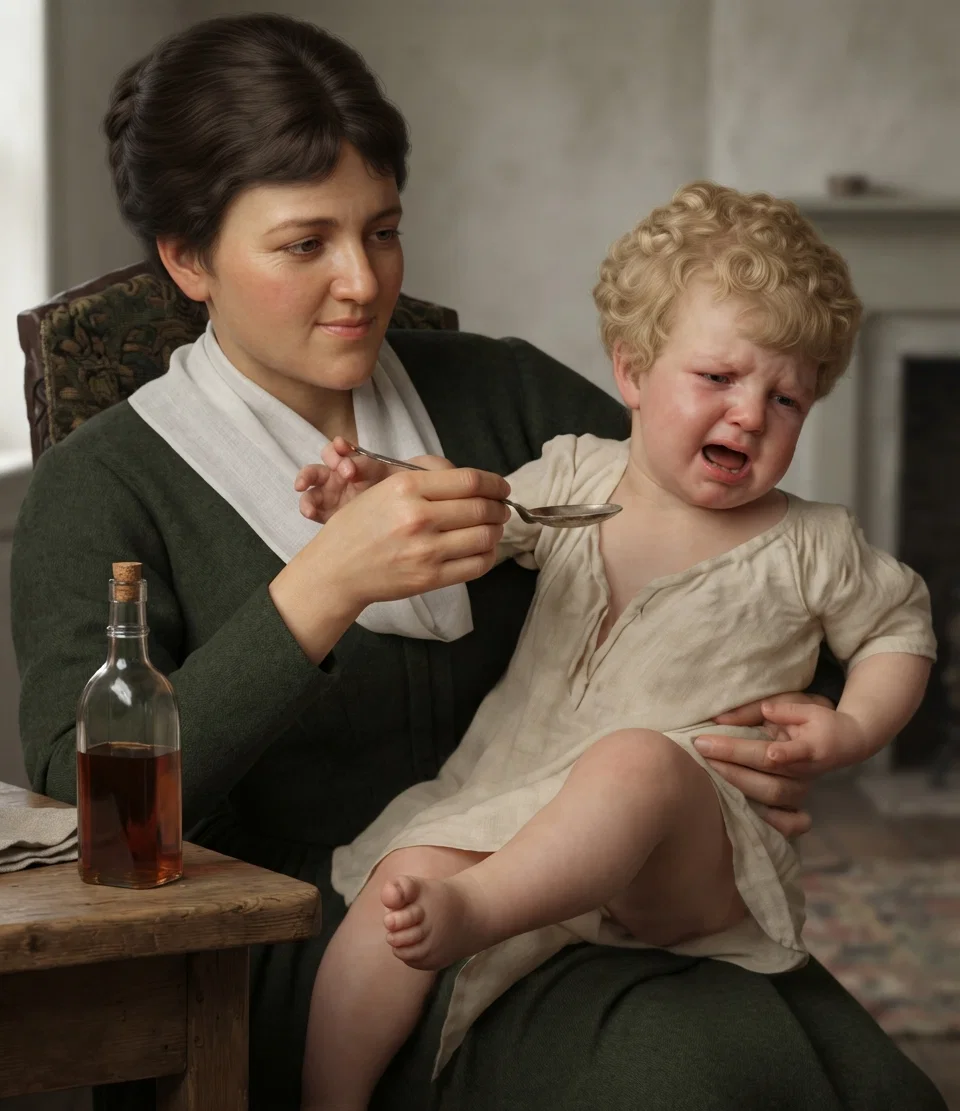
"Do not give him drugs except on the doctor's advice and direction."
"SUMMER complaint," or diarrhea, is one of the most-to-be-feared child destroyers. Mothers need to give the utmost attention to the prevention of this disease. Fortunately, however, there are a number of things that can be done, even after the disease appears, that may be successful in combating it, especially if done in time.
The suggestions here given are not intended to take the place of the services of the physician, but are merely to aid the mother whose care of her child must supplement that of the physician, or who possibly may be so situated that the immediate help of a doctor is not available.
The very first symptoms must be taken by the mother as imperative call to immediate action. Any digestive complaint in summer may be ominous, though it may seem at first ever so slight and innocent. It may quickly develop a serious disorder, and a little delay may mean fatal results. There should be no delay in calling a doctor. "Only a case of summer diarrhea" has too often made a funeral.

What Indulgent Mothers Forget

ALL medical treatment should belong to the physician. This is particularly true when baby is the patient. Do not give him drugs except on the doctor's advice and direction. Baby's stomach and bowels are very delicate and sensitive; and the use of drugs, the full action of which may be unknown to you, and very likely is not stated on the label, may cause trouble that can never be remedied.
Diarrhea in any form, from the simplest to the most serious, is caused by the presence of poisonous bacteria, or germs, in the intestinal tract, generally the result of some error in feeding. Baby may have been overfed, either by breast or by bottle, by too much food at a time, or by too frequent feedings. Indulgent mothers may forget that baby's stomach is of limited capacity, and allow more food than it can take care of. The result will be fermentation, and then irritation of the sensitive mucous membrane, followed by diarrhea. The trouble may be caused by particles of food, such as meat, corn, potatoes, or other foods, that were not properly chewed, and hence could not be digested.
The most common cause of diarrhea is milk that already has bacteria in it. With the favorable conditions of warmth and food found in the intestines, these rapidly multiply.

Stern Measures Imperative

THERE are a number of symptoms, or signs, to warn the mother of danger. The bowel movements will be more frequent than usual. The stools become thin or watery. There may be lumps of undigested curds, and perhaps mucus. The odor will be offensive. The color will vary, perhaps becoming green. The appetite begins to fail. The tongue is coated. There is more or less fever, according to the severity of the attack. Vomiting may occur. Gas may form, causing distention of bowels, and a rigid abdomen, with relief when gas is expelled.
What should be done? — First, stop feeding. More milk adds food for the germs. Give no food for at least twenty-four hours, perhaps longer. Give instead drinks of cool, boiled water at feeding times and between times. It is at this point that the destiny of many babies is determined by the mother's attitude — whether she yields to sympathetic tendencies, either of herself or of friends, to give baby something to eat, or whether she considers his real needs, and gives strict heed to them.
The digestive tract must be emptied of all food. The vomiting and diarrhea are natural efforts to accomplish this. Encourage vomiting to empty the stomach. Give a teaspoonful of castor oil to empty the bowels. If baby will not take it otherwise, it may be given in orange juice.
To aid further the emptying of the bowels, give a high enema of about a pint of tepid water to which a teaspoonful of salt has been added. This requires care, however. Attach a soft rubber catheter to the hose of a fountain syringe, grease with vaseline or olive oil, and insert slowly and carefully about six inches into the bowel, allowing the water to run while inserting, to distend the bowel ahead of the tube. Hold the syringe bag or enema can about two feet above the baby's body. Allow the air and a little water to escape before using.

Use Fomentations or Poultices

WARM applications over the abdomen will be helpful. Fomentations or poultices, changed as frequently as necessary to have them bearably hot, may be used for an hour. Follow with a cool compress of several thicknesses of cheesecloth, covered with a towel. This treatment may be repeated every four or five hours.
Fomentations are given with a woolen cloth—a piece of blanket, underwear, or other similar material—wrung out of hot water until as dry as possible, and folded inside a soft dry cloth. There should be two fomentation cloths, so that one may be applied while the other is being prepared. Care must be observed not to burn the baby.
Poultices may be made of linseed or bran, mixed with boiling water. Make thick enough to cut with a knife. Spread on cloth. Make two, and alternate in using. Fomentation cloths are preferable to poultices.
Sponging the body with cool or tepid water will aid in reducing fever, and will help to induce sleep. Place cool, wet cloths on the head. Allow plenty of fresh air. Do not be afraid of baby's catching cold; a baby with fever will not catch cold.
A child should be kept as quiet as possible when there is a tendency to bowel trouble. It should not be carried about, nor should it be allowed to run around or play. To be on its feet or to be moved much, aggravates the trouble.

Directions for Feeding

THE problem of feeding the baby during and after diarrhea is a serious one. The disease causes a nutritional waste, greater or less according to the duration of the attack. This waste is to be overcome as quickly as possible. At the same time, there is an inflamed condition of the digestive tract, which must not be irritated. Improper feeding may but prolong the difficulty.
After withholding food twenty-four hours, or possibly longer, give barley water, made by cooking two tablespoonfuls of barley in a quart of water for two or three hours, straining, and adding a little salt.
Egg water may be given after the first twenty hours. Beat the whites of two eggs in a pint of water until they are thoroughly mixed and the albumen is dissolved. Strain through a cloth, and add salt. This may be fed freely.
Rice water will also be permissible and helpful. Soak two tablespoonfuls of rice in three cups of cold water, heat gradually to the boiling point, and boil till the rice is soft. Strain, and add salt.
Milk should be withheld while diarrhea continues. The preparations mentioned will nourish for some time. They should be kept on ice between feedings.
The hands should always be washed after changing baby's napkins or handling them. This is particularly important when there is summer diarrhea, as the disease is communicable by soiled hands or utensils. The soiled napkins should be boiled in case of diarrhea.