Liberty in Spain

6%

Pacific Press Publishing Association · Mountain View, California · Aug 16, 1910

FromSigns of the Times, Vol. 37, No. 32.

Read the full edition

Liberty in Spain

HERE is a decided rupture between Spain and the Vatican. For many years Spain has been a decidedly priestridden country. She has not known freedom since the Mohammedan Moors ruled her. From the time of the driving out of the Moors till the present, with very few exceptions she has been intolerant of all religions except that of the Roman Catholic. It was in Spain that the Inquisition flourished in its fulness, and its victims numbered thousands. There have been longings for liberty and demands for liberty; and under pressure more or less liberty has been granted, so that Protestants can live there now, but they have had no right under recent laws to declare what their house of worship is or the faith it stands for. They could simply hold their meetings there. They must not appear on the streets in clerical garb; that belonged to the Roman Catholic alone. As a general thing, we understand, they were not disturbed in funeral services, but other out-of-door services were prohibited.
The Spanish government has endeavored to get modifications of the concordat, or agreement, between the Papacy and that government, but there has been objection to this on the part of the Vatican. Finally Spain's present prime minister, Señor Canalejas, has demanded that the break shall come and that all religions shall be placed on equal footing. He demands that Spain shall be Europeanized, as he calls it, and emancipated from ancient fanaticism. And in carrying this out he issued a decree authorizing freedom of service to all religious bodies. The king, knowing something of the effect this would have upon the Vatican, hesitated to sign the document. The prime minister is quoted as saying: "Sire, it must be done. The future of Spain as a modern nation depends on your act." The signing of the decree practically revokes the concordat, or treaty, between Spain and the Vatican, which has been in force for sixty years. Of course there has been a protest against this on the part of the Vatican, but no new concordat will be accepted by the Spanish government which prohibits the free exercise of the non-Catholic religions in Spain.
July 30 the prime minister of Spain said:
"It seems that a gust of revolutionary wind is blowing, and that many passions have been let loose, but we are prepared to control them. We do not fear the threats of civil war, having on our side the authority of the king. We rely upon the army, the chamber, and the common sense of the people."
The ambassador at the Vatican has been recalled, and the Vatican representative at Madrid has left Madrid, it is rumored. The Vatican has declared that the negotiations looking to a revision of the concordat can not be continued until the imperial decree permitting non-Catholic societies to display the insignia of public worship has been withdrawn; but Canalejas has responded that he can not cancel the program which the government has announced.
Then, too, the Spanish people have for years demanded a new treaty with the Vatican, a reduction of religious orders, because of the burden of taxes it places upon the kingdom. So much money is used for the support of the church that it drains the needed funds for the development of arts and industries and productive labor and national defense. In 1909, according to the provisions of the concordat, the Spanish church received from the state for its support $8,500,000, of which $6,000,000 was devoted to the payment of income; $1,750,000 to building, maintenance, and repair of churches; $225,000 to religious seminaries; and some $25,000 to religious congregations, cloister nuns, brotherhoods, etc. A million dollars was divided among the higher clergy, while the priesthood received $5,000,000.
Four years ago a movement was set on foot to follow the example of France; first to bring the religious orders under state control; secondly, either reform the concordat or declare for separation of church and state. A bill was drafted on the model of the French law of 1901, but it met with strenuous opposition. The Franciscans openly defied it. This new action is designed to emancipate the state from church control.
An outcome that some are looking for, and it is even hinted that the Vatican is wishing, is the triumph of Don Jaime, the Carlist pretender to the Spanish throne. He thinks that he has followers that will rally around him, and thus the liberal government may be overthrown and Spain held to Roman Catholicism. It is also hinted that this is a conspiracy not only on the part of Spain, but Portugal also, to break from the Vatican, and out of these kingdoms form two republics.
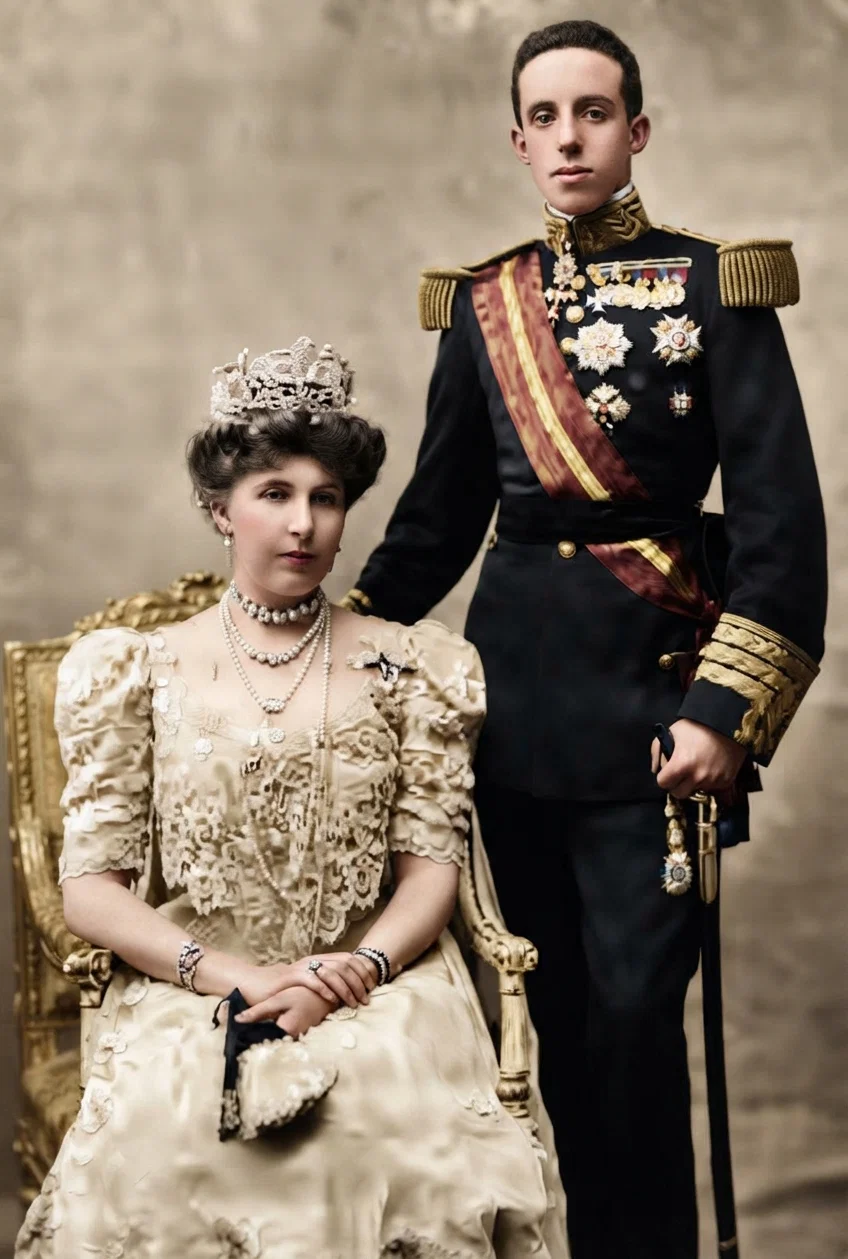
It is also rumored that there is a clique in the Spanish court which pays homage to Princess Beatrice, the mother of the Spanish queen, and that she is trying her hand at proselyting some of the Spanish court ladies who are not in the greatest harmony with the ecclesiastical authorities. King Alfonso is powerless to interfere with his mother-in-law, and the rumor has it that Princess Beatrice has turned a room of the royal palace into a private chapel where she has services by English chaplains, and that the queen attends the service secretly. On the other hand the queen-mother, Christina, the mother of Alfonso, is indignant at the presence of Princess Beatrice, and these things it is said add fuel to the flames.
There are many in Spain who sympathize with the Vatican, who are influenced by the ecclesiastics. Many, it is said, are considering the advisability of taking up arms in support of the Vatican. In such a case Spain would be rent by civil war. The premier speaks of the recall of the Spanish ambassador at the Vatican as an "indefinite suspension of negotiations." He declares that as soon as he assumed power he opened negotiations for a reduction of the religious orders. The Vatican replied offering less than was offered to Premier Maura, his predecessor; still he claims that he continued these in a spirit of great moderation, finally exercising his right by issuing decrees compelling the orders to register under the law. To this the Vatican replied only with protests. Finally the case seemed to demand radical action, and equal religious liberty was granted to all denominations.
King Alfonso and Queen Victoria
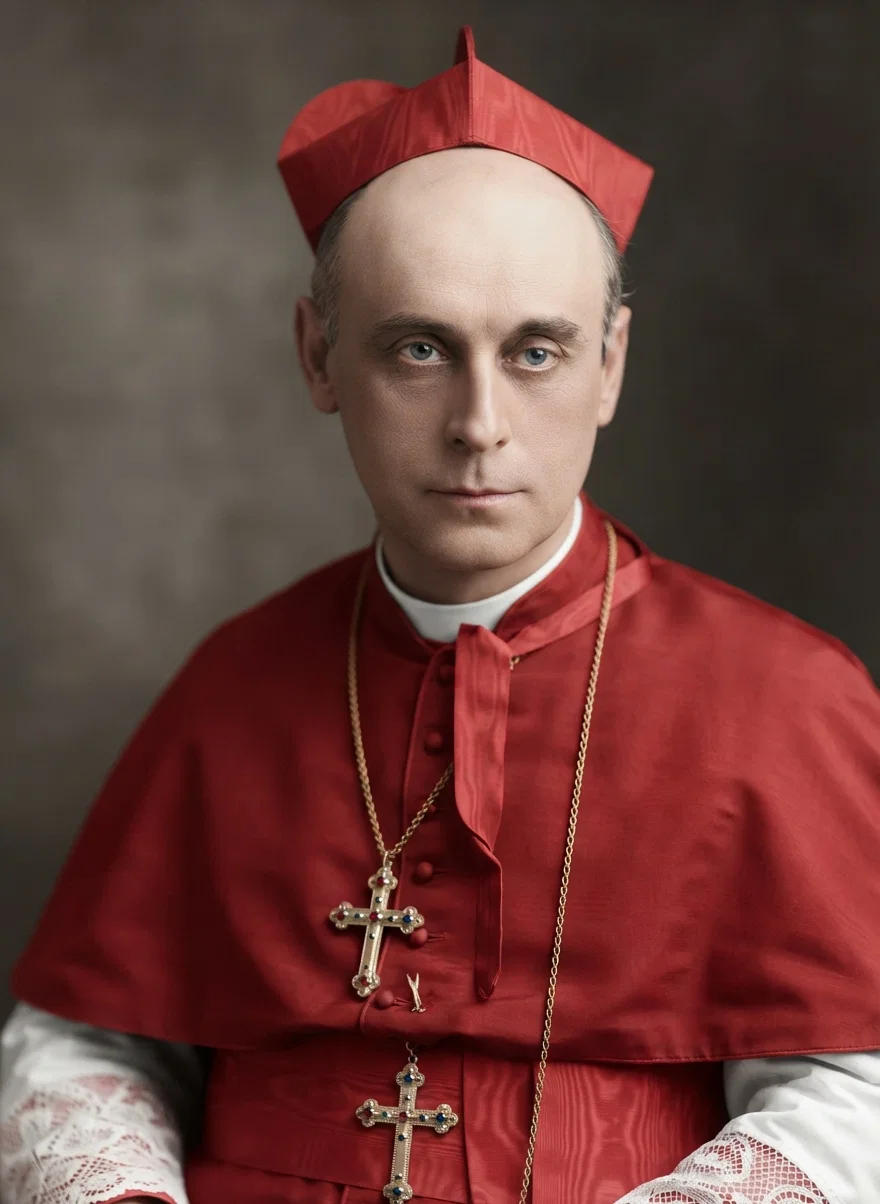
Cardinal Merry del Val
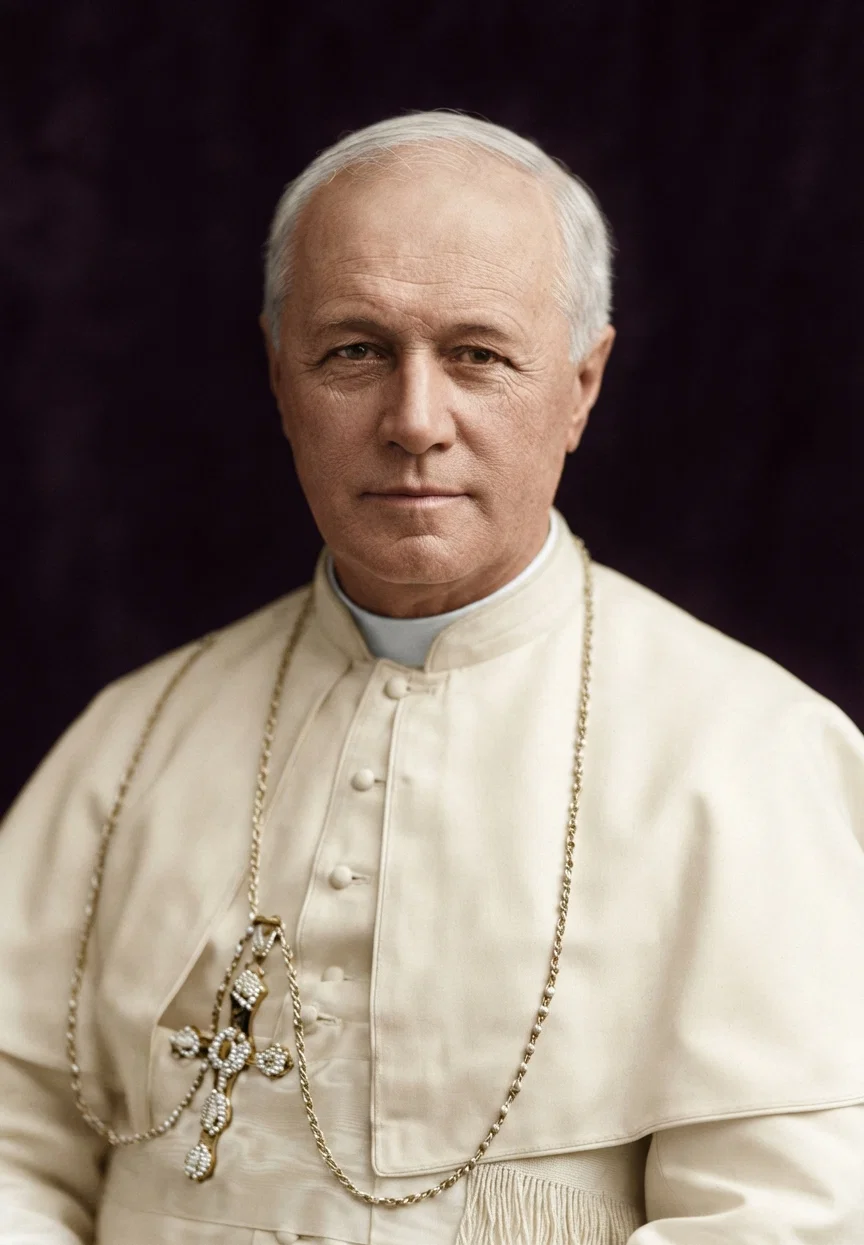
Pope Pius X
Pope Pius X
What Cardinal Merry del Val, the papal secretary of state, will do is not yet determined. This of course we know, that Rome will do all she can to hold her old-time power in Spain. We hope that public sentiment is sufficiently strong to sustain the premier and the king in the action that they have taken. Certainly the granting of full religious liberty to all classes is doing the Papacy no harm. It is but equal justice to all. It was Christ Himself who said, "If any man hear My words, and believe not, I judge him not: for I came not to judge the world, but to save the world." No true Christian church will ever demand alliance with the state or control of state funds or offices. When the time comes that a professed Christian church demands that, the indications are clear that she has let go of the arm of Infinite Power. The world will watch with interest the outcome of the Spanish struggle for freedom. We thank God that the struggle is on, and we hope that its issue will be favorable for the Gospel, for a little time at least before Christ shall come.
Four figures around which revolves the present crisis in Spain. What will Pius X do? What will his shrewd secretary of state, Merry del Val, devise to meet the vigorous premier of Spain, Señor Canalejas? Will Spain's weak king yield to the Vatican, or be dominated by his prime minister? What influence will Victoria, a sworn Catholic but at heart a Protestant, have upon the revolution? Will it involve England?