CYRUS the Great, who had been the leading general in the conquest of Babylon, succeeded to the throne of the Medo-Persian empire in 536. There was much to put Cyrus in sympathy with the Jewish people. Years before the fall of Babylon and the rule of Darius the Median and Cyrus the Persian, God had foretold through His prophets just what would be the fate of the proud city and kingdom of Babylon. Through the prophets Jeremiah and Isaiah an outline of what was to happen had been very clearly given and every essential fact foretold. The nations that were to come against Babylon, the way in which they would capture the city, and even the name of the great general, had been stated in these wonderful prophecies. About the year 712 B.C., Isaiah was inspired to say:
"Thus saith Jehovah to His anointed, to Cyrus, whose right hand I have holden, to subdue nations before him, and I will loose the loins of kings; to open the doors before him, and the gates shall not be shut: I will go before thee, and make the crooked places smooth; I will break in pieces the doors of brass, and cut in sunder the bars of iron; and I will give thee the treasures of darkness, and hidden riches of secret places."
Cyrus took Babylon in 538 B.C., when he was about sixty-one years old. Thus the Lord called him by name in this prophecy 113 years before he was born; and foretold what he would do, 174 years before he did it. When, therefore, Cyrus and Darius became associated with the prophet Daniel, he had not been slow to teach them what God had said respecting them and their work, and they had been wonderfully drawn to the man whom God by His providence had placed among them.
In these scriptures Cyrus found the Lord God of heaven speaking to him personally. He calls him by his name, assures him He will go before him, and that He will give him the treasures of darkness and hidden riches of secret places. For what reason? —"That thou mayest know that it is I, Jehovah, who call thee by thy name, even the God of Israel. For Jacob My servant's sake, and Israel My chosen, I have called thee by thy name: I have surnamed thee, tho thou hast not known Me. I am Jehovah, and there is none else; besides Me there is no God. I will gird thee, tho thou hast not known Me." This revelation of God to Cyrus was so personal and so clear and plain that Cyrus accepted it and acknowledged Him. This is all very clearly shown in the proclamation which he made in the first year of his reign, as recorded in the first chapter of Ezra, verses one to three:
"Now in the first year of Cyrus, king of Persia, that the word of Jehovah by the mouth of Jeremiah might be accomplished, Jehovah stirred up the spirit of Cyrus king of Persia, so that he made a proclamation throughout all his kingdom, and put it also in writing, saying, Thus saith Cyrus, king of Persia, All the kingdoms of the earth hath Jehovah, the God of heaven, given me; and He hath charged me to build Him a house in Jerusalem, which is in Judah. Whosoever there is among you of all His people, his God be with him, and let him go up to Jerusalem, which is in Judah, and build the house of Jehovah, the God of Israel (He is God)."
In it he says, "All the kingdoms of the earth hath Jehovah, the God of heaven, given me; and He hath charged me to build Him a house in Jerusalem, which is in Judah." The fact that he uses the word "Jehovah" shows that he acknowledges the God of Israel, for "Jehovah" was the term for "God" which only the Israelites up to that time had used. God was not known to any other of the nations nor to the patriarchs by this name. It was preeminently the Israelites' name for God. It shows how closely Cyrus had identified himself with the Jehovah God of the Jews. Further in this proclamation he says: "Whosoever there is among you of all His people, his God be with him, and let him go up to Jerusalem, which is in Judah, and build the house of Jehovah, the God of Israel. (He is God.)"
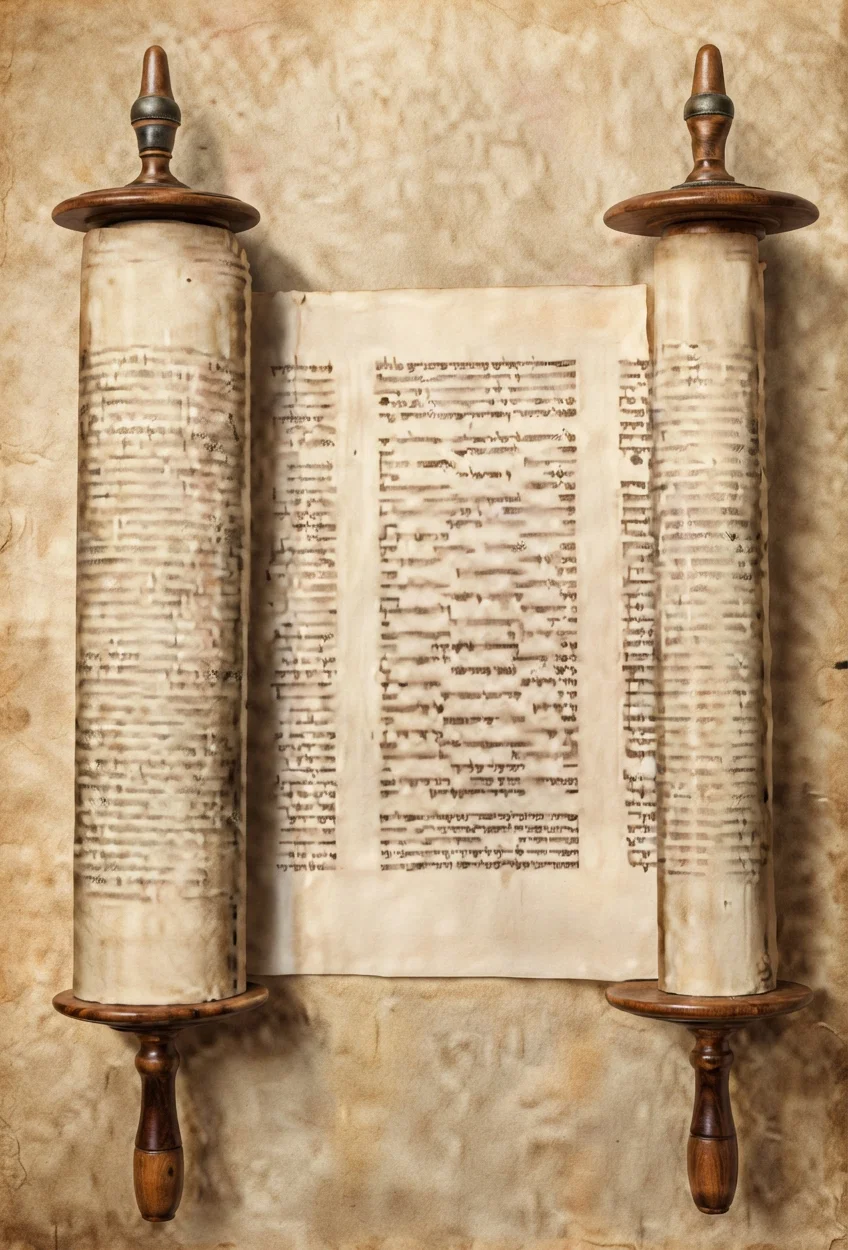
Ancient Scroll of Scripture
When Cyrus read the wonderful prophecy recorded in Isa. 44:28, where God calls him His shepherd, and tells him to perform His pleasure, "even saying to Jerusalem, Thou shalt be built; and to the temple, Thy foundations shall be laid;" he was stirred in spirit by the great Jehovah, and acknowledged that God had charged him to build Him a house in Jerusalem; and he commissioned any one of those who worshiped Jehovah, that might be in his realms, to go up to Jerusalem and build the house, and required that whosoever was left in any place where he sojourned, the men of the place should help with silver and with gold and with goods and with beasts, besides the free-will offering for the house of God which is in Jerusalem.
This was a remarkable thing for a heathen king to do, and shows what a remarkable influence the Spirit of God had upon his heart. Some historians in modern times have not been able to understand this remarkable thing of a king of another nation so wonderfully befriending and helping those who were representatives of a nation religiously at least opposed to the Persians. Some have thought that his conduct could be explained by the idea that his designs were political, that he wished to reestablish the Jewish nation as a barrier between his dominion and those of the Egyptians. Those familiar with Cyrus, his prowess, and the wonderful experience which he had undergone through the influence of the prophet of God, know that this could not be the explanation of his conduct. Everything of a selfish character would influence Cyrus not to allow the Jews to restore their city and temple. The fact that he did do so much for them, and the fact that the Persian nation continued for so many years to encourage this work of restoration of the Jewish city and temple, show that the cause was really supernatural.