AMERICA is destined henceforth to be a vast Catholic mission field. The first American Catholic missionary congress recently held in the city of Chicago, composed of seventy-five bishops and archbishops, and fifteen hundred or more other delegates, was indeed a notable gathering. The work outlined for the church in America is designed to be far-reaching in its results. An organization was effected, to be known as the Catholic Extension Society of the United States of America. This society embraces in its membership the clergy and laity of the church in America, and has the indorsement of the pope and leading Catholics of the world. The society is to be provided with ample means for the prosecution of its work.
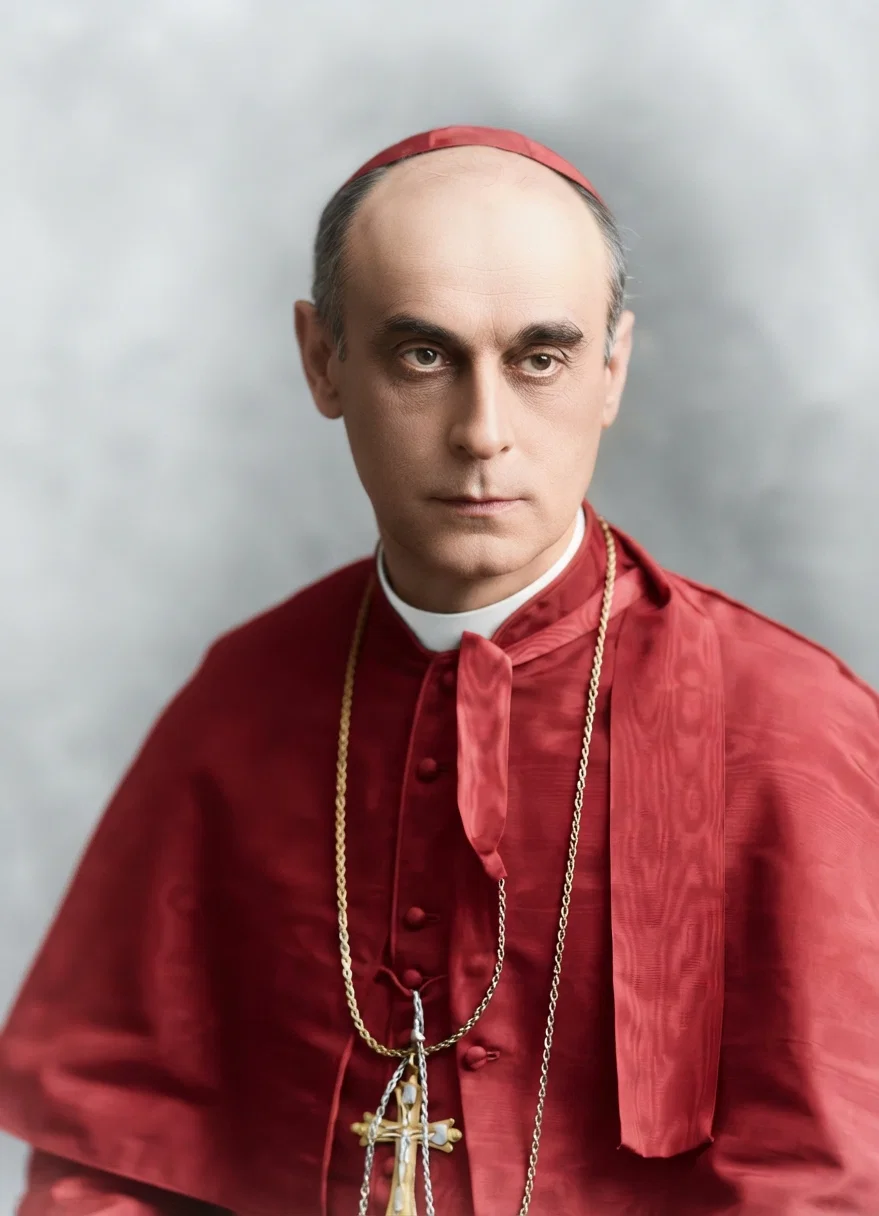
His Eminence Cardinal Merry Raphael del Val, the Papal Secretary of State.
The Scope of the Work
outlined embraces the following: The establishment of a missionary college for the training of missionary priests was the subject of resolution; the establishment of several missionary homes for the training of missionary workers was recommended; the erection of missionary chapels dedicated to the saints in localities where there is at present no membership, in charge of mission priests, to raise up congregations from non-Catholic residents, was indorsed. Many of the latter are already projected in the states of the South and West. Considerable attention was given to the subject of the colonization of Catholic emigrants in non-Catholic districts, for the purpose of extending the influence of the church. Much was said concerning the uplifting influence of Roman Catholics among the Indians and colored people of this country.
Use of the Public Press.
Another means of church extension receiving indorsement was the establishment of city missions among the poorer classes of all nationalities; and also schools for the education of non-Catholic children; hospitals for the care of the sick of all classes and religions; and last, but not least, the society proposes to utilize the public press to a far greater extent than heretofore. Great confidence was expressed in the efficiency of the latter scheme.
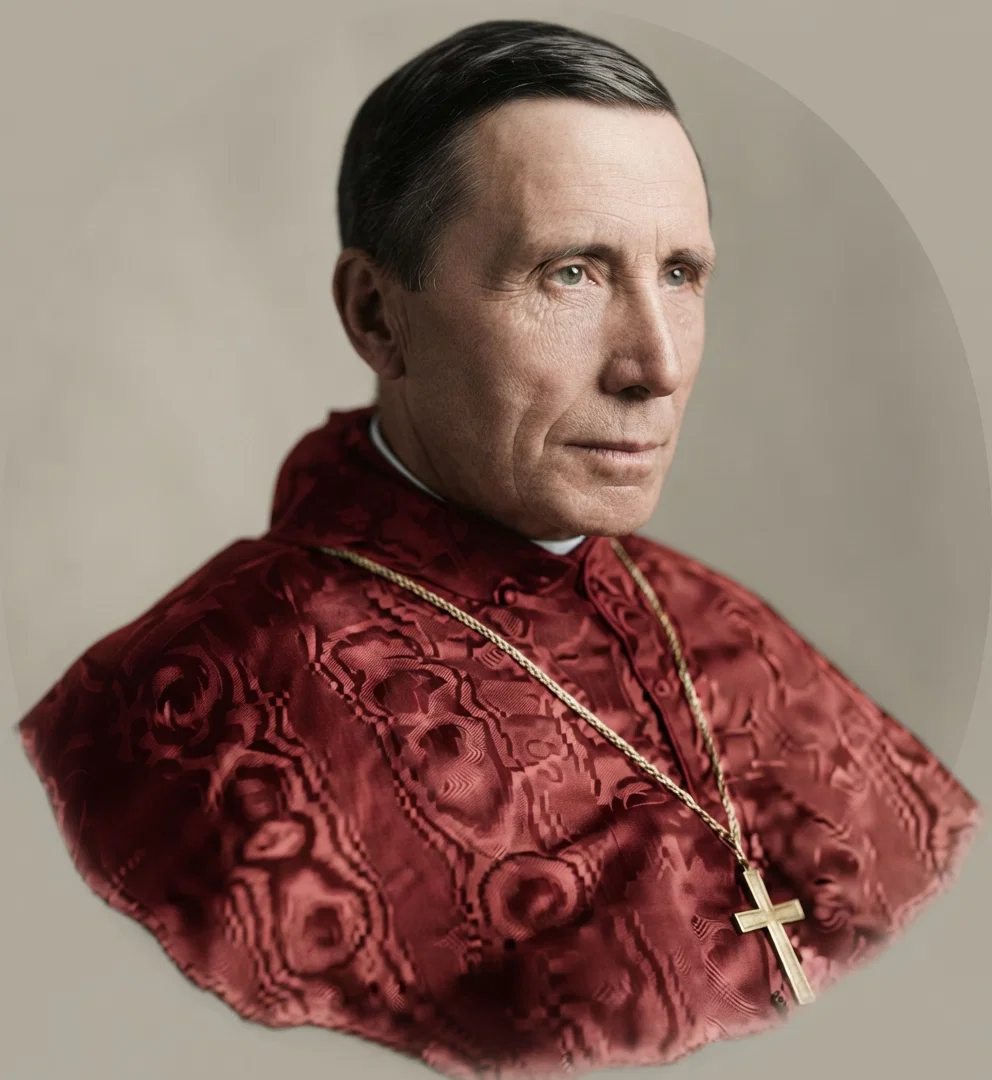
James (Cardinal) Gibbons, of Baltimore, the leading prelate and only Cardinal of America, to whom the Pope sent his special letter
What Leading Speakers Said.
Some expressions of leading speakers may be of interest to the reader. One speaker stated that such a congress of Catholics as was being held was undreamed of two years ago. But church extension means a good deal more now than it has ever meant before.
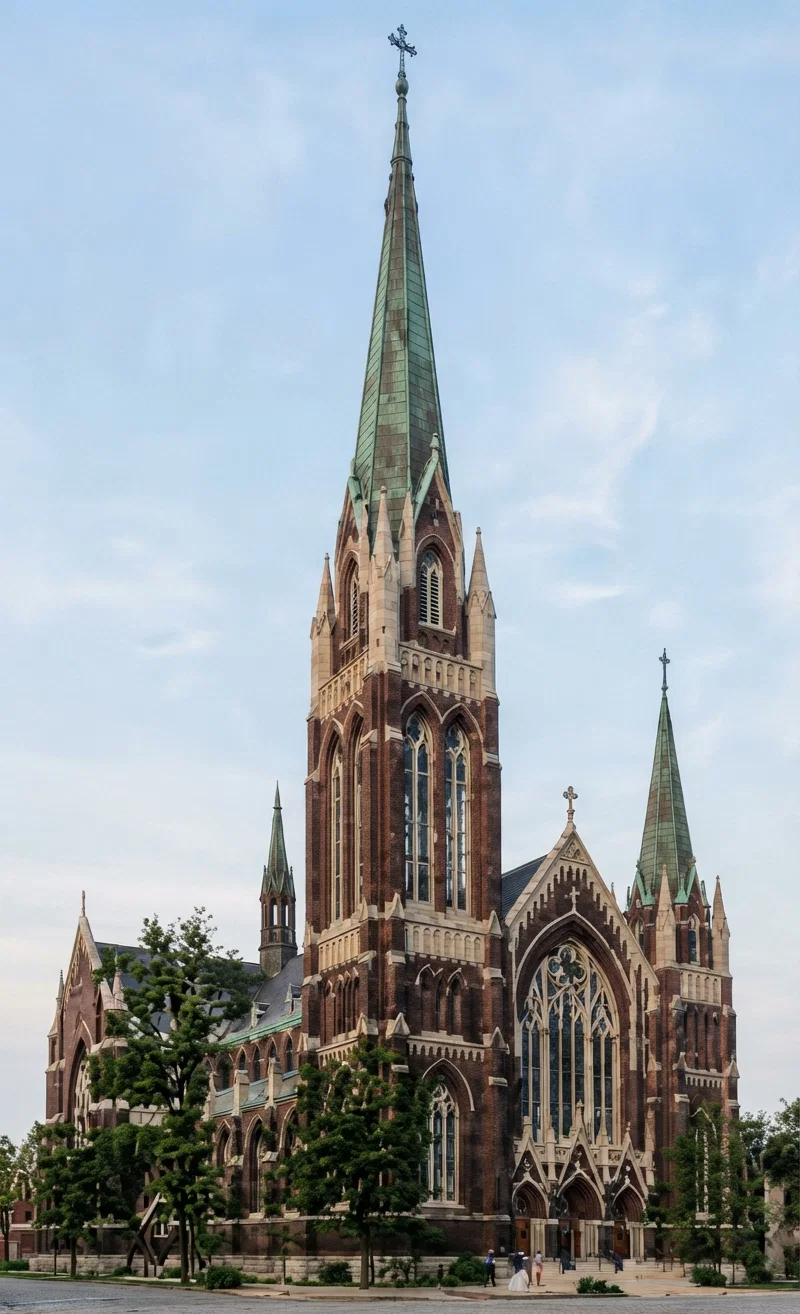
St. Michael's Church, Chicago, Ill., where some of the meetings were held.
Heretofore, caution has urged silence on the part of Catholics, but caution no longer is wise. Never before have we been so urged by the holy father to missionize America.
On learning of the intention of Catholics of America to hold a national missionary congress, the pope sent the papal delegate at Washington, with his SPECIAL BENEDICTION upon the congress, in which he conferred special plenary indulgences upon the faithful of the society. He also wrote to Cardinal Gibbons a highly commendatory letter, which was presented to the congress in the following language:
"The following apostolic letter has been received by Cardinal Gibbons, from his holiness Pius X, and it carries more than ordinary interest because it is the seal of Rome's approbation on a new and specially vigorous work that is reaping great results for the church in the United States."
[The letter is too lengthy for this article.]
"On the Ruins of Decaying Protestantism."
A strong appeal was presented by a leading speaker for a priesthood to labor for the conversion of America, and to build a strong church on the ruins of decaying Protestantism. The speaker said in effect, Protestantism never did and never can convert a nation. This remains for the Catholic Church. Catholic societies are bound together for Catholic purposes, and the question of the day is, Shall the Catholic cause live in America?
The term "Catholic America" was frequently used in referring to future America. Said one, THE PROTEST OF THE REFORMER OF THREE HUNDRED YEARS AGO IS FAST DYING OUT. Let us become nationalized, and let us support the priesthood in the work of missionizing the nation. The church is the great uplifter of the races and languages of the world. THE CHURCH ONCE BROUGHT ALL NATIONS OF EUROPE INTO ONE BODY. So again, the mission of the church is to UNITE ALL NATIONS OF MANKIND IN ONE. Our organization is the chief factor in uniting the world. The speaker used the words of the Saviour when He said, "Other sheep I have, which are not of this fold; them also I must bring, and there shall be one fold and one shepherd." The speaker further said, THE VICTORY IS ALREADY WON IN THE LAND OF THE REFORMER, and the missionary movement of to-day will result in unifying THIS great nation. The church is especially qualified to establish a liberty-loving and Christian nation.7The church is the kingdom of Christ on earth; and in the end there will be only one shepherd.
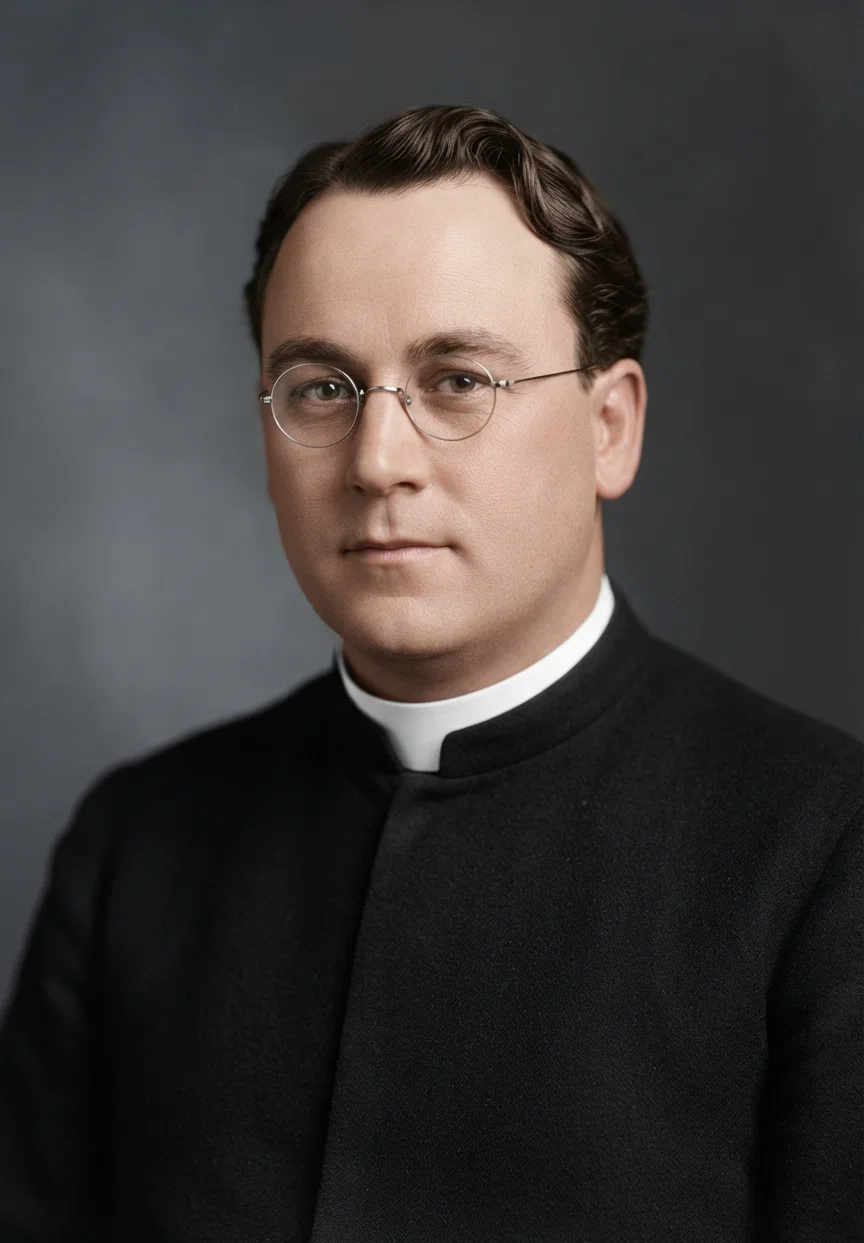
Very Rev. Francis C. Kelley, D.D., L.L.D., President of the Church Extension Society.
WHAT THE CHURCH HAS DONE FOR EUROPE SHE WILL DO FOR AMERICA. It is admitted that for a century or two very little has been accomplished in the missionary field; but now she goes forth with renewed zeal and power. The command now is not, "Go into all the world and preach the Gospel," but teach all nations as they come to you in America. So we go forth from Chicago, not twelve apostles, but more than twelve hundred apostles. The world is our kingdom; and we go forth to take possession.
Again "Thousands have come to us from the Old World, speaking the languages of all nations, to aid in the spread of Catholicism among these nationalities. But the remainder of these emigrants must be saved to the church. We must persuade them that Jesus is yet to be the great ruler of America. Already the church in America has more than thirteen thousand of the priesthood, and MORE THAN FIFTEEN MILLION COMMUNICANTS. The greatest, the noblest church on earth has a great mission before it to direct its agencies in this country. The future of the work in America depends upon the gathering together of all Catholics in America, and organizing them for the last great effort."
An Emigration Bureau.
Among other things it was declared that "the colonization of the peasant element from the Old World was for civic as well as religious purposes; and to carry this into effect, a bureau of emigration must be organized." A paper read by a layman outlined the work of men of wealth in the church. "These," he said, "may use their means to build memorial churches to be dedicated to the memory of dead saints. Our missionaries should be on the ground first in localities where there is virgin soil."
Church and State.
In harmony with the prelates, appearing on the street on Sundays, accompanied by a guard of five hundred armed with swords, a priest said, "I love to think of the Catholic Church as an army of soldiers with generals and commanders, and the pope as commander-in-chief."
It remained for the last speaker of the last evening of the congress to fully develop the plans of the society. He said, "The church is the true ally of the state; they can not be separated — never so long as democratic governments are relied upon to rule men. It is true that their organizations may be separate, but they are inherently inseparable and interdependent. It is true that the state needs no longer the support of the church. But under democratic government, the church must ever be the mainstay of the state. It is time that there should be a plain, clear, unmistakable, unanswerable definition of the Catholic position on this important point." Much more was said of like import.
The above are substantially the statements of the various speakers at the congress; and in most part, their exact words. If anything is lacking to convince the true believer that the last-day prophecies of the word of God are in course of fulfilment, it will no doubt be furnished by like gatherings soon to follow.