Some Freaks

3%

Pacific Press Publishing Association · Mountain View, Cal. · Oct 17, 1916

FromSigns of the Times, Vol. 43, No. 41.

Read the full edition

Some Freaks

of Bigotry
Only the Church or the Cemetery for Sunday — Compelling People to Be Pious — Travesties upon Justice
By Charles S. Longacre
THE object of every Sunday law has been to compel people to be pious and religious on Sunday. Nearly all the Sunday laws in European countries that had a union of church and state compelled people “to attend divine service on Sunday.” The early American colonies copied their Sunday laws from England, which made religion a part of the state. The Puritans of New England compelled all people, whether religious or nonreligious, to support the established church; and all were fined “ten shillings for nonattendance at divine service on Sunday.”
Men and boys were put into the stocks for laughing and whistling aloud on Sunday. Husbands were fined for kissing their wives on that day. All people were prohibited from walking or traveling on behalf of business, pleasure, or recreation. If they walked or rode at all, it had to be on a road that led directly from their premises either to the church or to the cemetery. The Puritan’s idea of proper Sunday observance was to compel all people to find the rest that the inhabitants of the cemetery enjoyed.

Go to Church or Else Stay Home

THE Puritan prohibited, by the power of the civil magistrate, all unnecessary work on Sunday. When a man was not attending church, he had to remain at home, and was practically compelled to sit in an easy-chair the rest of the day. He could not even twiddle his thumbs, according to the strict interpretation of the law, without being guilty of unnecessary labor.

Should We Prosecute the Cider Barrel?

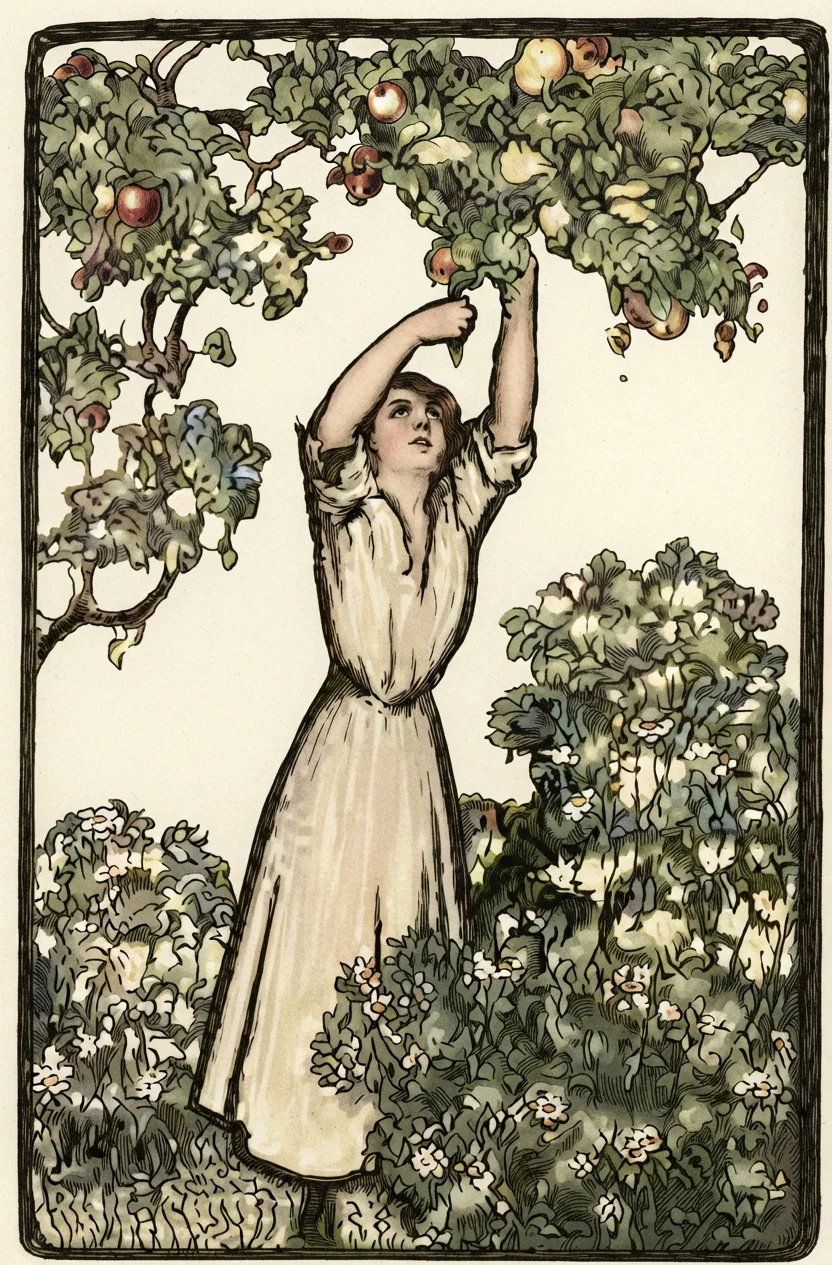
PEOPLE were fined for picking a few apples from a tree or gathering a few vegetables out of the garden for a Sunday dinner. Cats were caged up till Monday morning, for fear that they might work by catching mice and rats on that day. Bees were imprisoned in their hives, so that they could not gather honey on Sunday.
If a barrel of cider began working on Sunday, the Sunday blue law Puritan would roll it out of his cellar, and outside the gate of his premises, until Monday morning, and then would promptly roll it back, and allow it to resume operations again at the same old stand.
As defined in colonial times, “any sin committed with an high hand, as the gathering of sticks on the Sabbath day, may be punished with death. when a lesser punishment might serve for gathering sticks privily and in need.”—“Records of Massachusetts Bay,” volume 2, page 93.
Many of these drastic Sunday laws, forbidding recreation and all unnecessary work, are still on the statute books in some of the states of the Union; and occasionally a modern Pharisee, in a spasm of super-righteousness, attempts to revive these blue law relics of colonial and medieval times, when people thought it was proper to live under the old régime of a union of church and state, and to enforce religion by the power of the civil magistrate.
Recently a court official of Linden, New Jersey, fined an aged woman five dollars and costs for carrying in her apron seven apples, which the owner of a neighboring orchard had given her permission to take. “Even if she did not steal the apples,” said the judge, “she ought not to have been carrying them on Sunday,” and he promptly imposed the fine and costs.
A few weeks before this incident occurred, the same judge “fined John Sepp, an ice dealer, for giving away on Sunday ice that was needed for a sick baby.”

In Chain Gangs Through a Sunday Law

THIS travesty upon justice and common sense was committed by an American court, in the year 1915; and it was the logical outcome of the operation of a modern Sunday law, which gave the court the authority and privilege to decide what constitutes “proper Sunday observance” and “unnecessary labor on Sunday.”
Recently in Pennsylvania, under the drastic Sunday laws enacted in 1794, grocers were fined, at the instigation of a committee of clergymen, for selling bread to the hungry, ice to cool the fevered brow of the sick, and fresh milk to quench the thirst of suffering infants.
Scores of Seventh-day Adventists have been fined, and imprisoned for months in filthy dungeons, and compelled to work in chain gangs with murderers, for no other crime than doing a few trifling things on Sunday, after they had conscientiously rested on the seventh day of the week. They had committed no outrage, nor disturbed the peace of any one; but because they refused to reverence Sunday as a religious institution, they were treated as criminals.
Just recently five Seventh-day Adventists were haled before the court at Gallatin, Tennessee, for the merest trifles. The prosecutor charged that he had seen Robert and Ralph Ashton in their potato bin on Sunday, picking over a few bushels of decayed potatoes, while he was passing by in his automobile, himself on a business errand. A Mr. Templeton was accused of having violated the Sunday law of Tennessee by digging a mess of potatoes out of his garden for dinner on Sunday. A Mr. Robinson was prosecuted for mending a broken screen door, to prevent the flies from coming into the house, and for quietly working on an unfinished chair in his chair shop. Another man was prosecuted for picking a few peaches from a tree for a Sunday repast. The trial developed the fact that religious prejudice was at the root of the indictments.

Exemption Clauses Are Worthless

THE state of Oklahoma has a Sunday law that exempts those who observe another day than Sunday as holy time; yet in the face of this statutory exemption, two upright Seventh-day Adventist citizens of Hitchcock, Oklahoma, were recently convicted for quietly displaying goods in their own store on Sunday. The case is now pending before the supreme court of the state. If the higher court sustains the decision of the lower court, it is conclusive proof that exemption clauses in behalf of those who observe another day than Sunday are utterly worthless. The record of the trial shows that religious prejudice was the prime cause of these prosecutions. Religious organizations promoted the instigation of the indictments.

A Bloody Bludgeon for Bigots

RELIGIOUS legislation knows no limitations and no mercy. Sunday legislation has always been promoted by religious organizations, and has trampled upon the most sacred rights of humanity. Sunday laws have been a bloody bludgeon in the hands of religious bigots, to coerce dissenters. Not only is the Sunday institution unscriptural, but the methods of enforcing its observance are contrary to justice as well as to gospel principles.
The law of the state, the prison, fines, and the chain gang are not Christ’s instruments for promoting religion. Civil laws and carnal weapons were never employed by Christ to advance His cause. Nothing but the power and love of God can transform human hearts. It is in the secret closet of prayer, and not in the chain gang, that we conquer our enemies. It is spiritual regeneration, and not civic reformation, that transforms the evildoer.

Not the Methods of Christ

THE Man of Galilee did not try to reform the government, but to convert the individual. What this sinning world needs is more of the love and gentleness of the Christ of Calvary manifested by those who claim to walk in His steps. He requested His followers to worship God in spirit and in truth, at the altar of love and mercy, and not through the civil government, at the altar of force.

Un-American in Principle

THE only Christian and American attitude of American citizens toward a Sunday law, in a state which separates religious dogmas from civil enactments, is to vote religion out of politics when they have an opportunity to do so, as they will have in Oregon at the next general election.
All people ought to observe the day they believe to be holy time, from conscientious principles; but they should never be forced to observe it, by the power of the civil magistrate. Every citizen should enter his protest against all proposed legislation in the interest of the compulsory observance of Sunday, Saturday, or any other day of the week. Compulsory religion is un-American in principle.