The Authority of the State Ends Where Conscience Begins
By C. W. Flaiz
LIBERTY is often defined as "the right to do as we like so long as we do not interfere with the equal rights of others;" and this is correct when it is understood to apply to the relations obtaining between individuals. This relation is clearly defined by Christ when He says, "But be not ye called Rabbi: for one is your Master, even Christ; and all ye are brethren." Matt. 23: 8. As brethren, we are entitled to equal rights and liberty. We have liberty as long as these equal rights are respected.
It is the inalienable right of every man to worship as his individual reason and conviction may dictate, untrammeled by immunities and restraints imposed by others, because each person is individually responsible for himself to his Creator. To invade this right is to come between him and his God, and deprive him of his liberty. Civil government cannot of right dictate in matters of worship or religion.
From earliest times, civil government and religion were one. Each state had its deity, and prescribed how it should be worshiped. The individual conscience had to give way to the state. The state stood between the individual and his Creator. Liberty of conscience was unknown until a voice in Judea proclaimed a pure, spiritual kingdom for all mankind, and enjoined to render to Cæsar only that which was Cæsar's, and to God that which was God's.
An Unholy Alliance
FROM the time of the crucifixion of its Author, this spiritual kingdom went forth conquering and to conquer, and everywhere it was victorious. Its subjects rendered faithful obedience to the state in things temporal, but denied the right of the state to dictate in things spiritual. Persecution followed. The blood of martyrs proved to be the seed of the gospel; and at the end of two hundred fifty years, the state conceded to its subjects the rights of conscience, and church and state were for a time separate.
Soon, however, the church lost her holy character; and upon her demand for religious legislation, an unholy alliance was formed with the state, and the Dark Ages followed. Long years were to pass before men would again be permitted to exercise themselves in the rights of conscience.
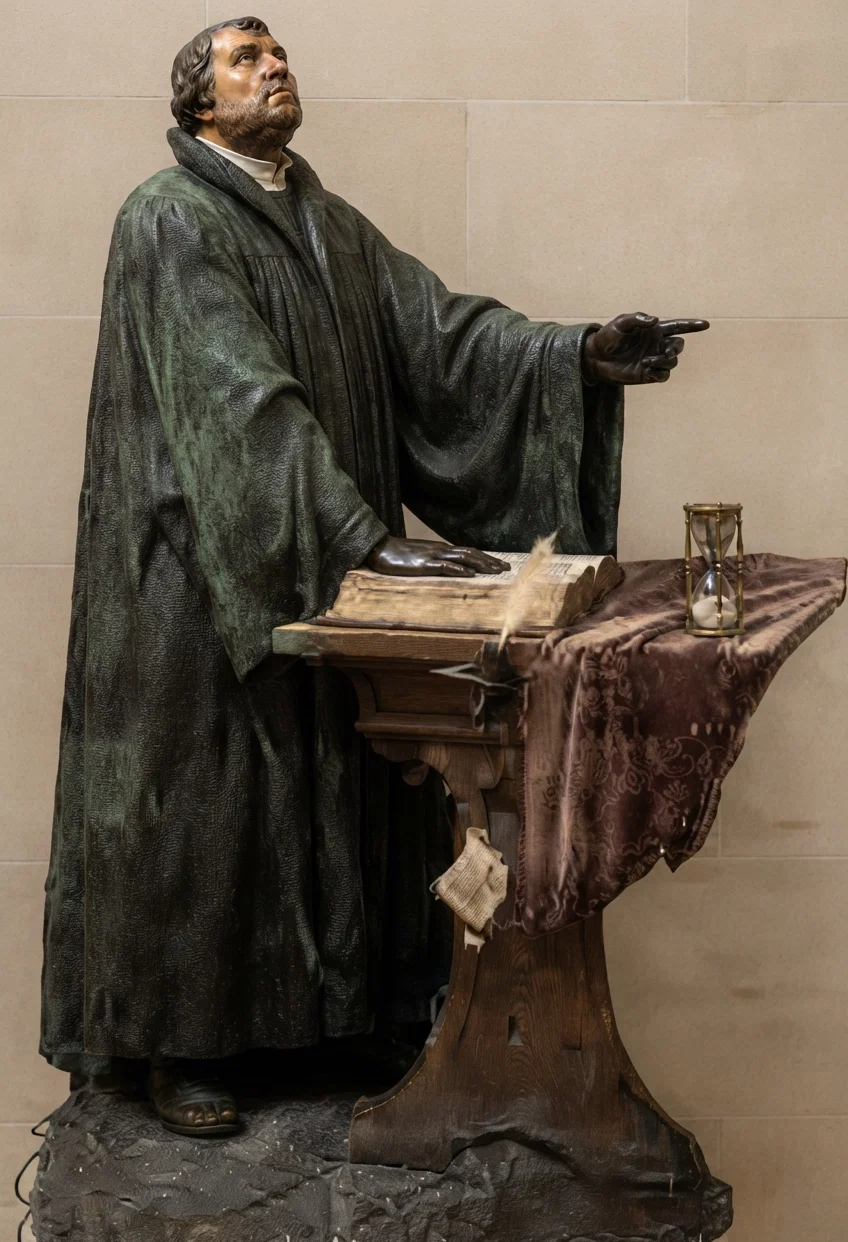
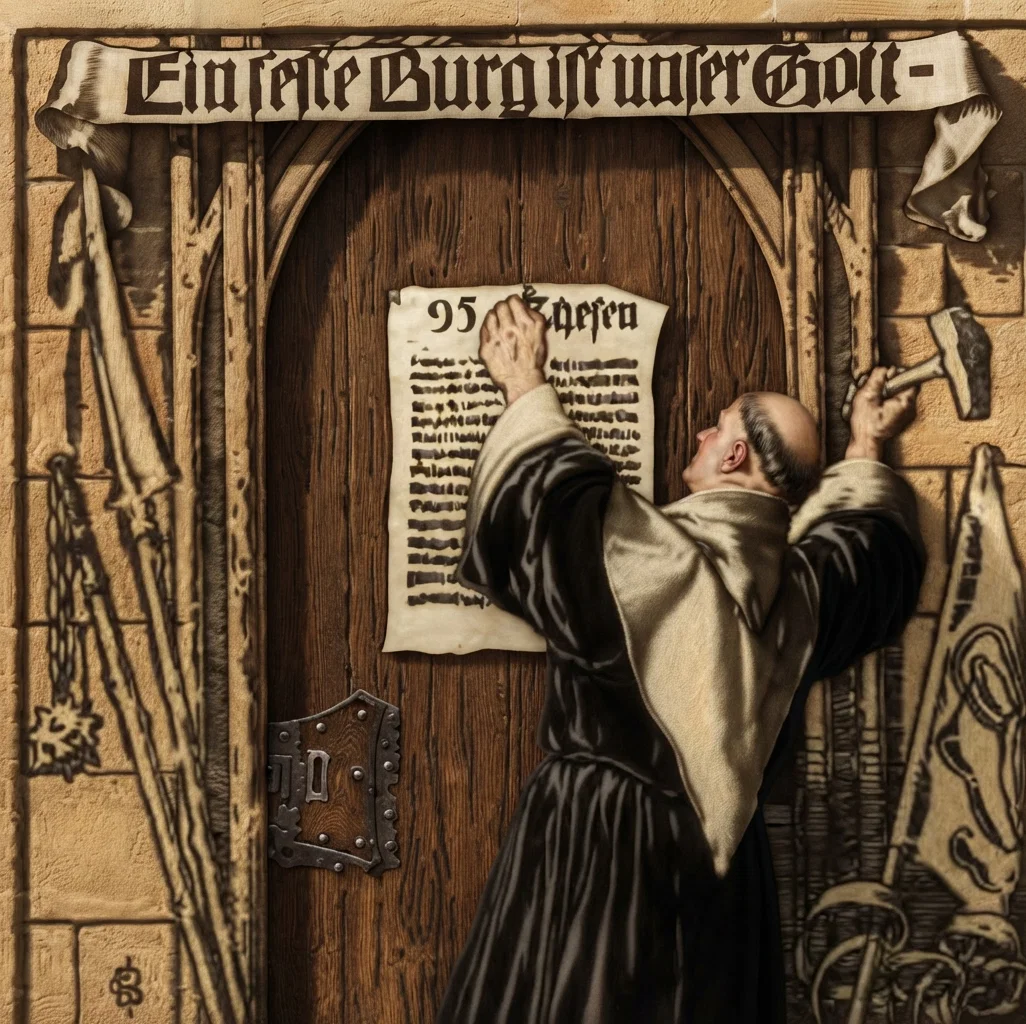
Then came the Reformation, and once more were heard voices advocating the rights of conscience and separation of church and state. In one of his letters to the emperor, Luther defends this doctrine in the following forceful words:
"God, who is a searcher of hearts, is my witness that I am ready most earnestly to obey your majesty in honor or dishonor, in life or in death, and with no exception save the word of God, by which man lives. In all the affairs of this present life, my fidelity shall be unshaken; for here, to lose or to gain is of no consequence to salvation. But when eternal interests are concerned, God wills not that man should submit unto man; for such submission in spiritual matters is a real worship, and ought to be rendered solely to the Creator."
It was the great Napoleon who, replying to a delegation of Protestants, acknowledged the principle as follows: "My dominion ends where that of conscience begins."
Dared Set the Example
ALTHOUGH many of the nations of the Old World have permitted freedom of worship, none of them have dared to assert the divine principle of absolute separation of church and state, and nearly every one of them has its established state church. It was left for the new nation across the sea to introduce a new order, and recognize liberty of conscience in its fundamental law. Bancroft says:
"Vindicating the right of individuality even in religion, and in religion above all, the new nation dared to set the example of accepting in its relations to God the principle first divinely ordained in Judea. It left the management of temporal things to the temporal power; but the American constitution, in harmony with the people of the several states, withheld from the federal government the power to invade the home of reason, the citadel of conscience, the sanctuary of the soul, and not from indifference, but that the infinite Spirit of eternal truth might move in its freedom and purity and power."
The nations of the Old World regarded this new order in the light of an experiment; but time has demonstrated that the principles of civil and religious liberty have been and are the chief factors in the wonderful growth, prosperity, and development of this nation. This liberty has stimulated thought and enriched the race along all lines of human endeavor.
Undermining the Foundations
IN the light of the past, it seems strange that serious attempts are made to undo the work of our fathers, and return to a union of church and state, by the enactment of religious laws. The persistent demand for Sunday legislation, both state and national, should warn every one who loves liberty to be on the alert.
More than eighty years ago, the question of Sunday legislation was urged upon Congress. From the report of the committee to which the matter was referred, submitted by Richard M. Johnson, of Kentucky, I quote the following:
"It should, however, be kept in mind that the proper object of government is to protect all persons in the enjoyment of their religious as well as civil rights, and not to determine for any whether they shall esteem one day above another or esteem all days alike holy."
A Dangerous Entering Wedge
THE report then refers to the combination of religious influences seeking legislation, and continues:
"Extensive religious combinations to effect a political object are, in the opinion of the committee, always dangerous. This first effort of the kind calls for the establishment of a principle which, in the opinion of the committee, would lay the foundation for dangerous innovations upon the spirit of the constitution and upon the religious rights of the citizens. If admitted, it may be justly apprehended that the future measures of the government will be strongly marked, if not eventually controlled, by the same influence."
"All religious despotism commences by a combination and influence; and when that influence begins to operate upon the political institutions of a country, the civil power soon bends under it; and the catastrophe of other nations furnishes an awful warning of the consequence. . . . Let the national legislature once perform an act which involves the decision of a religious controversy, and it will have passed its legitimate bounds. The precedent will then be established and the foundation laid for that usurpation of the divine prerogative in this country which has been the desolating scourge to the fairest portions of the Old World."
This is sound reasoning, and should put us on our guard against religious legislation of whatever character. The government of the United States, both state and federal, is confronted by many grave dangers, but none more serious than that found in the determined efforts of a strong religious faction in this country to secure legislation on religious matters.