Our London Letter

3%

Pacific Press Publishing Company · Mountain View, California · Aug 21, 1907

FromSigns of the Times, Vol. 33, No. 34.

Read the full edition
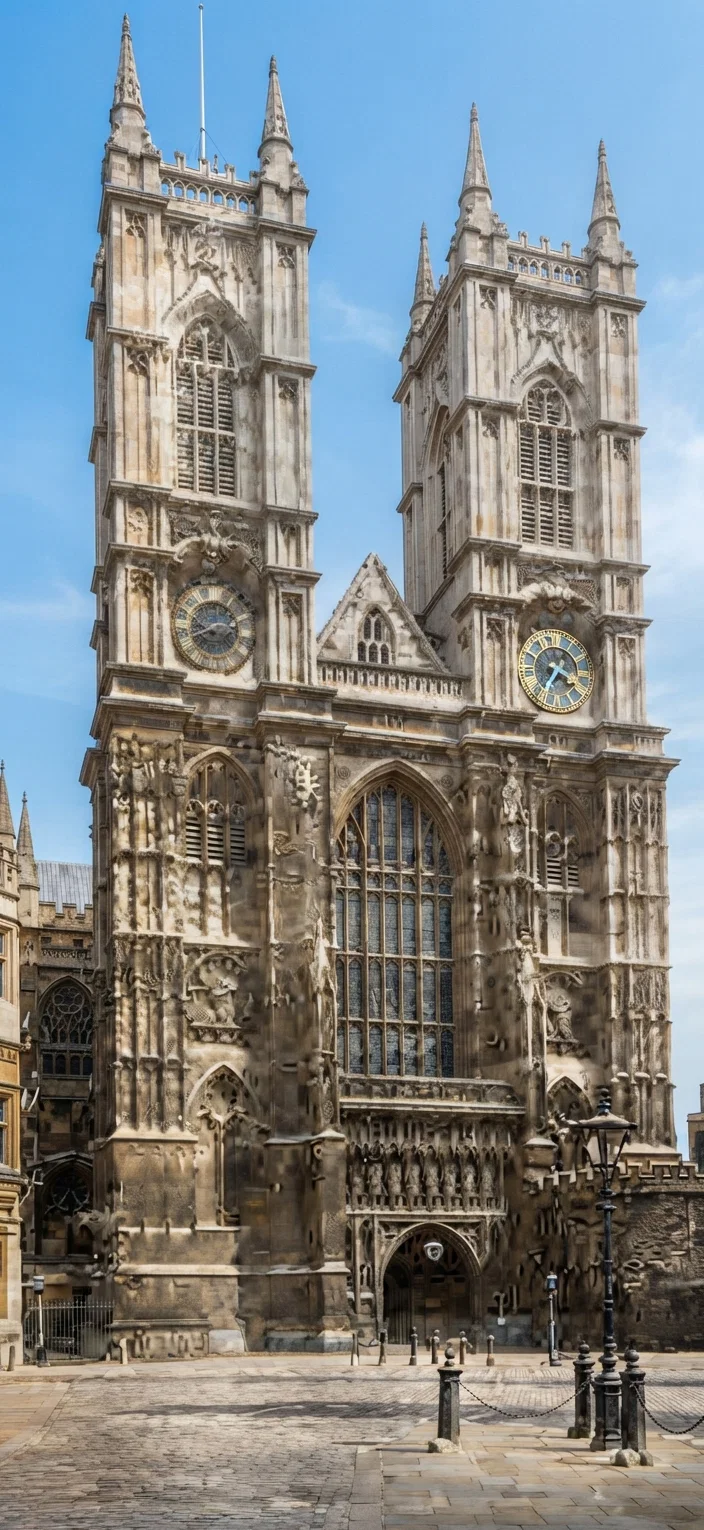
Westminster Abbey, West Front.

Our London Letter

By Our Own Correspondent

ENGLAND has been having all kinds of weather except that which would properly be expected in summer. A few days ago, a man muffled up in a thick overcoat stepped up to a news-stand and asked for the Christmas number of a certain magazine. He was told that it was not out yet, but the publishers were hurrying it forward, and it would doubtless be on sale in a few days. Farmers are having great trouble in curing their hay, and grain crops give small promise of ripening. Trade has naturally been bad, except for the makers of mackintoshes and umbrellas. Just at present, however, the weather clerk is giving more favorable forecasts, and yesterday was the first really warm day the country has had since Easter. So it is still permitted to hope for sunshine and soft breezes.

Appropriations and Conscription.

In the House of Commons, the government is manfully wrestling with a large amount of business, hoping it will not be necessary to make any further reductions in its program. The Army Bill will undoubtedly pass, the Lords being favorable to it on the whole. Lord Roberts thinks it good as far as it goes, but he, with many others, is a strong believer in conscription. This idea is growing in certain quarters. It is not likely to take definite shape during the Liberal regime, but if a moderate government were to succeed to power in a few years, some kind of universal conscription would be not only possible but probable.
Thus we see powerful influences making for militarism even while the nations in conference are talking of peace and good-will. One of the latest arguments in favor of universal training is based on the poor physique of the young Englander. Lord Raglan, presiding at a recent meeting of the Royal Institute of Public Health, went out of his way to make a strong appeal to the country to adopt a system of conscription, alleging that the decline in physique and manly vigor which was apparent in our young men is largely owing to the lack of enforced military training.
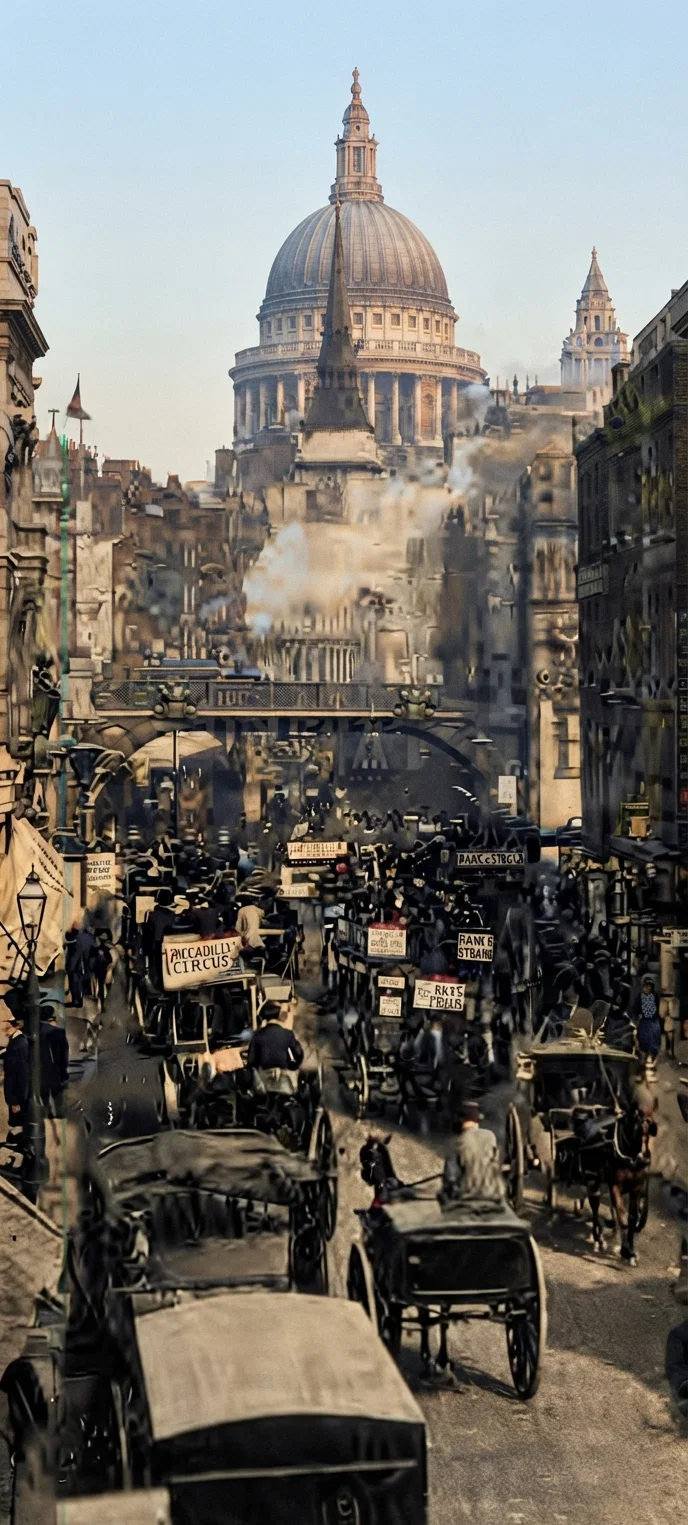
Ludgate Hill and Circus, from Fleet Street, London.

The Struggle between the Lords and the Commons.
There has been a great deal of speculation regarding the proposed legislation which is to regulate the relations between the Lords and the Commons. The prime minister's announcement was awaited with eager curiosity, and the Conservatives have quite generally condemned it as a dangerous innovation, it is, as a matter of fact, couched in such extremely moderate terms that it is likely in some form to pass into law. What it really amounts to is simply a proposal that it shall be possible for a united party in the Commons to carry out in the lifetime of one Parliament the reforms which it regards as essential, whether the upper house agrees or not. In other words, when the people on election day give a mandate to any party, it is not to be possible for the House of Lords to prevent that mandate from being carried into effect.
Disappointment in the Liberal ranks owing to the dropping of the McKenna Education Bill is somewhat allayed by the administration measures taken to relieve the situation. Denominational tests have now been abolished in secondary schools and training colleges, and Parliament is being asked to appropriate money for the building of schools in places where there is but one school at present, so that Non-conformists will not be obliged to educate their children in Anglican institutions.
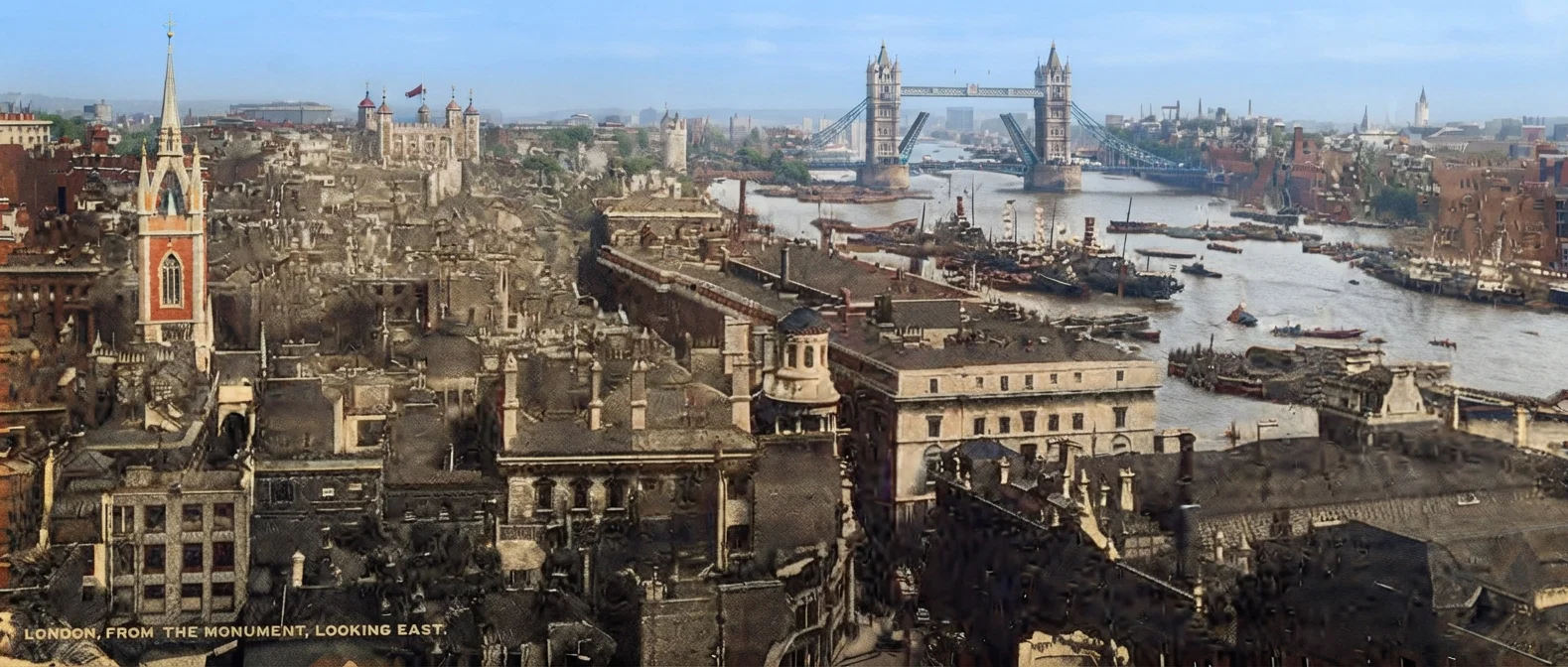
London, from the Monument, Looking East.

The Enthusiasm Dying Out.

The enthusiasm with which the peace conference at The Hague was at first hailed by Liberals is fast dying away, and the foremost Liberal newspapers are not backward in casting blame upon the English delegationfor the apparent unfruitfulness of the conference thus far. There seems to be some reason for this feeling of disappointment. England entered the convention after boldly announcing her intentions to lend her influence in support of the limitation of armaments, and of the consideration of the higher problems looking toward peace among the nations. But in the actual proceedings thus far she seems to have hindered the progress of the meeting along the lines which were marked out for it at the first. What causes there may lie underneath, it is not given us to know at this stage; but from a superficial view, the course of the English delegation would seem to be at least disappointing.

The Progress of the New Theology.

In the religious world, the New Theology controversy continues to hold a front position, and Mr. R. J. Campbell's book comes in for a good deal of just criticism. "The Old Faith and the New Theology" is the title of a book purporting to set forth the true attitude of Congregationalism to the new teaching. It consists of papers by prominent Congregational ministers on Sin, the Atonement, and other fundamental matters of faith.
Mr. Campbell continues to identify himself strongly with socialism and with movements closely allied with it. Yesterday he spoke at the first meeting of the Men's League for Women's Suffrage. Referring to the disorderly scenes created in the House of Commons by a certain section of the women who are working for women's suffrage, he said that in Britain all great reforms had been accomplished, for the most part, by breaking the law. Mr. Campbell seems to some of his friends to have lost his bearings generally, and to be taking positions in various matters which are contrary to his own best judgment.

Romanism in the Anglican Church.

The Ritual controversy in the Church of England continues unabated. Twelve months have passed since the Royal Commission on Ecclesiastical Discipline submitted its report,—a lengthy document contained in five good-sized volumes. The commission included such eminent personages as the Archbishop of Canterbury, the Bishop of Oxford, the Marquis of Northampton, the Lord Chief Justice, and many other notable men. It held 118 sittings, examined 164 witnesses, and received replies to over 23,000 questions. What did it accomplish? Is there any prospect of the elimination from the Church of England of those practises described by the report as lying "on the Romeward side of a line of deep cleavage between the Church of England and that of Rome?" The answer must be in the negative. Nevertheless the Low Church party still carries some influence.
There is talk of preparing a new rubric regulating the vestments of the clergy and the conduct of the services as well as the ornaments and fittings of churches, but as neither House of Convocation has unanimously accepted this recommendation, the matter has been referred to a committee. But leading churchmen on both sides repudiate the idea of a new rubric; so it is hardly likely to go thru.
Ritualists do not want the new regulations, because they prefer to be left absolutely free to carry on their gorgeous services as they see fit. Low churchmen, on the other hand, fear that any tampering with the prayer-book will mean a letting down the bars; they dread the power of Rome which is steadily growing, and feel that the only hope for the church lies in close adherence to the principles of the Reformation.
The situation is a very delicate one. There is strong feeling on both sides, and a disastrous split could easily be precipitated. How far the Ritualists have gone, and how great their influence in high quarters, may be seen from the new English Hymnal recently published by the Oxford Press. It contains hymns invoking the aid of the Virgin Mary and the saints, and in general savors strongly of Roman Catholicism. The Bishop of Bristol was the first to forbid its use in his diocese, and the Archbishops of Canterbury and York have also placed their ban upon it. An expurgated edition has now been issued.
Lord Halifax, the leader of the Ritualists, denies the authority of the Royal Commission, and, for that matter, is not willing to grant any real directing authority to the bishops of a diocese. He upholds auricular confession, the invocation of saints, the use of incense and images, and a large number of the clergy are guilty of these practises in their respective dioceses. Some begin with ritualism, and in time go over entirely to Rome; the majority prefer to remain in the English Church while doing their utmost to subvert its essential principles, and capture it entirely for the Papacy. Meanwhile Rome looks on with amused complacency; as much as to say, Whichever way the quarrel turns out, I am likely to gain something. In this she is entirely right. If there should be a split, the Ritualists would probably join Rome outright. If there is no split, the whole body will gradually move in that direction. Rome has only to remain quiet, and all the daughters of a false and warring Protestantism will gather themselves at her feet.
Convents are another phase of the Romeward movement in the Anglican church. Some very unpleasant facts came to light a few weeks ago in the courts of law, when the sisters of St. Mary at the Cross were accused of obtaining money from a Miss Florence Lovgood by undue pressure. It transpired in the course of the inquiry that these English convents are not even subject to inspection, as are those of the Roman Catholic Church, and consequently the inmates are entirely at the mercy of the mother superior in charge.
Canon Hensley Henson, of Westminster Abbey, referring to this incident, says: "It remains the case that for a whole generation the Anglican convent in Shoreditch has illustrated and propagated a definitely medieval conception of Christianity, restoring within its walls and within the range of its influence the specific doctrines and disciplines which the Church of England deliberately and categorically repudiated at the Reformation." "It remains," he adds, "the case that this literal 'undoing of the Reformation' has proceeded under direct episcopal sanction from the first."

Labor Difficulties.

Labor difficulties are a good deal to the fore in these days. It is not strange that a section of London's long-suffering shop-assistants should be on a strike. They are not asking for higher pay, but for the privilege of "living out." The majority of shop-assistants in England, Ireland, and Wales "live in." That is, they are lodged and boarded in premises belonging to the firm for which they work, and as a consequence, receive a comparatively small wage in money. The system is prolific of abuses, and even in the best houses, works unnecessary hardship for the hapless employee, who never gets from under the nagging eye of the shop-walker. Meals are always hurried, and in smaller places of business the shop-assistant is often interrupted in the midst of his dinner to wait on a customer. The food is likely to be of the poorest, and the serving still worse, while the bedrooms are practically without any ventilation, unwarmed, and badly crowded. The day's menu runs about as follows: Breakfast, white bread and margarin with wretched tea or coffee. Dinner, hash, vegetables, with pudding perhaps twice a week. Tea, bread and margarin again with a cup of tea; and for supper, bread and cheese.
The worst feature of the food is its poor quality. The manager of this department is allowed so much per head, and is encouraged to manage so as to have a good surplus above the allowance. In most firms the profits of the "living-in" establishments are immense. Hence the survival of the institution in spite of the many good reasons why it should be abolished. It is claimed by the proprietors that the morals of the shop-assistant are safeguarded by "living in;" but the kind of supervision furnished in most places is exceedingly minute so far as regards the interests of the firm, and very lax on the side of the employees' moral culture. In fact, the system often leads to vice, the indiscriminate mingling together of depraved and innocent girls in dormitories, opening a way for the rapid spreading of the virus of evil.

General Booth and His Degree.

General Booth, head of the Salvation Army, has received from Oxford University the honorary degree of D.C.L.—Doctor of Civil Law. This means much. Who would have dreamed of it twenty-five years ago, when the Salvationists were pelted in every street, mocked, derided, and utterly contemned? There is one explanation, and only one. The Army has undertaken, and is successfully carrying out, a work of rescue and restoration of the downtrodden masses which compels the admiration of all thinking people. They are getting hold of the drunkard, helping him onto his feet, and finally sending him with his family to start life again under better conditions in Canada and other new countries. They are lending a helping hand also to the poor and the unfortunate; they are meeting the convict at the prison gate, and aiding him to find an honest job.
These things need to be done, and the Army justifies its existence and puts the world under obligation while it does them, even tho in the actual work of winning souls for the Master, it seems to have somewhat less power than formerly. Perhaps the increase of prosperity is to blame. Persecution does help to keep a community pure. Nevertheless, the Army is filling a large place in social reform, and it is a pleasure to see its venerable founder, still young and enthusiastic in spirit, receive from England's most famous university this acknowledgement of long and highly meritorious service in behalf of his fellow men. M. ELLSWORTH OLSEN. London, July 12.