HERE is perhaps in all history "no name more fraught with picturesque and romantic interest than that of the Spanish Peninsula." A historian says: "After finishing this rare bit of handiwork, nature seems to have thrown up a great ragged wall, stretching from sea to sea, to protect it; and the Pyrenees have stood for ages a frowning barrier, descending toward France on the northern side from gradually decreasing heights, but on the Spanish side in wild disorder, plunging down thru deep chasms, ravines, and precipices; with sharp cliffs towering thousands of feet skyward which better than standing armies protect the sunny plains below."
To be able to realize that the Spain of to-day is only a mere semblance of her former self, one has but to visit her decayed cities and gaze upon her fallen watch-towers. To be able to appreciate the fact that her former greatness and culture have departed, one has to mingle but very little with her present inhabitants.
Spain is situated between the thirty-sixth and forty-third degree, forty-seven minutes, north latitude; and between west longitude nine degrees, seventeen minutes, and east longitude three degrees, twenty minutes. Its greatest length from east to west is 560 miles, and breadth from north to south, 540 miles. The surface contains 193,000 square miles, or about three times more than England. With the exception of Switzerland, Spain is the most mountainous country in Europe.
It is said that the country may be divided into seven distinct chains of mountains. The greatest elevations are found in the Pyrenees in the north, and the Sierra Nevada range in the southeast. The highest mountain is Mulahacen, near Granada. Its height is 11,703 feet.
There are but few rivers of much importance in Spain. Under Moorish rule, in the ninth and tenth centuries, an excellent irrigation system was established in different parts of the country. The canals and ditches excavated so many centuries ago are being operated with success to-day; and by their use many thousands of acres of the old land of the "Don" are made to blossom as the rose.
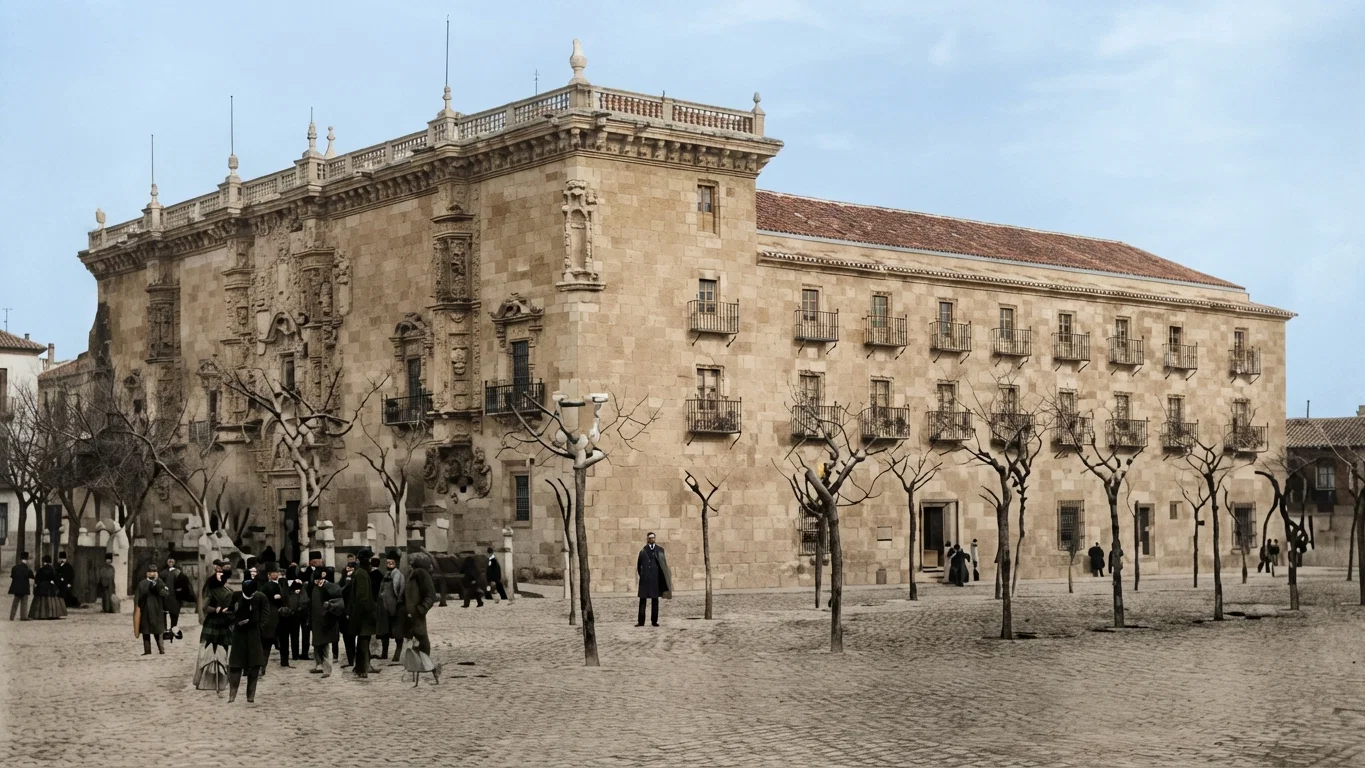
Art Museum, Valladolid, the Great University Center of Spain.
Spain is divided into forty-nine provinces; each of these having a separate government. It can not be said tho that each has an independent government. To give an idea of how limited its power is, I will refer to one thing: Should the city board of trustees in any city be desirous of paving some street in their city, they must first make their wants known to the central government at Madrid, and from there receive permission to carry out their plans. Just imagine the city board of some California city wanting to pave one of its streets, but not being able to execute their plans, without first receiving permission from Washington, D. C.!
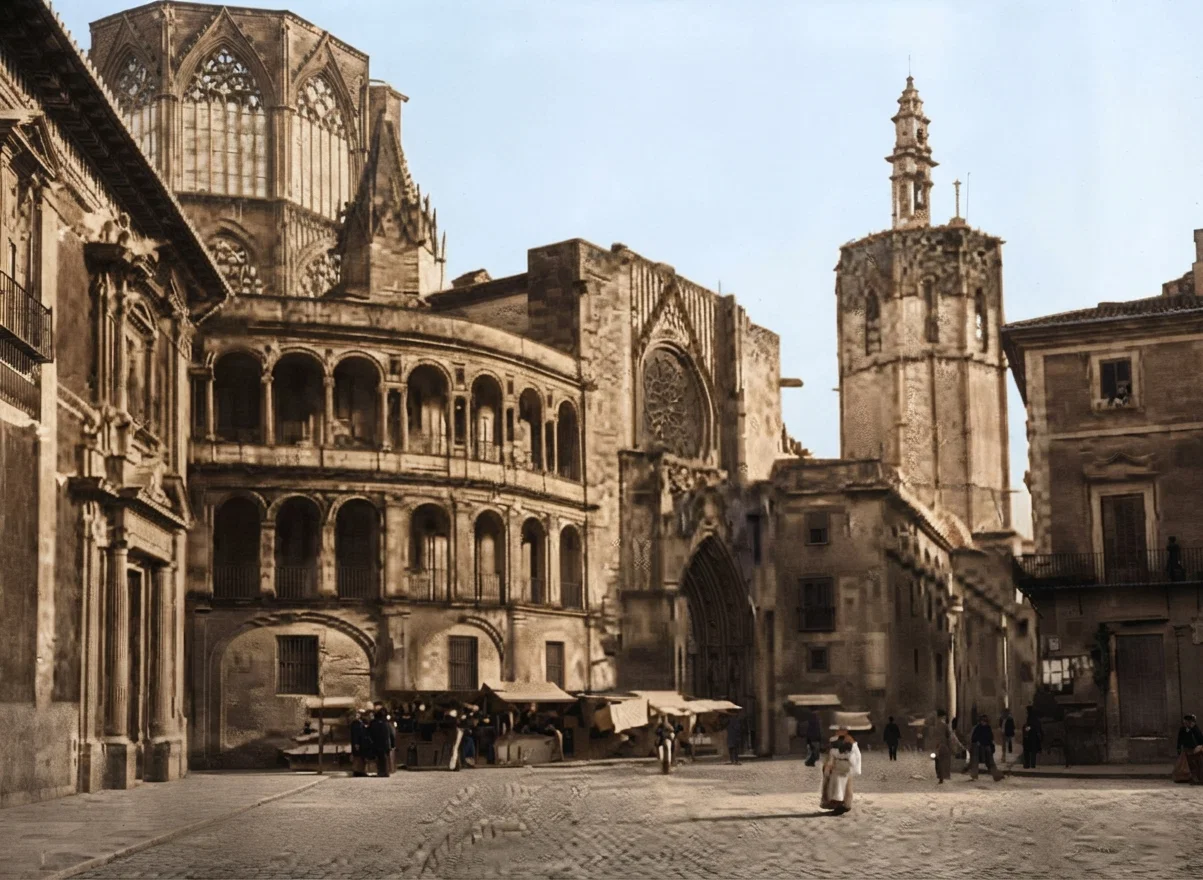
The Cathedral of Valencia, Spain.
It is considered that the climate in Spain is superior to that of Italy. In the first place it is more southern, and it is also sheltered from the north winds by the elevated Sierras running east and west. There is, however, quite a variety of climates to be found here, and consequently a greater variety in agricultural products. Spanish soil is usually light and very fertile, and being blessed with abundance of sunshine and in a number of places with a good irrigation system, this country is not only able to supply the demand of home consumption, but by her numerous exports does a big part toward supplying the markets of other European countries.
Northwestern Spain abounds with productive iron mines; the great table-lands, in the center of which is located Madrid, are almost wholly employed for the production of grains and wine. The greater portion of southern and western Spain is absorbed in the fruit industry. Stock-raising is also extensively carried on in the south as well as in central Spain. The province of Seville is famous for its superior olives.
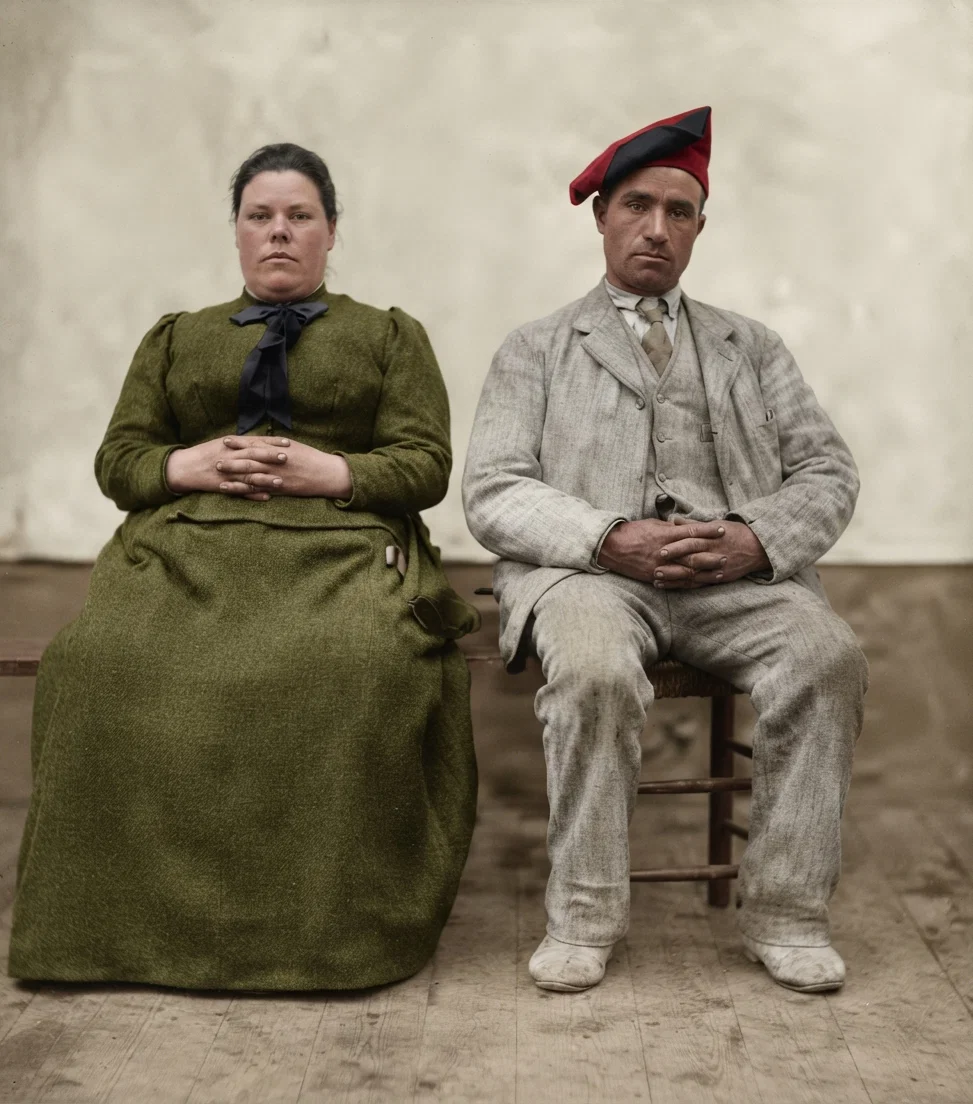
Catalan People of Northeast Spain.
Malaga and Denia are the great raisin centers, while Valencia is known all over Europe by her very fine oranges and other fruits. This climate is adapted to all fruits with which Californians are familiar.
Population and Cities.
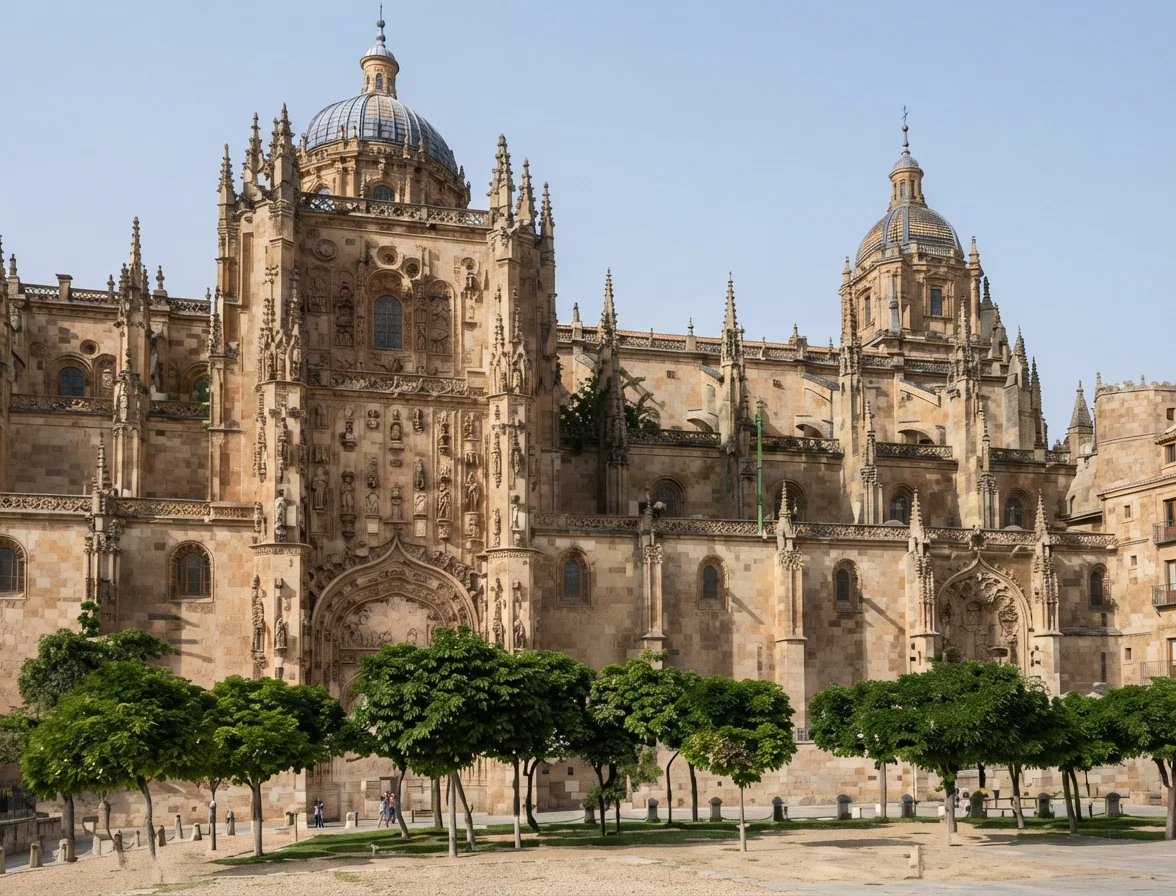
Spain has a population of about eighteen million souls. There are numerous large cities, each having from fifty thousand to six hundred thousand inhabitants; and there are thousands of smaller cities and towns. Spanish cities are usually planned after ancient styles of architecture, so to the American traveler the exterior view of the general run of buildings affords but little attraction. Narrow streets are very prevalent, but most every city has several wide, well-shaded ramblas and paseos which very effectually break the monotony.
Altho Spain has descended from her exalted and leading position which only three centuries ago she held among the nations of earth, still to-day this is a land full of interest.
As is true in every land and clime, the only power which can uplift and save the people from the awful depths into which they have fallen, is the Gospel of Christ.
In my next letter I shall write something about the Spanish people, their language, customs, etc. FRANK S. BOND.