Religious Schools Closed—Antagonism to Public Schools—The Religious Battle—Falsification of History—More Stringent Measures
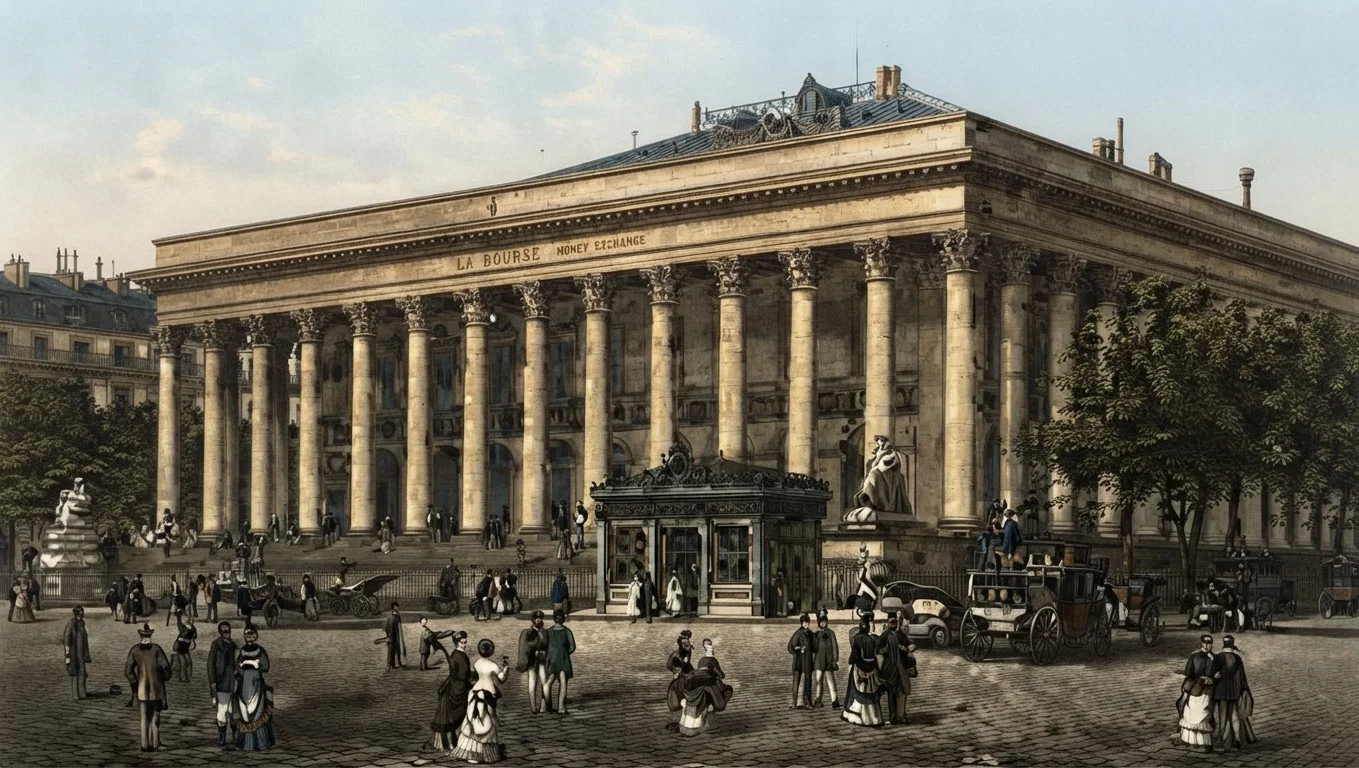
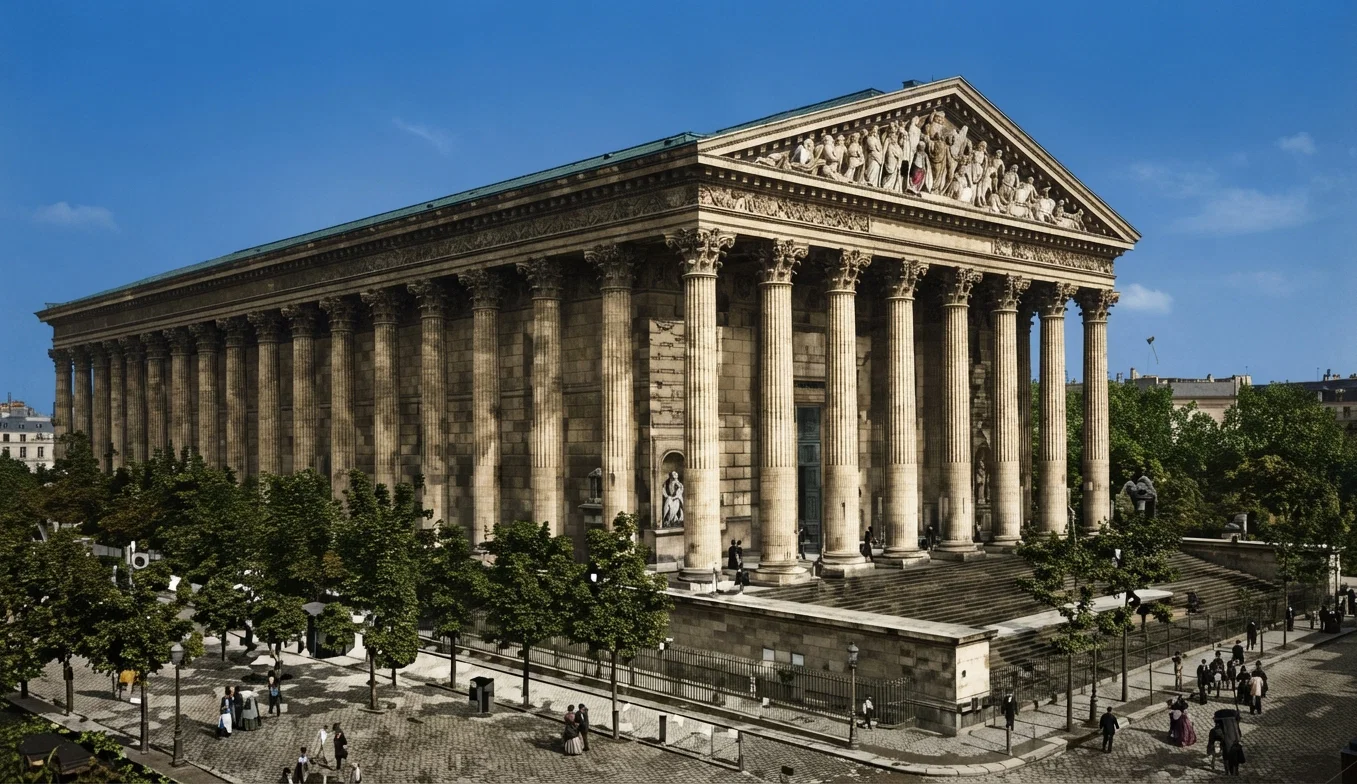
La Bourse—Money Exchange, Paris
THE separation between the church and the state in France which was accomplished a few years ago was but one battle in a long-continued conflict. One could hardly expect that it would be the last one. Recent events have proved that both adversaries were as far as ever from having reached a modus vivendi.
Religious Schools Closed
It will be remembered that seven or eight years ago, four years before the separation, the Waldeck-Rousseau government had abolished most of the teaching religious orders. This step on the part of the anti-clerical party was as important as the separation itself. Twenty thousand schools were shut down in France, and their scholars were added to the public schools' enrolment.
A few authorized congregations were still allowed to teach the children. These congregations themselves have since been forbidden to open schools, with the expectation, evidently, that the Catholic Church would send all her children to the public schools. This expectation was vain. Twenty-five thousand Catholic schools were opened by lay teachers who were simply unfrocked ecclesiastics, or even by regular priests not belonging to any order.
Antagonism to the Public Schools
At the same time, the public schools were jealously watched by associations of heads of families who had only too many reasons to fear that the teaching in the state schools was undermining the faith of their children. As a result, last September there came a letter from the Catholic bishops to the French Government accusing the public schools of outraging the faith of the Catholic scholars, calling these schools the principal cause of the demoralization of France, and singling out certain text-books which were a violation of religious neutrality.
This episcopal manifesto reopened public hostilities between the two foes. The answer of the government to this provocation on the part of the church was no less than the threat of establishing a state monopoly of schools. The battle, and a fierce battle, was waged in the Chamber of Deputies. On the one hand, the Catholic members accused the lay school of teaching atheism, and warned the government that they would fight the monopoly as they would for their lives. On the other hand, the government party endeavored to establish the fact that the Catholic schools were falsifying history, and teaching superstitions, and working contrary to true and loyal citizenship.
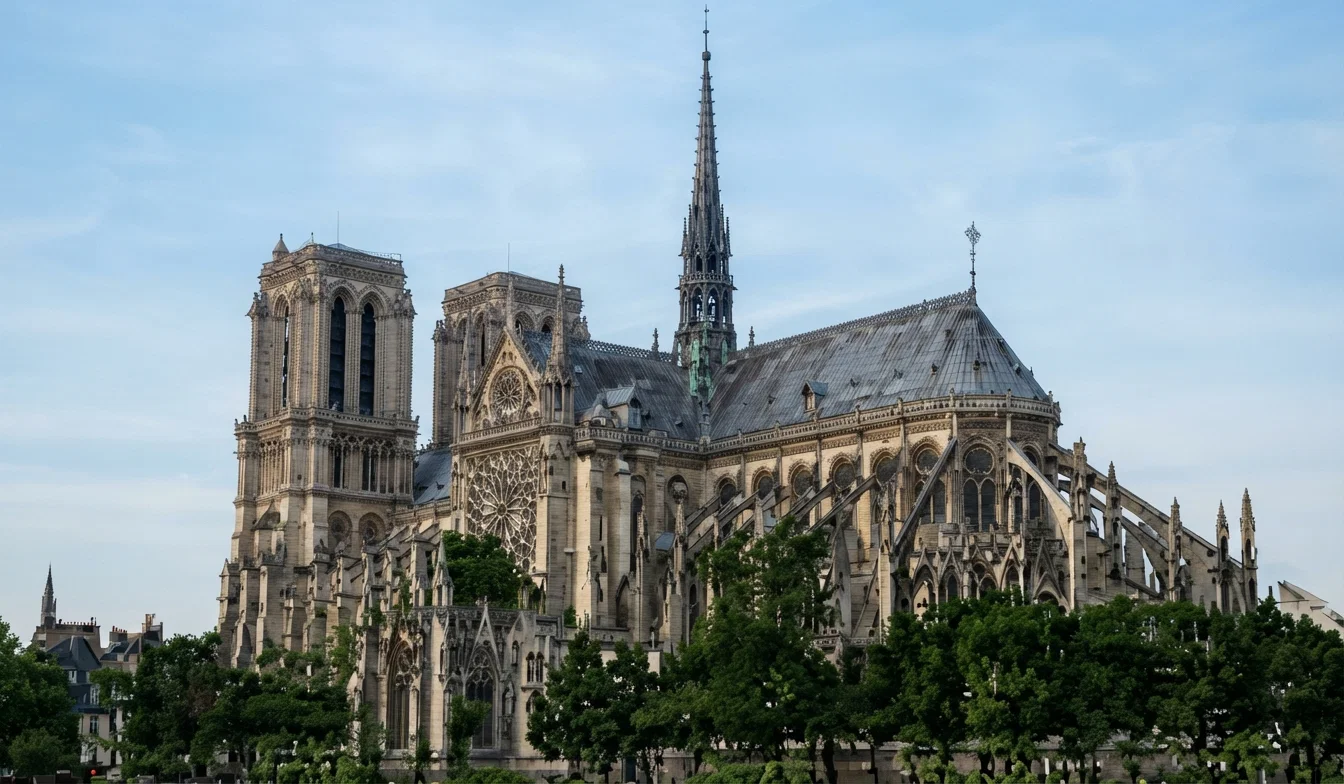
Cathedral of Notre Dame, Paris
It will be necessary in order to give a correct idea of this struggle, to quote from the speakers on both sides of the question.
A Religious Battle
One of the leading Catholic speakers, M. Groussau, referred back to the starting-point of the battle, to 1880 and 1882, when Jules Ferry and Paul Bert, the leading spirits of the time, brought about important changes in the public school system. The public schools, which until then were partially in the hands of the clergy, were thoroly "laycised;" primary school was made compulsory; fifteen thousand free schools were closed. At that time, however, there seemed to be no desire to do anything contrary to religious freedom. "There is not the least idea on the part of the government," said Jules Ferry, "of persecuting the Catholic Church; the republic would be foolish in entertaining even a thought of antagonizing Catholicism while making school attendance compulsory. If a public teacher should forget himself to the point of outraging the religious belief of any one, he would be as severely and as promptly punished as if he had brutalized said student. . . . Nothing will be done in the public schools which could in the least hurt the conscience of the parents or of the children."
The duty of the public school teacher with respect to religious and moral teaching was clearly defined in a book published by the state. Morality was to be taught, but without in any way contradicting the teachings of either Catholics or Jews. The name of God was not to be lightly spoken, and the laws of God were to be venerated as being in agreement with both conscience and reason.
M. Groussau then quoted from text-books now in use in the public schools. He asserted without contradiction that the word "God" had disappeared from such books. Eminent Catholics, such as Bossuet, Fénelon, Saint Bernard, were erased from the list of great men. Classical quotations referring to God's power and providence were changed for trivial remarks or commonplace proverbs. One of La Fontaine's fables has been mutilated in order to do away with the name of God. Adam and Eve have made room for some unknown Robert and Julia; and the phrase, "the commandments of God," has been changed into "the laws of nature."
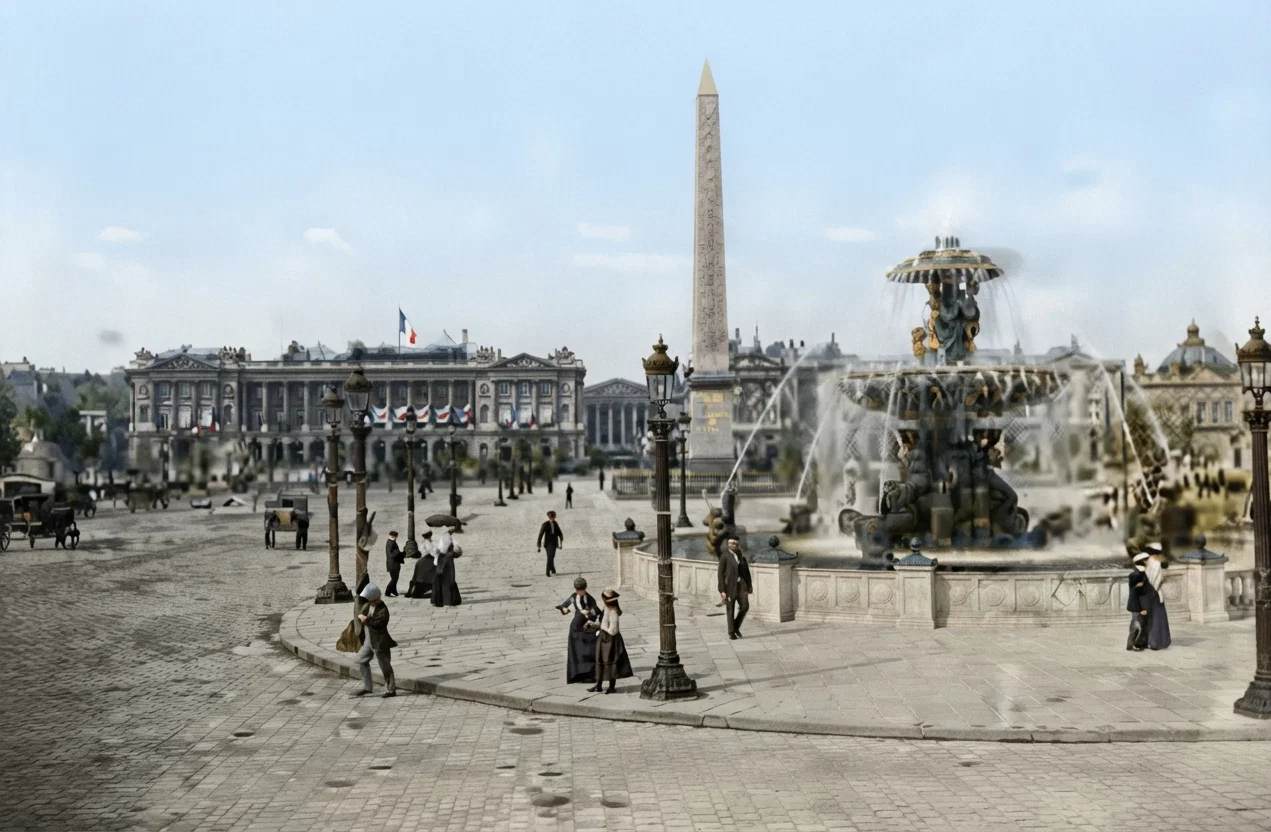
The Place of Concord, Paris
The "Primary School Review" was also quoted as teaching the non-existence of a future life and the blessings of free thought or unbelief. This same "Review," read by forty thousand teachers, plainly confesses its hope that atheism will triumph as a result of the present trend in the public schools. A school-book called "Moral Teaching at School," declares that "thinking people admit of no belief in God, in the origin of the world and man, or in the future destiny of man."
So Much for the Irreligious Character of the public schools. None of their advocates at the Chamber of Deputies disproved this sad arraignment. In fact, all their speeches were only a confirmation of the above statements. It is a well-known fact that the members of the French Government, aside possibly from a few Protestant rationalists, take no stock whatever in religion. And it is easy to understand the alarm of conscientious Catholics at the thought of seeing the faith of their children undermined and destroyed. The only pity is the fact that their own schools are not free from blame, and that their religious teaching is such as to disgust many a sound thinking unbeliever.
Falsification of History
This fact was also brought out by the discussion. The speakers on the government side proved from Catholic text-books a falsification of history, or at least a minimizing of everything disagreeable to the Catholic Church. The massacre of the Albigenses by Simon de Montfort and his men is left out as contrary to religious neutrality. The egotism, pride, and wanton prodigality of Louis XIV are condoned. So is the Saint Bartholomew massacre. From another Catholic text-book, the care of the body was shown to be prejudicial to the soul; the marriage relation is made inferior to celibacy, called "Christian virginity;" the duty of the state, among other things, is "to lend its help and strength to religious authorities," and so forth.
Add to this the fact that hundreds of Catholic schools are illegally reopening all over France, that these schools are generally full while many government schools have but a11scanty number of students, and you can understand the astonishment, impatience, and choler of the Free Mason party.
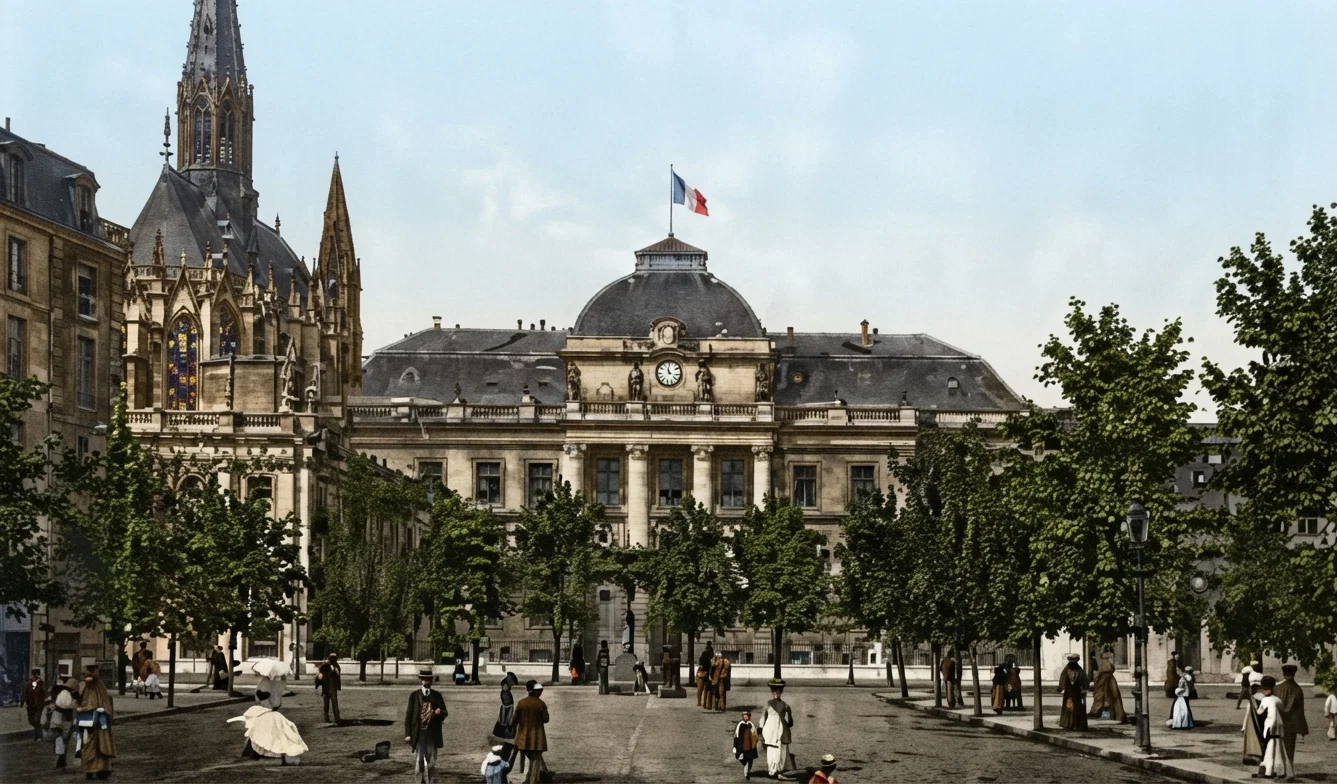
Church of St. Chapelle and Palace of Justice
More Stringent Measures
This parliamentary debate, which lasted several days, only forestalled the real battle. This will be waged when the minister of public instruction, M. Doumergue, shall introduce a new school bill which will compel, it is said, Catholic schools to submit their books for revision; or, according to others, which will inaugurate the absolute school monopoly, in other words the abolishment of all private schools. A more general uproar than in 1903-1904 may then be expected. M. Briand, it is reported, feels rather reluctant to follow his party blindly on to a new Waterloo; Napoleon without a sword, he would rather try his skill at a new concordat. This at least was the advice publicly given him by a speaker of the center. A strange repetition of history it would be, indeed! And how quickly and unexpectedly would France find herself again at the feet of the hoary queen on the Tiber!
Thus we are again facing a lamentable conflict between two parties, each of which represents one half of the truth: the government seeking to shield the country from the influence and by and by the supremacy of the Catholic Church, an influence which has been decidedly detrimental to France in the course of a long history; on the other hand, the Catholics of France, intent upon maintaining their faith, such as it is, with its errors and traditions. Alas! that such a great and beautiful country, such a charming and intelligent people, should be involved in such a hopeless conflict, the result of which, however the matter may turn, would be equally disastrous! In one case, we should witness a land of atheism and immorality; in the other, we should see a country crushed under Romish despotism.
Which Will It Be?
Will the Catholics yield in the long run, tired of fighting for their faith, or will the Free Mason party give up the battle as a bad job? Whichever may be the result finally, we may be sure that some fierce battles are ahead of us. Our only comfort, as we witness the scene, is the hope that the true Gospel — a Gospel which knows no antagonism between religion and civil government, between religious freedom and religious worship, between faith and reason — may soon be preached extensively over the fair land of France, claiming all the honest souls of either party, and bringing joy and peace into many homes in exchange for endless strife, sinfulness, and despair.