The Law Magnified

6%

Pacific Press Publishing Association · Mountain View, California · Feb 3, 1909

FromSigns of the Times, Vol. 36, No. 5.

Read the full edition

The Law Magnified

By J. O. Corliss
THERE can be no question as to the personage introduced by the prophet Isaiah in the forty-second chapter of his book. He who is there set forth, and upheld as Jehovah's "elect" servant; He who was then spoken of as commissioned to "set judgment in the earth," and given as God's "covenant" "for a light to the Gentiles," can be none other than the Lord Jesus Himself. Matthew recognized in Christ this foreordained One. Matt. 12:17-21; 3:17. Paul acknowledged Him to be the servant from heaven foreshadowed by prophecy. Phil. 2:5-9. Indeed, His entire course among men proclaimed loudly that Christ was indeed God's earthly representative, sent to fulfil Heaven's eternal purpose in redeeming the lost.
There is, however, one predicted work of this heavenly Messenger which has a bearing upon His claim of loyalty to the service assigned Him. In verse twenty-one it is said that He would "magnify the law and make it honorable." That the law here cited is that of the Ten Commandments, there is no ground for dispute. It is clear that the law of ceremonies ended by limitation, because of being merely a "shadow of good things to come," the substance of which was Christ Himself. All well understand that when a shadow is traced to the body that reflects it, the shadow ends in the substance itself. So Christ being the body which was typified in the law sacrifices, when He died a sacrifice for all, the sacrificial ceremonies ended.
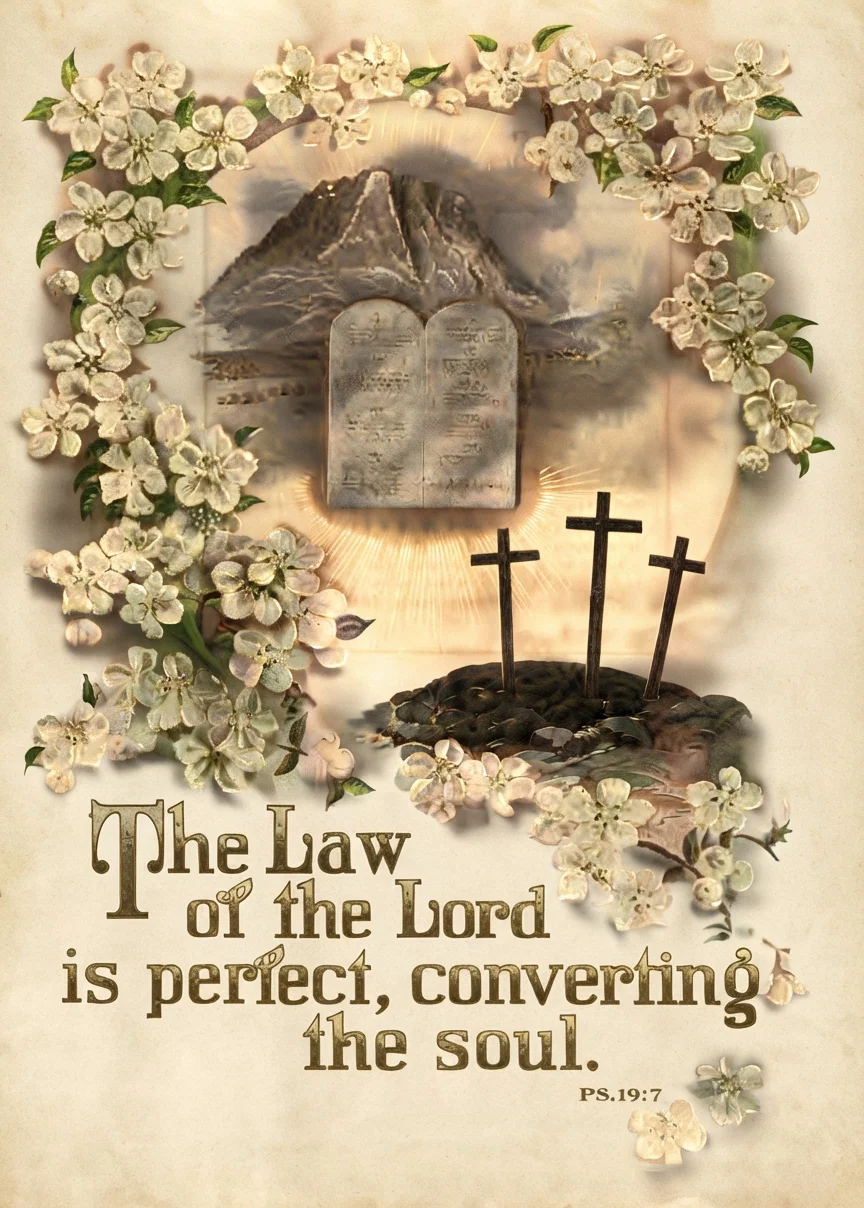
Not so with the moral requirements. The Saviour said of these: "Think not that I am come to destroy [literally, to "loosen down"] the law, or the prophets: I am not come to destroy, but to fulfil. For verily I say unto you, Till heaven and earth pass, one jot or one tittle shall in no wise pass from the law, till all be fulfilled." Matt. 5:17, 18. This, then, is the law which the Saviour was to magnify, or enlarge,—the one which stands above every other law, and which was orally proclaimed from Sinai's top amid storm and tempest, and lightning glare.

How Did He Magnify the Law?

But in what way did Christ enlarge this law, which had been so long held by the Jews, and is now regarded by many Christians as restricting merely outward acts of the physical man? Listen to the Son of God in this, and the answer is soon received: "Ye have heard that it was said to them of old time, Thou shalt not kill; and whosoever shall kill shall be in danger of the judgment. But I say unto you, that whosoever is angry with his brother without a cause shall be in danger of the judgment." Matt. 5:21, 22. It seems from this that the Jews, after the true Oriental custom, thought that no moral responsibility attached to personal indulgence of anger, even tho threatening demonstrations accompanied it, if only murder were not actually committed. But by these words the sixth commandment is so magnified, or enlarged, by the Saviour as to cover those passions of mind which under severe strain lead one to commit the crowning sin of murder.
One or at most two other statements from the Saviour must suffice to illustrate the point under consideration. Said He: "Ye have heard that it was said to them of old time, Thou shalt not commit adultery. But I say unto you, that whosoever looketh on a woman to lust after her hath committed adultery with her already in his heart." Verses 27, 28. These words introduced a feature of the seventh commandment which had not usually entered into the consideration of the Jews in regulating their sexual conduct, because they did not see in the law that which was intended to appeal to spiritual discrimination. The Saviour, however, so magnified that part of the law, that its spiritual features appear, to control and regulate the thoughts in a holy trend. This of course enlarges the scope of the law, and makes the commandment "exceeding broad" to those who are really desirous of proving loyal to Heaven's government.
This expansion of the law to meet the needs of darkened minds made it possible, and even expedient, for the Saviour to answer as He did the young Jewish ruler who came to Him to learn the way of salvation. The direct question asked by this dignitary was: "What good thing shall I do, that I may have eternal life?" The answer was givenin few words: "If thou wilt enter into life, keep the commandments." The questioner evidently was astonished, because obviously he supposed that he had lived up to all moral requirements, and so he asked to which commandments Christ referred. Upon a portion of the Ten Commandments being quoted, he justified his past course by saying that he had ever kept all those requirements. "What lack I yet?" he asked. Matt. 19:16-20.
The Saviour's answer to this was an enlargement of the law never before revealed to the young man. By it he saw that his heart had been closed to the needs of others, and consequently he had hoarded for himself this world's goods, while others were in want. Looking steadfastly in love at the apparently earnest inquirer, the Lord said: "Go and sell that thou hast, and give to the poor, and thou shalt have treasure in heaven; and come, follow Me." At this requirement, the young man went away sorrowful, not willing to let the golden rule in the law control his heart. Here the law again was magnified by the Saviour, in an effort to reach the consciences of men. Alas, how few to-day are willing to yield their all to the law's demands. Many indeed, like the young man, have some feature of the law newly revealed to them, requiring a sacrifice on their part, from which they but turn sorrowfully away.

The Law a Heart-Searcher.

Little do such realize that the heart has ever been the object of search by the law of God. The lack of this knowledge was why the Jews never derived comfort in the outward observance of the law's precepts. Paul had reference to this when he said they did not submit themselves to the righteousness of God, as the reason why they did not attain to the law of righteousness. Rom. 9:31; 10:3. He did not deny their zeal; but he said that it was exercised without knowledge, which ought to have revealed God's righteousness in the precepts He had given them. He then sums up the whole matter by saying that "Christ is the end [design, object] of the law for righteousness to every one that believeth." Verse 4. In other words, whatever Christ is to the believer the law was designed to be.
As the Saviour said to the young ruler, so Paul reiterates thus: "The man which doeth those things [required by the law] shall live by them." Verse 5. But because men do not see the Spirit of Christ in the law, and receive its benefits by faith, they "loosen down" (Greek of Matt. 5:17) the law, and so practically lead barren lives in God's service. The fact is, "the law was ordained to life" (Rom. 7:10), and is therefore "holy, and just, and good" (Rom. 7:12).
When a certain lawyer questioned Christ about salvation, in order to test Him, the Saviour's reply was: "What is written in the law? How readest thou?" Luke 10:26. In his answer to these questions the lawyer revealed that he knew the inner meaning of the law, which feels for the heart pulsations. When he had answered correctly what the moral rule of God's government would lead men to do, the Saviour closed the interview by saying, "Go, and do thou likewise." Verse 37. So now, the question most pertinent to be raised concerning God's law is, How do you read what is written therein?
Is it in the light of your own desires, or with the earnest desire to see Christ and His ways revealed in it? Again it may be asked: "How readest thou?"