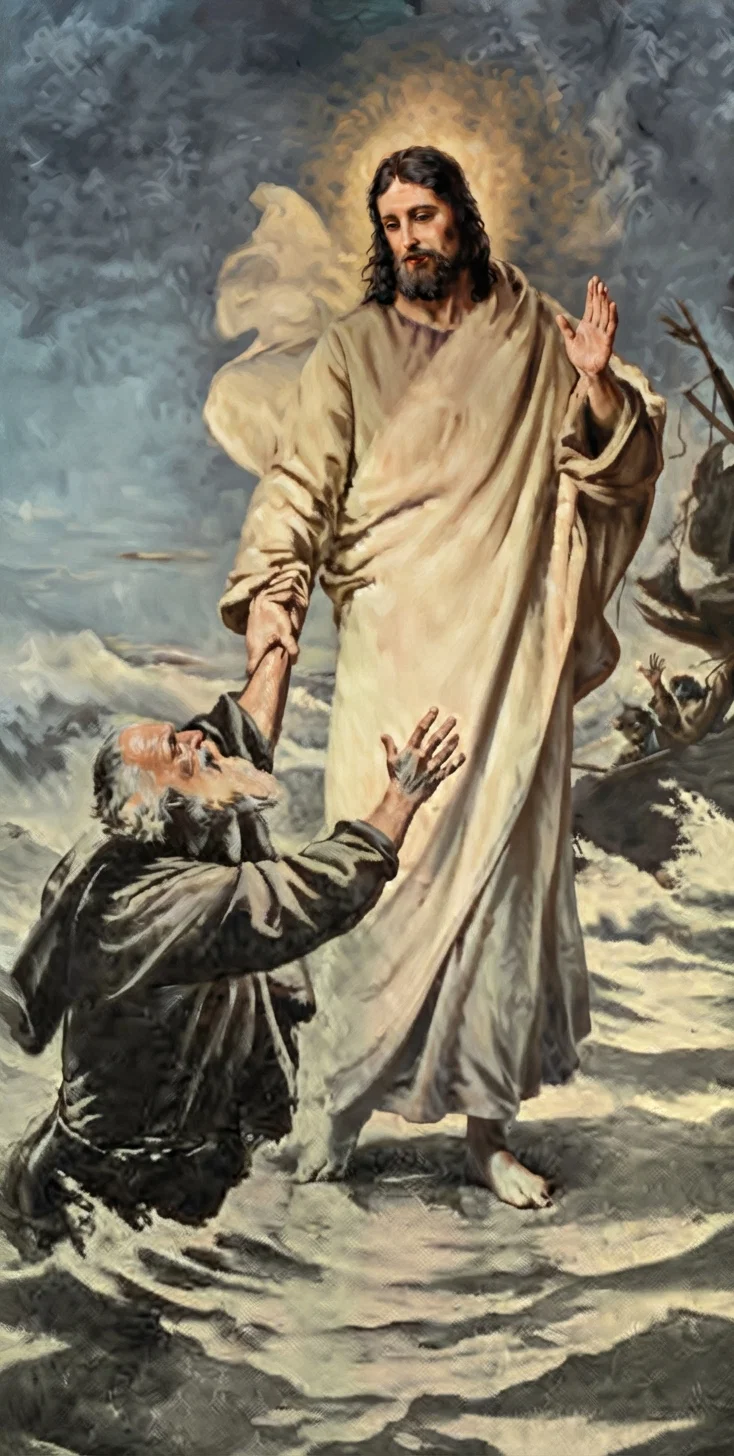
GOD is love. His religion is a religion of love, as His character is love. That character and religion were manifest in their beauty and perfection to the world in our Lord Jesus Christ. He declared God to the world in His teaching and example. He came to reconcile men to God to proclaim the glad tidings of an all-powerful Redeemer to a race lost and wrecked on the stormy, treacherous ocean of sin.
What were His methods? Did He compel, coerce, boycott, persecute? What were Christ's teachings? What was His example? He is the great example of the church, their great prototype. First of all, hear Him proclaim the motive which brought Him here:
"For God so loved the world, that He gave His only-begotten Son, that whosoever believeth in Him should not perish, but have everlasting life." John 3:16.
It was love that brought Christ here, and love will not compel. To compel men against their choice would destroy their freedom and make them slaves. True, Christ has His bond-servants, but it is "the love of Christ" that "constraineth." He will allow men their own way. He will set before them all the beauties of God's truth; He will appeal to them to become sons of God and walk in His light (John 1:9-12), but He will not compel belief and acceptance; for loving acceptance and belief can not be compelled save by love. But what if men would not believe? — He did not condemn them nor give them over to punishment. His mission was not to destroy but to save. His words are:
"I am come a light into the world, that whosoever believeth on Me should not abide in darkness. And if any man hear My words, and believe not, I judge him not; for I came not to judge the world, but to save the world. He that rejecteth Me, and receiveth not My words, hath one that judgeth him; the word that I have spoken, the same shall judge him in the last day." John 12:46-48.
His light shines, but the judgment is suspended. Infinite mercy pleads; the Holy Spirit touches the heart; Christ on Calvary still draws all to Him, but He does not compel acceptance. He leaves all to the judgment of the last day, when every truth He ever spoke will be demonstrated in the resplendent glory of eternity, and every sinner will stand self-condemned by the word of Christ. But His disciples then as now thought otherwise. On one occasion when the Master, weary and worn, would have turned aside to rest in a village of the Samaritans, they in their national prejudice "did not receive Him, because His face was as tho He would go to Jerusalem." His disciples, James and John, had not yet learned the heart of the Master; they would condemn and punish:
"And when His disciples James and John saw this, they said, Lord, wilt Thou that we command fire to come down from heaven, and consume them, even as Elias did? But He turned, and rebuked them, and said, Ye know not what manner of spirit ye are of. For the Son of Man is not come to destroy men's lives, but to save them. And they went to another village." Luke 9:54-56.
"God sent not His Son into the world to condemn the world; but that the world through Him might be saved."
When He came to the close of His life, in that hour of the power of darkness, when betrayed by His own disciple, another, impetuous Peter, drew a sword and smote one of the band which came to arrest Him. What did Jesus do? — He healed the wound of His enemy, and, turning to Peter, said to him and to every disciple who has since lived, "Put up again thy sword into his place; for all they that take the sword shall perish with the sword." Matt. 26:52. He could then have called on His Father, and angelic power would have been given to scatter the powers of darkness, but it was not to be. He was living man's example, while dying man's sacrifice.
A few hours later He stands before Pilate, charged with sedition in stirring up rebellion and making Himself a king. What does He say?
"Jesus answered, My kingdom is not of this world; if My kingdom were of this world, then would My servants fight, that I should not be delivered to the Jews; but now is My kingdom not from hence." John 18:36.
He sends forth His servants on the same mission of the Gospel, with the instructions, "Be ye wise as serpents and harmless as doves." The power He promises, the all power, is that of the Holy Ghost, received by faith. Acts 1:8. His panoply with which He clothes His own soldiers (Eph. 6:10-16) contains only spiritual weapons, not carnal, yet mighty through God for meeting all the powers of darkness (2 Cor. 10:4, 5).
But why enlarge? It is ever the same — strong and tender love to the sinful and weak. From His first call of the disciples, from the gift of freedom to the demon-bound in Capernaum, on that wondrous Sabbath day, to His weeping over Jerusalem and to His prayer for them who nailed Him to the cross, it was ever love, and only love, which longed that men should choose His way of righteousness and life, but could not nor would not compel.
Those, therefore, who seek civil law to compel furtherance of religious or moral ends, do not know Christ. Those who know Christ will seek to save in love's way.