The Word of Prophecy

6%

Pacific Press Publishing Association · Mountain View, California · Feb 17, 1909

FromSigns of the Times, Vol. 36, No. 7.

Read the full edition

The Word of Prophecy

The Horn, Little but Mighty.
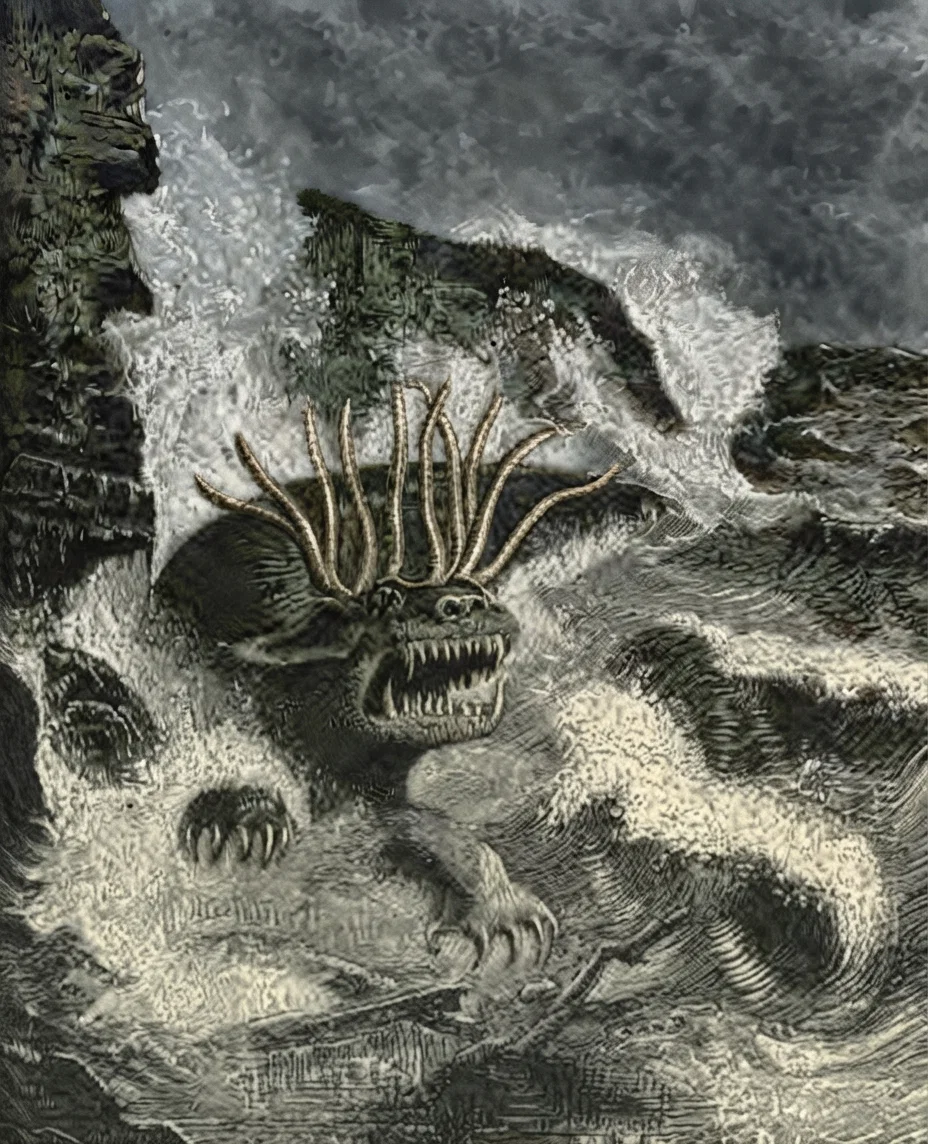
[The first article in this series upon Daniel 7 was a consideration of the first four symbols, the lion, the bear, the leopard, and the great ten-horned, nondescript beast. This article is a consideration of the ten-horned beast under the domination of the little horn.—EDITOR.]
THE ten horns, which according to our last article, Daniel saw upon the great and terrible beast, were clearly explained by his angel guide. "And the ten horns out of this kingdom are ten kings that shall arise: and another shall arise after them; and he shall be diverse from the first, and he shall subdue three kings." When Rome finally fell in 476 A.D. before the repeated attacks of the Northern barbarians, hitherto little known, the Empire of the West fell to the possession of ten different tribes: The Vandals, the Visigoths, and the Suevi; the Heruli, the Ostrogoths, and Lombards; the Franks, the Burgundians, the Alemanni; and across from the continent, the Anglo-Saxons. From these sprang such kingdoms as England, Germany, France, Switzerland, Italy, Spain, Portugal, etc., etc.
The little horn is not here shown.
These ten horns, however, did not create that portion of European history so astonishing to the prophet. "I considered the horns," he relates, "and, behold, there came up among them another little horn, before whom there were three of the first horns plucked up by the roots: and, behold, in this horn were eyes like the eyes of man, and a mouth speaking great things." Out from the downfall of the Roman Empire arose a power different from any we have yet beheld. "Out from the chaos of the barbarian migrations," says Dr. Dollinger, "out from the ruins of the Roman Empire, lifted up itself gradually a new state-formation, whose center-point became the throne of the pope."—Church and Churches, page 33. (Translated from the German).
As for over a dozen centuries this new power was the one most directly coupled with the history of God's people, let us follow its daring career, point by point, as noted by the prophet of God.

I. It Plucked up Three of the First Horns.

Tho Christ proclaimed that His kingdom was not of this world, and that those who took the sword must perish by the sword, such principles, however, were not followed by this so-called vicegerent in the city of Rome. "The Theodosian Code," says the Hon. Maurice Allard, "comes down to us as a volume of exactions on the part of the (Catholic) Church upon those religions which she sought to destroy by force." The first of three horns, which were plucked up by this aggressive little horn, was the Heruli. The Heruli, led on by Odoacer, had extinguished the Roman Empire in the West 476 A.D., and had taken full possession of the city of Rome. They soon, however, incurred the wrath of the church of Rome, because Odoacer sought to influence the election of a bishop of Rome. Irritated at the interference of a power whose religion was obnoxious to him, the Bishop of Rome appealed to Theodoric, king of the Ostrogoths, to come down from theNorth and root out the Heruli. Theodoric responded. He descended with his Ostrogoths from the regions of the Danube, and in two or three heavily fought battles he extirpated the Heruli.
This was 493 A.D. The first horn had been rooted up. It was not long before another event revealed the purpose of the Papacy to have its way. The church had called in the Ostrogoths; impartial history declares that for centuries no government more just had directed the affairs of Italy. Yet the Papacy was unsatisfied. The Ostrogoths were not Catholics; they did not manage things as the Bishop of Rome desired. Therefore his ambassadors to Constantinople, the capital of the Eastern Empire, represented the rule of Theodoric as a rule of tyranny. He used the influence and strength of his followers in Constantinople to turn an election in favor of Justinian, as the next Emperor of the East.
The result was advantageous for the Papacy. In full cooperation with the spiritual head at Rome, Justinian laid his plans for the extirpation of the Vandals and Ostrogoths. The Vandals of Northern Africa, like the Ostrogoths of Italy, were professed Christians, but not of the profession of Rome. "According to the testament of the founder," says the historian Gibbon, "the African kingdom had lineally descended to Hilderic, the eldest of the Vandal princes.
... But the Catholics accepted, with cold and transient gratitude, a favor so inadequate to their pretensions, and the virtues of Hilderic offended the prejudices of his countrymen." ("Decline and Fall," chap. 41.) Circumstances favored the campaign against the Vandals; but Justinian hesitated. "I have seen a vision," cried an artful or fanatic bishop of the East. "It is the will of Heaven, O Emperor! that you should not abandon your holy enterprise for the deliverance of the African church. The god of battles will march before your standard, and disperse your enemies, who are the enemies of His Son." (Gibbon, same chapter). Relying upon the strength of this pretended revelation, the Eastern Emperor launched the campaign which utterly extinguished the Vandal kingdom in northern Africa. The underlying reason of this conquest may be seen in the following quotation from Gibbon: "Impatient to abolish the temporal and spiritual tyranny of the Vandals, he (Justinian) proceeded, without delay, to the full establishment of the Catholic Church."
This occurred in 533 A.D. The second horn was plucked up; there remained still another. The Ostrogothic kingdom in Italy was the last obstacle to the freedom and power of the Papacy. "When Justinian first meditated the conquest of Italy," says Gibbon again, "he sent ambassadors to the kings of the Franks, and adjured them by the common ties of alliance and religion, to join in the holy enterprise against the Arians." Circumstances favored the Emperor in this enterprise as in the campaign against the Vandals. By 538 A.D. the renowned chieftain Belisarius had reduced to submission the Goths of Italy and had rid Rome of their presence.
Thus wonderfully did history fulfil prophecy. Three powers, or three horns,—Heruli, Vandals and Ostrogoths — were uprooted in order to secure the independence and power of the Papacy.

II. It Had Eyes Like the Eyes of Man.

From prosperity to covetousness there exists but one step. The prophet noticed that the extraordinary little horn differed from the other ten horns in that it had eyes like the eyes of man. What, according to the Scriptures, is symbolized by the eyes of man? Prov. 27:20. "Hell and destruction are never full: so the eyes of man are never satisfied." Greediness, insatiable desire, rapacity, were, after the Bible definition, prominent characteristics of the little horn. If we are correct in considering the little horn as God's prophetic description of the Papacy, can it be found as possessing these characteristics? Let history testify. "Innocent III realized more completely than any pope before or after him the Hildebrandine ideal. He was able to bring King John of England to surrender the overlordship of the land to him for his support against the nobles. He compelled Phillip Augustus of France to take back his rejected wife. In the struggle for the German crown he championed Otho the Guelph against Phillip of Hohenstaufen, but when Otho was king, Innocent turned against him at once." ("New International Encyclopedia," Article "Papacy.")
This single quotation shows the little horn interfering in the national affairs of England, France, and Germany. Many other quotations might be produced to fasten upon the Papacy her world-wide ambition which identifies her as the little horn. "The Papacy," said Pope Pius IX, in a consistorial speech, in 1861, "shall never reconcile herself to modern civilization, because she can never accept either religious liberty, or the admission of non-Catholics to public offices." ("French Senate Debate, 1905," page 149.) And as these quotations reveal the Papacy claiming sole control of the nations and of the public offices within a single nation, so other testimonies might be produced to prove her guilt in seeking to control the policy of Heaven. Such presumption must encounter the signal wrath of God. Already the punishment of Heaven has struck, in some measure, this wicked "little horn;" but a more terrible chastisement lies just ahead. We reserve the consideration of these for the next article.