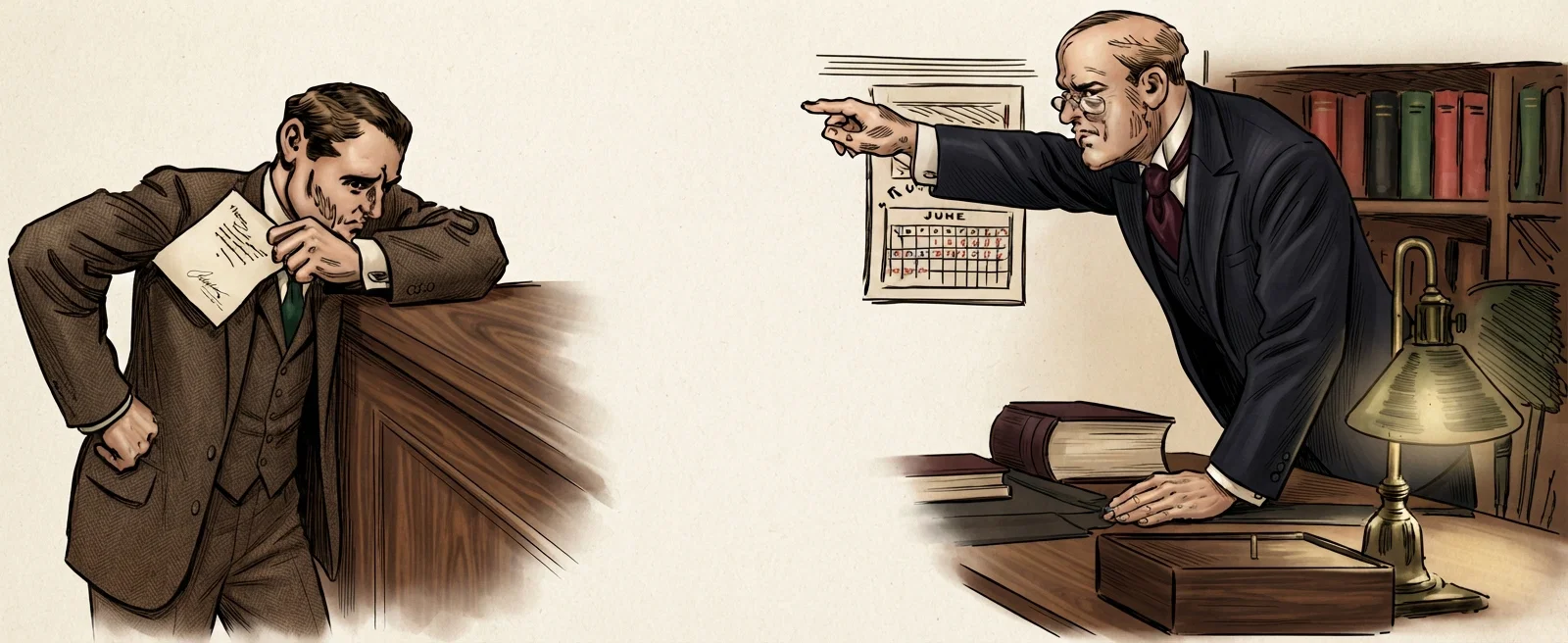
WHEN Professor H., followed by a class of senior medical students, made his rounds from ward to ward of the old City and County Hospital, San Francisco, he was nothing if not dramatic. He evidently believed in delivering his instruction in such a way that it would cling to the gray matter of his auditors. In the effort to leave a lively impress on the mind of the student, he probably left, as a by-product, a more than lively impression on the mind of the patient. We were ranged three or four deep around a cot on which lay a patient half bolstered up, who had that look of apathetic resignation betokening a man who has had more downs than ups. Standing near the head of the cot and facing his audience, the professor said, with an air of omniscience: "Young men, this patient has pneumonia, and he is going to die. Nothing we can do for him will save him, for he is a drinker." He was right. Our next visit to that patient was at the morgue or the autopsy room.
We then learned a fact which has been further impressed upon us, both as students and as practitioners — that the prognosis in a case of pneumonia is bad if the patient is a steady drinker. He need not be a hard drinker, either.
We afterward learned that there is a reason for this unfavorable effect of alcohol. In pneumonia, it is a pretty even fight between the invading germs and the body of defenders, the white blood cells. Every drink of alcohol damages these cells — helps to put them out of commission, as it were, so that the steady drinker is in a worse state of "unpreparedness" than are some governments we know of.
And as a government that is unprepared for the attacks of one nation is similarly unprepared for the attacks of other nations, so the body unprepared to defend itself against pneumonia is also unprepared to defend itself against other diseases.
Perhaps there is no body of men who, from the very nature of their calling, are so interested in the factors that shorten life as are insurance men.
In an address "Can Insurance Experience Be Applied to Lengthen Life?" Arthur Hunter, actuary of the New York Life Insurance Company, said: "Nothing has been more conclusively proved than that a steady free use of alcoholic beverages, or occasional excesses, are detrimental to the individual. . . . It is certain that abstainers live longer than persons who use alcoholic beverages."
The following is from a folder prepared by the medical director of the Provident Savings Life Insurance Company, and sent out to their policy holders:
"Published statistics relating to the mortality among immoderate drinkers are meager, but the effect of alcohol has in a broad way been measured by the experience of the United Kingdom Temperance and General Provident Institution, covering the period from 1866 to 1905. This company aimed to take none but total abstainers and temperate drinkers.
"On analyzing the experience in these two groups, it was found that for every one hundred deaths among the total abstainers, there were one hundred and thirty-one deaths among the temperate drinkers, showing a difference of thirty-one per cent in favor of the abstainers.
"Taking the experience of the same company for sixty-one years prior to 1901, and considering the mortality at the different age periods, we find that from age thirty-five to thirty-nine, the mortality in the general group was eighty-three per cent in excess of that among the total abstainers."
Should not this drug, capable of so much harm, be restricted in its sales, as are other dangerous drugs? And should not you, Mr. Voter or Mrs. Voter, do your share at the polls to effect its restriction?
DRINKING IMPAIRS THE MEMORY.
DISCHARGED BECAUSE OF DRINK "One cannot climb the ladder of success with one foot on a bar rail."