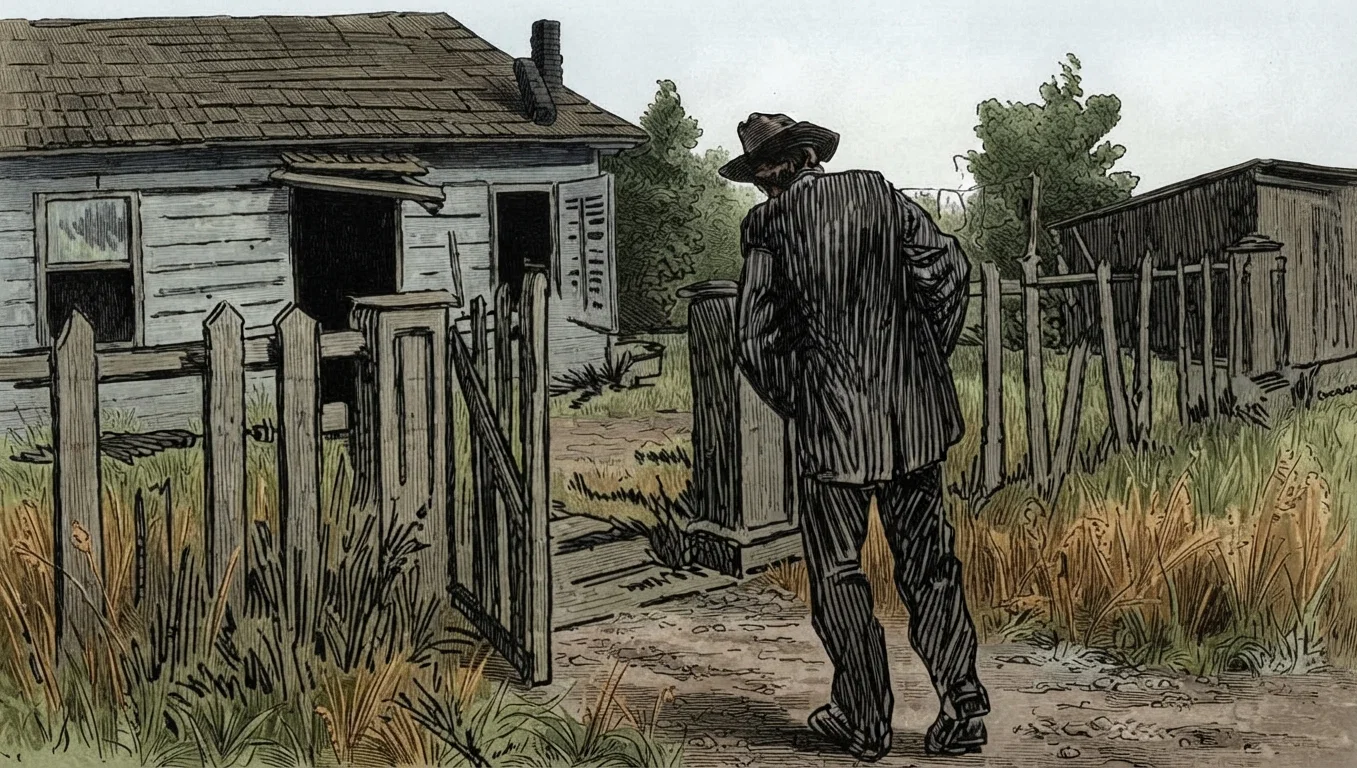
According to the report of the Boston Associated Charities, investigation showed that 243 of the 352 able-bodied men who in one year failed to support their families were drunkards.
The Right to Abolish the Saloon
By Sanford B. Horton
SANFORD B. HORTON
THE right to prevent crime is as inherent and justifiable in the government as is the right to punish the perpetrator of crime. In the language of Mr. G. Von Bunge, father of the anti-alcohol movement in Europe: "We have the right to defend society against alcohol by prevention as well as by punishment. That, you say, is paternalism. But in the case of another narcotic, morphine, the right is admitted."
We have the calm and deliberate opinions of courts to sustain the affirmation that the government has the undoubted right to abolish the saloon. The Supreme Court of the United States, some years before the anti-saloon movement received such impetus as it now has, handed down pertinent decisions, from one of which we abstract briefly as follows:
"The statistics of every state show a greater amount of crime and misery attributable to the use of ardent spirits obtained at these liquor saloons than to any other source."—Crowley vs. Christensen, 137 U. S.
"The true question presented by these cases, and one which I am not disposed to evade, is whether the states have a right to prohibit the sale of and consumption of an article of commerce which they believe to be pernicious in its effects, and the cause of disease, pauperism, and crime. . . . Every law for the restraint or punishment of crime, for the preservation of the public peace, health, and morals, must come under this category."—Mugler vs. Kansas, and Kansas vs. Ziebold and Hagelin, 123 U. S.
The right to abolish the saloon is fundamentally connected with principles set forth in our Declaration and constitution, in which the inalienable right to "life, liberty, and the pursuit of happiness" is sustained and guaranteed; and this right should be secured to all the people. Judge Kimball, of the District of Columbia Police Court, in 1911 was told by Warden Harris that the majority of criminals of all types had reached their downfall because of whisky drinking. Many such statements are available from criminologists and judges, showing that "life, liberty, and the pursuit of happiness" are directly menaced by the saloon business. To contend, therefore, that the state has no right to suppress this iniquitous traffic, is folly. As well might it be argued that the government has no right to suppress anarchy, prohibit boisterous noises in hospital zones, quarantine against disease, etc. What saloonist will assert that government has no right to prohibit gambling; that Congress had no right to debar the Louisiana Lottery Company's business from the mails, nor to prohibit foreign lotteries from doing business in this country? Would he not agree that for the safety of society, ordinances should be enforced against the promiscuous selling of such drugs as morphine, cocaine, laudanum, opium, cyanide of potassium, arsenic, and others containing poisonous ingredients? Would the saloonist claim that Congress exceeded its prerogative when it passed anti-trust laws, on the ground that such laws interfered with individuals in embarking in business under such arrangements as seemed best to them?
Discussing this question in its issue of March 30, the Continent logically deduces that "a free people cannot ultimately permit any citizen to make his livelihood by dealing in a commodity which does no good to any buyer and causes untold harm to the vast majority. That is an absolutely infrangible proposition. And it is all that is necessary to stick to in order to maintain the logic of prohibition in any form in which it has ever been proposed."
Therefore a business that is manifestly so malefic to the well-being of society; that works impediment to efficiency and achievement; that is recognized to be a curse by even the warring nations of to-day, should be abolished by the general government. And no patriotic citizen should question the right of the government to abolish it. On the contrary, he should aid in that abolishment.
"LICENSE is taxation. Taxation means representation, permission, protection, and perpetuity. License money is a bribe, and the acceptance of it by the United States is a national sin."
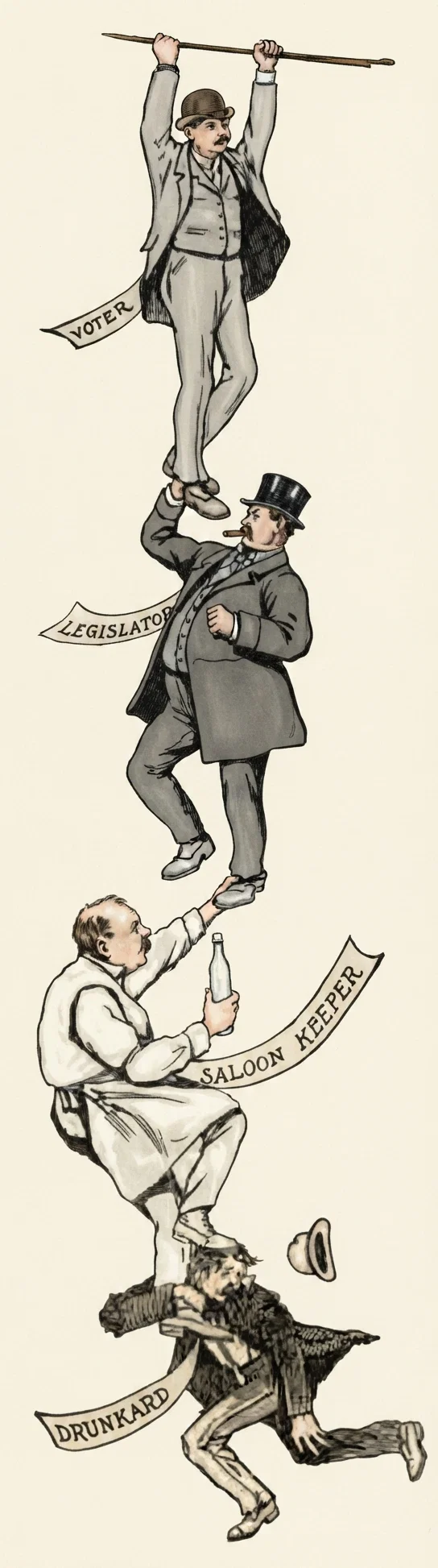
Here is a chain with the following links: a drunkard, a saloon keeper, a legislator, and a voter. Let us go to the last link.
"Poor drunkard, where are you going?"
"To the bottomless pit of perdition."
"How do you know?"
"The old Book says, 'No drunkard shall enter the kingdom of heaven.'"
Now let us go to the top of the chain. "Churchman, where are you going?"
"I am going to heaven."
"How do you know?"
"About forty years ago, the Lord took my feet out of the miry clay, and placed them upon the Rock, and put a new song in my mouth."
Let every man hear this statement—that if the lower link goes to perdition, and the upper does not—if the poor drunkard goes to perdition, and the churchman who voted for the saloon that made him doesn't go with him—then the drunkard can stand on the black-crested waves of damnation, and cry, "Unjust, unjust," until he would tear down the pillars of heaven.—George R. Stuart.