Our London Letter

5%

Pacific Press Publishing Company · Mountain View, California · Dec 18, 1907

FromSigns of the Times, Vol. 33, No. 51.

Read the full edition

Our London Letter

(From Our Own Correspondent.)
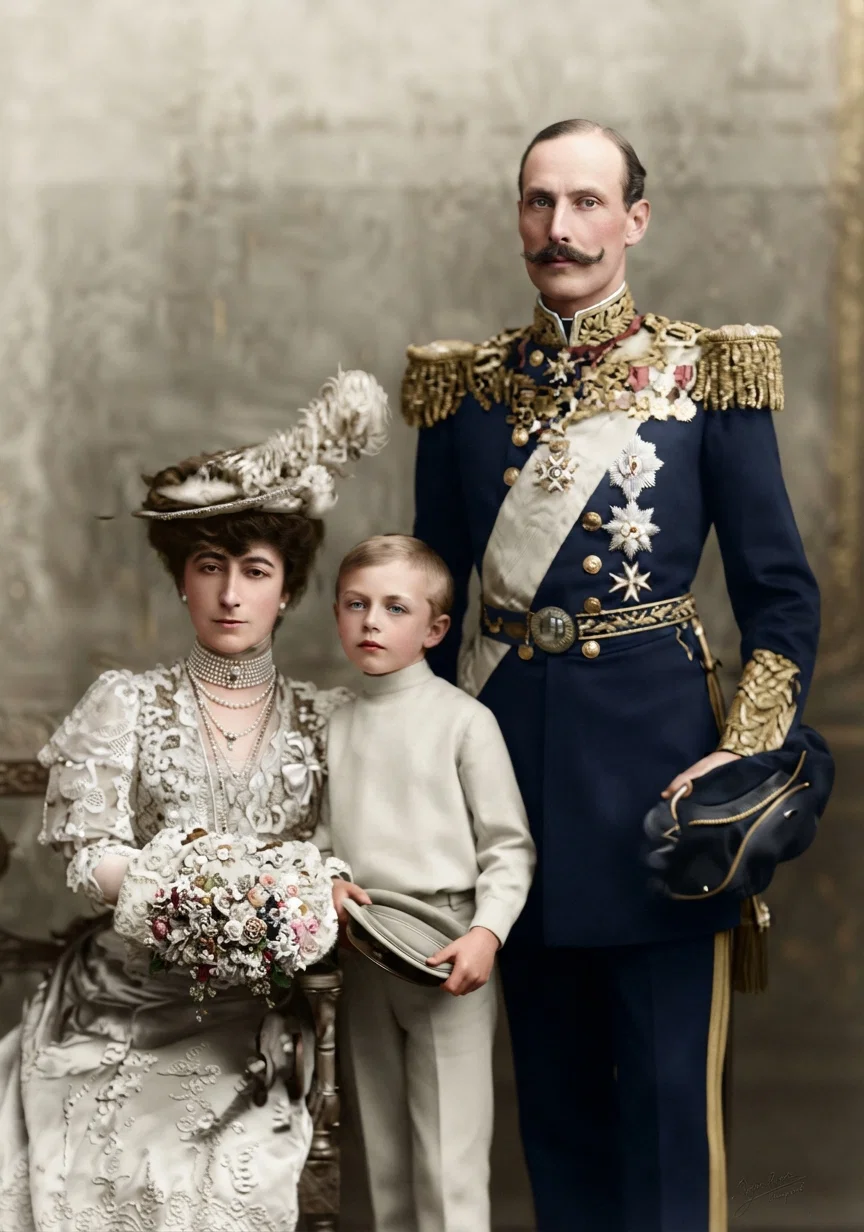
ENGLAND has been a meeting ground for royalty this autumn. The king and queen of Spain, the king and queen of Norway, and last and by far most important, the German emperor and his consort are paying us a visit, and seem to feel very much at home.
Naturally the emperor has attracted the most attention. The day before yesterday a banquet was given in his honor in the historic Guildhall, by the Lord Mayor of London. The streets were gaily decorated, and thronged with eager onlookers, carefully kept within bounds by detachments of mounted soldiery and policemen. Londoners gave the Kaiser a very hearty reception. He on his part has expressed the most cordial feelings toward this country. Peace and goodwill are his watchwords. To quote from his speech at the Guildhall: "When I addressed Sir Joseph Savory [the then Lord Mayor] from this same place sixteen years ago, I said my aim is, above all, the maintenance of peace. History, I venture to hope, will do me the justice that I have pursued this aim unswervingly ever since. The main prop and base for the peace of the world is the maintenance of good relations between our countries, and I shall further strengthen them as far as lies in my power."

Results of Earth Hunger.

No doubt the presence of the emperor may do something to promote better feelings between the two countries; but it is not safe to expect very much of a change in the somewhat strained relations of the two countries.
England's welcome must be taken as a tribute of respect and admiration offered to the Kaiser himself rather than as springing from any deep-seated feeling of friendship for the German nation. The real root of the anti-German sentiment must be sought in the fact that Germany's policy of growth and expansion commercially and otherwise is viewed with something of alarm in England. There is nothing tangible for the two nations to quarrel over—no vexed questions that skilful diplomacy could put right, simply mutual suspicion mingled with fear. Germany persists in thinking that England is trying to isolate her, and a considerable section in England take it for granted that Germany is building up a navy chiefly with a view to disputing the sovereignty of the seas with the Union Jack. The feeling is keenest between the Pan-Germans and the British imperialists. The former are dreaming of one day annexing Holland and German-speaking Austria, founding an empire in China, colonizing Asia Minor, and having a large sphere of influence in South America; the latter without urging the enlargement of the British Empire are very keen on maintaining its relative strength as compared with rival powers, and view with special concern the growth of the German navy.
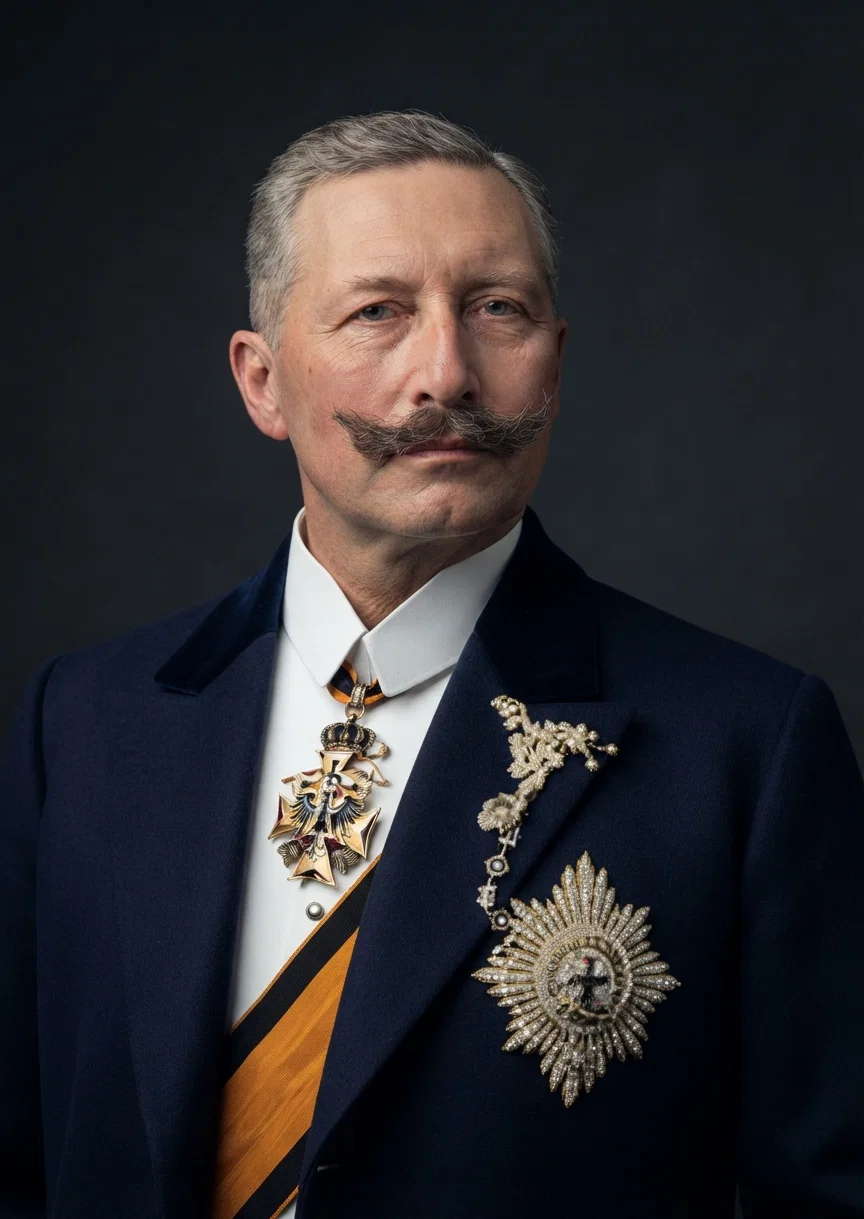
The Emperor of Germany.
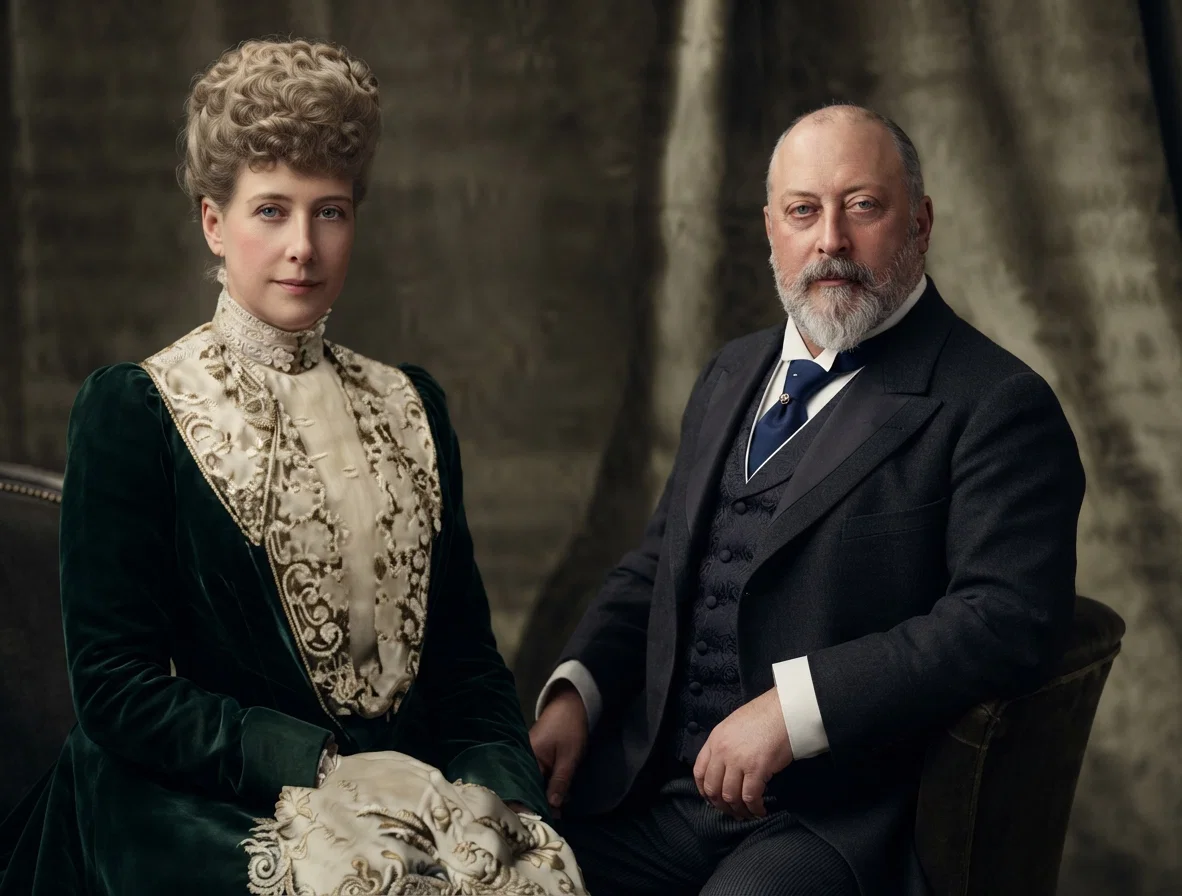
King Edward VII and Queen Alexandra.
The emperor himself is indeed a man of striking personality, and his record hitherto has shown him to be on the whole a lover of peace, so far as this may be consistent with the continued progress of Germany both as an industrial and a military nation. His devotion to his country, high sense of duty, and pure family life may well excite admiration. No wonder he is the exemplar of Young Germany. The empress likewise embodies some of the best of her country's traits, and is greatly loved by the people, being a typical German "hausfrau," and expert in all house-wifely arts. Needless to say, they both show hearty appreciation of English hospitality, and the present feeling between the reigning families of these two powerful nations is one of extreme cordiality.

Settlement of the Railway Strike.

In my previous letter I said that there was some prospect of an adjustment between the railway companies and their men, and the event proved the correctness of the forecast, but not till the country had been for a week or so in imminent danger of what would have been one of the most far-reaching and disastrous strikes on record. The settlement is owing much to the unfailing tact and energy of Mr. Lloyd George, president of the Board of Trade, whose representations to the railway companies led them to modify their former defiant attitude. In the final arrangements, while neither party got all that it wanted, concessions were made on both sides, so that there is a fair prospect of trouble being avoided in the immediate future. The result is a victory for trade unionism, which is yearly growing stronger in the British Isles. Hitherto it has had a fairly free scope in other directions, but has not been officially recognized by the railways, the proprietors of which have claimed that the interests of safe railway travel required that this branch of public service should be exempt from every kind of outside interference. Full recognition is not accorded even by the present arrangement, but is sure to come in time.One is naturally reminded in this connection of the terrible railway accident which happened only the other day at Shrewsbury, and forms the third of its kind which has taken place within about a year. Strange to say, the cause of none of these has been ascertained beyond the fact that the brakes do not seem to have acted properly. Up to very recent times the railways of Great Britain have been noted for their safety, but at the present rate of accidents they will not hold their high reputation much longer.
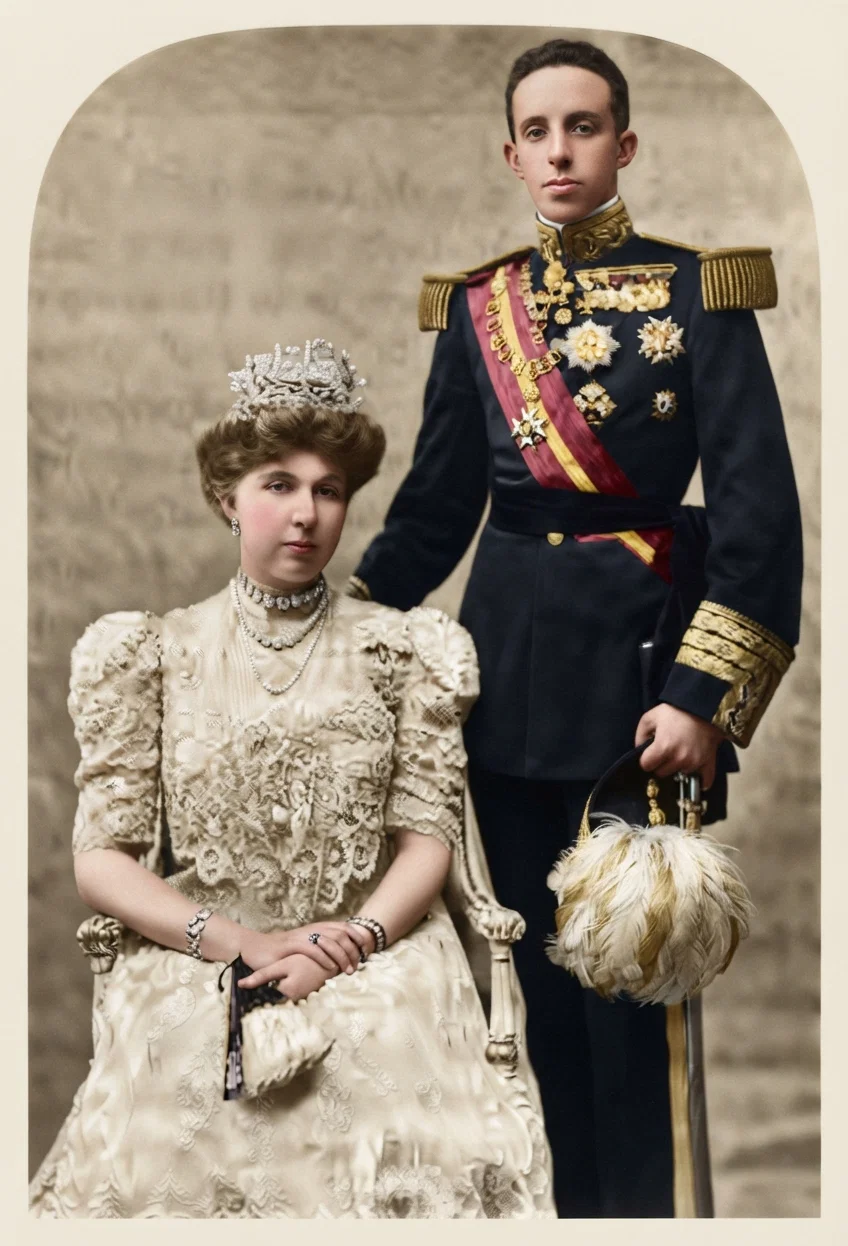
King Alfonso and Queen Victoria of Spain.
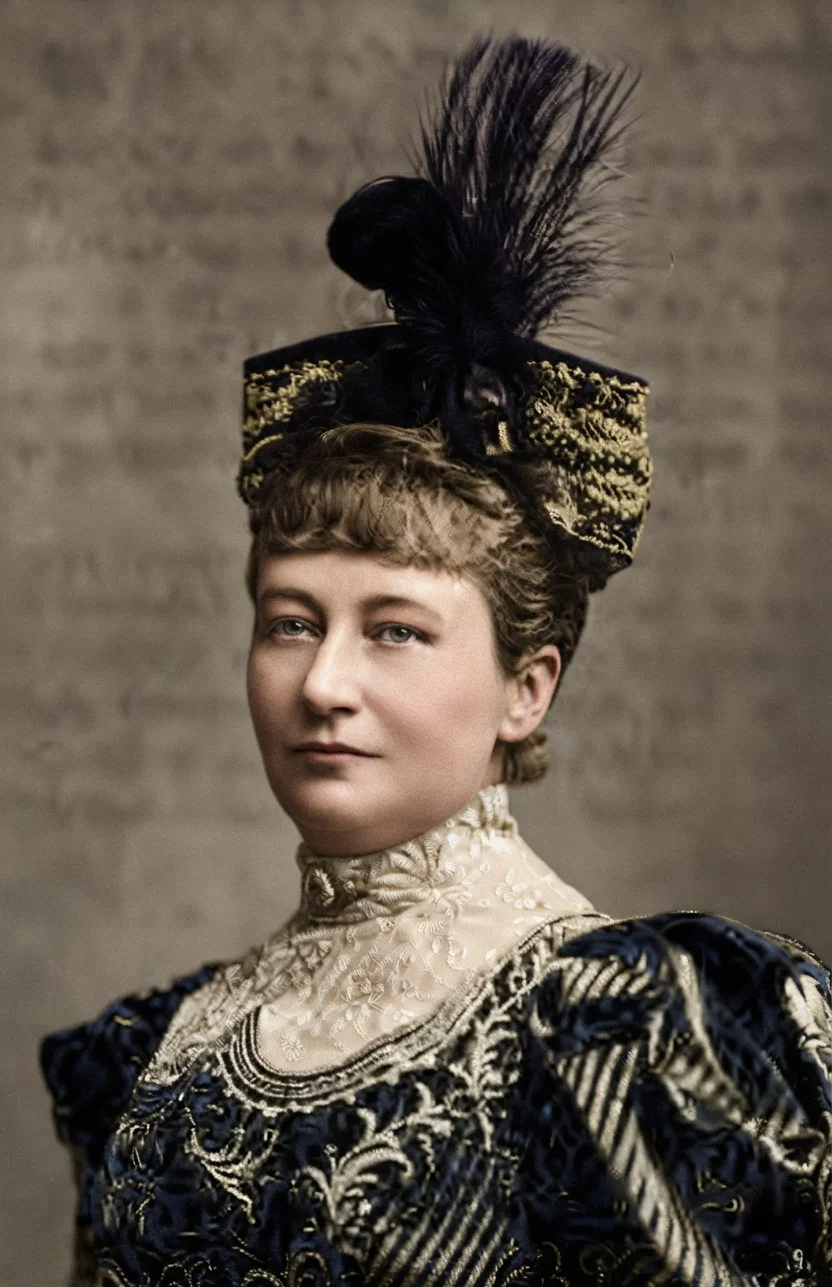
The German Empress.
The German Empress.

Parliament, the House of Lords.

Parliament meets on the 29th of January, 1908, and then will begin in earnest, if we are to credit the prime minister, the fight with the House of Lords. If the latter continues its opposition to the will of the Commons, an appeal will probably be made to the people in the form of a general election early in 1909. Just now the Conservatives are making their chief attack on Socialism. They pose as the protectors of property and offer to deliver the country from the imminent ruin thru the general adoption of socialistic principles. As a matter of fact the Liberals themselves are not in favor of socialism, tho they are endeavoring to bring about social reforms which are widely recognized as necessary. Nevertheless Conservatives have not raised the cry in vain. They won a great victory in the London County Council elections some time ago, and now recently they have made surprising gains in the municipal elections thruout the country, which goes to show that something of a reaction is setting in over considerable parts of the nation against radical ideas. The typical Briton has a deeply-ingrained conservatism which comes to the top in emergencies, and is never altogether out of sight.

Deplorable Conditions.

It must be admitted that many social agitators show great lack of common-sense and of practical statesmanship. Their zeal is without knowledge, and their program, if carried out, would plunge the country into greater evils than those under which it now suffers. Nevertheless the present social order is anything but ideal. We have a class of rich men who are doing nothing to justify their existence, but living off the toil of others, utterly engrossed in selfishness and worldliness. We have a very large class of laboring men whose wages do not enable them to live in decency and comfort, and who are liable to be out of work a good part of the time. Their children are scantily clothed and half-fed, their homes lack necessary comforts, and their lives are one long fight with want. It is true that they spend a portion of the small weekly wage in strong drink, and thus heighten their misery, but the laws of the land permit brilliantly-lighted, warm and cosy public houses (saloons) to tempt and tantalize them on every street corner, and we must not be surprised that both women and men yield to the temptation to forget their troubles for a little while.
Drinking among women is steadily increasing, in spite of energetic temperance work done in a great many channels. Said a London police magistrate the other day: "This is the fifteenth respectable-looking woman who has come before me this morning for intoxication. I do not know what women are coming to." The wobeone look on the faces of these poor, weak, erring ones is heart-rending, and a glimpse into their neglected homes, where pale-faced, stunted children cry in vain for bread, and shiver in filthy rags about the empty hearth, is most convincing evidence of the devastating effects of the drink habit.

Religious Matters.

The religious outlook is not a bright one. The indifference of the masses becomes more pronounced from year to year, and among Christians the most thoughtful deplore the growing worldliness and corruption. The "new theology" has evidently come to stay. Mr. R. J. Campbell continues to attract large audiences at the City Temple, but the audience is a different one from that which gathered about the late Dr. Parker to be fed with the living word. Mr. Campbell is clearly substituting Socialism for the everlasting Gospel. He rarely preaches a sermon nowadays without giving it a strongly socialistic trend, and his new ideas are coloring his exegesis of Scripture. Last week he preached on the work of John the Baptist. Jesus, he explained, was primarily preaching a gospel of social revolution. This was the chief point in which He differed from other Jewish teachers of His time. As for John the Baptist, "he was exactly the kind of man who would have led an attack on the Bastile in the eighteenth century; or, perhaps, he might have been found addressing a demonstration of the unemployed in Hyde Park." Well may the true Christian pray to be delivered from such preaching in one of the chief churches in the land. But when men turn away from the Gospel, they are likely to become involved in egregious error. M. ELLSWORTH OLSEN. November 15, 1907.
The King and Queen of Norway, and Prince Olaf.