THE WITNESSING OF GOD

3%

Pacific Press Publishing Association · Mountain View, California · Jul 8, 1913

FromSigns of the Times, Vol. 40, No. 26.

Read the full edition

THE WITNESSING OF GOD

THE BASIS OF OUR CONFIDENCE

VIII. The Twofold Witness to the Divine Mission of Jesus

THE HEART OF THE ORION NEBULA
THE SAVIOUR OF MEN
THE SAVIOUR OF MEN
THERE is, or has been, no greater mission than that of Jesus of Nazareth — or more stupendous fraud. It is either true or false. If it is true, nothing transcends it in importance; if false, there was never greater deception, and that deception concerning the things of eternal import. If true, the hope of millions is assured; if false, millions have trusted, toiled, suffered, died, in vain.
May we know that His mission was, nay, is true? Did those who preceded Him, who looked through the dim shadows of millenniums, centuries, generations to be, hope in vain? Did Enoch and Noah and Abel and Abraham and Moses and David and Elijah and Isaiah and Malachi, and hundreds of others, follow a vain quest?
Are the promises of God, backed oftentimes by mighty miracle and marvelous revelation, to be set aside by last-day science and skeptical evolution as mere chimeras, figments of disordered imagination, or dim legends of primitive medicine-men?
Was Jesus Himself uncertain of His mission? Did Simeon and Anna and John and Peter and Luke and Paul build faith on an insecure foundation?
We can not believe that they did, that all these hopes of the past were in vain. We believe that the twofold witness of God proves otherwise. A small portion of this evidence we will examine in this article, and leave a great mass of detail testimony for other occasions, or for the reader to study as he will. It is all found in the Word.
Keep ever in mind as we examine, God's law of witness. There must be at least two agreeing witnesses whose testimonies can not in any respect be collusive. The witnesses could not agree together beforehand as to what their testimony should be. If there were any probability of this in ancient times, the witnesses were examined separately to learn if there were such collusion. (See the History of Susanna in the Apocrypha.)
We have therefore the right to expect that the same law will hold good, that God will send His divine Son with unimpeachable testimony to His divine mission. John the Baptist bore witness to Jesus, but John's witness might be questioned. It could be argued that there was a possibility of collusion between Jesus and John. John's testimony alone was worthless. John himself, in his discouragement in the dungeon of Machærus, wavered in his faith as to whether Jesus was the Messiah, and was only assured by the twofold witness of the divine mission of the One to whom he bore witness. This was "the greater witness" than that of John.
Our Lord believed that witness, and this is how He states it to the skeptical Pharisees: "It is also written in your law, that the testimony of two men is true. I am one that bear witness of Myself, and the Father that sent Me beareth witness of Me." The Father and the Son,—how do they bear witness?
Read again: "And the Father Himself, which hath sent Me, hath borne witness of Me." "Ye search the Scriptures, because ye think that in them ye have eternal life; and these are they which bear witness of Me." John 5:37, 39. The inspired Scriptures is one of the ways God bore witness to His Son. Let us note some of the many particulars which stand out like mile-posts, from the dawn of the promises in Eden lost, recorded in Genesis, to Malachi, the messenger of God, the last recorded prophecy.

Some Particulars

We note first that as through the woman sin entered into the family of man, it must be the seed of the woman which crushes the foe and conquers. Gen. 3: 15.
2. God chose one of the sons of Noah,—Shem; one of the sons of Terah,—Abraham; one of the sons of Abraham,—Isaac; one of the sons of Isaac,—Jacob; one of Jacob's twelve sons,—Judah; and of the families which sprang from Judah that of Jesse; and of Jesse, Jesse's son David, through whom on the human side the Messiah was to come; and the long genealogy of the patriarchs and royal family was kept with scrupulous exactness by the Jews until the time when Jesus of Nazareth was born. The ancestral rolls of other tribes save Judah and Levi were utterly lost because no promise of God was connected with their fulfilment, but in the case of these two tribes the record was kept.
3. The time the Messiah was to be manifested was clearly foretold. It was to be at the end of sixty-nine weeks of years from the going forth of the commandment to restore and build Jerusalem, which occurred in B.C. 457. See Dan. 9: 24-27; Ezra 7: 7. Those years ended in A.D. 27.
4. The very town that should be honored as our Lord's birthplace was told us more than six centuries before He came. Micah the Morashtite prophesied, 'But thou, Bethlehem Ephrathah, which art little to be among the thousands of Judah, out of thee shall One come forth unto Me that is to be ruler in Israel; whose goings forth are from of old, from everlasting.' Micah 5: 2.
5. The Messiah's work and ministry, His lowly life, His rejection by His people, the injustice shown Him in His trial, His death with malefactors, His burial with the rich, the agony of His life as He bore upon His heart the sins of men, His very words upon the cross, were all foretold in such scriptures as Isaiah 53, Psalm 22, Isa. 61: 1-3.

The Response in the Life of Jesus

This is the second witness. Hear Him: 'But the witness which I have is greater than that of John; for the works which the Father hath given Me to accomplish, the very works that I do, bear witness of Me, that the Father hath sent Me.' John 5: 36.
The works of Jesus were in and of themselves mighty and convincing, but they were many fold more evidential when agreeing with God's witness of the ages—His word. Note the fulfilment of the above particulars.
1. The Deliverer was to be of the seed of the woman. Read Luke the third chapter, the genealogy of Jesus which is traced backward to Adam, the son of God, and of course through the female portion of the race from that time.
2. Read in connection with the third chapter of Luke the first chapter of Matthew, in which is traced the royal pedigree of our Lord. Luke tells us that He came through Adam and Enoch and Noah, and Matthew takes up the genealogy from the time of Abraham, traces it down through David and Solomon, to the time when Jesus Himself was born. We sometimes weary over the long genealogies given in the Word, and yet they bear mighty and important witness to the divinity of that Word. It is said that a Chinese on one occasion was converted or was led to Christ through His genealogy. He thought that One who had as long a pedigree as that traced back through so many honorable characters, must be certainly worthy of consideration, so he studied His life and gave himself to Christ.
3. The Old Testament prophesied the time when the Messiah should appear. 'Messiah' means 'anointed,' and Jesus was anointed at His baptism. Luke 4: 18; Acts 10: 38. Jesus was baptized in the spring of A.D. 27, as recorded in Mark 1: 9. Our Lord met the very time when it was predicted that He should come, and declared, 'The time is fulfilled, . . . repent ye, and believe the gospel.' Mark 1: 15.
4. Micah had declared more than six hundred years before Christ that Jesus should be born in Bethlehem, and we find the apostle Matthew leaving us this record: 'Now when Jesus was born in Bethlehem of Judea in the days of Herod the king.' Matt. 2: 1. God in His providence brought Mary and Joseph to the little town predicted of ancient times. He was born where the prophecy declared He would be; He was manifested as the Messiah when the prophet declared He would be.
5. We need not dwell on the other particulars as recorded in Psalm 22; Isaiah 53; 61: 1-3, and other predictions of the Old Testament. The whole life of Jesus testifies to the truth of all these. He needed only to call the attention of His unbelieving, doubting, discouraged disciples, after His resurrection, to the Scriptures of truth throughout to enable them to see that He whom they had given up as dead was fulfilling all that God had before written, from Genesis to Malachi. God had predicted the life of Christ in His word; Christ had lived it out in His life.
Note the positive assurance which we have in this twofold witness, or, these two agreeing witnesses: first, the Father's testimony in the Scriptures which had been written from fourteen hundred years to four hundred years before Christ was born. All this testimony was ultimate authority with the Jews. They could not say that Jesus the son of Joseph had by artifice deceived them by writing His own life in advance, or by tampering with the sacred writings which they themselves possessed. Those writings had existed among the Jews for hundreds of years, copied with reverential and scrupulous care. There was no doubt in their minds concerning this, and Jesus was 'not yet fifty years old.' Nearly three hundred years before, these writings had been translated into Greek, and copies had been scattered, we may well believe, throughout the Grecian world. Jesus had not tampered with these Grecian copies. Here was one infallible witness which men would not at all question.
Secondly, Jesus was in harmony with all these prophecies, not in words alone, but in deeds, in character, in the whole history of His life. Here was absolute agreement between the unchangeable witness of the recorded truth of God and the testimony of the work and life of Christ; and when the Spirit of God had predicted these things of the Messiah, and then when Jesus had met them all in His own life, the conclusion would be unavoidable that God had given Him these works to do, and that His mission was indeed divine. This absolute agreement with the infallible Scriptures made another infallible witness to the Messiahship of Jesus, the two together being absolutely unimpeachable.
The Scriptures of truth that testified of Christ before He came compose now the Old Testament; the writings which record His works compose the New Testament. These two are the living, unshaken testimony to the divine mission of our Lord. They are the two witnesses to the truth of Christianity which stand before the Lord of the whole earth, and ever will stand. Rev. 11: 3-12. Praise God for the sure evidence! No other system can furnish the same; no other prophet or teacher could or can present such credentials. Seemingly humble in origin of person and mission, both came from the highest heaven. Dying an ignominious death as a criminal, condemned by the Jews as a blasphemer and by Pilate as a traitor, He seemed to lay a poor foundation for His followers to build upon, but it was the undying rock of all truth for all time. Faith can there fold her wings and rest. Hope anchored to this evidence is secure.
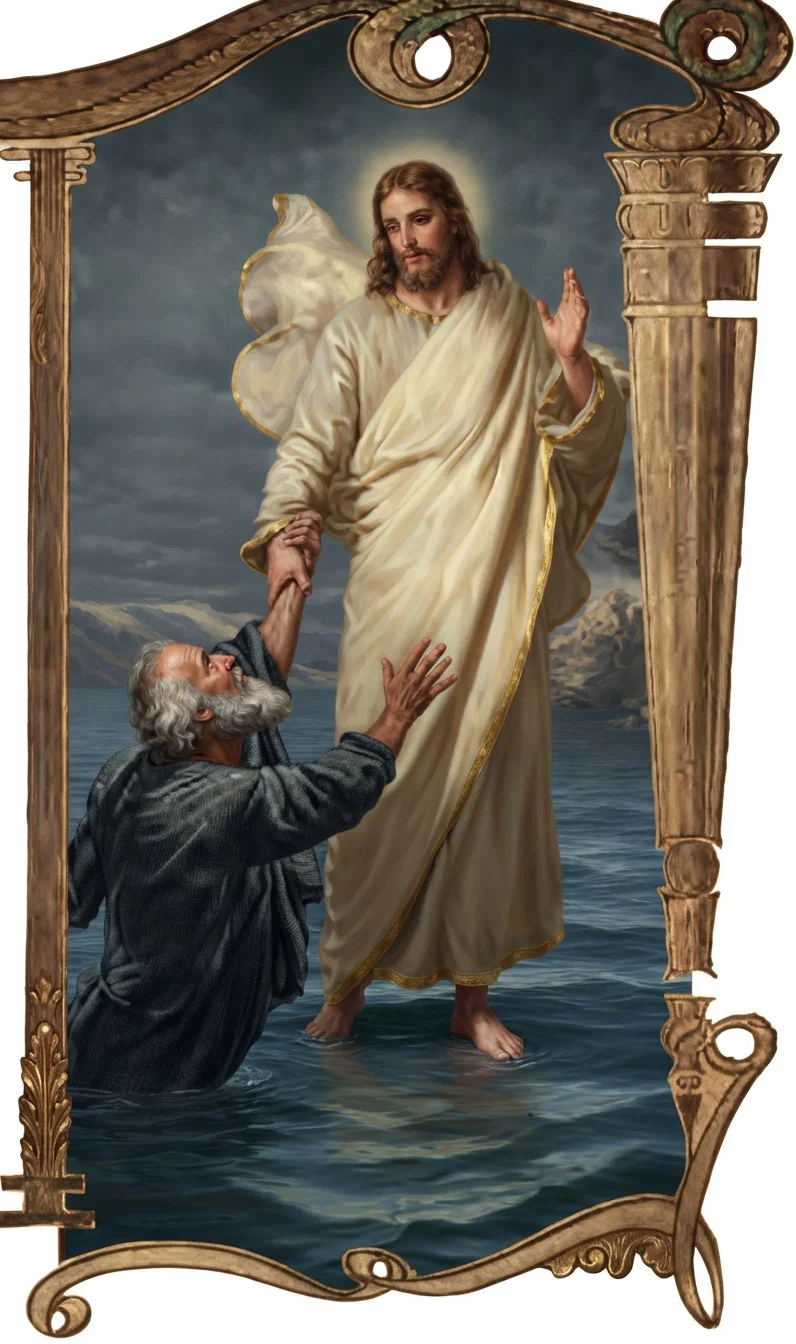
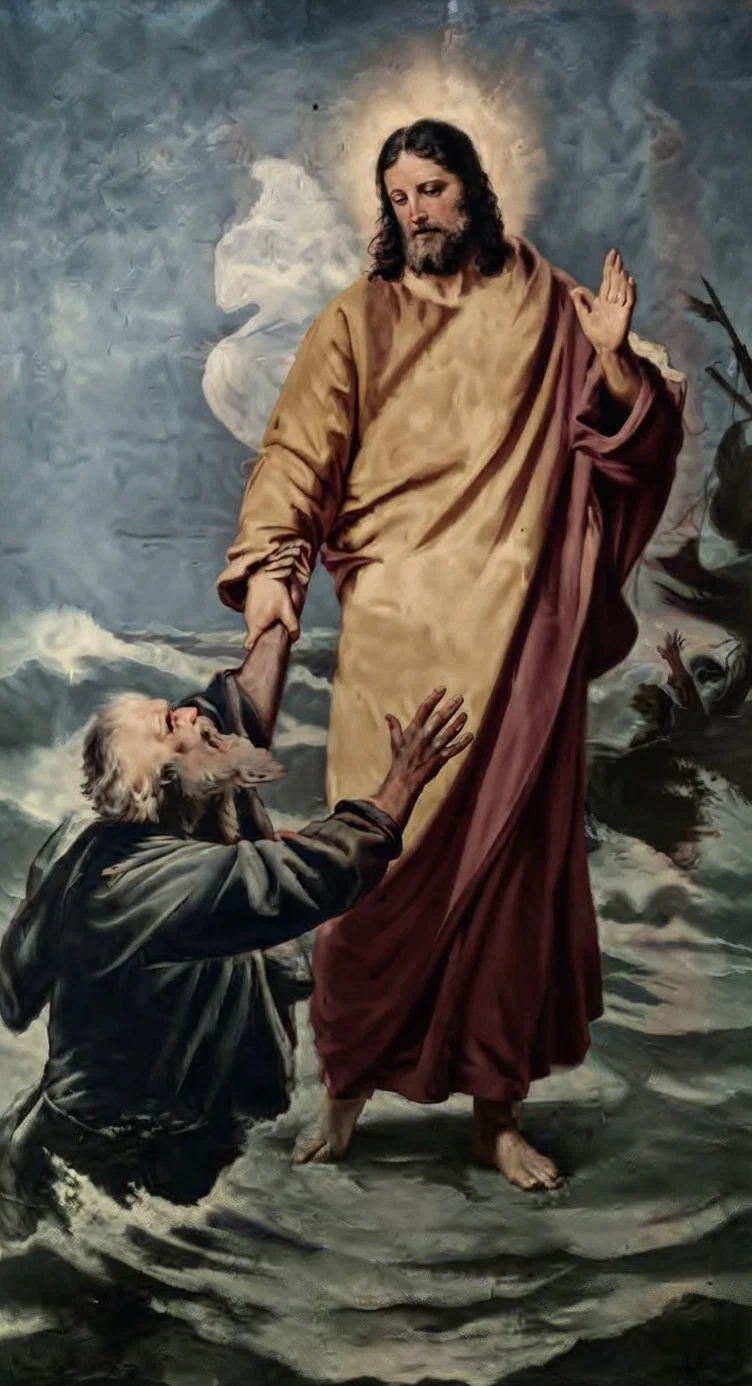
JESUS, THE SAVIOUR OF MEN. Plockhorst