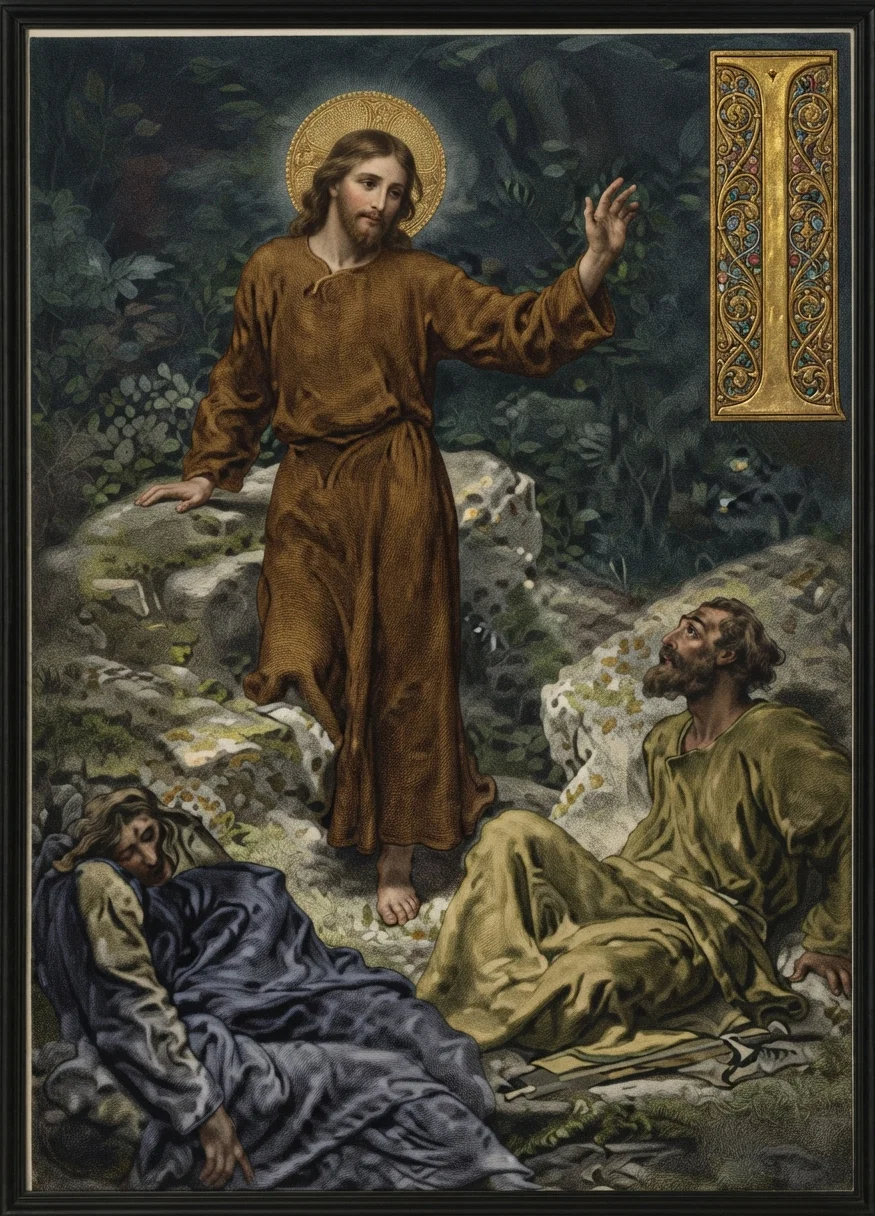
Christ Volunteered to Pay the Death Penalty for Man—The Majesty of the Law Must Be Upheld—The Father Suffered with the Son
In the transgression of Adam, the race of mankind had fallen. He could transmit to his offspring only the heredity of his sinful nature. Hence by the natural law of transmission, the iniquity of Adam must be visited upon the race. "By the offense of one judgment came upon all men to condemnation." Rom. 5:18. Judgment had been rendered, the verdict announced; and the world ruined by rebellion, having seceded from the moral government of God by the act of disobedience, was hopelessly lost. "Wherefore, as by one man sin entered into the world, and death by sin; and so death passed upon all men, for that all have sinned." Verse 12.
HE HAD NO EXCUSE
Man could offer no acceptable excuse for sin. God's proclamation was plain: "Of the tree of the knowledge of good and evil, thou shalt not eat of it: for in the day that thou eatest thereof thou shalt surely die." Gen. 2:17. Eve informed Satan that God had made this definite prohibition. Gen. 3:3. Hence she could not plead ignorance of the law. But even ignorance of law does not excuse the transgressor.
DUE THE DAY HE SINNED
The death penalty was therefore due the day man sinned. If it had been executed that day, the race of mankind would have perished in Adam. Why was not the death penalty executed upon Adam that day?—Jesus offered to take man's place and bear the penalty in man's stead. So it is said: "For we must needs die, and are as water spilt on the ground, which can not be gathered up again; neither doth God respect any person: yet doth He devise means, that His banished be not expelled from Him." 2 Sam. 14:14. Or, as the margin reads, "Because God hath not taken away his life, He hath also devised means."
Adam's life must have been taken away that day if God had not devised means to spare it, by another volunteering to act as man's substitute under the death sentence. By that means His banished was not expelled from Him. "Then He is gracious unto him, and saith, Deliver him from going down to the pit: I have found a ransom." Job 33:24.
The means devised had therefore provided a ransom for man that saved him from execution the day that he sinned.
CHRIST MAN'S VOLUNTARY SUBSTITUTE
The very day that Adam sinned, God sought him in the garden, and offered him a ransom in the promise that the seed of the woman should bruise the serpent's head. Gen. 3:15. This promise was renewed to Abraham. Gen. 17:19. The promised seed was Christ. "Now to Abraham and his seed were the promises made. He saith not, And to seeds, as of many; but as of one, And to thy seed, which is Christ." "And if ye be Christ's, then are ye Abraham's seed, and heirs according to the promise." Gal. 3:16, 29.
Why did not God pardon the sinner without the sacrifice of Christ? It was not because He did not love the sinner sufficiently. "For God so loved the world, that He gave His only-begotten Son, that whosoever believeth in Him should not perish, but have ever-
lasting life." John 3:16. To offer pardon indiscriminately for all violation of law, without inflicting its penalty upon a voluntary substitute, would remove all restraint of law.
FUNDAMENTALS IN SCIENCE AND MORALS
As in science there are certain fundamental rules that lie at the foundation and enter into the solution of all scientific problems, so in morals there are ten fundamental rules that lie at the foundation of God's moral government and enter into the solution of all moral questions. Sin is secession from the government of God. Sinners are those who have joined Satan in secession. To provide a plan of pardon that would restore to such the rights of citizenship while in open rebellion against the government, would be to enthrone anarchy and overthrow the kingdom of God.
In providing a plan of pardon, the dignity of the law must be recognized. God could not wipe the slate and call the account of sin balanced. The Lawgiver must either inflict punishment or take it upon Himself. He chose to take His own judgment of sin upon Himself, that He might save the guilty without dishonoring the law.
MUST ACKNOWLEDGE JUSTICE
Any plan of pardon that does not require an acknowledgment, on the part of the sinner, that God is holy and just, is imperfect. Holiness must in love set judgment in the earth, while restoring the sinner. No amount of sacrifice or suffering which does not by a life of obedience recognize the justice of God's demand for holiness, can atone for sin.
Sin is not merely to be punished. It must be removed from the universe. God and sin can never dwell together. He can never look upon sin but to hate it. The measure of His love for the sinner is the measure of His hatred of sin. The ruin that sin has wrought with the subjects of His kingdom makes impossible His reconciliation to its remaining in the universe. God must remove sin from the universe or abdicate His throne.
The vicarious sacrifice of Christ begins the work of atonement with a life of such perfect obedience as does justice to God's holiness and to the righteous requirements of His holy law. He thus began the work of atonement at the very point where man had failed. In taking man's place, He must be just before the law, or He can never justify the transgressor. He must sense the sinfulness of sin as God feels it, as well as to accept its judgment for men. He must justify God's dealing with sin, while suffering its penalty.
DID IT AS A VOLUNTARY SUBSTITUTE
This Christ did as man's voluntary substitute. "For if by one man's offense death reigned by one; much more they which receive abundance of grace and of the gift of righteousness shall reign in life by one, Jesus Christ. Therefore as by the offense of one judgment came upon all men to condemnation; even so by the righteousness of one the free gift came upon all men unto justification of life. For as by one man's disobedience many were made sinners, so by the obedience of one shall many be made righteous." "That as sin hath reigned unto death, even so might grace reign through righteousness unto eternal life by Jesus Christ our Lord." Rom. 5:17-19, 21.
Though tempted in all points as we are, Christ lived His entire life for man as man, yet without sin. Heb. 4:15. He vindicated the justice of God in requiring obedience to the law, not only by showing that man could have lived it perfectly in Paradise, but as man He lived it inviolate in a world of rebellion. Having lived righteously for man, He had righteousness to offer to man.
But His obedience could not be accepted for transgression, until justification had been made complete by the acceptance of the penalty of transgression as just. When He took man's place, the217Lord laid on Him the iniquity of us all. Isa. 53:6. In accepting the death penalty for all, Christ acknowledged that the death sentence pronounced upon all was just. Here His obedience reached its climax, and His vindication of God's justice was complete.
IT WAS NOT DONE ARBITRARILY
God did not arbitrarily lay the sins of the world upon Christ. The counsel of peace was between Them both. Zech. 6:13. Christ, though equal with God, voluntarily "made Himself of no reputation, and took upon Him the form of a servant, and was made in the likeness of men: and being found in fashion as a man, He humbled Himself, and became obedient unto death, even the death of the cross." Phil. 2:7, 8.
In dealing with the problem of atonement, Christ must exercise the same freedom of choice, at every step of His voluntary substitution for man, that man had been permitted to exercise in relation to sin. It was this right of freedom to choose at every step whether He would proceed farther with the plan to save man at the tremendous sacrifice it involved, that caused the bitter cup of man's sin meeting God's displeasure in Gethsemane and at the cross, to tremble in His hand. It was not until He had voluntarily said, "Nevertheless not My will, but Thine, be done," that the Father inflicted upon Him the extreme penalty of sin at the cross.
HE COULD NOT EXCUSE SIN
The conquest of Calvary had been won in Gethsemane. Christ's death was the manifestation of God's displeasure against sin. It shows that sin must be punished. Its judgment must be executed the same when it is voluntarily taken by His own innocent and beloved Son, for man, as when it falls upon the most hardened impenitent sinner. This shows unquestionably that all sinners must be freed from sin through Christ's voluntary substitution, or meet the death penalty. God would not inflict the death penalty upon His own Son when sin was laid upon Him, and excuse another with unsurrendered sins of his own upon him. Christ's voluntary substitution for man is therefore an incontrovertible demonstration of the fact that every man must accept Christ's work of atonement for sin, or himself be executed as a sinner.
NOT TO APPEASE GOD'S WRATH
Christ's execution upon Calvary was not to appease the wrath of an offended God against the sinner. Neither was it the death of a martyred hero. It was the climax of the love of God for the sinner. "But God commendeth His love toward us, in that, while we were yet sinners, Christ died for us. Much more then, being now justified by His blood, we shall be saved from wrath through Him. For if, when we were enemies, we were reconciled to God by the death of His Son, much more, being reconciled, we shall be saved by His life. And not only so, but we also joy in God through our Lord Jesus Christ, by whom we have now received the atonement." Rom. 5:8-11. The marginal reading for "atonement" is "reconciliation."
Reconciliation is bringing man to see and acknowledge that he is wrong and God is right. Atonement is at-one-ment. It is restoring the sinner to a position where he is at one with God, and, through the love of God, with his fellow men. It must restore the sinner from rebellion, and reinstate him in the kingdom of God.
RECONCILING THE SINNER
God was not in wrath merely looking upon Christ and condemning the sinner. God was in Christ reconciling the sinner to Himself, not by removing His law, but by removing the sinner's transgression of it. The atonement is not an effort at compromise between the sinner and God. It is not an effort to get God to love the sinner. God in love gave His Son on Calvary to save the sinner who in fiendish rebellion mocked and derided Him upon the cross. God commended His love in that while men were yet sinners Christ died for them.
But God can never be reconciled to a sinner's leading an unholy life. God was in Christ offering to man a holy life on condition of the surrender and removal of sin from the universe. Man in Christ accepted the offering. Christ through the work of atonement has undertaken to remove sin, and through His atonement God and man are reconciled. That the atonement is completed by the removal of sin from the universe is seen in the cleansing of the sanctuary.
VICARIOUS SUFFERING
The vicarious sacrifice of Christ is not mere sentiment. It is the central fact of both the Old and the New Testament Scriptures. "Without shedding of blood is no remission." Heb. 9:22. "For the
love of Christ constraineth us; because we thus judge, that if one died for all, then were all dead: and that He died for all, that they which live should not henceforth live unto themselves, but unto Him which died for them, and rose again." 2 Cor. 5:14, 15. Christ's life must be sacrificed in the sinner's stead if He would restore the sinner. "Surely He hath borne our griefs, and carried our sorrows: yet we did esteem Him stricken, smitten of God, and afflicted." Isa. 53:4.
THE ERRONEOUS PAGAN CONCEPTION
The pagan conception of suffering was, to appease God's wrath against the sinner. Those who have become affected by paganized conceptions of Christianity have viewed the sufferings of Christ in that way. This would make of an infinitely loving God, a demon of hatred.
It has been the plan of Satan ever since his fall to make God appear as an exacting judge, standing over the sinner with the sword of justice, only awaiting an opportunity to wreak upon him vengeance in the enforcement of an arbitrary law. He has ever sought to attribute all the suffering that sin has occasioned to the vengeance of an unjust God. Christ's death upon Calvary, by revealing the love of God, unmasked Satan's malicious scheme to undermine thus the character of God. At the cross it was seen that "He was wounded for our transgressions, He was bruised for our iniquities: the chastisement of our peace was upon Him; and with His stripes we are healed." Isa. 53:5.
The cross was not the manifestation of the Father's wrath against the sinner, but the infliction of the penalty of transgression of His law upon sin.
GOD SUFFERED WITH CHRIST
The cross was the climax of Christ's life of love. He had submitted to be made sin for us, that He might make us sinless. "He hath made Him to be sin for us, who knew no sin; that we might be made the righteousness of God in Him." 2 Cor. 5:21. "Behold, what manner of love the Father hath bestowed upon us, that we should be called the sons of God." 1 John 3:1.
It wrung the heart of God to its infinite depths to withdraw His face from His Son in the hour of His darkest trial. God suffered equally with Christ in permitting His Son to be made sin for us. Accompany Abraham and Isaac to Mount Moriah if you would know the suffering of the Father in offering His Son for us. Hear the suffering Son cry out, "My God, My God, why hast Thou forsaken Me?"
But the Father can not spare His Son the agony of Gethsemane and save the lost. Christ must feel the depths of the separation of sin from a holy God. And as God turned His face from His only Son, He felt to its depths the awful darkness that sin had brought. God was in Christ suffering that He might reconcile sinners by His love.
THE SACRIFICE WAS DIVINE
"It was Christ that died." His death was not the death of humanity. It was the death of God for humanity. A human sacrifice could not atone for sin. He came as "Immanuel," "God with us." He was Divinity clothed in humanity, Son of God and Son of man. As man He lived a sinless life, "in all things . . . made like unto His brethren, that He might be a merciful and faithful High Priest in things pertaining to God, to make reconciliation for the sins of the people." Heb. 2:17.
As God He died a divine sacrifice for sin. His very soul was poured out unto death, and made an offering for sin. Isa. 53:10-12. Our redemption is sure, because our Redeemer is Creator. He is not only to place us under new environment, but to make us new creatures. After His resurrection it was said, "See the place where the Lord lay." And standing forth triumphant over death He said: "I am He that liveth, and was dead; and, behold, I am alive forevermore, amen; and have the keys of hell and of death." Rev. 1:18.
GOD IS FOR US—WHO CAN BE AGAINST US?
O, sin-burdened soul, in view of Christ's suffering and death for us, "what shall we then say to these things? If God be for us, who can be against us? He that spared not His own Son, but delivered Him up for us all, how shall He not with Him also freely give us all things? Who shall lay anything to the charge of God's elect? It is God that justifieth. Who is he that condemneth? It is Christ that died, yea rather, that is risen again, who is even at the right hand of God, who also maketh intercession for us. Who shall separate us from the love of Christ? shall tribulation, or distress,218or persecution, or famine, or nakedness, or peril, or sword? As it is written, For Thy sake we are killed all the day long; we are accounted as sheep for the slaughter. Nay, in all these things we are more than conquerors through Him that loved us. For I am persuaded, that neither death, nor life, nor angels, nor principalities, nor powers, nor things present, nor things to come, nor height, nor depth, nor any other creature, shall be able to separate us from the love of God, which is in Christ Jesus our Lord." Rom. 8:31-39.