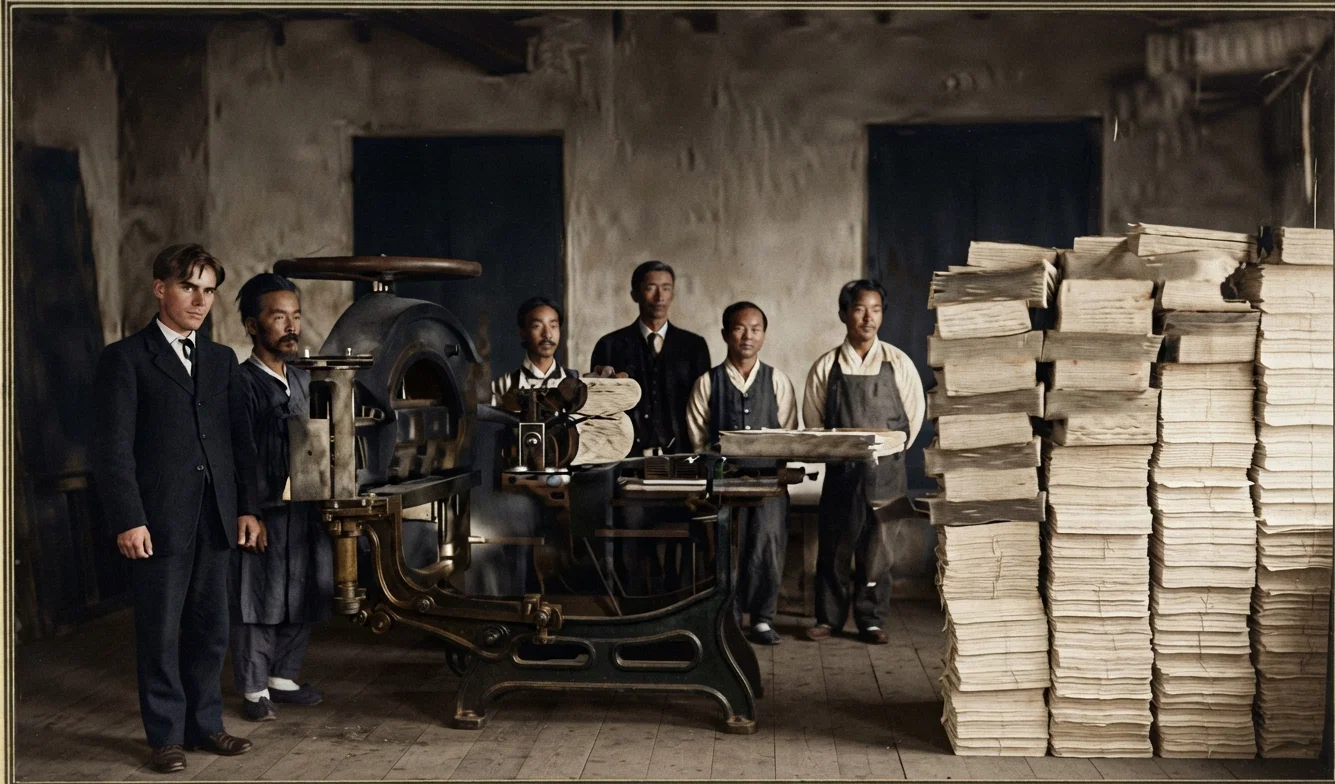
PASTOR C. L. BUTTERFIELD is superintendent of our mission work in Korea. Having been in that field for a number of years, he has had personal observation of much that he tells about in his article.
WE often think of the great ocean liners as aiding mission work by carrying missionaries to their fields of labor and by forming a connecting link between them and the home land. And truly they are great aids when compared with ocean transportation of fifty years ago. But to-day they are not the only aids enjoyed and used, but just one of many.
ONLY TWENTY-SEVEN YEARS AGO
Twenty-seven years ago, mission work in Korea was commenced at Pyong Yang, the second city in size, and located one hundred seventy miles north of Seoul, the capital. The city could be reached by going up the Tai Tong River from the Yellow Sea; but there were no roads either wagon or rail, no telephones, no telegraph lines, and mail from America had to be brought from Seoul once a month on ponies' backs.
NOT A WHEEL TURNED IN ALL THE COUNTRY
At that time there were no wagons or carts here. In fact, not a wheel turned in all Korea. But here as elsewhere, "the entrance of Thy word giveth light"; and the coming of the missionary, bearing the glad tidings of salvation through Christ to those who in their spiritual darkness were bowing down to idols of wood and stone, meant not only spiritual light and life and joy in Christ, but it also meant that the dawn of a better day had arrived.
RAILROAD ACTIVITIES
It was in 1907 that the railroad reaching from the port of Fusan at the southern extremity of the peninsula, and passing through Seoul and Pyong Yang to Weiju on the Manchurian border, was completed. Now this railway, ending at Fusan, is the eastern terminus of the great Trans-Siberian Railway connecting with the trunk lines of Europe; and it is possible to travel from Seoul to London, a distance of nearly eight thousand miles, in comfort and ease in only twelve days' time. Branch lines have been built from this main line, and now there are nearly one thousand miles of railway in this small country, and more is built each year.
ANNEXATION TO JAPAN AND PROGRESS
Since the annexation to Japan, great improvements have been made. Five years ago we wished to print a small monthly paper, but there was no way of sending it to the subscribers in the country unless we sent a man to deliver it. To-day we received an order for one thousand six hundred copies of our twenty-eight page magazine, to be sent to agents more than twenty-five miles from the railroad, and at least two hundred miles from here. In three days the postman will deliver them at the agents' homes. The postage was only $2.25.
Splendid roads are under construction, connecting all the important towns of the country. On these, automobile lines are established, and are well patronized. Only a short time ago, the writer wished to visit a new company of Adventists living fifteen miles from the railway station. He expected to walk that distance, but found it to be an automobile road, and in forty minutes had gone twelve miles for only thirty-five cents.
Although the first recorded printing by movable type — A. D. 1403 — was in Korea, the development of this art remained for the coming of the missionary. To-day there are several daily papers printed here, besides weeklies, monthlies, and books. In our own publishing house we have issued, during the past year, an average of three thousand copies a month of our magazine, a two thousand edition of a treatise on Revelation, a three thousand edition of a book after the order of "Bible Footlights," an eleven thousand edition of a thirty-eight page tract on the signs of Christ's coming, and we are now printing a ten thousand edition of the tract "Waymarks to the Holy City." Aside from these, there has been the Sabbath-school Quarterly, and smaller tracts, etc.
By these and many other inventions, missionary work in Korea has been revolutionized during the past twenty years. New missionaries coming to the field know nothing of the hardships, privations, and primitive methods of work of those who first came.
THESE IMPROVEMENTS AND THE ONWARD MESSAGE
But why all these improvements? Are they provided in order that missionaries may have an easier time, and keep in touch with the world by having American mail delivered to their door every four or five days?—Not at all. The hour has struck for this message to be given to the world, and God is wonderfully preparing the way, "for He237will finish the work, and cut it short in righteousness."
Now is the time to arise and give the message to every nation, kindred, tongue, and people. Every modern invention is at our command to aid in the work. Not only so, but God is waiting to baptize us with the Holy Spirit and power. The preaching of this message will soon culminate in the close of the Judgment in heaven, and the glorious appearing of Jesus Christ to receive His people to Himself. Therefore let us make use of every material aid that God has prepared for us, and also the aid of the Holy Spirit, in winning souls who will stand with us in that great day, and exclaim, "Lo, this is our God; we have waited for Him, and He will save us: . . . we will be glad and rejoice in His salvation."
C. L. BUTTERFIELD.