China's National Christianization and Its Reaction
By Ross C. Porter
The Remarkable Transformation from Established Customs and Prejudices to "a Modern Christian Republic" — A Mighty Backward Current Has Set In — Struggling Forces in Terrific Conflict
By Ross C. Porter
MR. PORTER is in charge of the Asiatic division of our missionary operations, with headquarters at Shanghai, China, and therefore writes from the standpoint of first-hand information. Revolutions in this time, whether forward or backward, go with marked intensity.
A LITTLE more than two years ago, China was in the throes of one of the greatest revolutions of history. This revolution is quite generally conceded to have been the result of years of missionary operations, which had created a sentiment in favor of Christianity and Western civilization.
When the revolution reached the point that its success was assured, there was a great swing, on the part of the new government party, toward Christianity and republicanism. Cues were cut off, idols were destroyed, temples were demolished, and the traditions and customs of forty centuries were abandoned by large numbers of heathen Chinese. The world has furnished no parallel of a heathen empire of so long standing, with its religious customs so deeply grooved in millennia of tradition, turning from the beaten track of many centuries, in so marked a revolution, in the space of a few months.
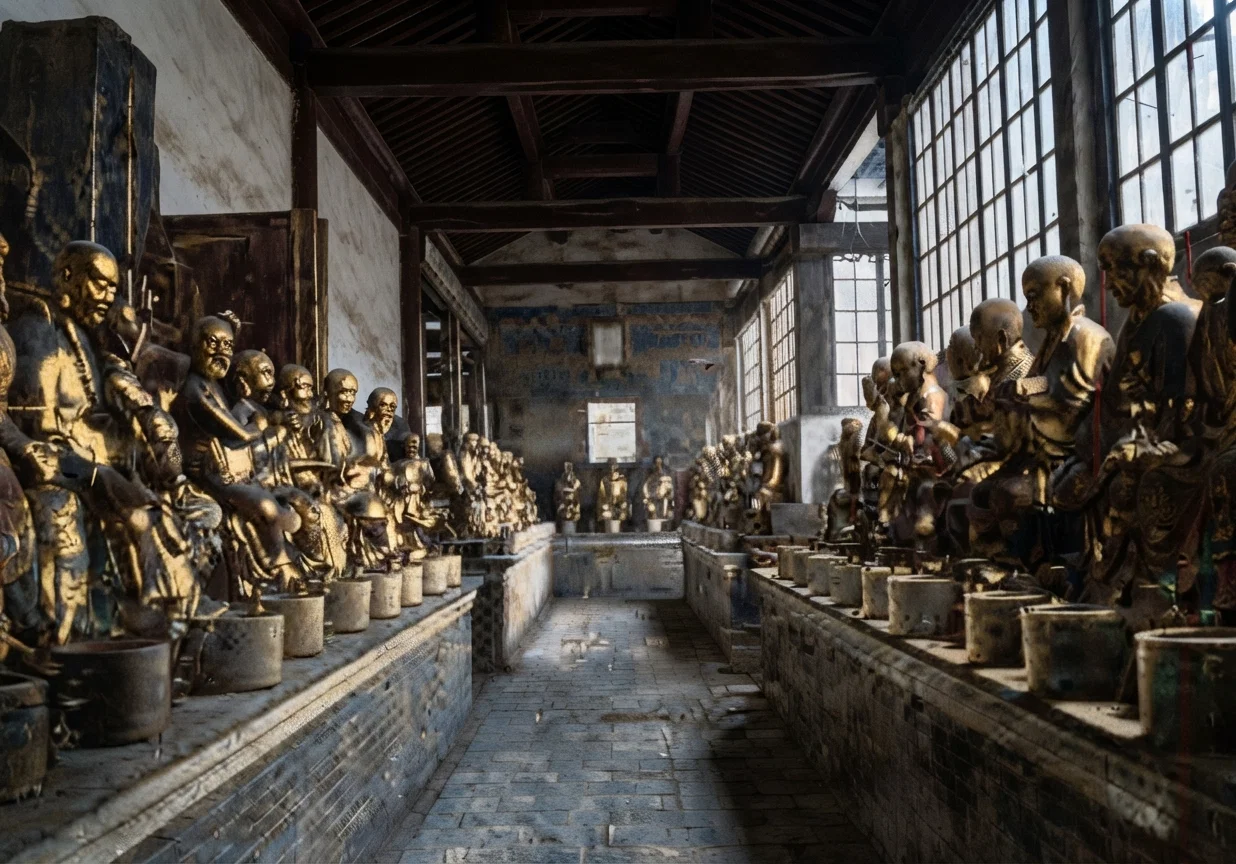
At the setting up of the republic in China, the idols were removed from a number of the large temples, in order that the buildings might be used for schools or barracks.
Eloquently Spoke of Fabled Millennium
Statesmen paused, marveled, approved, applauded the marvelous transformation from the old heathen Manchu dynasty to the new Christianized republic, and talked more eloquently of the fabled millennium of peace on earth when nations shall learn war no more. Missionaries who had toiled in the midst of plague, famine, persecution, riot, raid, and revolution, hailed with delight the indications that their labors had been rewarded and brighter days were dawning for the heralds of the cross.
The more pessimistic class seriously raised the question, Will this reformation movement be lasting? Can a people who have not trained themselves in self-control, operate successfully a self-governing republic? Can a great empire so suddenly turn bodily from heathenism and imperialism to Christian civilization and republicanism without a relapse? They supported their query with the scripture, "Can the Ethiopian change his skin, or the leopard his spots? then may ye also do good, that are accustomed to do evil."
Many were the good offices rendered, by enlightened statesmen, in the interests of good government and the prosperity of the new republic. Christendom devoutly praised God for the national Christianization of China, and most sincerely prayed that this reformation movement might be lasting.
But a great change has come. A reactionary spirit now permeates the new republic. The reaction is twofold,—first, against the method of operating the government; second, against the new religious movement that accompanied the formation of a constitutional government.
The republic was born under conditions of internal revolt against the old dynasty on account of misrule. Those looking toward a constitutional government for relief, have looked and hoped in vain. The officials chosen by the people to direct the affairs of the new ship of state had not become so far Christianized as to love their enemies. Old animosities were settled by executions without due process of law. The old conditions of unrest, which are the first stages of revolution, revived.
Last summer several of the leading cities started a revolution, which was the most stubbornly defended at Nanking. Here the general in command of the government forces in the hour of victory remembered an old slight from that city during the revolution of the preceding year, and turned the city over to the unrestrained passions of thirty-five thousand soldiers for three days. The outer city having been burned, the city within the wall, one of the finest in China, was the scene of barbarous outrages. Chinese women226were raped publicly in the streets, while their friends were guarded off by soldiers with bayonets. Every Chinese place of business in the city was looted of everything worth carrying away. Private dwellings were then likewise universally raided and looted. If citizens offered resistance in protection of their wives, daughters, or property, they were thrust through with bayonets.
Such conditions did not indicate that the great empire which had swung so far toward Christian civilization in its theory of government was yet Christian. Other disorders followed on account of the discontent which had arisen from what was interpreted as a continuance of the old forms of misrule under the new form of government.
THE IDOLS AND BUSINESS INTERESTS
One serious difficulty that confronted the new republic, of which little account was taken at the time the new government was launched, was the number of business men affected by the movement away from idol-worship. Large numbers of those engaged in the manufacture and sale of idols and incense, soon entered strong complaints on account of the falling off in their business receipts. At first little attention was paid to their demands that some steps be taken by the government looking toward the revival of the old Manchu customs of worship. Unrest and revolution followed in various places.
DISAFFECTED GENERAL LEADS REVOLT
The most serious feature of the present reactionary movement began early in the winter. White Wolf, formerly a prominent general, but now seeking revenge against the government, with a company of disbanded soldiers, began raiding the helpless country people in the interior of central China, in the provinces of Hupeh, Honan, and Anhui. At first the government was too busy with its consideration of other problems to give much attention to affairs affecting only two or three provinces; but the movement grew as it advanced, until from fifteen to twenty thousand soldiers are playing the role of bandits in central China. They not only have robbed their own people, but they have plundered foreign missions, captured missionaries, carried off one child—who was returned for a ransom—and shot down in cold blood the superintendent of a Catholic mission. The object of this interference with foreigners was doubtless twofold,—first, to secure booty; second, to involve the central government in difficulty with foreign nations.
GOVERNMENT TROOPS INEFFECTIVE
The government has recently sent forward thirty thousand troops to subdue these bandits and quell the rebellion. But so far, either from fear or out of sympathy with the bandits, the government troops have made no decided advance upon the revolutionists. When the advance lines have come near enough to skirmish, they have compelled lines of citizens or coolies to form in advance to meet the fire and protect the troops. It is reported that White Wolf's soldiers lashed a number of girls on horses, with kerosene cans opened and lighted to spill the blazing contents over the girls and the animals as they advanced. Thus prepared, the maddened animals were rushed into the lines of the advancing government column for the purpose of throwing them into confusion. Such methods of warfare, such inhuman torture, if the report be correct, is a revelation of present conditions in China.
RETURNING TO CONFUCIUS
In order to steady revolutionary conditions throughout China, President Yuan Shih Kai, after dissolving congress and calling a constitutional amendment conference, has introduced measures which are reported in the China Press, Shanghai, February 22, as follows:
"Regulations for the veneration of Confucius have been promulgated. The hereditary title and all honors are restored to his lineal descendant.
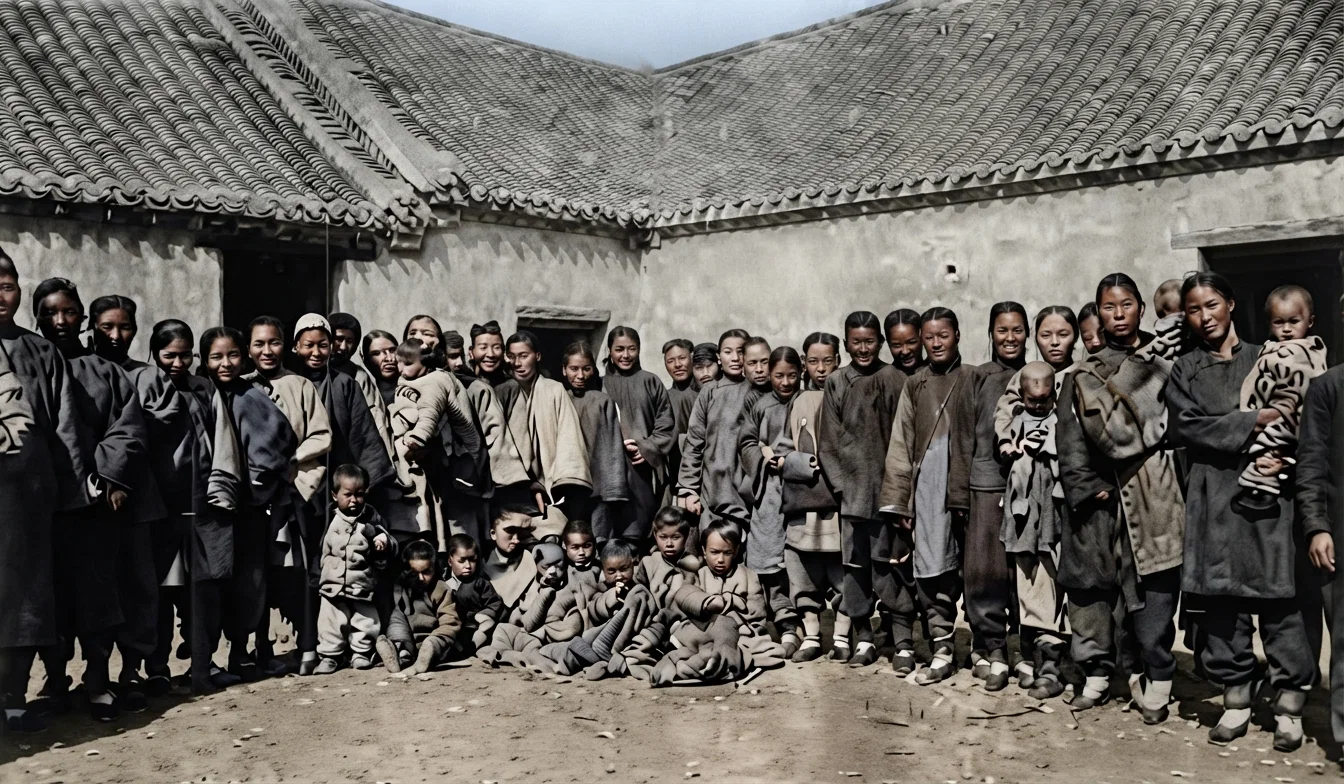
CHINESE SISTERS, WITH SOME OF THEIR CHILDREN, WHO ATTENDED OUR RECENT GENERAL MEETING AT YENCHENG, HONAN, CHINA
"The regulations also grant an annual pension of one thousand dollars to him, whilst the expenditure upon the offering of sacrifices to Confucius is fixed at six thousand dollars a year. Eight sacrificals are being appointed from his direct descendants. These posts will be hereditary.
"A presidential mandate contains the regulations about the Confucius veneration. According to them, forty priests employed by the government in the temple at Kufu, are given a silver seal. Two thousand dollars a year are provided for the upkeep of the mausoleum of Confucius."
THE FOUNDATION FOR ANOTHER REVOLT
Thus the pendulum which swung so far toward Christianity in the formation of the republic is now swinging backward. The dream of China becoming a Christian nation does not appear so promising as it did on October 10, 1913, when the first president was inaugurated. On the contrary, the present conditions indicate that China's reaction is laying the foundation for another revolt against Christianity and its advocates, which will evidently follow sooner or later.
The reaction, supporting Confucianism, as it does, is another step toward the final conflict of nations, when awakened heathenism shall assemble her forces for the Armageddon battle just before the second advent of Christ. See Joel 3:9-17; Rev. 16:12-21.