The Printed Page and the Active Worker—New Recruits to the Front
The Beautiful Southern Continent
By H. H. Hall
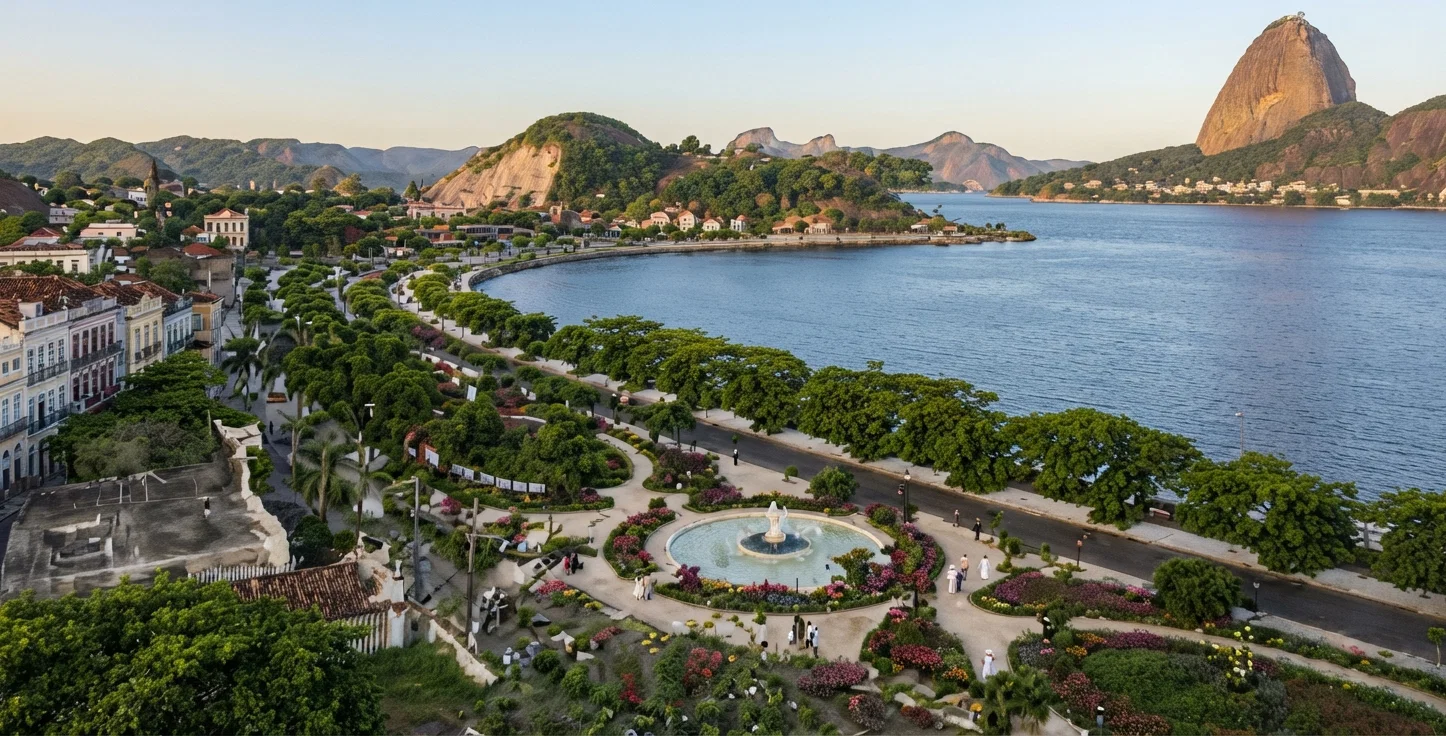
AVENIDA CENTRAL, SHADED BY THE BRAZIL-TREE
PREVIOUS articles from Brother Hall, the manager of our book department, have told, both by words and by illustrations, how our work, particularly in the publishing line, is advancing in England, Scandinavia, Germany, Spain, and other places he has visited in Europe. In this article, he has just well started in his work in South America. Later articles from him will tell of the things he has seen in the advancement of our work in other portions of South America, as well as what he finds in Central America and the West Indies.
It is a thing to be wondered at, as we contemplate the power that is taking hold of the hearts of men and women, and leading them into every corner of the world, to do self-sacrificing service in proclaiming the great and joyful message of the soon-coming Christ.
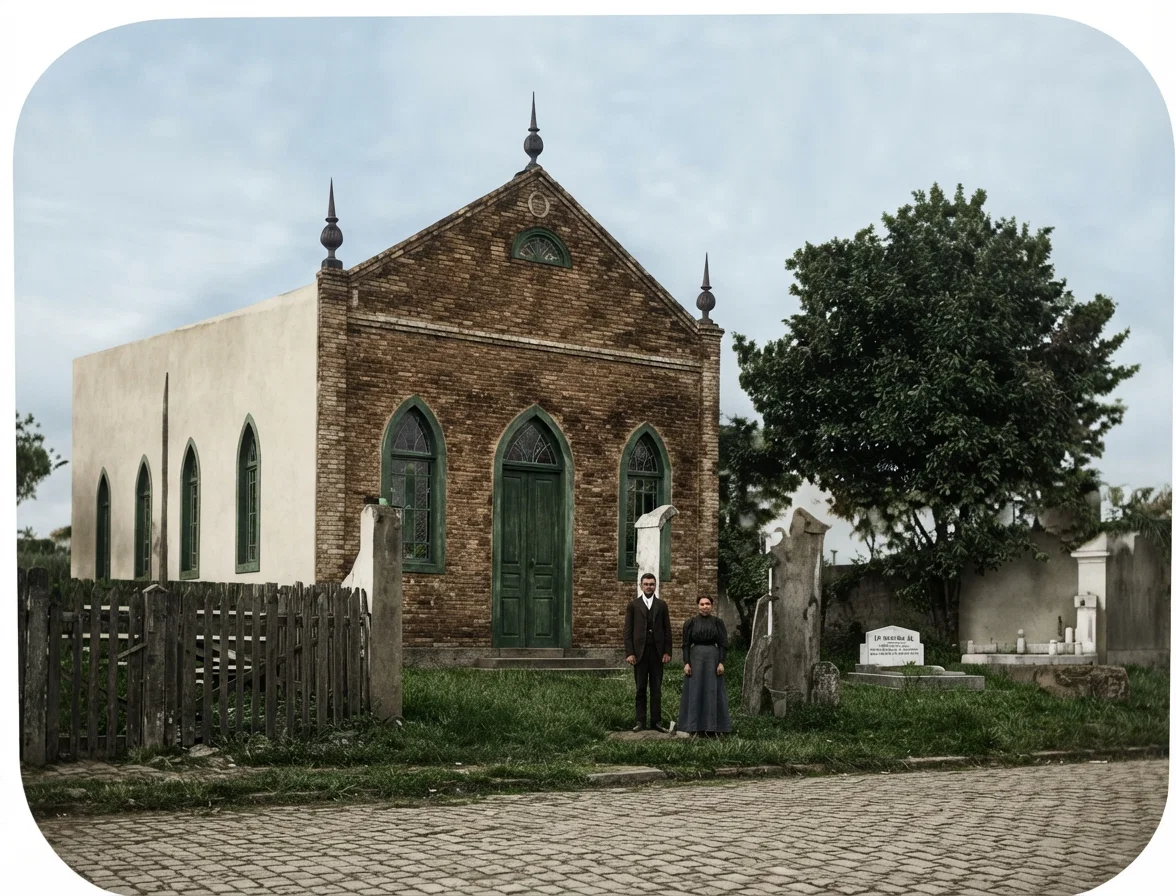
SEVENTH-DAY ADVENTIST CHURCH AT PORTO ALEGRE
URGED on by power generated in thirty monster boilers and so applied to its twin propellers as to turn them on an average of seventy times a minute, our steamship Amazon took but eight days to carry us from Madeira, off the coast of Morocco, to our first stop in South America. This is Pernambuco, where both the temperature and the low shore-line of palm-trees tell us we have entered the tropics.
Sharks and Yellow Fever
Although permission is given us to go ashore, we do not do so, for at least three reasons: first, the ship is about a mile from the dock, and the trip has to be made in small boats, and sharks abound; second, we do not like the looks of the bamboo basket in which we would be swung at the end of a wire rope to the bobbing boats below; and third, yellow fever is said to be taking its toll of lives in the city, and it is even rumored that the German consul and three Englishmen have been stricken.
Courageous in the Work Nevertheless
Yet not far from here we have a church of sixty members; and before this reaches the SIGNS office, Pastor Ricardo Wilfart will have arrived and entered upon his work in the vicinity.
We sail on down the coast to Bahia, situated in All-Saints Bay. It is a very old city, with a population of some two hundred thousand, and is said to have one hundred fifty churches. From the number of crosses we see from the harbor, we conclude that this is not an exaggeration. Here we also have a small company of believers; and Brother Max Rhode, formerly foreman in our Brazilian publishing house, is now on his way there to engage in Bible work. After taking on a few passengers and nearly two hundred tons of cured tobacco leaf — for the
people smoke down here — we proceed to the far-famed Rio de Janeiro.
Rio de Janeiro and Its Beauties
Travelers have vied with one another in praising its harbor and its improvements, and they have not overdone it. Perhaps the harbors of Sydney and San Francisco are as good, possibly Sydney is better; but Rio de Janeiro is safe, commodious, and beautiful, and is set in an environment of peculiarly shaped mountains that give it an individuality all its own. Then the city itself, with its more than a million inhabitants, its long curving beaches of fine white sand, its truly wonderful botanical gardens, its miles of broad boulevards skirting the water-front, its Avenida Central shaded with the Brazil-tree by day and brilliantly lighted by gas and electricity by night, paved like a floor, and its wide sidewalks laid in figured mosaics and flanked by truly magnificent buildings — well, these must be seen to be appreciated.
Our Mission Headquarters There
Rio de Janeiro is the headquarters of our Rio Espírito Santo Mission, of which Pastor F. R. Kuempel is the director. Pastor Ehlers and a company of workers are laboring in the city itself, where we already have a church of about forty members. Pastor Henry Meyer, who has been in charge of the work here, joined us on his way to his new field in southern Brazil. As we sailed out of the harbor, he pointed out to us the effects of the bombardment of the government buildings and fort by the mutinous marines in 1910. As will be remembered, these marines secured possession of the finest battle-ships in the navy, and used them to enforce their demands for certain reforms. The punishment meted out to some of them still forms a topic of subdued conversation about the city.
Santos and Its Coffee and Bananas
Another day brought us to the great coffee exporting port of Santos, where ships from all over the world were loading. This is largely done by long files of half naked men, each carrying a sack of about one hundred fifty pounds. I counted forty-two men in the group loading the ship nearest ours.
The huge warehouses on one side and the ships on the other shut out the little air that was stirring, while the tropical sun beat down upon the rocky pavement in a way that would seem almost to blind the men. Still they trotted on. This looked more like genuine labor than anything else I have seen on the trip, except possibly the coaling of the ship at Rio de Janeiro. That too was done by hand, baskets holding about fifty pounds being used for the purpose.
Here I had my first view of banana plantations, and saw great barges of the fruit loaded on waiting ships.
Administrative Divisions
Pastors F. W. Spies, president of the Brazilian Union Conference, and John Lipke, superintendent of the East Brazil Mission, came on board on their way to Montevideo, where they will assist in the South American Union Conference meeting.
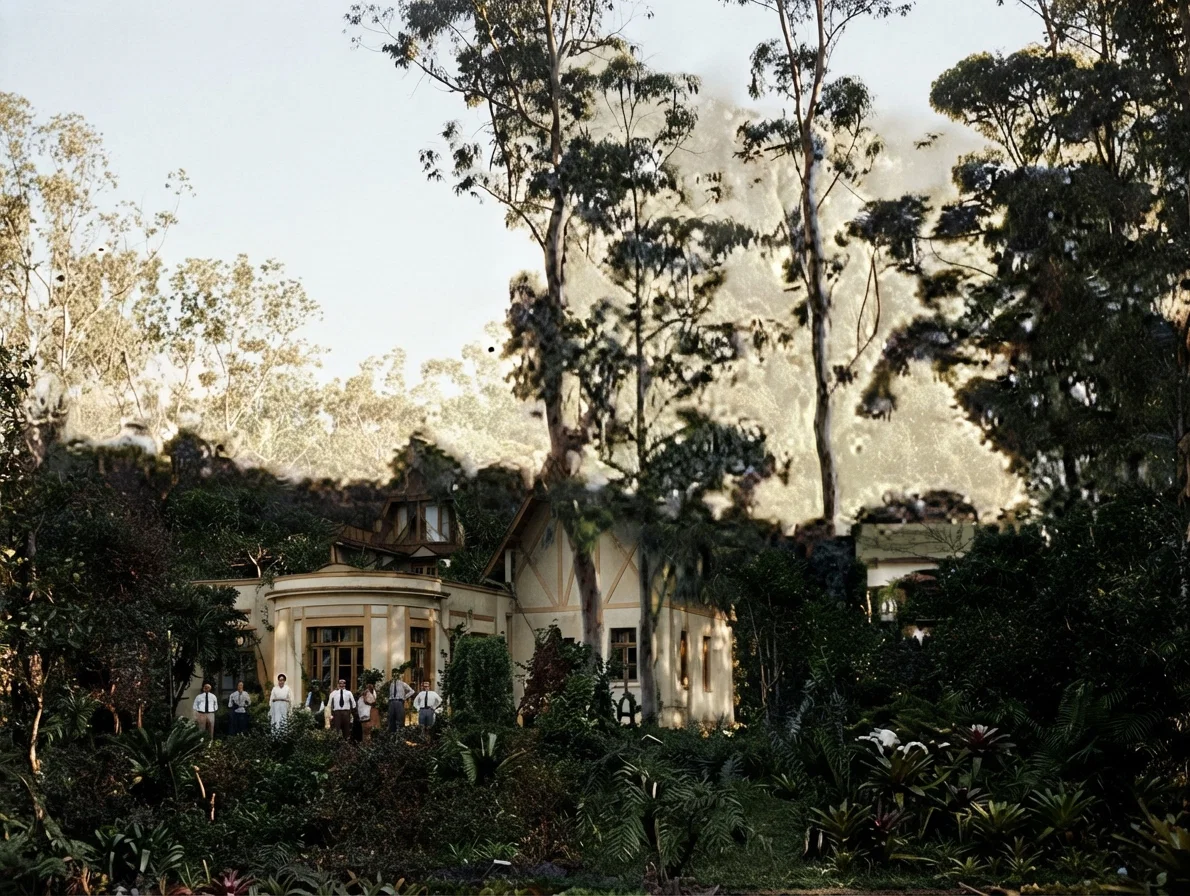
Perhaps it should be explained that our work in South America is separated into two general administrative divisions; namely, Brazil, where the Portuguese language is spoken; and Uruguay, Paraguay, Argentine, Chile, Peru, Bolivia, and Ecuador, the language of which is Spanish. The former division is known as the Brazilian Union Conference, and the latter as the South American Union Conference.269The treasurer of the Brazilian Union and manager of the publishing house, August Pages, also came on board. I returned with him across the coast mountains, up which our train was pulled by cable, to São Bernardo, São Paulo, where we have a fairly complete publishing plant. It occupies three good brick buildings, a partial view of which is here given. It has nearly six thousand feet of floor space, and the books show an investment of about $30,000 gold. It is located about a mile from the station, and is surrounded by vegetation peculiar to the tropics.
Activities in the Publishing Work
The publishing work has become a very important factor in evangelical efforts here, as is evidenced by the following records: In 1911 the sales were $7,195.50, in 1912 they were $9,861.50, and in 1913 they were close to $16,000. During these three years, there have been published here very attractive editions of “Steps to Christ,” “Glorious Appearing,” and “Christ Our Saviour,” and a seven thousand edition of “Home and Health” is nearly finished — all Portuguese, of course. We completed arrangements whereby an eight thousand edition of “Patriarchs and Prophets” will be issued, and twelve thousand copies of “Coming King,” the Pacific Press taking seven or eight thousand copies in printed sheets for the Portuguese-speaking people of North America. Thus the heavy expense of translating and typesetting will be distributed over twice as many books as would be possible if both countries published it, and the cost will be reduced proportionately.
The office records show that there are in Brazil one thousand six hundred Sabbath-keeping believers in the soon coming of our Lord. These are divided among fifty-five churches and companies, twenty-one of which have their own church buildings. One of these buildings is here shown. It is in the state of Rio Grande do Sul, Brazil, where their local conference meeting has just closed. It is 25 x 50 feet, and built of brick, over which a heavy coat of plaster with hard white coating is smoothly distributed. This is the almost universal plan of construction of the better class of buildings there. It resembles concrete. The church is fitted with a baptistery, in which ten were baptized recently.
Reenforcements and the Prospects
The working force has been small; but reenforcements have been received during the past few months, as follows: J. H. Peters and wife, from North Dakota; Henry Haeft and wife, of Washington; J. H. Boehme and wife, of California; P. Hennig and wife and C. C. Specht and wife, of the German seminary, Clinton, Missouri; R. M. Carter and wife, of Kansas; Carl Wright and wife, of New Jersey; Sisters Louise Wierts from Philadelphia, Corrine Hoy from Massachusetts, and Sarah Kinner from New Jersey.
As this group of workers master the language and take the many important posts now unfilled, we may confidently expect to see great things accomplished in this great country, with its twenty-four million people.
And truly it is a great country. One realizes it more and more every day he remains here. If the whole of the United States except Alaska were placed within its borders, there would still be room enough for most of Germany. It contains about one fourteenth of the habitable surface of the globe, and has a coast line of five thousand four hundred miles, while the Amazon and its different affluents alone furnish some twenty-seven thousand miles of navigable waterways.