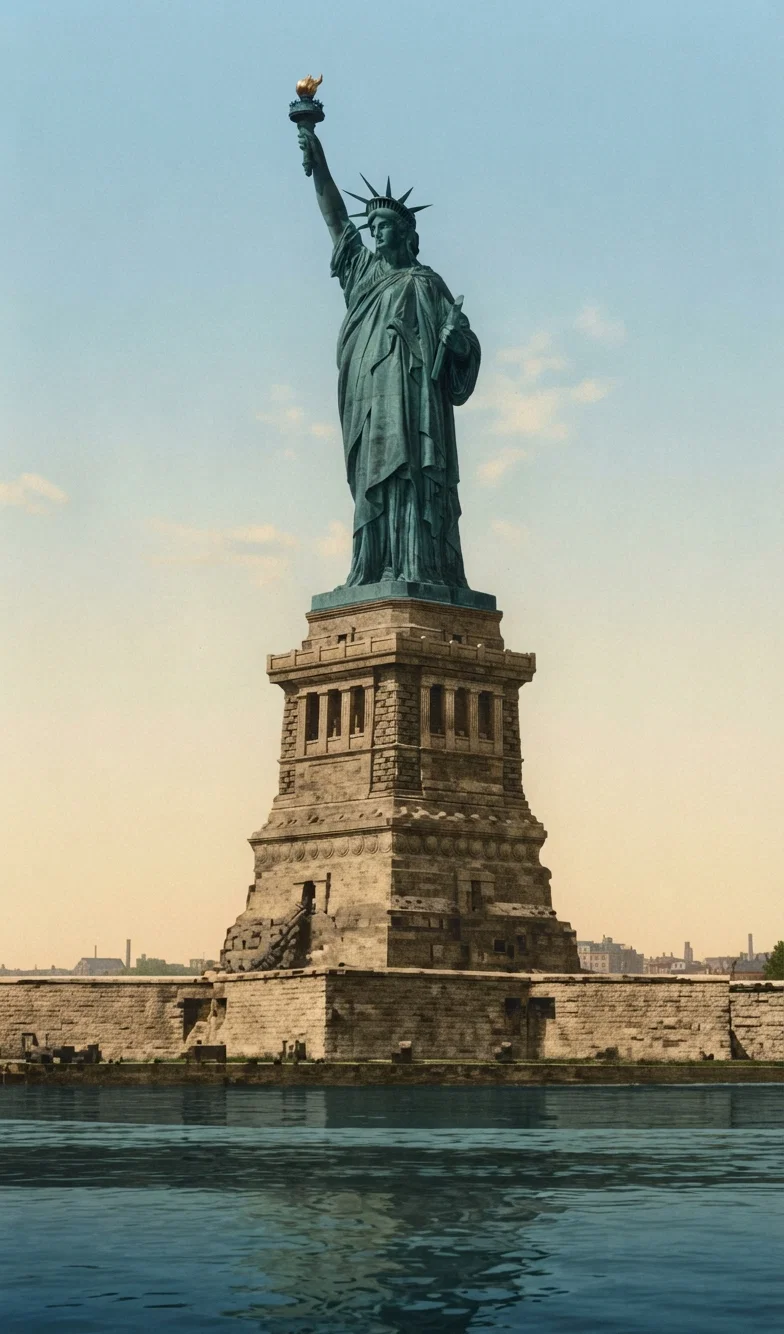
Illustrious Men of Old Who Have Sacrificed Themselves in the Cause of Individual Liberty — The Rights of One Man Defended Against a Nation
THIS article and the one next week by Mr. Porter deal broadly with the subject of inherent religious freedom. Each is independent of the other, but both contain important principles concerning man's accountability to God alone in matters of religious faith. This is a subject that is studied altogether too little in these times. Many of our fathers gave their lives to uphold these foundation principles. EDITOR.
RELIGIOUS liberty is a fundamental right of every man. It is soul liberty. It is the right of choice in religious matters. The right of choice embraces the privilege of choosing to be unrighteous, as well as perfect freedom to be righteous. It leaves a man as free to do wrong as to do right, religiously.
THE SOVEREIGNTY OF THE WILL
Since man's eternal destiny rests upon his voluntary choice to obey and worship God or to disobey and not worship, God will not, and man can not in right and justice, enforce obedience in the religious realm. Enforced obedience can only apply in things civil. God would not compel His subjects in things religious. His call to sinners, since the fall of man, has always been, "Whosoever will, let him take the water of life freely." Rev. 22:17. This shows that in God's great plan, the will of the individual is sovereign in the realm of religion.
NATIONAL INTERFERENCE WITH RELIGIOUS RIGHTS
In the days of the Pharaohs, the Israelites were made slaves to the Egyptians. For two hundred years this slavery continued. The Egyptians came to think they owned Israel, body and soul. Their rights of conscience were totally disregarded. Jehovah sent this message to Pharaoh by the hand of Moses and Aaron: "Let My people go, that they may serve Me." He further instructed Moses and Aaron: "Wherefore say unto the children of Israel, I am the Lord, and I will bring you out from under the burdens of the Egyptians, and I will rid you out of their bondage, and I will redeem you with a stretched out arm, and with great judgments." Ex. 6:6. The ten plagues that came upon Egypt were God's first mighty protest against national interference with the religious rights of the people.
THEY WOULD NOT SERVE HIS GODS
In the days of Nebuchadnezzar, king of Babylon, the accusation was brought by some of the Chaldeans to the king, that the Jews "serve not thy gods, nor worship the golden image which thou hast set up." Dan. 3:8-12. This is another instance of national interference with the religious rights of citizens. Religious prejudice is the most cruel and relentless expression of bigotry. Because those men refused to worship the heathen images, and serve their gods, they were cast into the fiery furnace.
In order forever to brand this infamous abuse of national power with the stamp of His displeasure, the Son of God stepped down from His royal throne on high, to stand with these subjects of the kingdom of Babylon, who would rather die than surrender their298religious freedom. The fire burned off the cords that bound them; but beyond that, it had no effect. There were only three men involved in this refusal to worship according to the dictates of the state. God defended the rights of three men against a whole nation in their freedom of choice in religious matters.
A HEROIC STAND FOR RELIGIOUS RIGHTS
Under the reign of the Medes and Persians, some of the officials, who were unfriendly to the religious faith of the Hebrews, secured from the king a decree that no man should worship any god save the king for thirty days.
This decree was secured through a fraudulent representation. The king was informed that all the officers of state had agreed in making this request. Daniel, the prime minister of the kingdom, had, in fact, not been consulted. This is a specimen of the cunning that the father of lies weaves into all his attempts to secure control of men religiously, by means of legislation.
Upon this occasion, Daniel alone was the target at which the law was aimed. These designing princes were ready to sacrifice the grandest and truest citizen of their nation upon the altar of religious bigotry. He was watched, and was found to worship God as usual. The matter was reported to the king, and the king then for the first time understood the real import of the decree which he had been decoyed into signing. "Then the king . . . was sore displeased with himself, and set his heart on Daniel to deliver him: and he labored till the going down of the sun to deliver him." Dan. 6:14.
THE UNALTERABLE LAW OF THE MEDES AND PERSIANS
The king had only to be reminded that the decree was signed according to the unalterable law of the Medes and Persians, and the sentence assigning Daniel to the den of hungry lions for worshiping God was executed. But God sent His angel to close the lions' mouths, so that no harm came to His servant. Christ, "the Lion of the tribe of Judah," prevailed in this instance, as before.
The next morning, by order of the king, these religious zealots were cast into the same den into which Daniel had been thrust. The mouths of the lions were no longer muzzled by the angel sentinel, and their appetites, rendered furious by the touch of divine retribution, caused them to devour with greedy relish these religious tyrants.
This most striking defense of one man against a whole kingdom reduces the question of religious liberty to its lowest terms. One man possesses all the religious rights of a whole nation. A nation has no right to interfere with the liberty of a single citizen in religious matters. In civil things only is the civil government's sphere of legitimate legislation. Here again, in this case of Daniel, God interfered, when the question of religious rights was brought to the test. In every case, He defends the individual in his right to religious freedom.
HANGED ON HIS OWN GALLOWS
In the days of King Ahasuerus, Haman and his friends, moved with envy against Mordecai and the Jews, secured a decree from the king to put the whole body of the Jews to death. Again the providence of God reversed the decree, and Haman was hanged upon the gallows erected for Mordecai. In this instance, God again defended the rights of the unoffending citizens who stood for religious freedom.
CHRIST A VICTIM OF RELIGIOUS LEGISLATION
In the time of Christ, the Jews, who had so often themselves been persecuted, turned persecutors, and entered complaints against Christ, because He did not follow their religious traditions. Two special charges were made against Him: "He made Himself the Son of God," and He kept not the Sabbath day according to their customs. They secured from Pilate His death sentence, and He was executed upon Calvary, a victim of religious legislation.
ELOQUENT WITH THE PATHOS OF PITY
Just before His execution, He unsheathed the sword of His kingdom, the word of God, and with eyes filled with tears of tenderness, and a voice eloquent with the pathos of pity for those who were blinded by religious bigotry. He cut away the mask of insincerity, behind which those despots pursuing Him were hiding, and showed them openly in all their deformity. Their true character as revealed was recorded for the benefit of succeeding nations, which would be besieged by zealous hypocrites, under a similar guise of piety, for the enforcement of their religious creeds. Read the record of Christ's unmasking of the hypocrisy that seeks to dominate personal liberty of faith and worship, in Matt. 23:13-36.