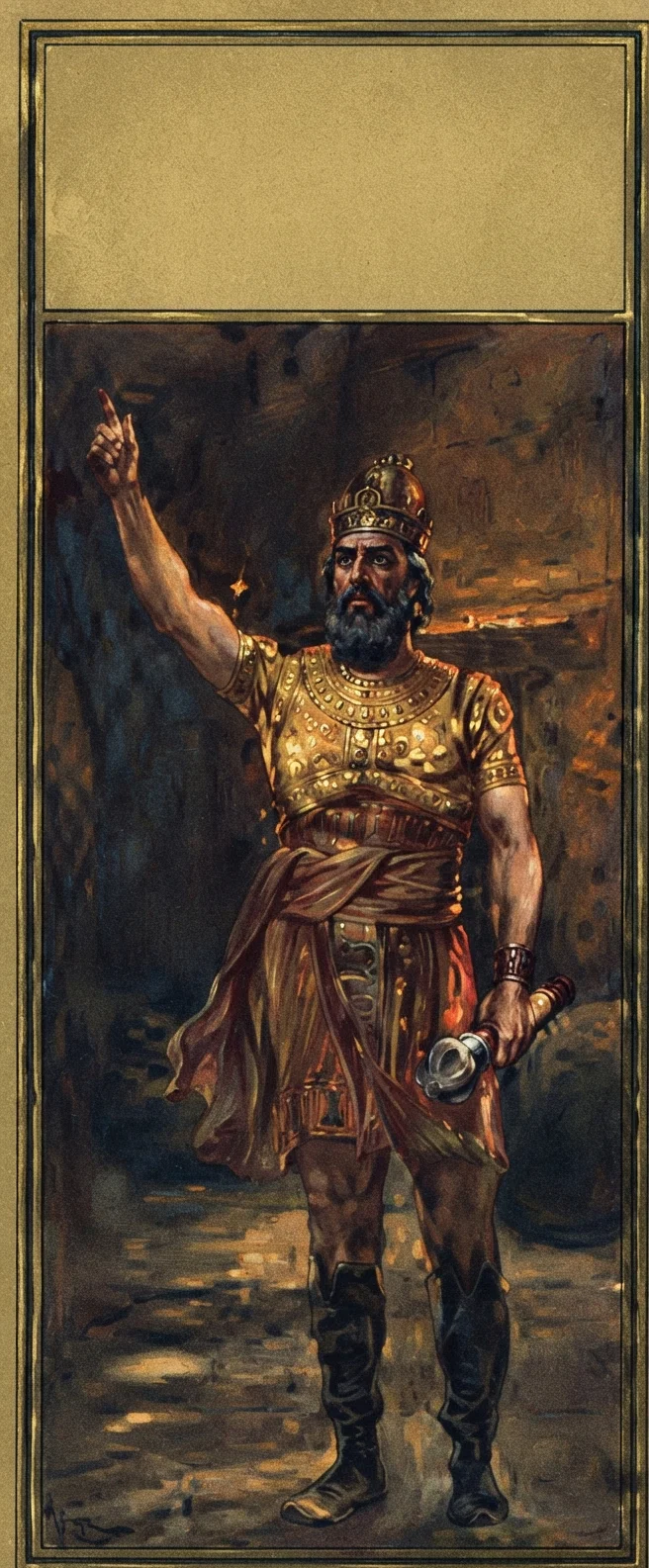
The Statue Stood Before Him in a Dream—A Young Hebrew Prophet Comes in as Interpreter—The Future of the World Unrolled Before Him
JEAN VUILLEUMIER
THIS is the first of three articles by Mr. Vuilleumier on that remarkably clear prophetic chapter, the second in the book of Daniel. This article introduces the prophecy, and lays the foundation, to show in the two succeeding articles how strikingly it has been fulfilled. These three articles will be followed by others dealing with some of the further prophetic portions of the book of Daniel.
N
O more absorbing, no more harrowing thought can come to the thinking men of this generation than that so often voiced by the questions: What is the world coming to? What are we as a nation and as individuals coming to?
HE HAD CONQUERED THE WORLD
There is an answer to these solemn questions. It has long been written in a document hoary with age. It was given 2,500 years ago by a young prophet to a mighty monarch. Let me tell you this curious story.
It was in the year 603 before Christ. Nebuchadnezzar, king of Babylon, had just completed the conquest of the known world by the sack of Jerusalem. This proud successor of Nabo-palassar was standing at the head of the mightiest empire ever seen since the fall of Nineveh, and he lived in a capital the grandeur of which seems to us fabulous.
A DREAM THAT AROUSED HIM
One night, on his royal bed, the king had a dream which startled him, but which he could not recall. And when his magicians and astrologers could not help him out, Nebuchadnezzar, in his despair, sentenced them to death. At this juncture, the whole dream was revealed in a vision to a young Jew, a captive in Babylon, the future prophet Daniel, who hastened to the palace of the king. Nebuchadnezzar immediately recognized his own dream, and showered favors and honors on Daniel.
THE UNFOLDING OF THE FUTURE
It is this dream and its interpretation that will give us, even after 2,500 years have gone by, the unfolding of the future. Let us hear it, then, with reverence, as Daniel told it to the king.
He begins by revealing the source of this wonderful revelation. "The secret which the king hath demanded," he says, "can neither wise men, enchanters, magicians, nor sooth-sayers, show unto the king; but there is a God in heaven that revealeth secrets, and He hath made known to the king Nebuchadnezzar what shall be in the latter days." Dan. 2: 27, 28.
THE YOUNG PROPHET REPEATS THE DREAM
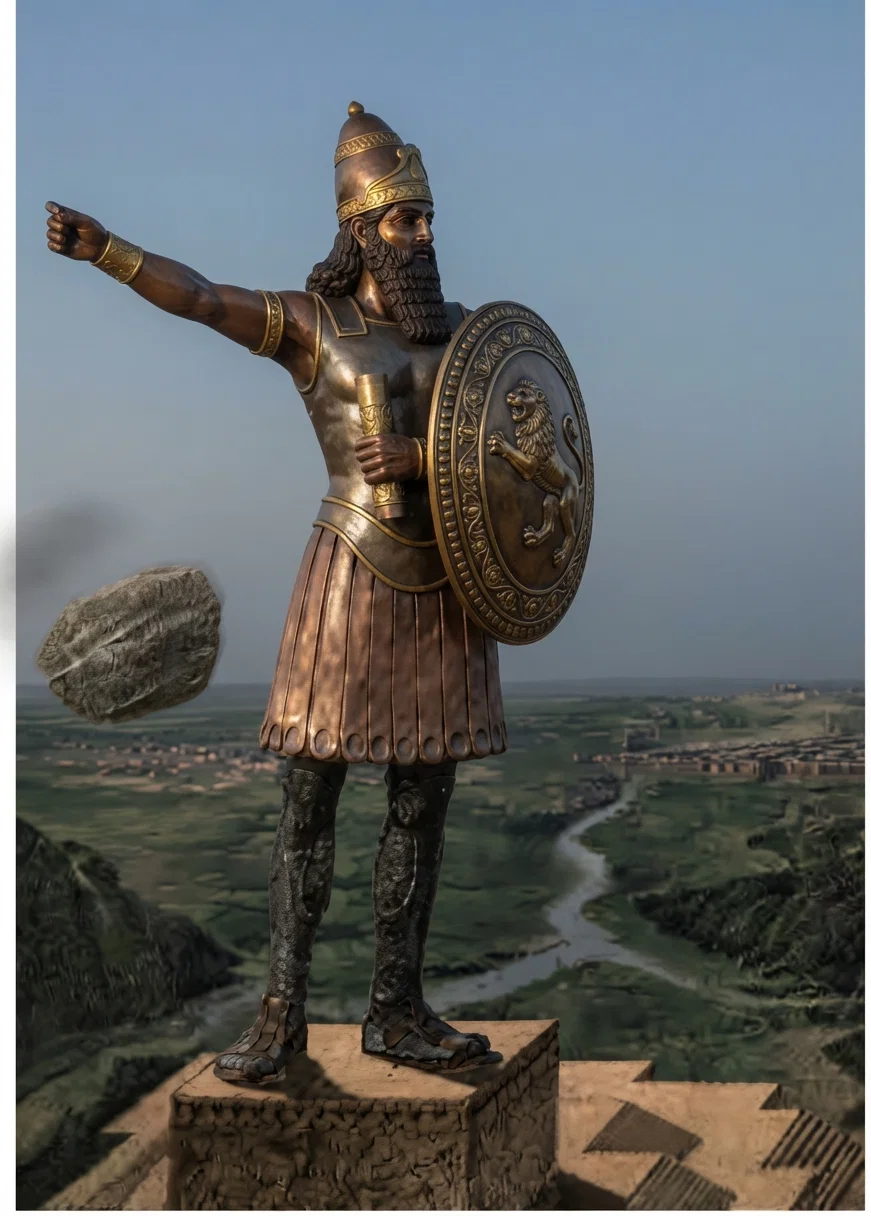
Then he goes on to say: "As for thee, O king, thy thoughts came into thy mind upon thy bed, what should come to pass hereafter; and He that revealeth secrets hath made known to thee what shall come to pass. . . . Thou, O king, sawest, and, behold, a great image. This image, which was mighty, and whose brightness was excellent, stood before thee; and the aspect thereof was terrible. As for this image, its head was of fine gold, its breast and its arms of silver, its belly and its thighs of brass, its legs of iron, its feet part of iron, and part of clay. Thou sawest till that a stone was cut out without hands, which smote the image upon its feet that were of iron and clay, and brake them in pieces. Then was the iron, the clay, the brass, the silver, and the gold, broken in pieces together, and became like the chaff of the summer threshing-floors; and the wind carried them away, so that no place was found for them: and the stone that smote the image became a great mountain, and filled the whole earth.
HE TELLS HIM THE INTERPRETATION
"This is the dream," said Daniel; "and we will tell the interpretation thereof before the king. Thou, O king, art king of kings, unto whom the God of heaven hath given the kingdom, the power, and the strength, and the glory; . . . thou art the head of gold. And after thee shall arise another kingdom inferior to thee [the bust of silver]; and another third kingdom of brass, which shall bear rule over all the earth. And the fourth kingdom shall be strong as iron, forasmuch as iron breaketh in pieces and subdueth all things; and as iron that crusheth all these, shall it break in pieces and crush." Verses 29-40.
Then comes the interpretation of the feet, of iron and clay, which represented a division of the fourth kingdom into several smaller kingdoms, partly strong and partly weak, mingled among themselves, but unable to "cleave one to another."
AN ETERNAL KINGDOM THE CLIMAX
And now the vision tells us the end of earthly things: "And in the days of those kings shall the God of heaven set up a kingdom which shall never be destroyed, nor shall the sovereignty thereof be left to another people; but it shall break in pieces and consume all these kingdoms, and it shall stand forever. Forasmuch as thou sawest that a stone was cut out of the mountain without hands, and that it brake in pieces the iron, the brass, the clay, the silver, and the gold." Verses 44, 45.
Daniel closes with this emphatic declaration: "The great God hath made known to the king what shall come to pass hereafter; and the dream is certain, and the interpretation thereof sure." Verse 45.
THE WHOLE SUCCESSION OF EMPIRES
We see that this mysterious image is intended to represent the whole succession of earthly empires clear down to the establishment of God's kingdom. This dream, then, to use the words of the late Professor Gaussen, of Geneva, is really the "great clock of history," or its "general chart," or yet its "universal chronology." Herein is found the "general plan of divine Providence for the government of nations," "the program of the great drama of empires as the mighty Ruler of all things traced it thirty centuries ago."
Such a bold claim for a simple dream may seem to some amusingly daring. "When Daniel wrote his book," says Gaussen, "Persia was a country without power and without fame; Greece was nothing; Italy, less still.
WHO COULD HAVE BELIEVED IT?
"Who could have believed then that the obscure horde of the Persians would overthrow the mighty empire of Babylon, and would seize and hold for a hundred years the scepter of the civilized world? Yea, who could have believed that, after the Persians, the insignificant nation of the Greeks, and especially their barbarian province of Macedon, would rule the earth and carry its soldiers as far as the Indus River? Who could have believed that, after the Greeks, the Italians, from the remotest regions of the West, as they thought, would establish the greatest, the most terrible and enduring of empires; would make of a puny village, called Rome, and built on a small river, called Tiber, the queen of nations, the new Babylon, the so-called eternal city; and that finally this kingdom, divided among ten kings, would last, under this strange arrangement, until the end of time?"