As We "Consider," We See the Marvelous Provisions — Nature as a Great Lesson Book — All Designed to Show His Care for You
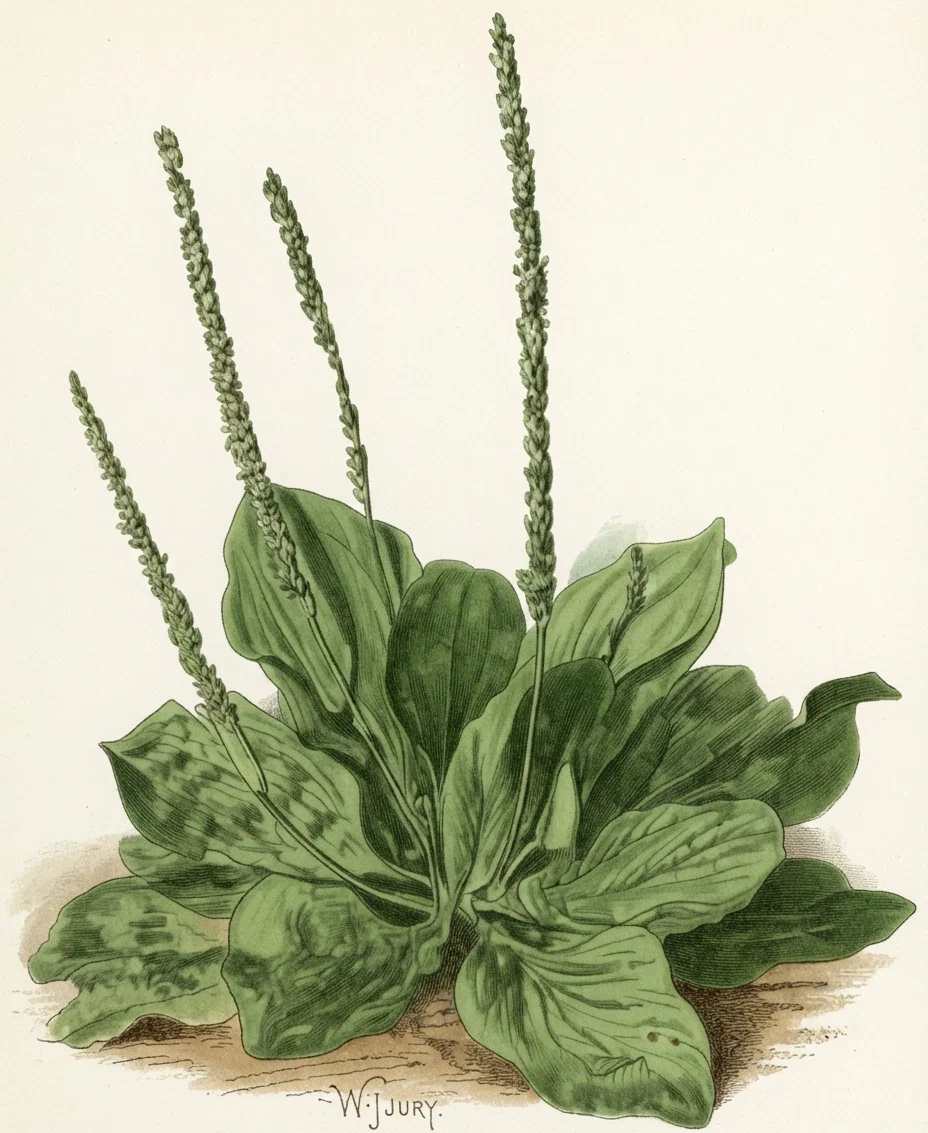
SOMETIMES we wonder that certain plants can grow all summer long and apparently not receive a drop of water for months. The common plantain is one of these; but when we examine it carefully, and notice how it grows, and the means by which it is able to exist during the long, arid summer, the mystery is clear. God has provided for its life.
THE COMMON PLANTAIN
HOW IT MOISTENS ITS ROOTS
We notice, first of all, that the root is primarily a tap-root, running directly downward from the center of the plant. Out from this center the leaves are spread, sometimes for a foot or more; and every portion of these leaves is so planned and laid out that every particle of water falling on them is carried down to the midrib; and this midrib, being hollowed, like a rain trough, carries all the water to the central portion, to sink into the ground and water the root.
THIS PLANT DOES IT DIFFERENTLY
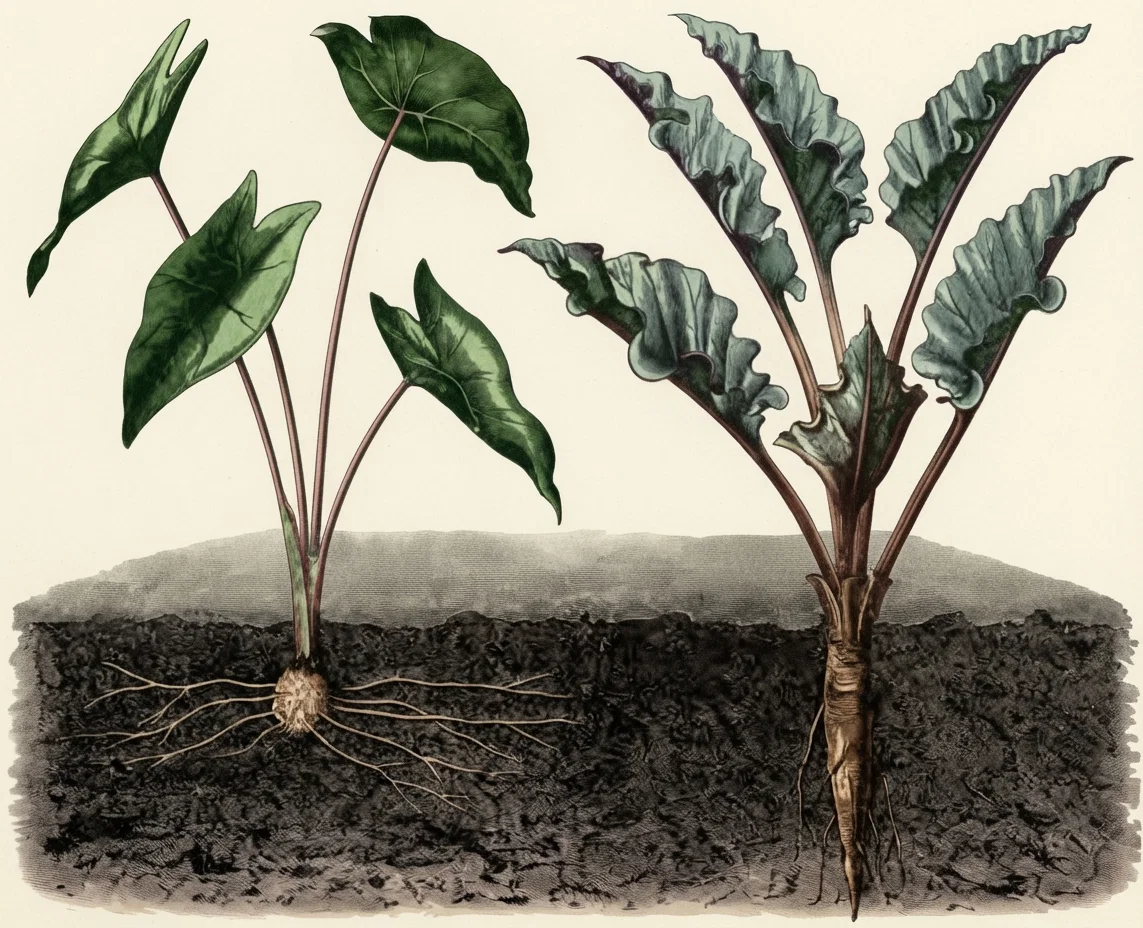
Not all plants are designed in this way. In the picture accompanying this you will see another plant. The roots are spreading; and the leaves are arranged to drip in such a way as to put every particle of night dew or mist or fog that may be gathered by the leaves, to the place on the ground where the roots need it most. Thus these plants are able to live in a dry climate, in soil that is apparently without moisture. They can gather enough moisture at night, in the dew that falls, to continue life's circle to its close.
"CONSIDER" THEM AND GET THE LESSON
This is one of those phenomena that Jesus points us to when He says, "Consider the lilies of the field, how they grow." "Consider" all the flowers and the plants. If God makes such adequate provision for them, how much more will He do for you!
We will not know about these things unless we consider them. Jesus says, "Consider." It is a strong word. It means to study. It means to think carefully. It means to give our attention to it. Consider the plants, how they grow. And as we consider, we see there the provision of God for their lives and for their welfare. We are to remember that God will do more for us than for them. It is a good, live way to study botany. It puts a vim and a vigor into it that nothing else can. It makes the plants utilitarian. They have a use — a use for our souls.
AS MEDICINES FOR THE SOUL
Some men study plants to gather them for their medicinal purposes, as medicines for the body. Very well; but we may study and gather plants that they may act as medicine to our souls by the thoughts they give us,—thoughts of God, thoughts of peace and not of evil, preparing us for a happy future.
HOW THE HORSERADISH PROLONGS ITS LIFE
Almost every one knows the horseradish, whose roots are gathered and grated by some as a relish.
In the summer-time the leaves of the horseradish are large and thick and wrinkled, almost like those of the pie-plant; but I have observed in Illinois that toward fall, when the nights become cool and the days short, the horseradish puts forth new leaves — leaves that are cut and slashed and apparently torn into ribbons.
This is God's provision for the plant, in order to lengthen its life and give it a longer period of growth. By the cut leaves, the plant is enabled to conserve its moisture. The roots can not gather moisture as rapidly during the colder weather. There is not so much moisture to gather, anyway, in the dry field, and the leaves are likely to lose more moisture than the plant can gather. And so leaves are given it that will allow as little evaporation as possible. Thus the plant lives on for a few weeks or months longer than it otherwise would.
WILL HE NOT PROVIDE FOR ETERNITY?
If God does this to lengthen the life of a horseradish, what will He not do to lengthen the life of you and me? O, we of little faith! If God will make special provision in nature for a few weeks more of life for a horseradish, will He not make greater provision for an eternity of life for you and me?—Yes, He will.
And the provision He has made for us, more than the provision for horseradishes and all the plants that grow on earth, is the provision that we find in the gift of His blessed Son. Thank God for this unspeakable gift! As we look at the plants, consider them, and study them, it should cause us to look to the great things God has done for our souls.
MARKS OF CONDEMNATION
It is true that in nature there are marks of God's condemnation, as is witnessed in the thorns and the thistles and other analogous forms of animal and vegetable life. This condemnation thus pictured in the visible world is but a token of God's condemnation of sin, which, through man's rebellion, has entered into the dominions first given to the man Adam. But the condemnation is of such a character that it constantly points the way from condemnation to a possible justification. For example, while there are thorns, there are also roses. The thorns teach the condemnation, but the roses teach that perfection of character may bud and blossom and come to full maturity.
CENTRIFUGAL AND CENTRIPETAL TRANSMISSION OF WATER
The condemnation taught in nature is therefore one that begets hope in man, and not despair. God employs nature as a pattern of the human soul, picturing its conditions and its possibilities, and thus nature becomes a pathway up to the knowledge of God.
However, we must go to the word of God to find how we may escape the just condemnation of God, and through Christ receive His justification, and the fruition of a heavenly character. L. A. R.