Another Vision of the Four Great Empires — Saw the Fourth One Broken into Ten — The Prophet Plainly Interprets His Own Prediction
By JEAN VUILLEUMIER
In our last three issues, Elder Vuilleumier has given us some studies on the prophecy of the second chapter of Daniel. In this and the next two papers, he presents studies on the seventh chapter of that intensely interesting book.
In the articles on the seventh chapter, it will be shown that this chapter parallels the second. That is, it tells of the four great monarchies, and on the subject of the breaking to pieces of the fourth, the seventh chapter is specific in telling the exact number. It also tells of an eleventh, an ecclesiastical kingdom, that arises among the ten; and it tells in detail what this church power would do. Thus while the seventh chapter is parallel to the second, it tells many details that are not in the former.
This article takes us to the breaking of the Roman Empire into its ten kingdoms. The article next week will be devoted to a consideration of the church kingdom that arose among the ten. EDITOR.
In a vision given to the prophet Daniel, in 603 B. C., for the immediate benefit of King Nebuchadnezzar, of Babylon, as we have seen in former articles, this young Hebrew exile saw four successive world empires under the image of a great metallic statue. The fourth — the Roman Empire — was to be reduced into several fragments, or kingdoms, which, for an undetermined length of time, were to exist together, uniting or warring with each other, until they should all be swallowed up in destruction. Then the earth itself, the theater of their rivalries and bloody contests, was to be rejuvenated, and occupied by a new empire, the universal and eternal empire of Jesus Christ and His saints.
A NEW AND MORE REMARKABLE VISION
Such is in brief the vision found in the second chapter of Daniel. But chapter seven of the same book contains a new vision, more remarkable still, which, while covering the same ground, brings to view some wonderful developments in the nearer period of medieval and modern times, and that with special reference to the central, commanding figure of the papacy. It will repay us to devote time to the study of this vision and its astonishing fulfilment. And to that effect, let us read it step by step both in the description given by Daniel and in its interpretation given him by a heavenly being.
VERSES FROM THE VISION
“Daniel spake and said, I saw in my vision by night, and, behold, the four winds of heaven brake forth upon the great sea. And four great beasts came up from the sea, diverse one from another.” Verses 2, 3.
THE PROPHET’S OWN INTERPRETATION
“These great beasts, which are four, are four kings, that shall arise out of the earth. But the saints of the Most High shall receive the kingdom, and possess the kingdom forever, even forever and ever.” Verses 17, 18.
Here, then, is the great plan of God for this earth and its nations. Four mighty empires will compass the destinies and glories of earthly history in its fallen, sinful state. Then this same earth will become the eternal and peaceful abode of a race called “the saints of the Most High.” How simple, yet how thrilling! Can we believe it? Let the fulfilment of the vision itself answer this question.
THE ROARING WATERS OF THE GREAT SEA
According to Isa. 17: 12, 13, and Rev. 17: 15, the great sea symbolizes the restless multitudes of earth’s nations. The four winds of heaven that cause these waters to seethe and surge are the winds of war, political feuds and rivalries (see Jer. 4: 11-13), which cause the rise and downfall of kingdoms and potentates.
THE BABYLONIAN MONARCHY
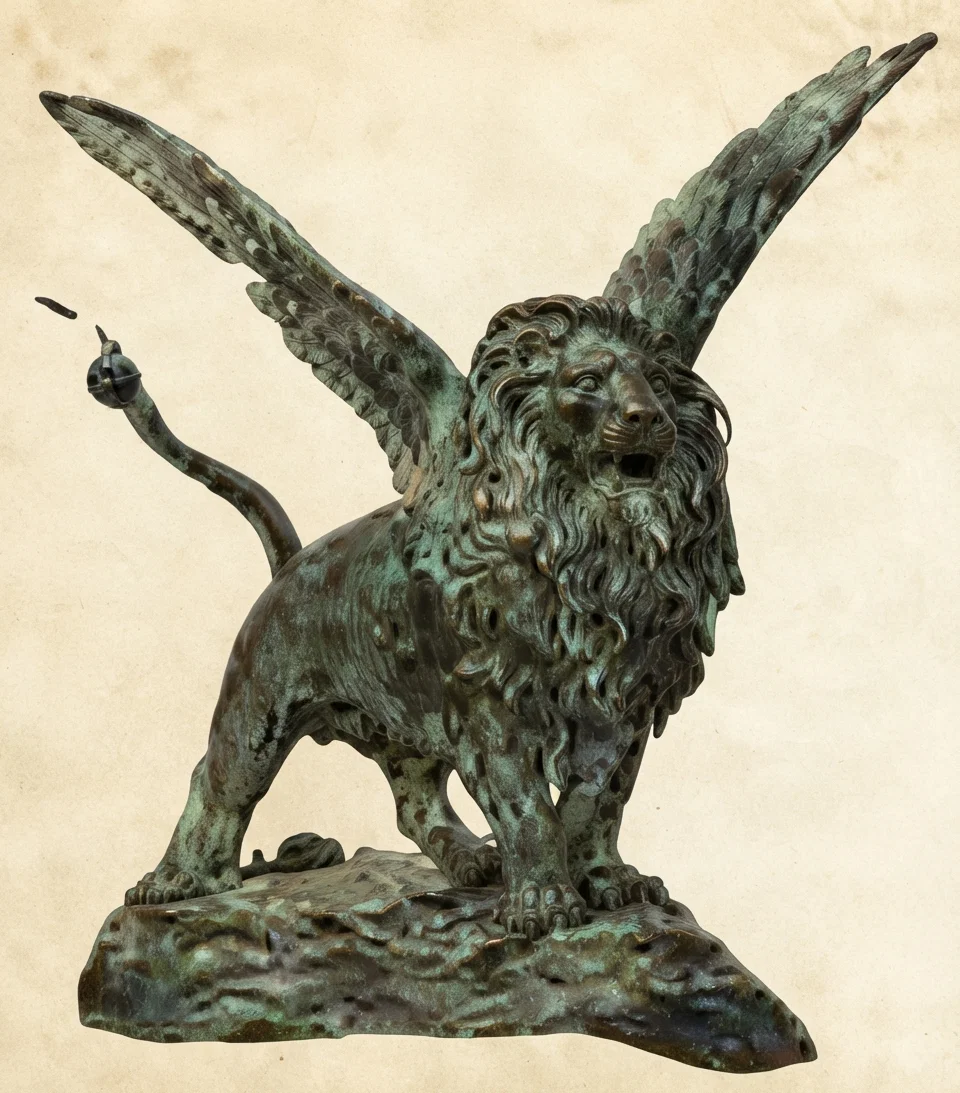
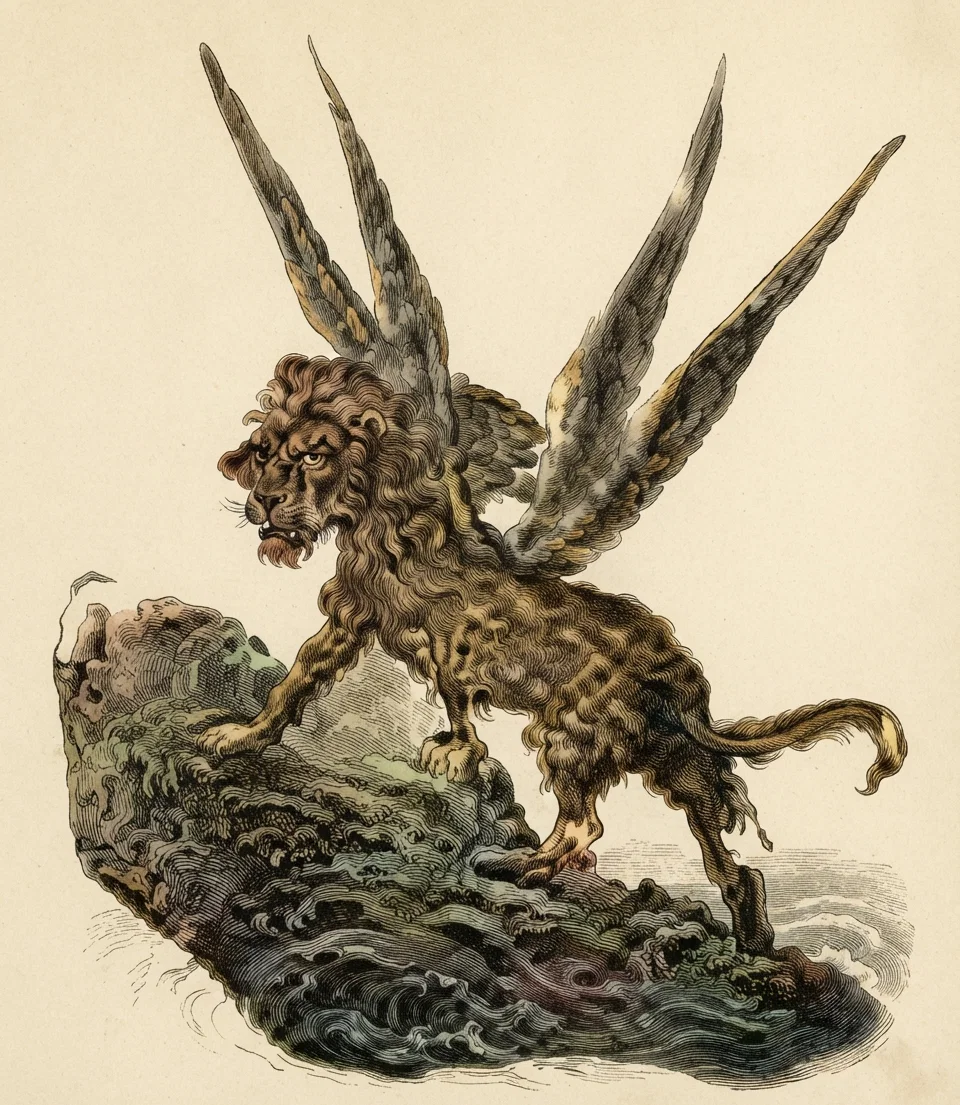
“The first was like a lion, and had eagle’s wings: I behold till the wings thereof were plucked, and it was lifted up from the earth, and made to stand upon two feet as a man; and a man’s heart was given to it.” Dan. 7: 4.
As we learn from the vision of the second chapter (Dan. 2: 37, 38), the Babylonians are the first of the four great nations. They are here represented by the king of animals and the king of birds; while in the former vision, by the choicest metal. Under the successors of Nebuchadnezzar, the Babylonian lion loses much of its military valor; and finally (in 538 B. C.) this empire falls into the hands of Cyrus, who establishes the Medo-Persian monarchy.
THE MEDO-PERSIAN MONARCHY
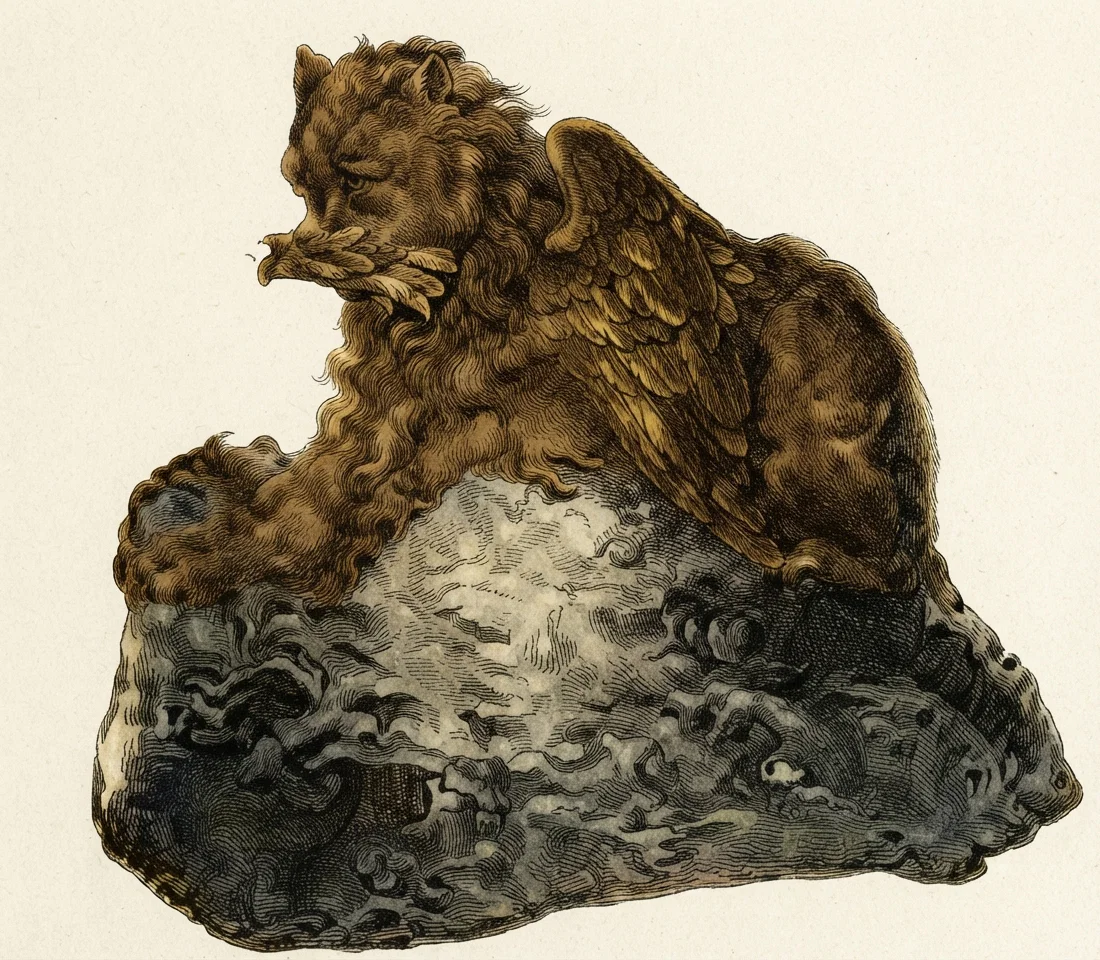
“And, behold, another beast, a second, like to a bear; and it was raised up on one side, and three ribs were in its mouth between its teeth: and they said thus unto it, Arise, devour much flesh.” Dan. 7: 5. The two unequal nations making up this new empire; the three great territories added to it by conquest — Chaldea, Lydia, and Egypt; the cruelty of the Medo-Persian wars; the clumsy mass of their armies, — all this is fittingly represented by that bear leaning upon one of its sides, having three ribs between its teeth, and devouring much flesh. But the scene changes.
THE GREEK-MACEDONIAN MONARCHY
“After this I beheld, and, lo, another, like a leopard, which had upon its back four wings of a bird; the beast had also four heads; and dominion was given to it.” Verse 6. This symbol not only denotes the customary ferocity of war, but also a marvelous velocity in military movements, and the division of the empire into four parts. This was fulfilled by the unequalled record of Alexander the Great, who conquered the world in less than ten years, and after whose untimely death his great empire was divided into exactly four kingdoms.
VISION OF THE ROMAN MONARCHY
“After this I saw in the night visions, and, behold, a fourth beast, terrible and powerful, and strong exceedingly; and it had great iron teeth; it devoured and brake in pieces, and stamped the residue with its feet: and it was diverse from all the beasts that were before it.” Verse 7.
“Then I desired to know the truth concerning the fourth beast, which was diverse from all of them, exceeding terrible, whose teeth were of iron, and its nails of brass; which devoured, brake in pieces, and stamped the residue with its feet.” Verse 19.
THE PROPHETIC INTERPRETATION
“Thus he said, The fourth beast shall be a fourth kingdom upon earth, which shall be diverse from all the kingdoms, and shall devour the whole earth, and shall tread it down, and break it in pieces.” Verse 23.
Such indeed was the Roman power, which succeeded the Greeks. For six long centuries, it ruled the earth. The greatest captains the world had known, like Hannibal and Mithridates, were dashed in pieces against this iron power. By degrees, all known nations were brought to submit to the dread authority of the Roman senate, either as allies or as conquered peoples. Marius, Sulla, Pompey, Caesar, and a hundred more, marched in succession to all parts of the political compass, spreading terror and ruin to the nations, who had to yield their wealth and offspring to the victors. The terror of the Roman name became a proverb.
But this tremendous power was to pass through a second phase. It was to be divided into ten kingdoms.
VISION OF THE TEN BARBARIAN KINGS
“And it [the beast] had ten horns.” Verse 7.
“Then I desired to know the truth . . . concerning the ten horns that were on its head.” Verses 19, 20.
THE INTERPRETATION
“Thus he said, . . . As for the ten horns, out of this kingdom shall ten kings arise.” Verses 23, 24.
The division of the Roman Empire into ten distinct kingdoms is the one leading feature in the political history of the middle ages and of modern times. During the fourth and the fifth century, the Roman world of the West was conquered and divided by the Alemanni (351), the Franks (351), the Burgundians (406), the Suevi (406), the Vandals (406), the Visigoths (408), the Saxons (449), the Ostrogoths (453), the Lombards (453), the Heruli (475, 476). The nations of Europe to this day have occupied nearly the same territories and borne nearly the same names. The central figure in this prophecy will be the theme for next week.