THE GUIDANCE IN NATURE

3%

Pacific Press Publishing Association · Mountain View, California · Jul 7, 1914

FromSigns of the Times, Vol. 41, No. 26.

Read the full edition

THE GUIDANCE IN NATURE

Frank Admission — The Young Ouzel That Knew — The Dramatic Mother Duck — Whence the Intelligence of Nature and These Dumb Creatures?
WHAT is instinct? We believe that the question can be answered. In a previous article, we showed that the Creator has impressed the organism with the law of its life. Therefore God is the guide. Instinct is the mere blind obedience of the creature to the Creator.

THE MARSHALING OF ATOMS

What is growth and development? What is conformity to type? — It is the process by which wheat always produces wheat, and rye produces rye, and the child is like the parent. Why, in the plant, does one part produce a limb, another a leaf, another a flower, and finally a fruit? — This is an infallible movement of cells, a marshaling of the atoms into their proper places, and it shows a guiding power.
Evolution says that this was impressed by the parent, as its law of life, upon the offspring. But such a statement is no explanation of origin. It is simply to say that the offspring has what it has, because its ancestors always had it; and take it back as far as you may, this is dodging the whole question. It is saying that the child receives from the parent, and the parent from its parent, and so on until we are too tired to try to follow the matter any further.

REFUSING TO GO BELOW THE ROCKS AND ACCOUNT
It accounts for nothing. It is as unscientific as the old statement about the final foundation of the earth — that it was rocks — rocks all the way down. This is an absolute refusal to go down below the rocks and account for the rocks.
"TURNED ITS CRESCENT TOWARD THE MAN"
Thus the evolutionist refuses to find the origin of the impressions, and simply puts it into a series running so far back that he can forget or grow tired before he finds its beginning. It is putting origin into the far distant past, exactly as Tyndall himself does:
"It [the hypothesis of evolution] does not solve — it does not pretend to solve — the ultimate mystery of this universe. It leaves, in fact, that mystery untouched. For granting the nebula and its potential light, the question whence they came would still remain to baffle and bewilder us. At bottom the hypothesis does nothing more than transport the conception of life's origin to the indefinite distant past."—"Fragments of Science," Tyndall, page 133.

ADMITTEDLY EVOLUTION DOES NOT SOLVE

This is frank and to the point. It is an admission that evolution does not solve the mystery, does not explain origins. We do not quote this from Tyndall merely because it is an admission, but because he, being an evolutionist of the agnostic type, states a fact. There is nothing in the hypothesis of evolution that does anything definite toward explaining the origin of life, and its phenomena. Such men as Tyndall are honest enough to admit it, and that settles the question, it seems to us.
Refusing to admit a Creator, and His power over nature, they can not explain origins, for they refuse utterly that which explains. By some means, God is able to impress the atoms and the molecules, and marshal them into orderly array. As world attracts world through the power of gravitation, so atom attracts atom in accordance with the law of life. As an invisible power guides the planets and the suns in their paths, so an invisible power guides the atoms and molecules that build up an organism, and guide that organism itself.

THE YOUNG OUZEL KNEW HOW

Take some examples from instinct. The duke of Argyle gives the following incidents that are very plain in presenting this wonderful power of instinct with which animals are equipped.
In 1874 a number of water-ouzels built their nests in the hole of a wall of a small tunnel at Inverary. This tunnel had been completed in order to carry a rivulet under the walks of a pleasure-ground. The season was one of great drought, and the rivulet, during the whole time of incubation and of the growth of the young in the nest, was nearly dry. One day, the duke examined one of these nestlings that was almost entirely fledged. While he was so examining it, the other birds became alarmed, darted out of the hole, and ran down the tunnel toward its mouth. At this point there was a pool of water. It lay in their path. They did not seem to seek it, for they were moving in aimless flight. One of the little birds, thus fluttering along, stumbled into the pool. It paused as though surprised, and then seemed to wake to its power. Down into the water it dived, with all the facility of its parents. It used its wings, which are adapted to both air and water, with seeming perfection. It remained so long under the water, that the duke feared it had drowned; but later it appeared, and was put back into the nest.
Here was no opportunity for education, or experience. The bird at once knew its powers, knew its environment, was perfectly at home.

TWO WEEKS OLD, BUT OUT-WITS THE DUKE

To give another example: On a secluded lake of the Hebrides was discovered a sun-diver, of the family of the red-breasted merganser. With her was her brood of ducklings. They were only a fortnight old, yet it was almost impossible to capture them. They would swim long distances under water, and emerge at unexpected places, and for a time they baffled all human efforts.
At length one of the little birds made for the shore to hide in the grass and the heather on the margin of the lake. It was pursued closely. A long drought had left a broad margin of small, flat stones and mud between the water and the usual bank. The bird was seen to disappear.An eye was kept upon the spot where it was last seen. The boat was run up on the beach, and the duke thought to find and pick up the chick. He reached the place where it had disappeared. This place he had kept under his eye every moment, but there was no sign of the chick. The closest scrutiny failed to discover it.
In his search, he went too far. Realizing this, he turned to look back. Like an apparition, the little creature arose from the stones, dashed past the boat, and having regained its wind by the rest it had secured by making itself invisible among the stones, it reached the lake, and dived and disappeared. It was applauded for this clever work with cheers from the whole company.
It had shown remarkable tact and skill. About two weeks before, however, it had been coiled up on the inside of the shell of an egg. A month before, it was a mass of albumen and fatty oil. Yet now it was equipped with a wisdom and a tact and a skill that could outwit a duke.

THE DRAMATIC DUCK

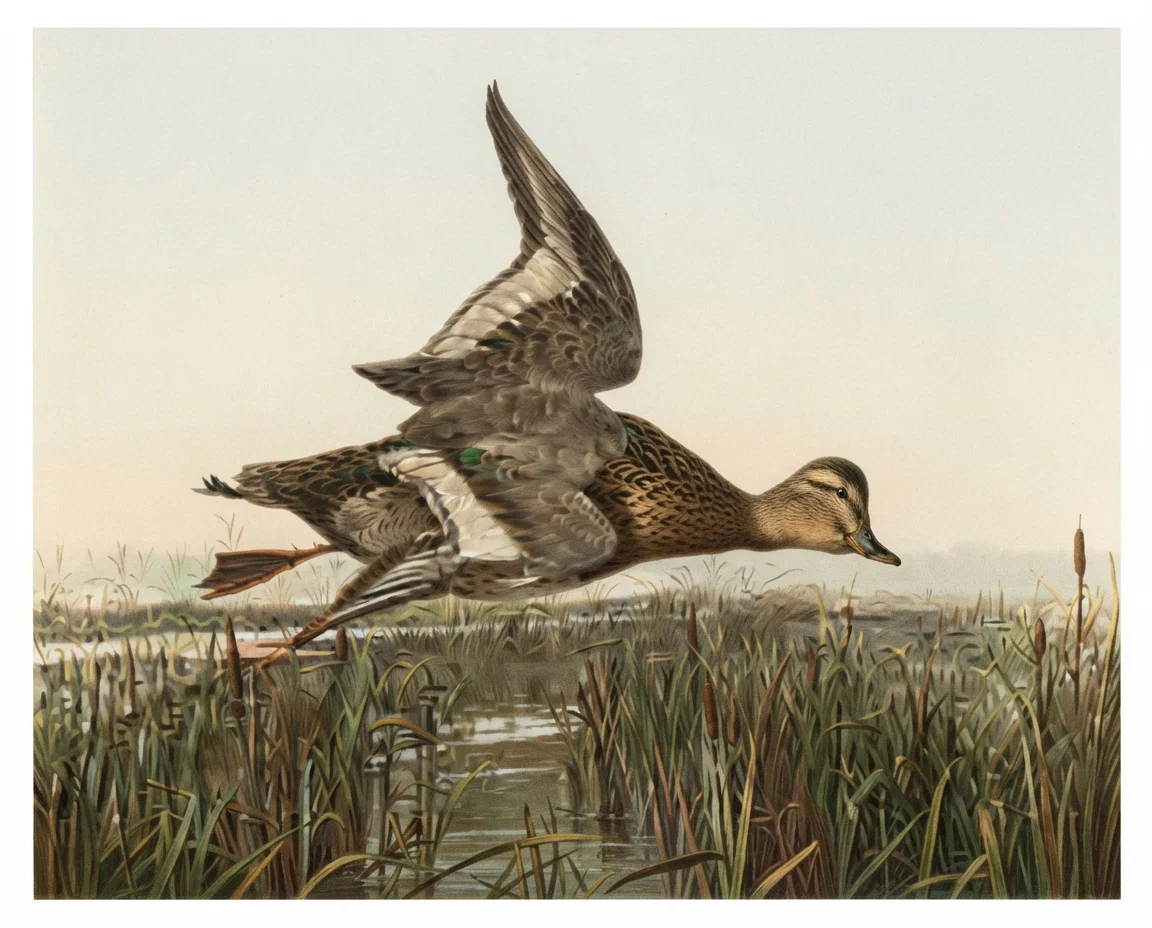
Another incident: Walking along the side of a river with overhanging banks, the duke came suddenly on a group of wild ducks — anas boschas. The young were just out of the nest. The mother duck fluttered out from under the bank and into the stream with loud cry, and all the struggles to escape of a helplessly wounded bird.
THIS MOTHER DUCK WAS A PERFECT ACTRESS
Any one realizes how difficult it is for an actor to show extreme feeling and do it well, but this mother duck was a perfect actress. The labored, half convulsive flapping of the wings, the wriggling of the body, the straining of the neck, the expression of painful and abortive effort, were all admirable. Thus she skilfully maneuvered until she was well out.
When she saw she could not tempt them to follow, she made resounding flaps on the surface of the water to draw attention to herself, seemingly to say: "Here I am. Come out here." Then she flew around back to the spot she had originally left, and maneuvered all over again as before.
All this she was doing to draw attention away from her little ones to herself. She was willing to take the risk of sacrificing herself for her young. At the same time, the little ones had such remarkable instincts, knew so well what to do under the circumstances, that they could not be found.

THE BUTTERFLY THAT KNEW

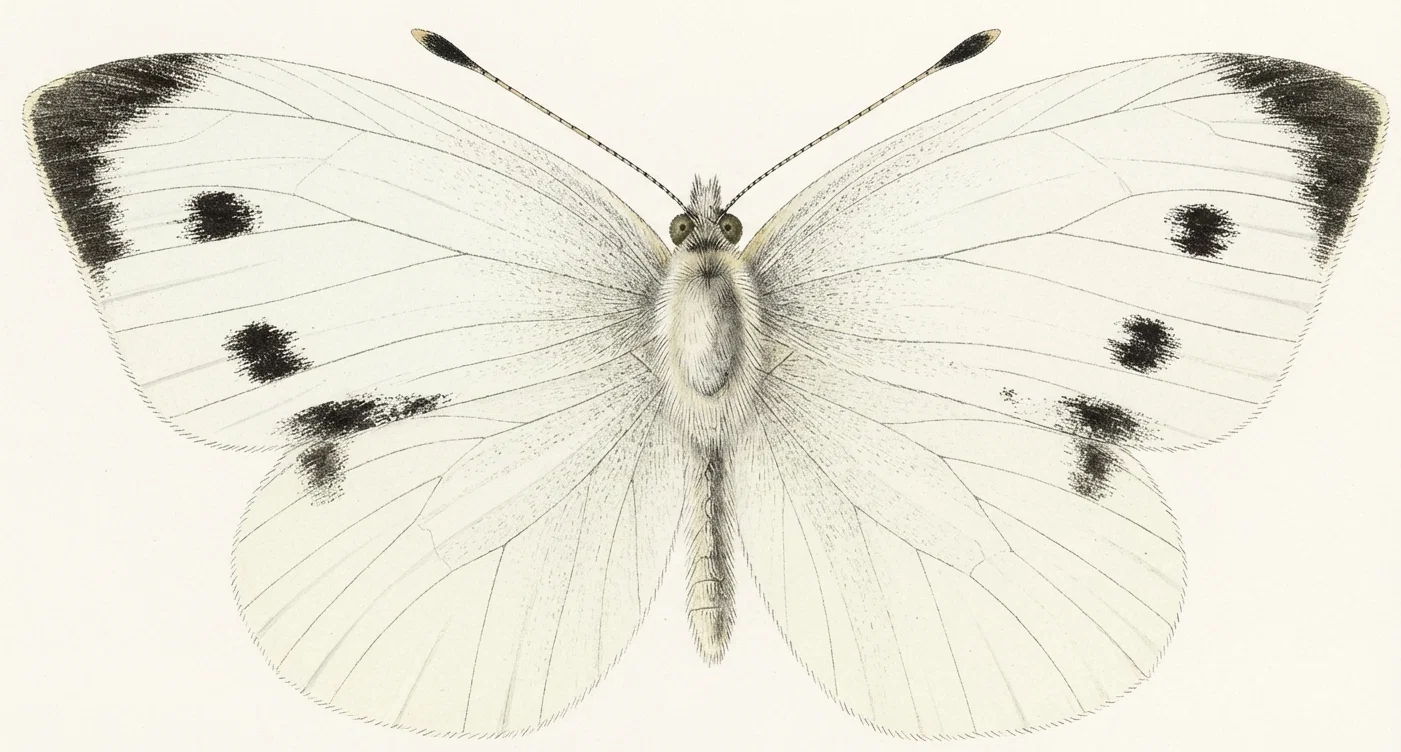
Any one who is willing to give patient study to nature, will find examples similar to these. The writer once occupied a house covered with an ivy vine, one branch of which had cream-colored leaves. Every evening, about sunset, a large, white cabbage-butterfly used to search out these half-dozen white ivy leaves, perch upon them, and roost there for the night, practically invisible. It was guided by instinct, infallibly, to choose leaves of its own color rather than green ones, which would have made it conspicuous to its enemies, and its life would have been a forfeit for this prominence.

CUNNING OF SOME OTHER BIRDS

Startle a blue tit, and it will seek the high branches against the sky, where its blue, brown, and green colors will make it almost invisible. A robin, however, flees to the shadow of a bush. It knows enough, even when threatened by an older robin, to take refuge near some reddish brown color, that its own reddish brown body may be made as nearly invisible as possible.
A thrush, almost as soon as fledged, is clever enough to find its own tints on some wall or tree trunk. Keep your eye on it. It is motionless. Remove the eye for even a twinkling, and the bird instantly hops out of sight noiselessly, before you can look again.
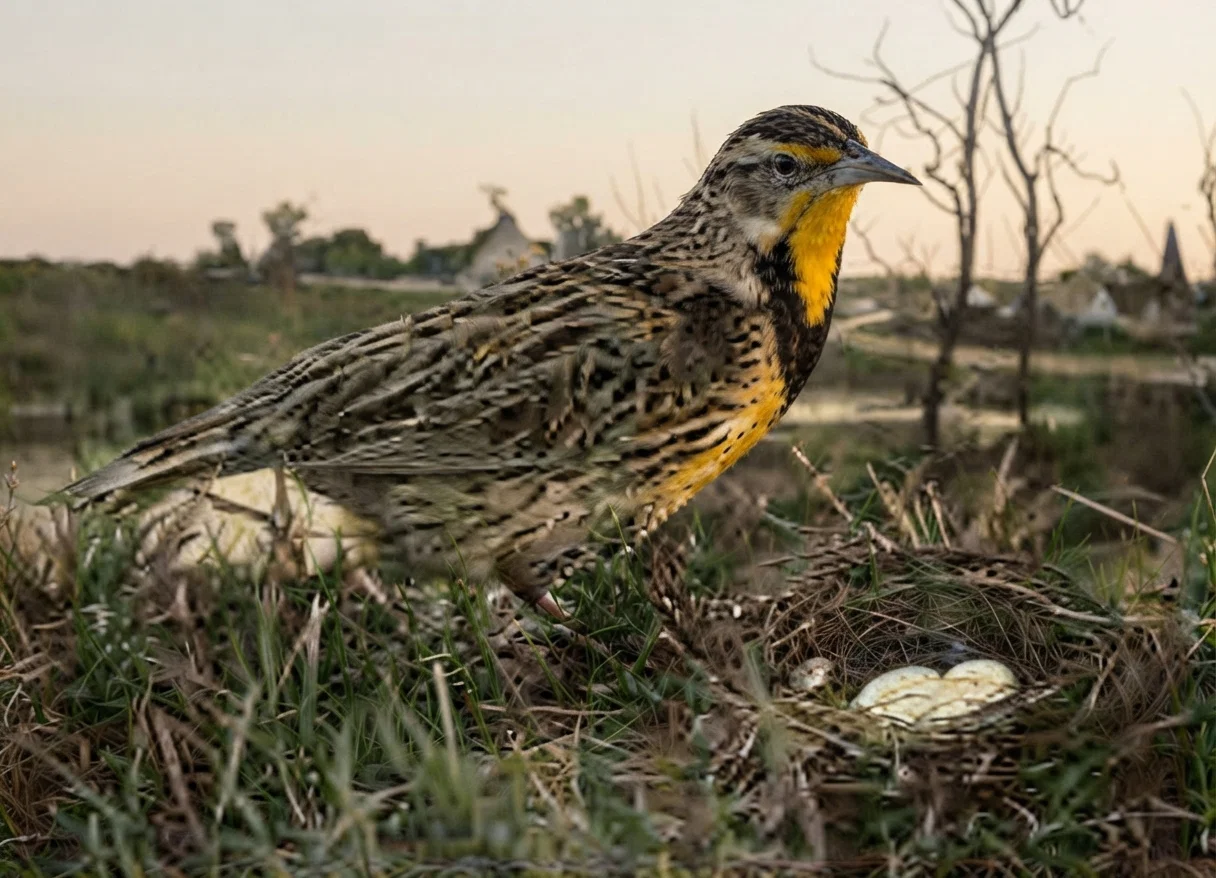
Have you ever noticed how the meadow-lark refuses to show its broad, conspicuous crescent to the passer-by? It always turns toward its enemies those parts of its body that are less conspicuously colored. At one time, a lark that was threatened by a hawk took refuge near a man. It turned the grayer portions of its body toward the hawk, its implacable enemy, and turned its crescent toward the man, as much as to say, "If I must choose between hawk and man, I choose man." And the man proved not unworthy of his trust by sparing the lark, and driving away the hawk.
All creation being guided by an infallible wisdom, impressed by the Creator, stamped with His law of life, thus, as the Word says, "The Lord is good to all: and His tender mercies are over all His works." Ps. 145:9.
"All common things His footprints bear, From shining skies to lowly sod, That man may look to things unseen — From nature up to nature's God." L. A. R.