America

5%

Pacific Press Publishing Association · Mountain View, California · Sep 12, 1916

FromSigns of the Times, Vol. 43, No. 36.

Read the full edition

America

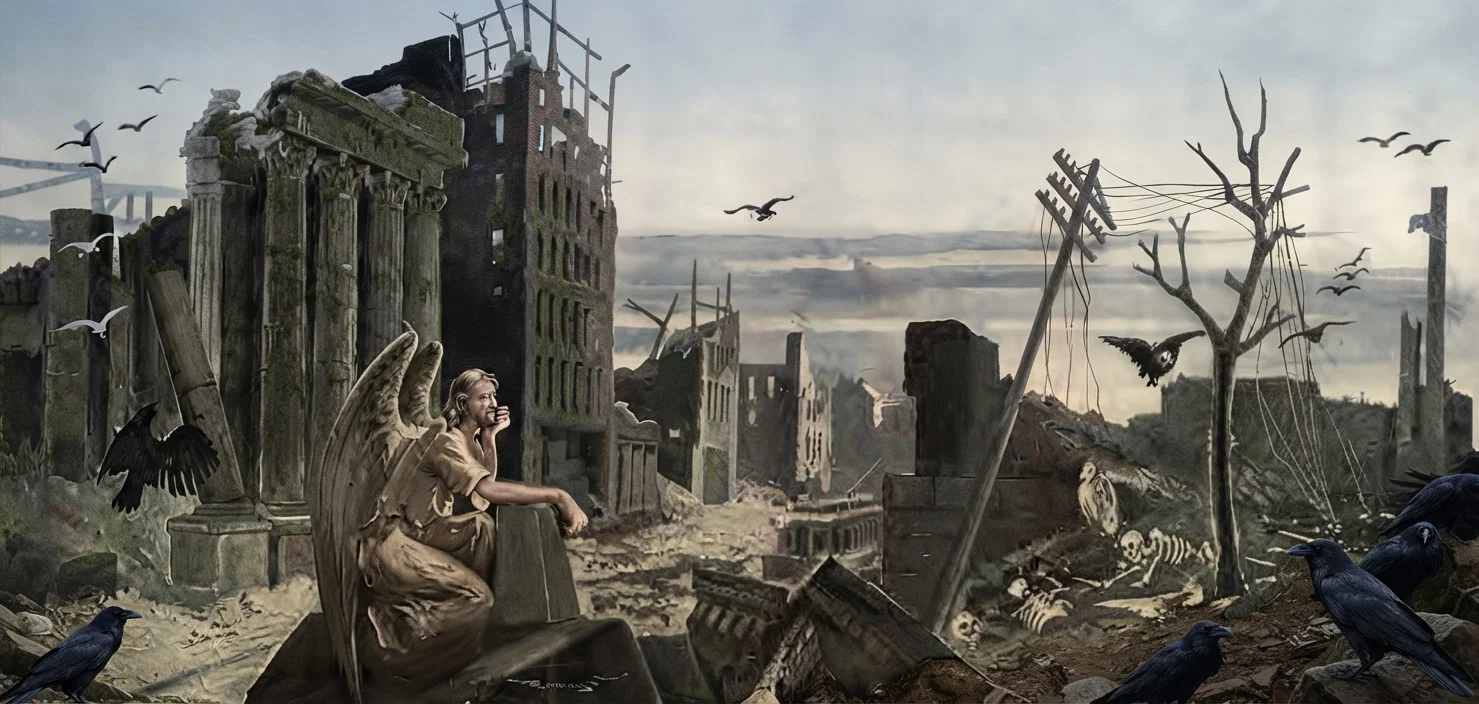
During the Millennium

By Benjamin G. Wilkinson
“A thousand years from to-day, things will look a great deal different.”
A HUNDRED years from to-day, things will look a great deal different from what they do now. A thousand years from to-day, things will look a great deal different from what they do at present. It will be wisdom for us now so to conduct ourselves that a hundred years from the present, or a thousand years from the present, we shall look back and be glad that we thus conducted ourselves.
Time is always precious. The Spanish prince who traveled all over the world looking for the fountain in which youth might be renewed, typified the world's cry for more time. A thousand years is coming that will be very precious. We call it the millennium. A day, a week, a year, is valuable; a hundred years is a space of time given to few mortals; but the mind of man staggers in its effort to estimate the value of this thousand years.
There are in the divine Scriptures eight texts which use the expression "thousand years." Six of these are found in the first seven verses of Revelation 20. Of the other two, one is found in the Psalms, and one in the second epistle of Peter. There is this difference, however,—that whereas the mention of a thousand years in the Psalms and in Peter refers to any portion of time known as a thousand years, the thousand years of Revelation 20 is generally designated as "the" thousand years. We read as follows: "And I saw an angel come down from heaven, having the key of the bottomless pit and a great
chain in his hand. And he laid hold on the dragon, that old serpent, which is the devil, and Satan, and bound him a thousand years, and cast him into the bottomless pit, and shut him up, and set a seal upon him, that he should deceive the nations no more, till the thousand years should be fulfilled: and after that he must be loosed a little season. And I saw thrones, and they sat upon them, and judgment was given unto them: and I saw the souls of them that were beheaded for the witness of Jesus, and for the word of God, and which had not worshiped the beast, neither his image, neither had received his mark upon their foreheads, or in their hands; and they lived and reigned with Christ a thousand years. But the rest of the dead lived not again until the thousand years were finished. This is the first resurrection. Blessed and holy is he that hath part in the first resurrection: on such the second death hath no power, but they shall be priests of God and of Christ, and shall reign with Him a thousand years. And when the thousand years are expired, Satan shall be loosed out of his prison." Here, then, is a series of events, all bounded by a thousand years. It seems as if God, in His divine wisdom, had marked off and appointed for the future a definite space of time. He decreed for the Flood one hundred and twenty years, for the captivity in Babylon seventy years, and a certain number of years for the sojourn of the Israelites in Egypt. These all, however, had to do with local events.(Continued on page 12)

America During the Millennium

(Continued from page 1)
The thousand years is different; it has to do with events universal.
There is a thousand years space of time between the first verse of Revelation 20 and the last verse. When the angel comes down from heaven, in verse 1, it is the signal for a great cataclysm. It marks the second coming of the Lord Jesus Christ. For while the devil is being bound, the blessed and holy dead are being raised; and of this we read, "For the Lord Himself shall descend from heaven with a shout, with the voice of the Archangel, and with the trump of God: and the dead in Christ shall rise first." 1 Thess. 4:16.
The last part of the chapter, which deals with events a thousand years later than the first part, ushers in the new heavens and the new earth; for we read, "And I saw a new heaven and a new earth: for the first heaven and the first earth were passed away." Rev. 21:1. Now is it not clear that there is a thousand years between the resurrection of the righteous and the resurrection of the wicked? The Lord Jesus says: "Marvel not at this: for the hour is coming, in the which all that are in the graves shall hear His voice, and shall come forth; they that have done good, unto the resurrection of life; and they that have done evil, unto the resurrection of damnation." John 5:28, 29.
Now the question arises, Where shall we place the millennium? It is an unusually long stretch of time for the prophetic Word to mention any particulars. We go back to Daniel 2, and as we see the Hebrew prophet standing before the Chaldean king, interpreting to him the dream of the great statue, he says, "Thou art this head of gold." Then as he successfully explains the breast and arms of silver, the waist and thighs of brass, the legs of iron, the feet part of iron and part of clay, he tells of a great stone cut out of a mountain without hands, smashing the image on the feet, grinding it to powder; and then he says, "In the days of these kings shall the God of heaven set up a kingdom, which shall never be destroyed."
Thus the great image of Daniel 2 puts one hand on the origin of the Babylonian empire, which was immediately after the Flood, while it stretches out the other hand to put it on the second coming of Jesus Christ, or the setting up of the great "stone" kingdom, which shall never be destroyed. This, according to the prophecy, is a space of some 3,500 years.
Now does the millennium fall somewhere within this period? — No, indeed. The millennium begins where the second chapter of Daniel leaves off. Revelation 20 opens up the next chapter, the kingdom destined to stand forever, following the smashing of the image in Daniel 2. And the subjects of that kingdom being those who come up in "the resurrection of the just," the millennium begins with the second coming of Jesus Christ and the resurrection of the righteous.
But what happens to the wicked during the millennium? — "The rest of the dead lived not again until the thousand years were finished." Rev. 20:5. If the grand opening of the millennium embraces the return of our Lord, and the return from their graves of all His saints, then the close of the millennium, which is the same thing as the opening of eternity, is marked by two such great events as the resurrection of the wicked and the creation of the new heavens and the new earth. In other words, during this thousand years, while the righteous living reign with their Lord, the wicked sleep.
How marvelous this is! It is God's answer hurled back in the teeth of the infidel who says that to-day it does not make much difference whether we are Christians or unbelievers. They that hear the Word and believe it, says the Saviour, are like those who hear the Word and believe it not, in that they both are builders. There is this difference, however,—that the believers are building on a rock, while the unbelievers are building on sand. Human eyes are unable to discern the foundation; they see only the superstructure.
So, to-day, there is not a special difference, in composition of body, and in the general essentials of life, between the righteous and the wicked. Both wear the same style of collars and cuffs, and the same brand of shoes. But inside, away in the inward parts, where no eye can see and no ear can hear, there is a mighty distinction. We cannot reach down within, pulling the inside out, to place this distinction before the astonished eyes of all; but the millennium will show it.
During a thousand years, while this earth trundles on, week after week, and year after year, around its mighty orbit of more than half a billion miles, the wicked sleep on in their graves. The righteous, on the contrary, are then being introduced, by their divine Lord, to the enraptured universe. Friend, where will you spend that thousand years?
In our next number, Dr. Wilkinson will continue the discussion of this vital question. The events of that eternally important thousand years will be studied in detail. These things concern all, and each should study the subject with an open mind.