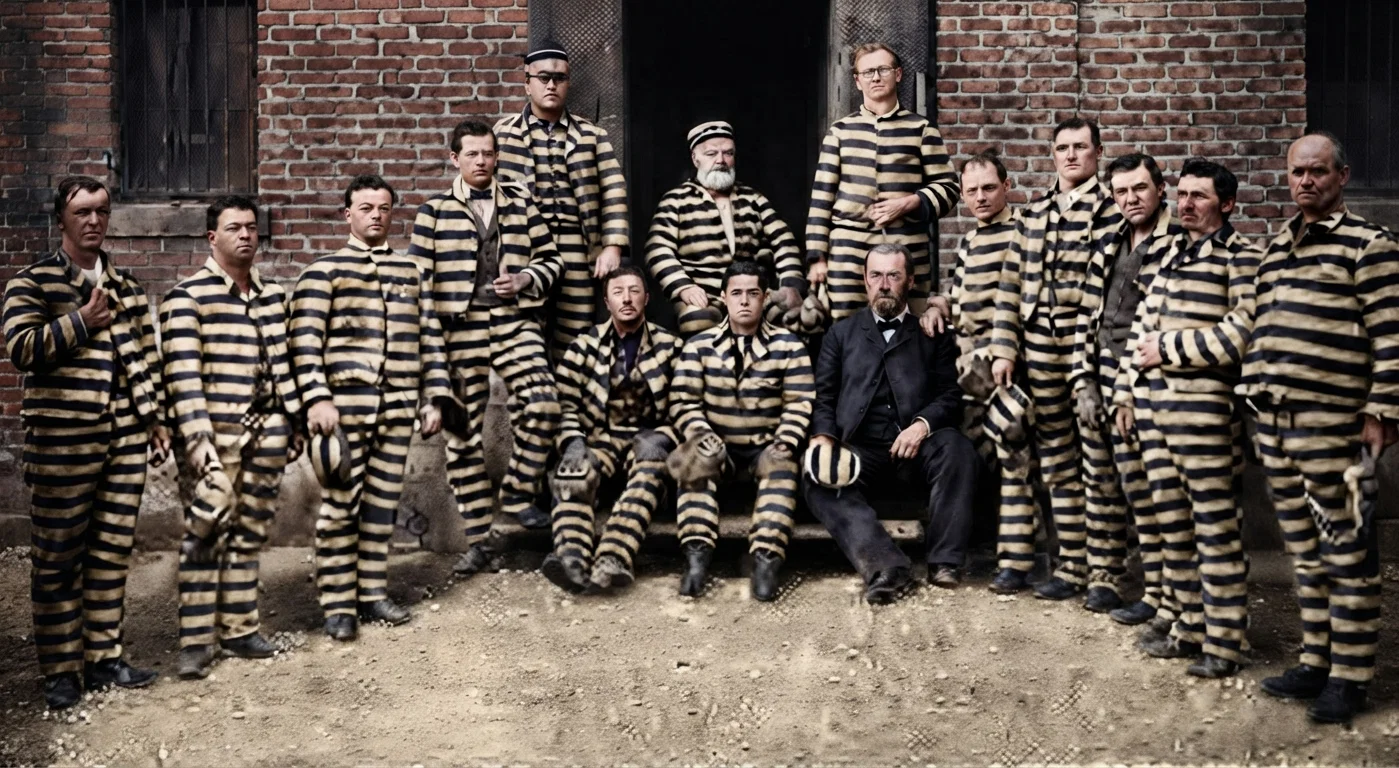
IN Collier's of July 29, 1916, the editor sets forth the blessed results that follow the suppression of the liquor traffic, as follows: "The county jail was the subject of an editorial printed on this page some weeks ago, when we noted that the Denver Highway Department now has to pay real money for the rocks it is using in road making, simply because there aren't convicts enough to serve on the rock pile. All that has happened since Colorado went dry; and it seems to us that if the rock-pile industry has been ruined, it is all the fault of the drys. But Denver isn't the only sufferer. Down in Wilkes County, Georgia, they've been having trouble finding enough convicts to work on the roads, and tried to borrow some from Richmond County. According to the Augusta Chronicle, however, Richmond was short herself. 'Prohibition, it seems, had begun to get in its work in Richmond as well as in Wilkes.'
"The Savannah Morning News comments on the same shortage in Chatham County, where 'prisoners in the county convict camps averaged about one hundred less than the previous month.' The Atlanta Georgian reports still another county — Fulton — that is having trouble because there aren't boozers enough being sentenced to jail terms. In Fulton County, some fifty or sixty deputy wardens, guards, and other officeholders seem to be doomed, or have already lost their jobs, and there are to be only five convict camps instead of eight.
THE SITUATION ALARMING
"THIS situation naturally alarms the Augusta Chronicle. 'What on earth are the counties of Georgia going to do about it — with prohibition depriving them of their convicts in this manner? The situation is becoming serious.' Indeed it is, and not only in Georgia. In other states, too, the convict-labor market is upset by these newfangled prohibiting measures. The Seattle (Washington) Post-Intelligencer reports that the dry laws have cut down the number of convicts sent to Walla Walla, and Superintendent Bowen is short-handed on his road work in Pine Cañon. He doesn't know what to do about it unless the state of Washington votes wet the next chance it has.
"Warden Talcott, of the North Dakota penitentiary, hasn't enough convicts left to run the prison twine works. He blames it all on the North Dakota liquor laws. Pretty soon several thousand ambulance chauffeurs, hospital internes, policemen, prison keepers, and a whole lot of other presumably good people, to say nothing of the barkeeper himself, will be losing their jobs or jogging along on half time simply because of these liquor laws that are just playing the Old Nick in these states of Georgia, North Dakota, and Washington."
It has been well said that the saloon is a licensed turnstile inevitably becoming a "criminal dump." When an officer of the law is searching for some outlaw who is a fugitive from justice, the first place he looks for him is in a saloon. Rum stands convicted at every just tribunal, as the greatest curse the world ever saw.
FEEDING THE MAW OF THE DRINK GOD
IT takes a hundred thousand boys and girls each year to supply the depleted ranks of the unhappy victims of the intoxicating cup; for we are informed that a hundred thousand besotted, ruined victims of rum fall into the grave annually, lost not only for this world, but for the world to come as well. This is a terrible toll required to feed the insatiate maw of the drink god.
Surely it is time for the manhood and womanhood of this great republic to throttle this destructive monster, which is preying upon society and upon the homes of our fair land. Let the convict ranks be depleted. It will cost the state less to put able-bodied men on a rock pile at good wages, than to support an institution that manufactures paupers and idiots, and fills our jails and penitentiaries with depraved victims of intemperance.
We speak of the horrors of war, and God knows there are horrors enough,— carnage and bloodshed and terrible mutilation. There are crippled men, empty coat sleeves, weeping, desolate widows, and hungry, homeless orphans, together with enormous debts and grinding taxation. Rum debauches more homes, makes more misery and anguish, more pauperism, crime, and murder, and more victims of self-destruction than war ever has. G. B. T.