Will Compulsory Military Training Prove to Be the Long-Looked-For "Emancipator"?
By M. Ellsworth Olsen
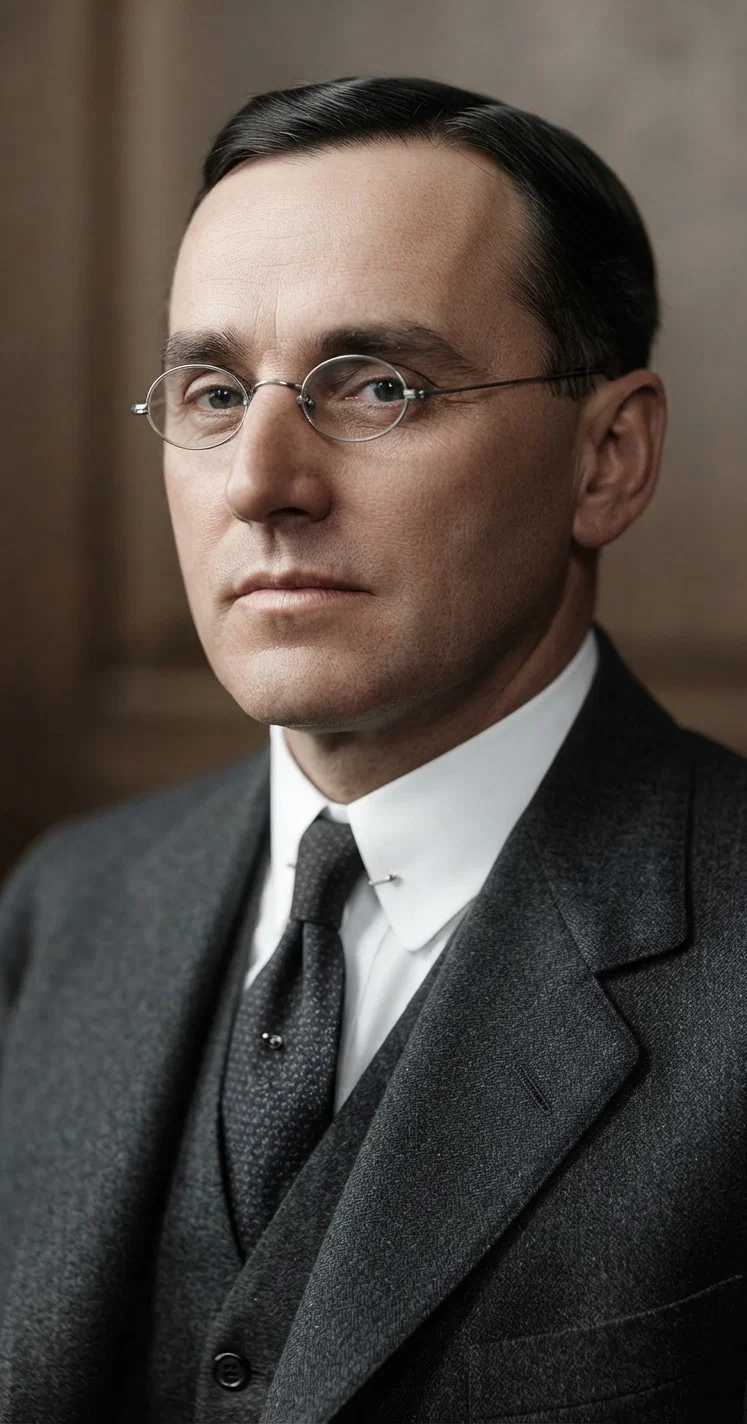
DURAND U. SPRINGER Secretary of the National Education Association
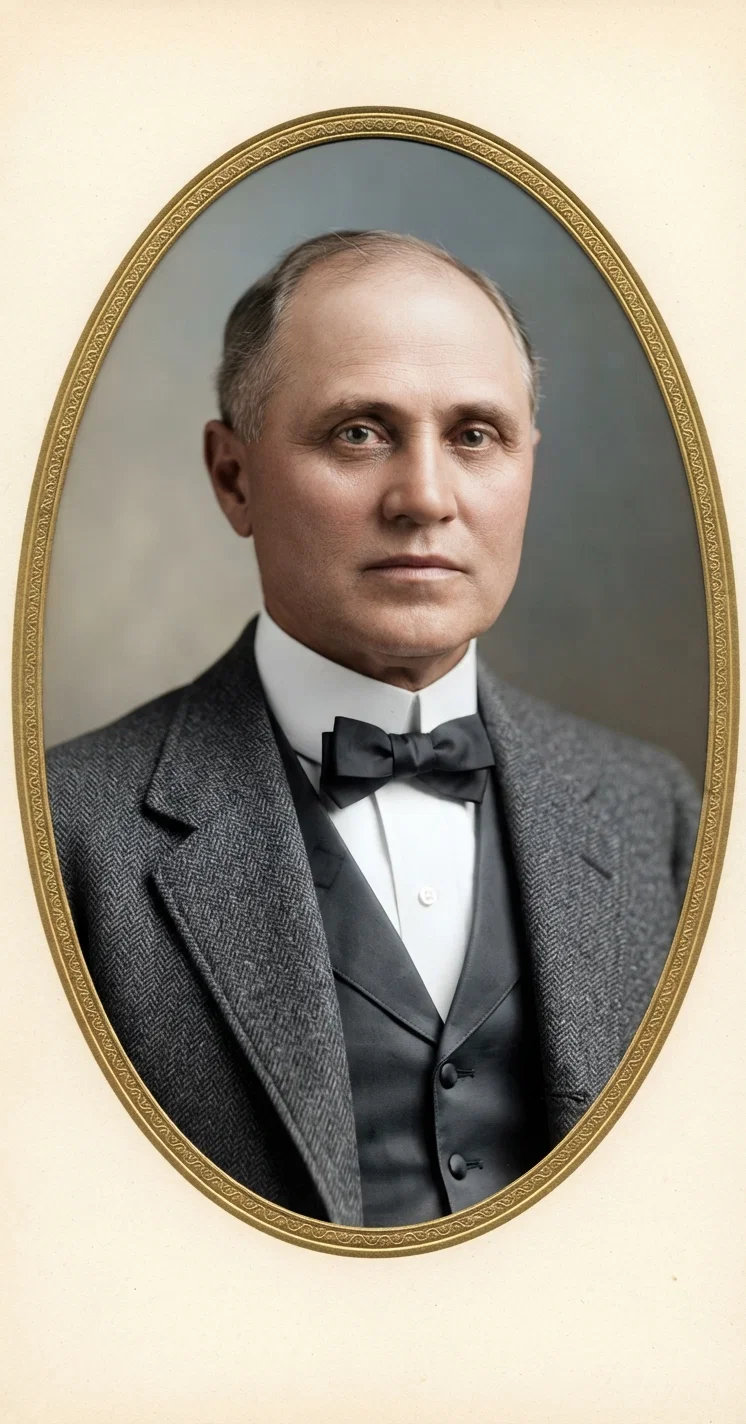
DAVID B. JOHNSON President of the National Education Association
Dr. Olsen's presentation of the preparedness spirit among the educators of the nation shows something of the military fever that possesses many of the leaders of our country. If our children are to receive compulsory military training during their tender school years, it is easy to foresee the ideals which will dominate and the sentiments which will prevail as they emerge to enter the various occupations of after life.
Whether this military instruction in the public schools is advisable or inadvisable is not the question at issue so far as this paper is concerned; but the whole spirit of the time does show that war, and not peace, has taken possession of the minds of men. Regardless of our boastful talk of a soon-coming millennium, when the nations will learn war no more, we find that warnings of the prophets are true, and that this is the age when the nations are "angry," as expressed by the seer of patmos.
SHALL the schoolboy be taught to shoulder a gun? Is compulsory military training in the schools necessary in order that this nation may be prepared to defend itself? Over this important question, the thirty thousand delegates in attendance at the annual meeting of the National Education Association, held in New York, July 4-8, were hopelessly divided.
To begin with, the anti-militarists seemed in the majority. Speeches were made by David Starr Jordan and William Jennings Bryan, pointing out the needlessness of such early training, and the danger of cultivating a military spirit.
A number of the delegates warmly indorsed the views thus presented. C. Ward Crampton, director of physical training in the New York schools, thought drilling small boys and putting them in uniform absurd from a military point of view, and worse than absurd from an educator's point of view. Mrs. Fannie Fern Andrews, secretary of the American School Peace League, thought military training in the schools "not only hostile to American traditions, but an acknowledgment of helplessness in dealing with the greatest crisis in modern history. If education is to become effective in imparting ideals which will preserve and advance the higher interests of civilization, it must lead over all other forces." P. P. Claxton, United States commissioner of education, while pleading for more flexibility in the scheme of national education, also expressed himself as opposed to school military training.
Welfare in the Name of War
BUT the idea of training our boys to fight had strong backing, numbering among its supporters Major General Leonard Wood, Mayor Mitchell, of New York, John D. Shoop, superintendent of Chicago schools, and many others. Dr. Woods Hutchinson thought such training had great possibilities for good. He said:
"Military training in the schools may prove the great emancipator for which we have been waiting to free our system of education from clerical shackles and classical absurdities of the past, and place it upon a hygienic, rational, and scientific basis. Instead of deploring conditions, we should meet them half way, and see if what we have not been able to obtain for the health and bodily welfare of the child in the frivolous name of play we can obtain in the name of war. Instead of a hard-won, barely tolerated section of school hygiene, we may make all schooling hygienic, and all education improving to the body and health of the child as well as to his mental development."
But the speech of telling importance was the one made by General Wood. He addressed the association on Thursday night, July 6, in the great hall known as Madison Square Garden. Without concerning himself much as to the kind or extent of military training that might be desirable in the schools, he strongly emphasized the need of preparing the young people now growing up in this country for the stern duties of citizenship, and he very bluntly denied the allegations of earlier speakers to the effect that military men were anxious for war, and liable needlessly, at times, to provoke hostilities.
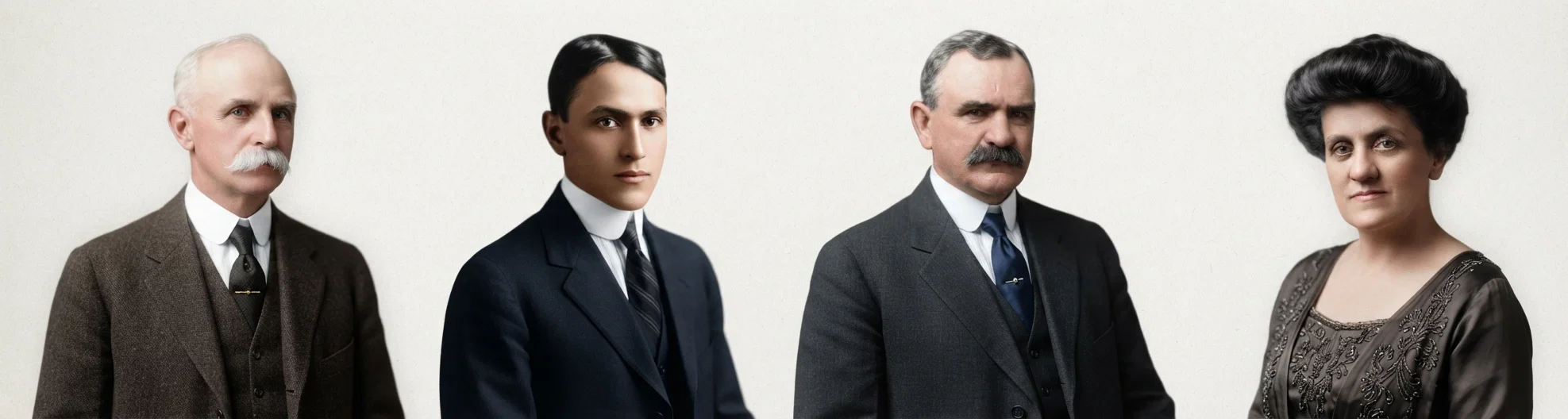
DR. A. E. WINSHIP Editor of the Journal of Education DR. CHARLES H. JUDD Director of Education, University of Chicago DR. JOSEPH SWAIN President of Swarth-more College MARY B. FOX President of the Department of Kindergarten Education
The Charge Vigorously Denied
THERE was nothing in the least conciliatory about the speech, and it was not even preceded by the usual compliments directed to the vast body of educators gathered for their annual meeting. But it was approved, from the start; and while the speaker did not court applause, and rather deprecated it, always starting in on his next point before the applause was half over, the speech was probably the best received one of the whole meeting.
"You are preparing people for life," he began. "One of the things you should teach, and don't to the extent you ought, is that the individual has an obligation to the state, and it isn't the state alone that has an obligation to him."
The charge that soldiers stirred up war was indignantly repelled. "You are the light talkers about war, not we. We know something about it; you know nothing. Search all history, and you will find no single instance in which officers of your army or navy have brought on conflict unless acting under direct authority of the government. Our business is to get the country out of wars that you get us into. We are quite as domestic as you are, and quite as human."
More War To-Day than Ever
THE general paid his respects to certain previous speakers in the words: "We have altogether too much of the fourth of July style of oratory, all too much of the type of man who speaks of a million springing to arms between sunrise and sunset. I have been sitting up nights for three weeks to see thirty thousand spring, and it is a very heavy spring."
"History is too superficially taught in this country. It isn't564enough to teach dates, the names of generals, et cetera. You should tell your pupils the truth about our country. Show them that we never yet in all our history engaged in war single-handed with a first-class power."
"We don't want war. We all believe in arbitration. There were forty peace societies in this country in 1815. Mankind has been struggling for peace all these years; but if you look over the world to-day, you will see more of war than any lot of human beings ever saw before. We are going to work for peace, but we must not be blind to the facts. A good moral life, an upright character, will not in themselves protect any one."
"The unscrupulous nation is just as remorseless as the unscrupulous highwayman. There is no security in numbers. No wolf was ever frightened by the size of a flock of sheep. He may have been puzzled for a moment to decide which was the fattest one; nothing more."
Must We Resort to Force?
"WE talk too much of our moral excellence. Wherein does it lie? Our murder rate is one hundred twenty-four per million against twelve in Switzerland, where every man undergoes military training, and fifteen to eighteen in Europe generally."
"We don't want to make swashbucklers or braggarts of our boys and young men; but they should know that they owe everything to their country, and they should be able to discharge the military side of their obligations to that country, because everything depends upon it."
"The whole question sums itself up in this: If you have in your country and institutions anything worth defending, remember that they are not defended by words. Force must sometimes be resorted to."
Such, in short, was the plain, blunt speech that won such widespread approval.
When the question was put to the vote, the majority of the teachers were found to favor a measure of military training for the boys, under certain conditions. The resolution passed provides that "the community or state may introduce such elements of military training into the schools as may seem wise and prudent, yet the association believes that such training should be strictly educational in its aim and organization, and that military ends should not be permitted to pervert the educational purposes and practices of the school."
Broadening the Field of Knowledge
ANOTHER matter that received much attention at the convention was the need of more vocational training. Secretary Redfield's address on Wednesday evening was an urgent plea for increased emphasis upon this important phase of modern education. "The trained mind is well," he said; "and because it is well, it is also well that that trained mind should guide a trained hand. If it be the spirit of academic education to preserve for future ages the riches of all the ages past, it is the high ideal of vocational education to absorb the fruit of the ages and to fertilize the field of labor so that each successive age shall produce more and more that which shall bless the age yet to come."
"The cry of children to-day is, Teach us to work, and to know why we work as we do, and how to work well and effectively. Vocational education, then, has no narrow horizon. The whole broad field of knowledge is its own."
"The apprentice in a machine shop will be none the worse, but rather the better, for a knowledge of metals and the principles of mechanics. If he builds or repairs automobile engines, something about hydrocarbons will do him no harm. The truth is that industry to-day reaches out into all the sciences so fast and far that the field for thought is large and free and fascinating, and the inspiration of intelligent effort is an incentive to larger living."
Opening Its Deeper Recesses
"VOCATIONAL education, then, is the opponent of things narrow and cramping. It looks with impatience on the boy in the machine shop who knows how to run a drill press, but to whom a planer, the shaper, and other machines are sealed books. It would take a boy and make him a mechanic knowing the why and the wherefore of mechanics, the reason why each tool does what it does, as well as understanding the way in which it does it. It would open to a boy and girl the recesses of knowledge out of which modern industry has sprung and on which it depends. It would make them reasoning workers and not automata. Its purpose is to make men and women flexible in their working powers, and to take the rigidity out of toil. It is a human force, sympathetic and virile, leading the mind to express through the hand the character and spirit of the worker."
The secretary had much more to say on this subject, and his address met the hearty approval of the teachers. It is evident that this country is waking up to the need of a practical, all-round education for its boys and girls, one that will fit them for the real duties of everyday life.
Seventh-day Adventists have been well to the front in this movement. The need of vocational training first began to be agitated in our schools some forty years ago, and it is to-day a well established part of our educational system.
Interpret in Values of Human Service
THIS large assemblage of teachers was addressed by Samuel Gompers, president of the American Federation of Labor. He came, he said, as "the representative of those who, by their physical labor, put the natural resources of the country into a shape that will make them serviceable to all, . . . those who do the actual work that makes our present civilization possible."
The toilers of the country are vitally concerned in the public schools, and also in the kind of instruction their children there receive. "The old academic education for mind culture alone was founded upon false principles. . . . There must be coordination of both the physical and the mental." The labor movement demands that education shall mean opportunity for freedom, opportunity for larger and better lives for all.
"Give to the masses of the people, those who perform mechanical work, which of its very nature is monotonous and may become also stultifying, an imaginative understanding and such a wide comprehension of the wholeness of life that no vocation need be to them a rut. Enable each to see up and beyond, with a vivifying mental grasp that shall interpret labor in values of human service, and to do the day's work with the joy of creative labor."
Other prominent speakers at the various meetings were Prof. John Dewey, head of the department of philosophy in Columbia University; Dr. John H. Finlay, state commissioner of education, Albany, New York; Dr. A. E. Winship, editor of the Journal of Education; Dr. Joseph Swain, president of Swarthmore College. The chairman of the meetings was David B. Johnson, of Rock Hill, South Carolina, who has served as president of the association for the past year. The success of the great gathering was owing in no small degree to the faithful and efficient efforts of the secretary, Durand U. Springer, of Ann Arbor, Michigan.