In remarking on these chapters, the ram, goat, little horn, 2300 days and 70 weeks will be briefly noticed.
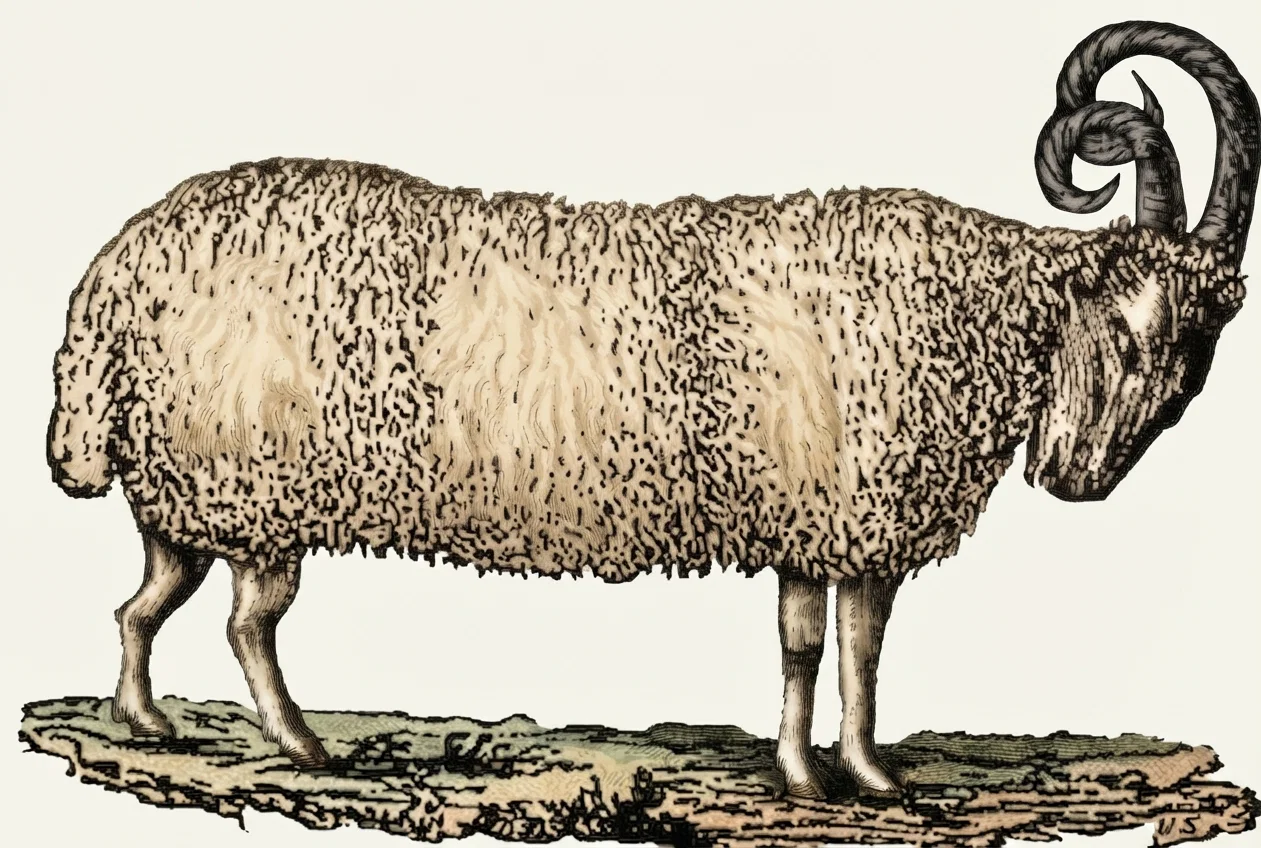
1. THE RAM. Verses 2, 3. "Then I lifted up mine eyes, and saw, and behold, there stood before the river, a ram which had two horns; and the two horns were high; but one was higher than the other, and the higher came up last. I saw the ram pushing westward, and northward, and southward; so that no beasts might stand before him, neither was there any that could deliver out of his hand; but he did according to his will, and became great."
This symbol is explained by the angel in verse 20. "The ram which thou sawest, having two horns are the kings [kingdoms] of Media and Persia." It represents the same as the breast and arms of silver of Chap. ii, and the bear of Chap. vii. This vision does not begin with the empire of Babylon, as do those of the second and seventh chapters, but it commences with Media and Persia, at the height of its power.
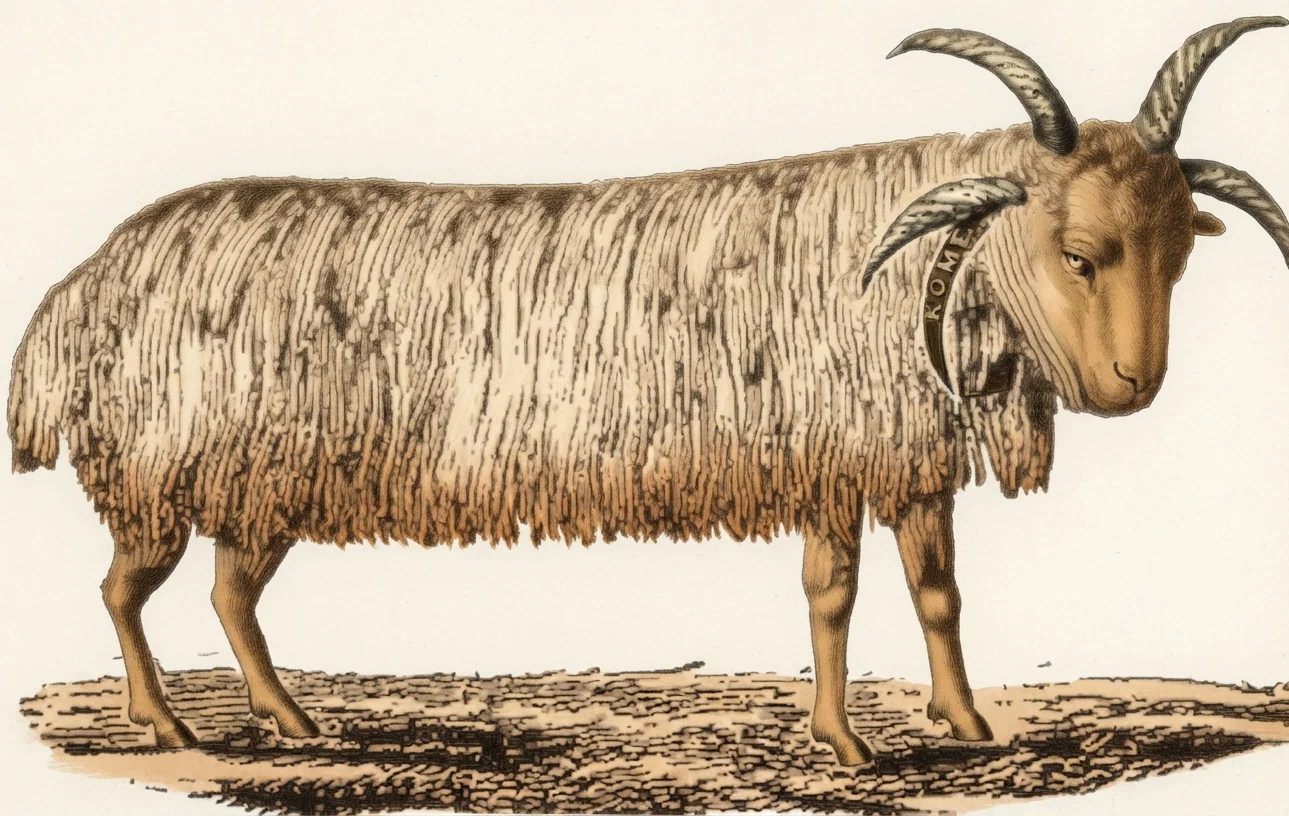
2. THE GOAT. Verses 5-8. "And as I was considering, behold an he goat came from the west on the face of the whole earth, and touched not the ground; and the goat had a notable horn between his eyes. And he came to the ram that had two horns, which I had seen standing before the river, and ran unto him in the fury of his power. And I saw him come close unto the ram, and he was moved with choler against him, and smote the ram, and brake his two horns; and there was no power in the ram to stand before him, but he cast him down to the ground, and stamped upon him; and there was none that could deliver the ram out of his hand.
Therefore, the he goat waxed very great; and when he was strong, the great horn was broken; and for it, came up four notable ones toward the four winds of heaven."
The angel explains this symbol in verses 21, 22. "And the rough goat is the king of Grecia: and the great horn that is between his eyes is the first king. Now that being broken, whereas four stood up for it, four kingdoms shall stand up out of the nation, but not in his power." The goat, then, represents Grecia, the same as the brass of the image of chapter ii, and the leopard of chapter vii. Greece succeeded Persia in the dominion of the world, B. C. 331. The great horn is here explained to be the first king. The four horns that arose when this horn was broken, denote the four kingdoms into which the empire of Alexander was divided after his death. The same is represented by the four heads and four wings of the leopard of Dan. vii. See Chap. xi, 3, 4.
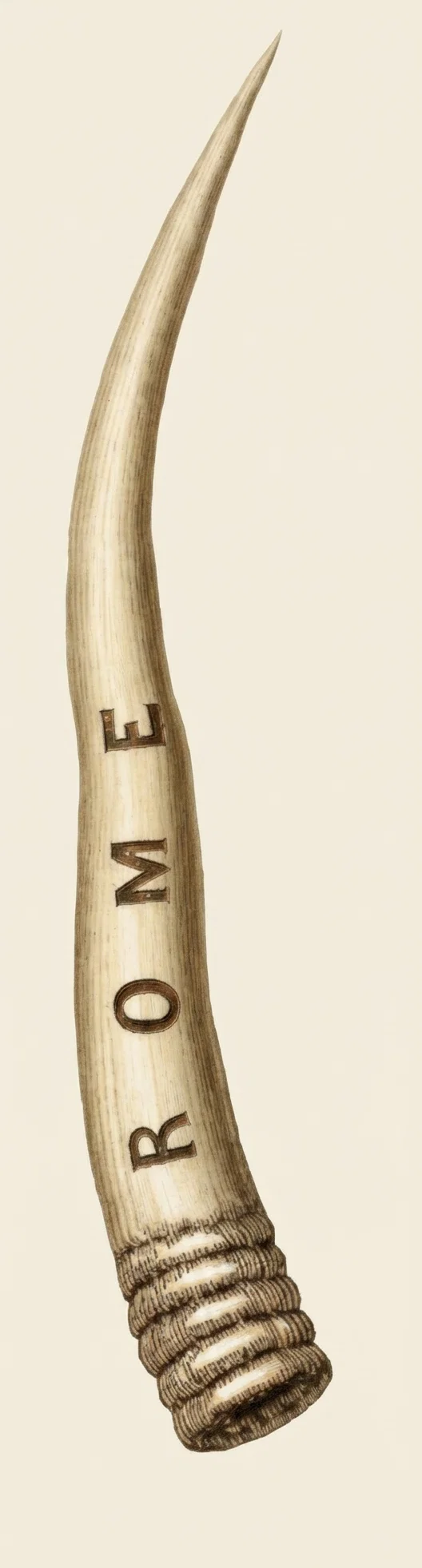
3. THE LITTLE HORN. Verses 9-12. "And out of one of them came forth a little horn, which waxed exceeding great, toward the south, and toward the east, and toward the pleasant land. And it waxed great, even to the host of heaven; and it cast down some of the host and of the stars to the ground, and stamped upon them. Yea, he magnified himself even to the Prince of the host, and by him the daily sacrifice was taken away, and the place of his sanctuary was cast down. And an host was given him against the daily sacrifice by reason of transgression, and it cast down the truth to the ground; and it practiced, and prospered."
This symbol is explained by the angel in verses 23-25. "And in the latter time of their kingdom, when the transgressors are come to the full, a king of fierce countenance, and understanding dark sentences, shall stand up. And his power shall be mighty, but not by his own power; and he shall destroy wonderfully, and shall prosper, and practise, and shall destroy the mighty and the holy people. And through his policy also he shall cause craft to prosper in his hand; and he shall magnify himself in his heart, and by peace shall destroy many: he shall also stand up against the Prince of princes; but he shall be broken without hand."
To avoid the application of this prophecy to the Roman Power, Pagan and Papal, Papists have shifted it from Rome to Antiochus Epiphanes, a Syrian king who could not resist the mandates of Rome. See notes of the Douay [Romish] Bible on Dan. vii; viii; xi. This application is made by the Papists, to save their church from any share in the fulfillment of the prophecy; and in this, they have been followed by the mass of opposers to the Advent faith. The following facts show that
THE LITTLE HORN WAS NOT ANTIOCHUS.
1st. The four kingdoms into which the dominion of Alexander was divided, are symbolized by the four horns of the goat. Now this Antiochus was but one of the twenty-five kings that constituted the Syrian horn. How, then, could he, at the same time, be another remarkable horn?
2d. The ram, according to this vision, became great; but the little horn became exceeding great. How absurd and ludicrous is the following application of this comparison:
Great. Persia. Very Great. GRECIA. Exceeding Great. ANTIOCHUS.
How easy and natural is the following:
Great. Persia. Very Great. GRECIA. Exceeding Great. ROME.
3d. The Medo-Persian empire is simply called great. Verse 4. The Bible informs us that it extended "from India even unto Ethiopia, over an hundred seven and twenty provinces." Esther i, 1. This was succeeded by the Grecian power, which is called VERY GREAT. Verse 8. Then comes the power in question which is called EXCEEDING GREAT. Verse 9. Was Antiochus exceeding great when compared with Alexander, the conqueror of the world? Let an item from the Encyclopedia of Religious Knowledge answer:
"Finding his resources exhausted, he resolved to go into Persia, to levy tributes and collect large sums which he had agreed to pay to the Romans."
Surely we need not question which was exceeding great, the Roman power which exacted the tribute, or Antiochus who was compelled to pay it.
4th. The power in question was "little" at first, but it waxed or grew "exceeding great toward the south, and toward the east, and toward the pleasant land." What can this describe but the conquering marches of a mighty power? Rome was almost directly northwest from Jerusalem, and its conquests in Asia and Africa were, of course, towards the east and south; but where were Antiochus' conquests? He came into possession of a kingdom already established, and Sir Isaac Newton says, "He did not enlarge it."
5th. Out of many reasons that might be added to the above, we name but one. This power was to stand up against the Prince of princes. Verse 25. The Prince of princes is Jesus Christ. Rev. i, 5; xvii, 14; xix, 16. But Antiochus died 164 years before our Lord was born. It is settled, therefore, that another power is the subject of this prophecy. The following facts demonstrate that
ROME IS THE POWER IN QUESTION.
1st. This power was to come forth from one of the four kingdoms of Alexander's empire. Let us remember that nations are not brought into prophecy, till somehow connected with the people of God. Rome had been in existence many years before it was noticed in prophecy; and Rome had made Macedon, one of the four horns of the Grecian goat, a part of itself B. C. 168, about ten years before its first connection with the people of God. 1 Mac. viii. So that Rome could as truly be said to be out of "one of them," as the ten horns of the fourth beast in Chap. vii, could be said to come out of that beast, when they were ten kingdoms set up by the conquerors of Rome.
2d. It was to wax exceeding great toward the south, and toward the east, and toward the pleasant land. [Palestine. Ps. cvi, 24; Zech. vii, 14.] This was true of Rome in every particular. Witness its conquests in Africa and Asia, its overthrow of the place and nation of the Jews. John xi, 48.
3d. It was to cast down of the host and of the stars. This is predicted respecting the dragon. Rev. xii, 3, 4. All admit that the dragon was Rome. Who can fail to see their identity?
4th. Rome was emphatically a king of fierce countenance, and one that did understand dark sentences. Moses used similar language when he evidently predicted the Roman power. Deut. xxviii, 49, 50.
5th. Rome did destroy wonderfully. Witness its overthrow of all opposing powers.
6th. Rome has destroyed more of the "mighty and holy people," than all other persecuting powers. From fifty to one hundred millions of the church have been slain by it.
8th. This power is to be broken without hand. Compare with Chap. ii, 34, 45, where it is said that the stone "cut out without hands," smote the image, &c. Its destruction then takes place at the final overthrow of all earthly powers.
4. THE 2300 DAYS.—The field of vision, as we have seen, is the empires of Persia, Grecia and Rome. We will here introduce the inquiry of one saint, [angel,] and the answer by another.
Verses 13, 14. "Then I heard one saint speaking, and another saint said unto that certain saint which spake, How long shall be the vision concerning the daily sacrifice, and the transgression of desolation, to give both the sanctuary and the host to be trodden under foot? And he said unto me, Unto two thousand and three hundred days; then shall the sanctuary be cleansed."
It is a fact that 2300 literal days (not quite seven years) would not cover the duration of a single power in this prophecy, much less extend over them all; therefore the days must be symbols, even as the beasts and horns are shown to be symbols. It is also a fact that a symbolic or prophetic day is one year. Eze. iv, 5, 6; Num. xiv, 34. Hence, the period is 2300 years.
In regard to the date of the 2300 prophetic days, they evidently commence with the vision, at the height of the Medo-Persian empire. Anything more definite, this chapter does not furnish, we must therefore look elsewhere for the definite explanation of this matter.
5. THE 70 WEEKS. We regard this period of Chap. ix, as the only key to the time of the vision of Chap. viii. Notice as follows:—
1st. The command to Gabriel, [Chap. viii, 16,] "Make this man (Daniel) to understand the vision."
2d. Gabriel did make the Prophet to understand what the ram, goat and little horn meant, yet,
3d. Daniel says, at the close of this interview with the angel, "I was astonished at the vision, but none understood it." None understood the time—where to commence the 2300 days, and "what manner of time" they were.
4th. The ninth chapter of Daniel records another visit of Gabriel. The Prophet is praying when the angel touches him, and says, "I am now come forth to give thee skill and understanding." It was on time that the Prophet needed "understanding," as the other symbols had been explained and mark the heavenly messenger's first declaration, after telling Daniel to "consider the vision:" "Seventy weeks are determined [cut off] upon thy people," &c. Cut off from what? Most certainly cut off from the 2300 days, as a period of time can only be cut off from time.
The "going forth of the commandment to restore and to build Jerusalem" is mentioned in verse 25 as the event to mark the commencement of the 70 weeks. As the 70 weeks are cut off from the 2300 days, it follows that they form the first 490 of those days, and both periods begin at the same date. Here we take leave of this subject, and refer the reader to our works on the 2300 days and the Sanctuary, where it is shown that the 2300 prophetic days began B. C. 457, and terminated A. D. 1844.