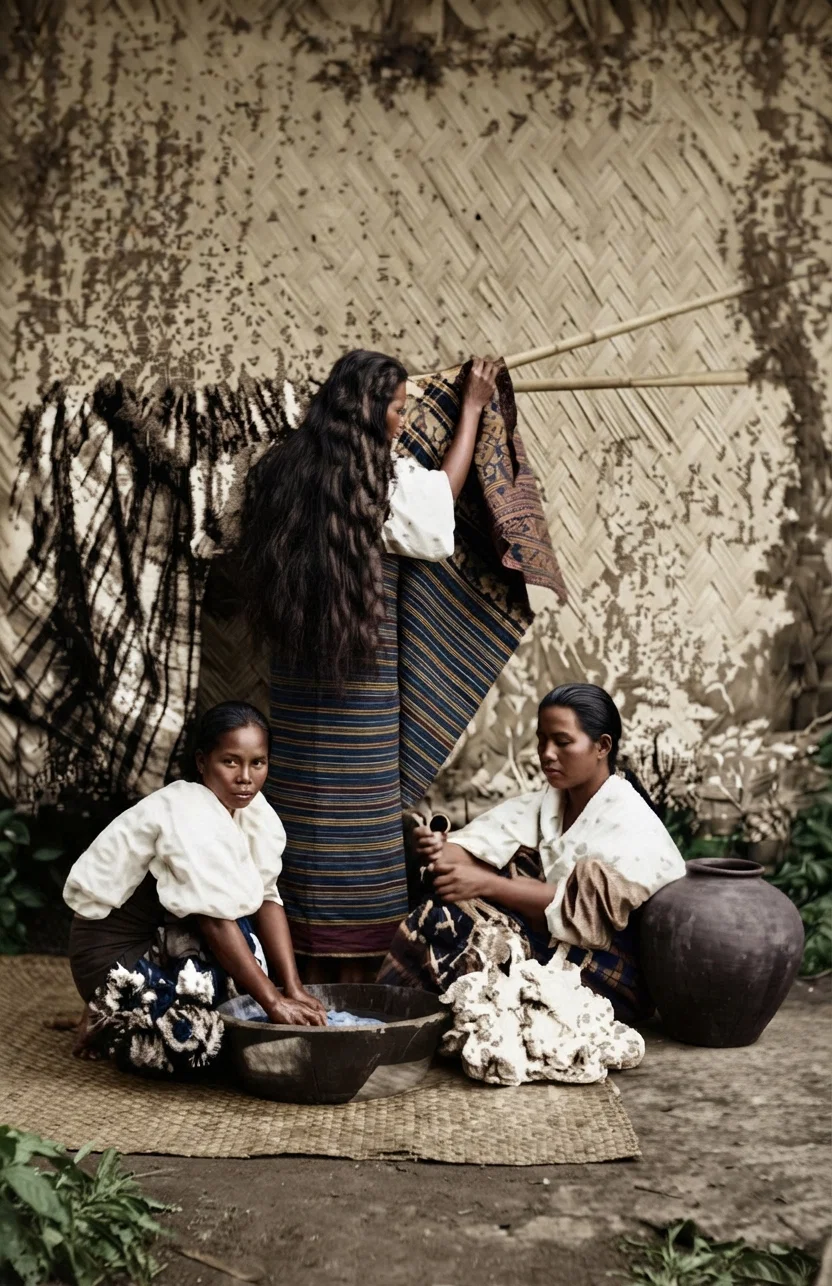
THE houses are made largely of bamboo. They are usually raised about ten feet from the ground. The roofs are thatched. Glass is not used for windowpanes, a window consisting of an open space covering nearly the whole side of the house, which is closed by means of a light, sliding shutter. The natives think that the night air is bad for them, so they close their houses at night. The floors are made of light bamboo strips, which are about three quarters of an inch wide and one quarter thick. They are not placed together, but spaced about one-half inch apart.
These people are great gamblers, betting chiefly on cock-fights. Sunday is the great day for the cockpits, to which hundreds of the natives go, and either gain or lose money. To make the fight still more barbarous, they fasten a sharp-edged blade about three inches long to the foot of the rooster. I suppose that the Americans did not want to incense these people by taking away their chief sport. Almost any time of the day men are to be seen carrying their cocks around in their hands. They keep them in a fighting mood by letting them fight a little each day, but not with the blade.
Many of the venders are women. Around our meeting-tent at night there were three or four women selling their produce. They sat on the ground near their tray-like baskets, and sold peanuts, roasted chestnuts, boiled eggs, etc. They also had corn on the cob, which they were roasting on charcoal coals to sell.
A PHILIPPINE WASHERWOMAN
The coals were kept alive by means of a fan in the woman's hand. The people bought that corn and ate it as we would candy.
We dare not drink water that has not been either boiled or distilled. The vegetables must be cooked, and the only kind of fruit that is safe to use is that which grows on trees and has a thick peel. Then, to avoid the malaria, we must sleep under netting.
Manila is divided into two parts,—the Intramuros, or old walled city, and that which has been built beyond it. The walls are about twenty feet high, and nearly as thick. They are broken down in places for the streets.
The women of the higher class dress artistically. They wear a skirt of heavy material, about like our linen or grass-cloth, or perhaps not so heavy. This is of a bright color or black, never white. Over a white undergarment they wear a low-necked waist, made of very thin material, which comes to the waist line. The sleeves are very large and are starched, so they stand out like a balloon.
They reach to a little below the elbow. In addition to this, there is a kind of scarf, usually made of the same material as the waist. It is just a square folded triangularly and then folded two or three times again. It is placed on the neck, and pinned together in front. This, with the big sleeves, makes the women look odd to the newly arrived American. Their hair is straight and black. Their shoes are leather soles, without heels, but usually with plush toe-pieces. The house shoes are the same, but made of grass. Most men dress like the Americans. The poorer class of men wear trousers and undershirt, with a very thin top shirt outside of the trousers, which takes the place of a coat. The small boys wear a one-piece garment, which is a tight shirt reaching to about the waist line. This is usually all they wear. The little girls wear a slip, which comes to the knees or a little below.
One reason why our living is so expensive is because we have to buy our food in small quantities, for food does not keep well. We get tomatoes and other fruits by the dozen, and potatoes by the kilo (2.2 pounds). Bananas are plentiful. Mangoes are a tropical fruit that we had never eaten till coming here. They are about the size and shape of a turkey egg, only a little flatter. The one seed in the center is long and flat. The meat is a rich golden color, and is very good; in fact, mangoes are thought to be the best fruit. When they first ripen, they cost seventy-five cents a dozen. Papaya is another fruit new to us. It grows on a tree about the size of the coconut-tree, and is very nearly the size and shape of the coconut in the husk. Its meat is yellow, and seems very much like a muskmelon. Canned fruit is twenty-five cents a can, and dried fruit is from fifteen to eighteen cents a pound. Everything in the store is high. Most foods must be kept in tin, sealed up. All kinds of dried fruit, and also beans, peas, cereals, and crackers, have to be packed in tin, or they are likely to spoil before reaching this place. We can get tomatoes, onions, eggplants, green butter-beans, sweet potatoes, etc.; but they are expensive. The native foods that we care to eat furnish so little variety as to be trying on the appetite in this warm climate. We buy distilled water in two-quart bottles, costing us two cents each.
Just a word about the religion. The Roman Catholic has been and is still the largest church. The Catholic churches, with their bells, are to be seen everywhere. In the small places where the people have only bamboo houses, there are very large stone churches towering high above all else. A few years ago, Aglipay, a native Catholic priest, withdrew from the church, and established what is called the Filipino Independent Church. In about two years this church took from the parent church about three million members. The various Protestant churches are quite well represented.