LEAVING Shanghai on March 17, on a small eight-hundred-ton boat that had been in service for over thirty-two years, I reached Amoy in three days, where our general meeting, which was attended by most of the workers of the Southeast China Mission, was in progress. The foreign workers present were Elder W. C. Hankins, Elder B. L. Anderson and wife, and the writer. The object of the meeting was to hold an institute for the evangelists, Bible workers, and colporteurs in that mission field; and in addition to the Chinese workers belonging in that field, Evangelists Keh, from Shanghai, and Ang, from Swatow, were present throughout the entire meeting. The day services were given up to the study of Bible doctrines, and methods and plans of work. Regular preaching services were conducted in the evening, and were fairly well attended.
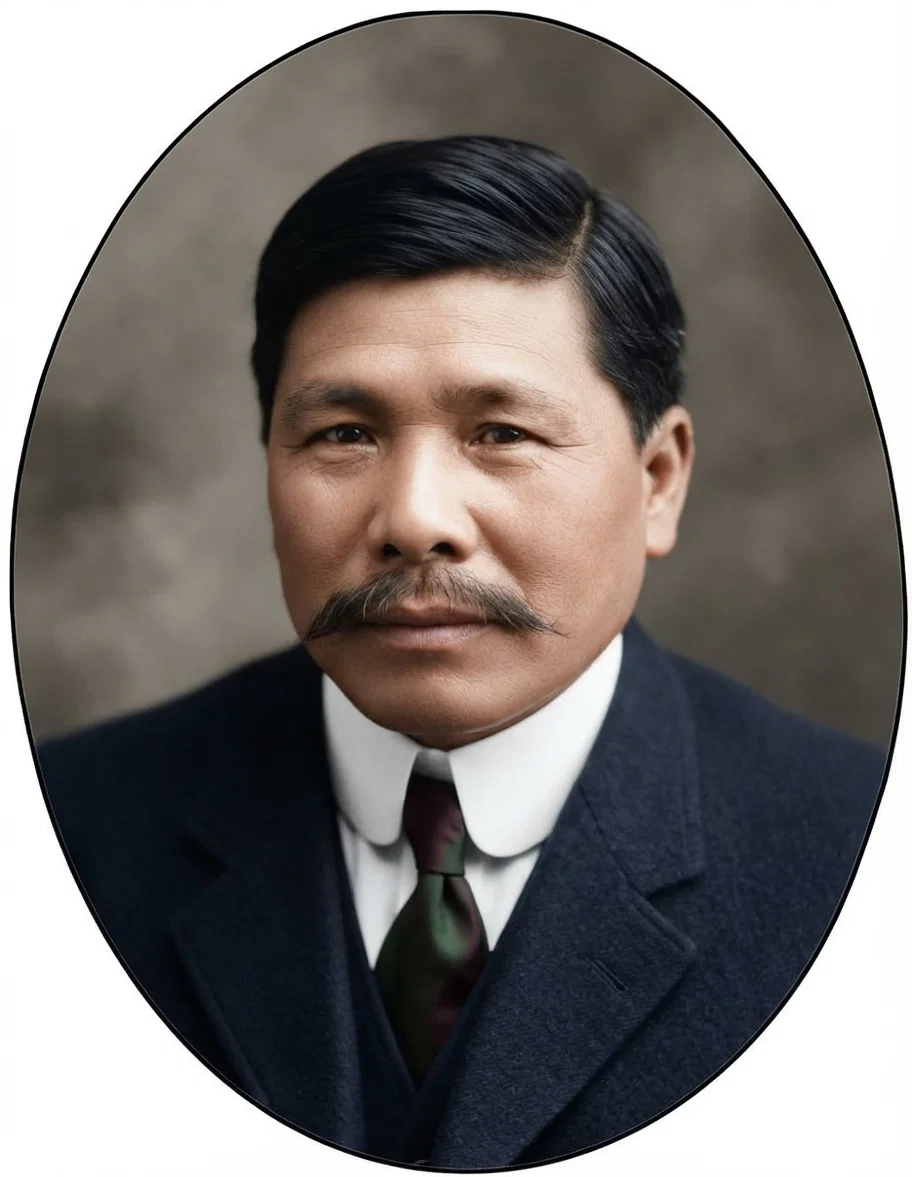
After the sermon on Sabbath morning, Evangelist Ang Tsu Kiet was ordained to the work of the gospel ministry. Brother Ang is the second ordained evangelist we have proclaiming the third angel's message to the millions of China. He is a promising, consecrated man, with a well-trained family of six girls and one boy, who, together with his devoted wife, are united in the worship of the true God. Not only is he devout and sincere, but he is also a very pleasant, capable man, having been a mandarin. Even since professing the truth, he has been urged to accept an official appointment from which he would receive a large salary. He declined this opportunity for worldly gain and advancement, and has given his whole heart and life to the preaching of the third angel's message. His home is in Swatow, and he speaks the Swatow dialect.
In Amoy two schools are conducted, one for girls, and the other for boys. In the girls' school we have two teachers, and fifty-six students, all but two of whom are day-students. In the boys' school, with thirty enrolled students, fifteen are day-students. The others are roomed and boarded, about one half of whom pay for their food, others being supported by the mission.
At Chin Chow also a school is conducted, with an attendance of seventy students, five of whom are girls. At Hui An another school is in operation, with an attendance of twenty students; and at Tang Chu a school of fifteen students is just starting. All these are day-schools, the students living at home, and being supported by their parents. The future alone can tell what benefits the cause of God may derive from these schools. Much depends upon the management, the consecration of the teachers, and the proper following up and supplementing of the work of the teachers by those in charge of the schools.
The Southeast China Mission has three foreign families, also nine native evangelists and four colporteurs. However, as Elder W. C. Hankins and family are in the United States on furlough this year, there are really but two foreign families in this field at the present time. One of the native colporteurs is working in Formosa, where he has taken eight hundred annual subscriptions for our Chinese paper. One person has already begun keeping the Sabbath on that island. This is the first-fruits of the third angel's message in Formosa, with its population of three and one-half millions. About one thousand copies of the monthly Chinese paper go to the province of Fukien, besides the annual subscriptions. These papers are sold from house to house by the colporteurs, evangelists, and foreign workers. During the closing meeting four Chinese students from the Amoy school sang, in English, the beautiful hymn "Almost Home." The words, the rendering, and the occasion combined to make the song most effective. Surely the desire of all hearts in these neglected, difficult fields is to reach speedily that goodly land. But before that glad day can come, a mighty work must be done, to accomplish which there must be the outpouring of the Holy Spirit. Five persons were baptized at this place.
ANG TSU KIET
At Swatow we found Brother and Sister W. F. Hills of good courage, enjoying the work, and making progress in the study of the language. The brethren there like them much, and there is a great work before them, which can be done only by the blessing of God. No other field in China is more promising, nor is there any territory seemingly more ripe for the third angel's message, than that of Swatow.
In the evening Brother Keh and I sailed for Hongkong, where I spent two days visiting Brother and Sister S. A. Nagel and Sisters Ida and Gertrude Thompson. Brother Nagel was unable to remain in
Wai Chow, his field of labor, and had come to Hongkong, waiting the settlement of conditions in the interior. He and the Sisters Thompson were engaged in Bible work, and had some interested families whom they were expecting to accept the message. We had intended to visit Wai Chow on Friday; but Thursday night Elder George Harlow came to Hongkong, and told us that it was not safe for us to venture into that territory, and he could not advise that we carry out our plan. I therefore went to Canton with Brother Harlow, where it had been planned to hold the general meeting for the South China Mission. However, Canton was in such a state of unrest that it was decided to hold the meeting in Fat Shan, about an hour's ride by boat and train from Canton. Here we had a good meeting.
I greatly enjoyed my trip in the south, and hope that the conditions in the interior will soon warrant the return of our workers to their stations, and the carrying forward with great activity of the work committed to their trust. Brother J. P. Anderson has been at his Wai Chow station during the entire time, his wife remaining in Canton and taking charge of the Bethel school. The workers in the south are of good courage. The Lord has many precious souls in that field for us to search out and train for his kingdom. I have never before visited the field when I felt so much encouraged, nor saw such a desire on the part of the workers to preach the message and to bring souls to Christ. It was with sorrow that I bade them good-by and returned to Shanghai.