The South India Mission

9%

Review and Herald Publishing Association · Takoma Park Station, Washington, D. C. · Oct 3, 1912

FromReview and Herald, Vol. 89, No. 40.

Read the full edition

The South India Mission

J. S. JAMES
MORE than seven months have hurried by since my last report to the REVIEW. This tardiness has not been due to indolence or lack of interest, but to ill health and a surplus of taxing work. In October of last year it seemed advisable that I go where I could build up my health, which was then verging on a complete breakdown. Arrangements were made for a temporary stay in Bangalore, a semihill station of south India, where I could get proper food and medical attention. This made it necessary for Elder G. G. Lowry to look after the work of two stations, and in order to do that properly, it was necessary for him to locate in Tinnevelli.
In February of 1912 I was called away to Lucknow, to attend a meeting of the advisory board, remaining there some days to assist with a number of important matters. While there, I received word that Elder Lowry had been compelled to leave Tinnevelli on account of his wife's health, and I hurried home to throw my remaining strength into the gap and help out as best I could. Upon getting careful medical advice, a special season of prayer was held for Mrs. Lowry's recovery, after which it seemed advisable for all of us to spend some time in the hills. The months of April and May (the hottest months of the year) were spent at an altitude of 7,500 feet, in a beautiful range of mountains here in southern India. This stay in the hills was of immense value to me. I gained in strength and weight rapidly, and felt like a new person when I came to leave. It was not then possible for Brother and Sister Lowry to return to their work, so they arranged to remain in the hills until fall.
Returning to the heat of the plains, Mrs. James and I went immediately to the station in Tinnevelli, to supervise some needed repairs on the mission buildings and counsel with our native workers. Developments there in connection with our constituents and the day-school call for some provision to be made for orphan children who have been left to our care, in order to save them for our work. Temporary provision was made, which will be completed later.
In order to carry the responsibilities of two stations, and develop some resources much needed to enlarge our work in the future, it seemed advisable for us to settle in Trichinopoli. This being a chief railway and commercial center of south India, with printing and shipping facilities, it offered us advantages for our literature work that could not be had in an out-of-the-way place. Since coming here, we have begun the publication of a Tamil sixteen-page quarterly journal, printed by a Hindu firm in this city. It is called The Present Truth, and we desire to make it such in fact as well as in name. We hope to be able to have all our printing done here for some time.
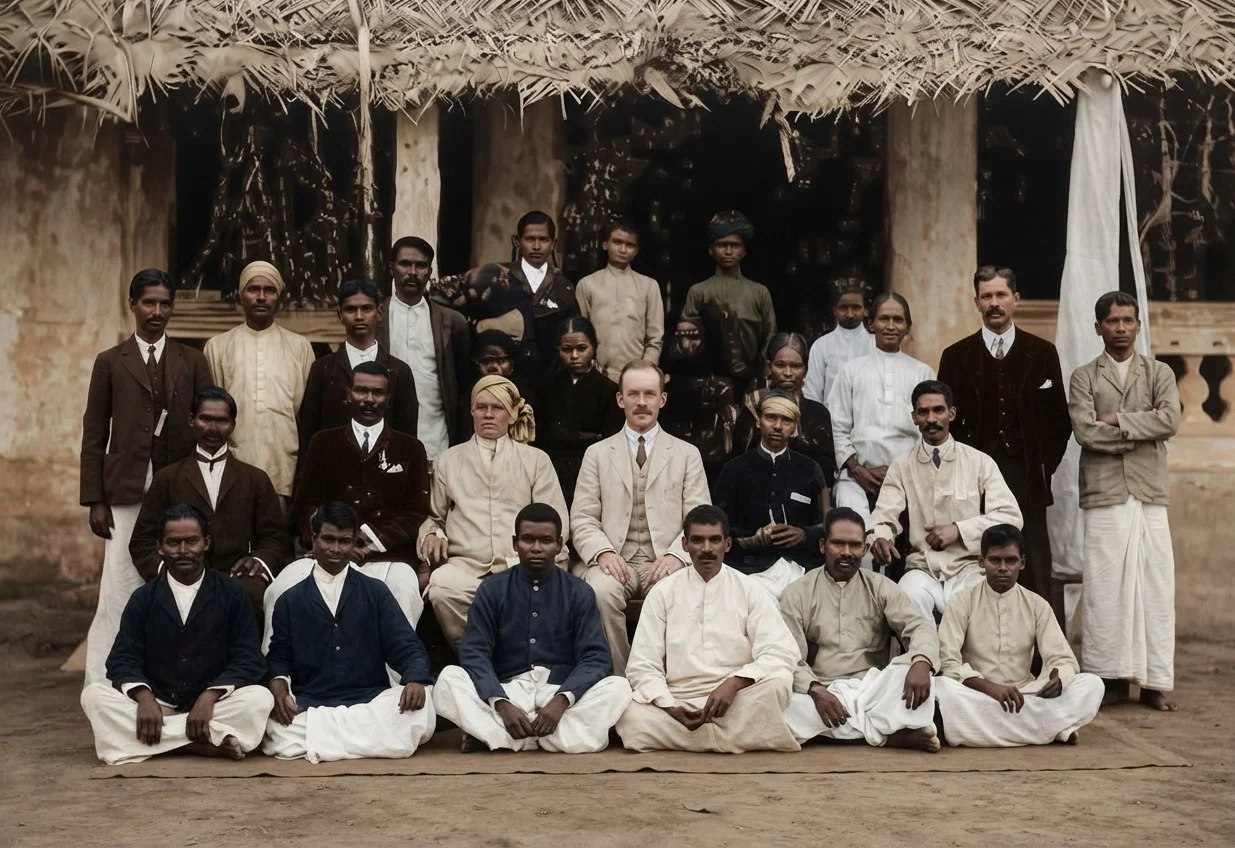
While the paper was going through the press, a colporteurs' institute was conducted, which lasted from July 9 to 28. Nine men took a training for that work. Elder Lowry was able to be with us most of the time, and rendered valuable service in the Bible studies. Brother Thomas, our Tamil evangelist from Tinnevelli, was also present and gave timely aid.
This institute was unlike any that I had ever attended or conducted. Our only material for study consisted of four small tracts and the Bible. Most of the instruction was given through an interpreter. The majority of our men had none of the advantages of an education. Some of them had never seen a railway train in their lives, and with difficulty could correctly add a simple row of figures. But these limitations do not disqualify for work where there is an earnest purpose, consecration, and determination. Toward the close of the institute we were able to get a few finished copies of our Tamil paper for study and drill. The program consisted of a special line of Bible studies for workers in the morning at seven o'clock, practical instruction and drill at 10:30 A. M., and studies in the fundamentals of the message in the evening at 6:30. Some time was spent each day in selling tracts in the city. On the last Sabbath of the institute, five persons went forward in baptism, most of whom were the first-fruits of the work started more than a year before by Elder Lowry and associated workers.On the last day of the institute the printer sent the first instalment of our papers, so our men could take a supply with them to their fields. Before distributing them, we all gathered round the bundles, and on our knees offered earnest prayers for God to bless this beginning made in his name, and go before the men who were to carry the papers to the people. A number of the colporteurs joined audibly in this petition. All the workers went to their appointed fields full of courage and hope, and we believe a good work will be done through their efforts.
WORKERS ATTENDING COLPORTEURS' INSTITUTE AT TRICHINOPOLI, SOUTH INDIA
It is with greater determination and hope that we lay hold of the additional burdens of this new undertaking. We are compelled to labor under many disadvantages, and practically alone, save for the One who has promised to go with us to the end of the world. It is only by his sustaining power in our behalf that we are able to press on. We hear that new workers have been chosen to join us soon. This cheers us, and quickens our pace. We need your continued prayers in behalf of the workers and work of south India. [Since writing this article, Brother and Sister Lowry have been compelled to leave India, and are now on their way home.]
Trichinopoli.