MALACCA dates its history from about the year 1377. In the year 1360 some Malays from Palembang in Sumatra settled in Singapore. In 1377 the Javanese invaded Singapore, and the Malays fled to Malacca, drove out the Negritos, or aborigines, and founded the kingdom of Malacca, so that by the year 1405 they had become a strong nation. Envoys were then sent to China, and were recognized by that nation.
In those days the nations of the East regarded China just as they regard Europe in these days. Malacca was not disturbed again until the year 1509, when the Portuguese, for the first time, made their appearance in the Straits; but this first attack on Malacca and the Malays failed. Later, in 1511 Affonso de Albuquerque, the great viceroy of India made a successful attack, and routed the Malays out of every settlement, compelling them to shift up and down the peninsula. The Portuguese then controlled all the Malay Peninsula Straits and its trade. In 1641 Malacca fell into the hands of the Dutch, and the Portuguese had to go. The Dutch placed as governor a gentleman by the name of Westerhout, of a distinguished family, of whom there are now many descendants in the Straits Settlements. In 1826 the British came into possession of everything. Peace, prosperity, education, and liberty have followed in the wake of British rule, so that now Malacca is fast becoming a rich country.
In the beginning of the nineteenth century Dr. Milne came. He had found no liberty in China to put religious work into print, so he started a China mission printing establishment and mission work in Malacca. Here was the first native convert of the Straits Settlements. Three of Dr. Milne's granddaughters accepted present truth. Two of them were recently baptized, and are now members of the Seventh-day Adventist Church of Singapore. The other granddaughter recently died. The mission building and home used by Dr. Milne was bought by the Westerhout family, the descendants of the first Dutch governor. The materials and timber of this house, most of which were hard wood or teak, were used to build the Westerhout home in the town of Malacca.
A few weeks ago, in company with a member of this family, my wife and I disembarked from a small coasting steamer which had arrived from Singapore just before daylight. We landed in a native boat, possibly on the very spot where the celebrated Affonso de Albuquerque and his men landed in the year 1511; and where later the Dutch landed, and ascending the hill that immediately rises from the water's edge, attacked the fort and captured it. On the hill stood a cathedral, and connected with it were secret passages and chambers. On the approach of the Dutch the monks caused these passages to be blocked by the falling in of earth, and it is believed by some that there are many treasures hidden under that historical hill.
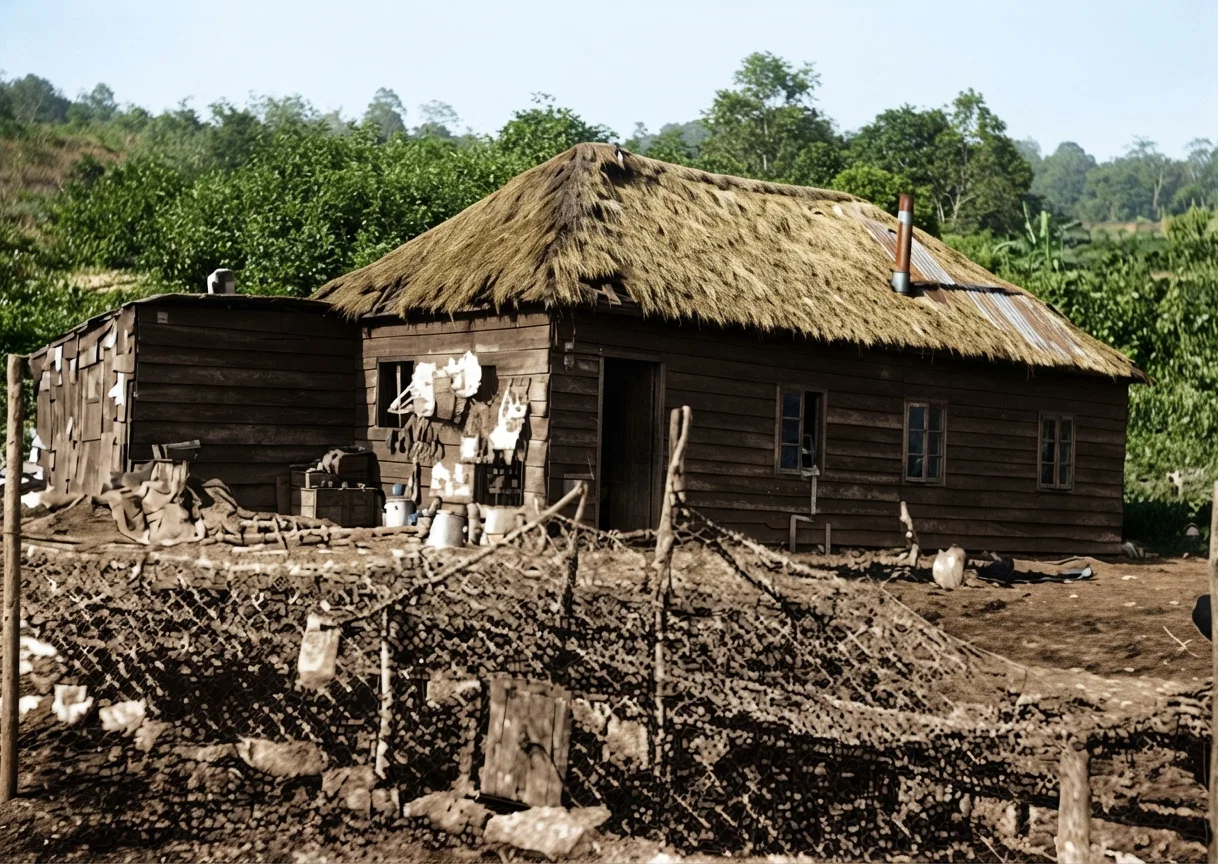
FIRST EMMANUEL MISSION HOME
We ascended this hill just as the sun was rising above the horizon, and entered the old cathedral, whose walls are as good as they were four hundred years ago. The first thing we saw was a large tomb. The inscription on it in Dutch was defaced with age, but we managed to make out the names of several of the Westerhout family. This tomb is probably two hundred fifty years old. We next entered a side chamber, where the body of Francis Xavier lay until its removal to India. At the foot of the hill on the farther side, is a small, but ancient cemetery where some of the first British residents, and army and naval officers are buried. Here also is the tomb of the Milne family. While standing by the tomb of these Protestant pioneer missionaries of the Far East, our feelings were stirred as we thought of the hardships they endured in those days and their willingness to deny self for the gospel's sake. Erelong this tomb will be rent asunder, and those in it will come forth at the voice of their Master and the sound of the great trumpet.
However, our object in coming to Malacca was not sightseeing, but to visit an estate belonging to Brother Westerhout, where a training-school may be established for the purpose of fitting young people to carry the threefold message quickly to every tribe and people in Malaysia. Concerning this enterprise I hope later to be able to write more definitely.