THE HEAD OF GOLD

7%

Publishing Committee · Battle Creek, Mich. · Nov 19, 1857

FromReview and Herald, Vol. 11, No. 2.

Read the full edition

THE HEAD OF GOLD

SYNOPSIS OF THE PRESENT TRUTH. No. 2.
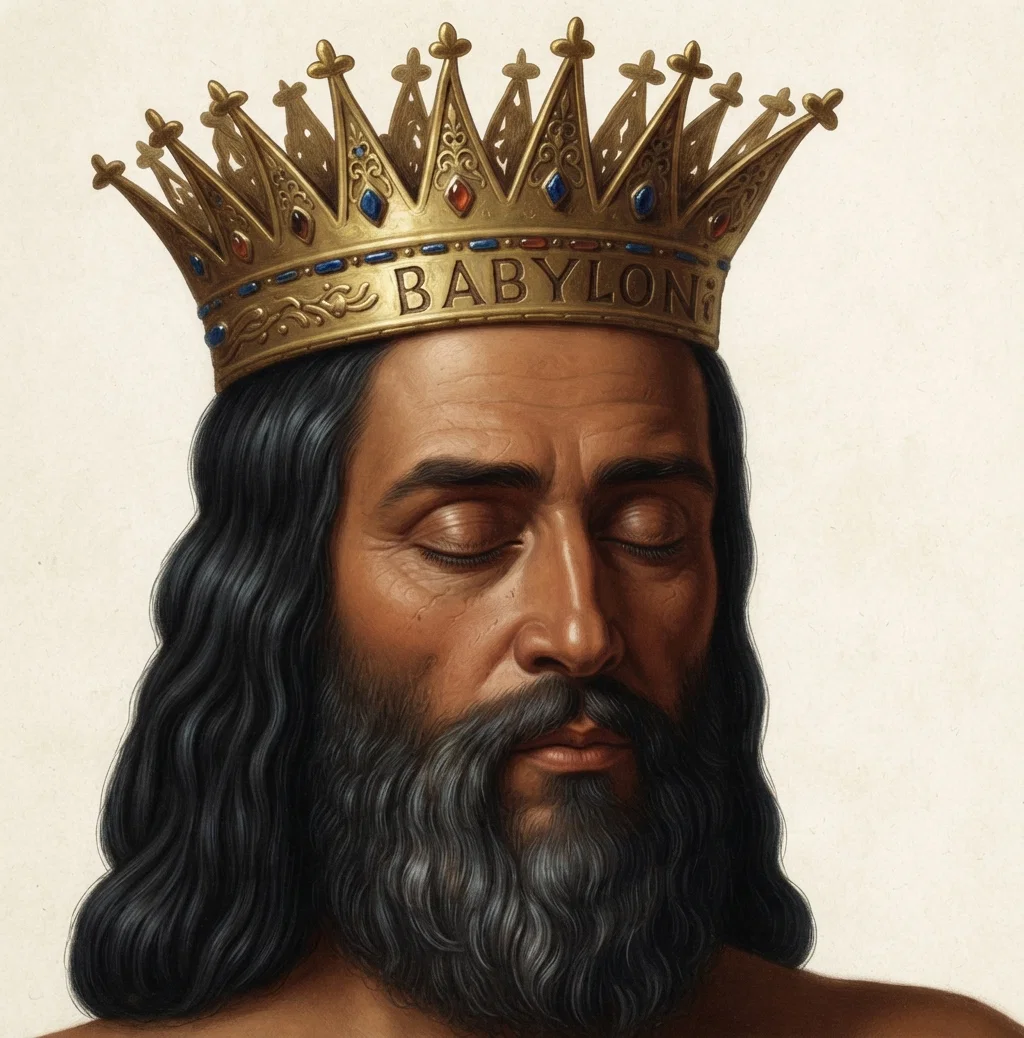
THE HEAD OF GOLD.

TWENTY-SIX centuries ago was founded the Babylonian empire by Belesis, otherwise called Nabonassar, and known in Scripture as Baladan. Isa. xxxix, 1. B. C. 747. It arose from the ancient empire of the Assyrians, founded by Nimrod, [Gen. x, 9, 10.] which had governed Asia for about thirteen hundred years. Having reached the summit of its greatness and glory under Nebuchadnezzar, who overran Asia Minor, Phenicia, Egypt, Syria and Palestine, it became connected with the people of God, as an instrument in his hands for their punishment and is hence introduced into prophecy.
In the year B. C. 606, Jeremiah prophesied of the coming of Nebuchadnezzar against Judah and Jerusalem, and the captivity of seventy years that was to follow. This accordingly came to pass. In the same year, Jerusalem was taken and many of its inhabitants carried away captive to Babylon. Among these were Daniel, Hananiah, Mishael and Azariah.
A revelation of the world's history now opens. A succession of events is unfolded, reaching down to our own time, and a little beyond, which has employed the pens of all historians from that day to this, and will continue to employ them till the great consummation of all things. Here then let us commence to note these events as they transpire along the course of time; having the assurance that the same lamp of prophecy which at this point shines so full upon our path, will light us all the way.
Nebuchadnezzar ascended the throne of Babylon on the death of his father Nabopollasar, B. C. 605. In the second year of his reign, as related in Dan. ii, he "dreamed dreams wherewith his spirit was troubled and his sleep brake from him." The magicians and astrologers having failed to comprehend the matter, it was revealed to Daniel, and he made known to the king the dream and the interpretation thereof. He stated to him a fact which is a source of rejoicing to God's people even to the present day; namely that there is a God in heaven that revealeth secrets, and maketh known what shall be in the latter days. He told him that he had seen a great image whose brightness was excellent, and form terrible; that its head was of fine gold, its breast and arms of silver, its belly and sides of brass, its legs of iron, and its feet part of iron and part of clay. A stone cut out of the mountain without hand smote the image upon the feet (this point we shall notice particularly hereafter) and the iron, clay, brass, silver and gold were dashed in pieces, and like the chaff of the Summer threshing-floor, were blown away. In the interpretation which follows, the Prophet addressed the king with these words: "Thou O king, art a king of kings; for the God of heaven hath given thee a kingdom; power and strength and glory . . . . Thou art this head of gold."
This is enough. We now know that the image which the king saw, was a symbol of earthly governments, and that he (or the kingdom which he represented, the king being here put for the kingdom) was the first of them, for, said the Prophet, referring to his kingdom, power and strength and glory, "Thou art this head of gold." Thus clearly, with dates and starting points all-well defined, are we set upon the track of truth.
Nebuchadnezzar reigned forty-three years. He was succeeded by his son, Evilmerodach, who reigned two years. Evilmerodach was followed by Neriglisar, who reigned four years. He was succeeded by Laborosoarchod, who being put to death after nine months, his reign is not counted in the Canon of Ptolemy. This brings us to the reign of Nabonadius, who is the Belshazzar of Daniel. He reigned seventeen years.
In the first year of Belshazzar, Daniel had a dream and vision of his head upon his bed, [Dan. vii, 1.] in which were revealed the same essential events as set forth in the image shown to Nebuchadnezzar. He saw the four winds of heaven strive upon the great sea, (the sea denoting peoples and tongues, and the four winds, wars and civil commotions among them, Rev. xvii, 15) and four great beasts came up diverse one from the other. The beasts are declared plainly to be four kings (or kingdoms) which should arise out of the earth. Verse 17.
The first was like a lion, having eagle's wings, representing the first universal or Chaldean empire, the same as the head of gold. Daniel beheld till the wings thereof were plucked and it was lifted up from the earth, and made stand upon the feet as a man and a man's heart was given to it. Verse 4. On this verse Scott has the following note:
"The Chaldean empire as advanced to its summit of prosperity under Nebuchadnezzar, and as declining under Belshazzar, was intended by this beast. The lion was an emblem of Nebuchadnezzar's courage and success in acquiring the dominion over his neighbors; and perhaps of his superior generosity and magnanimity, with which he ruled over the nations. The eagle's wings denoted the rapidity and unabated vigor with which he prosecuted his victories. But as the Prophet saw him, he observed 'that the wings thereof were plucked.' After the death of Nebuchadnezzar, the Chaldeans made no more conquests; several of the subjected nations revolted; the Medes and Persians soon began to straiten them; till at length Babylon was besieged and taken, and so that monarchy was terminated. No longer did this beast appear rapid in conquest as an eagle, or courageous and terrible as a lion; but it was changed as it were into a human creature; it 'stood on its feet as a man, and had a man's heart given to it.' After Nebuchadnezzar's death, the kings of Babylon became less terrible to their foes and subjects, and more cautious, and even timid; till at length Belshazzar shut himself up in Babylon, not daring to face Cyrus, as a man would not venture to face a raging bear, which a lion would despise."
Gold is the noblest of metals, the lion the noblest of animals; so the Chaldean was the noblest of earthly governments: not indeed in the duration of its existence or the extent of its dominion, but in its grandeur and glory. Babylon, its renowned metropolis, became under Nebuchadnezzar one of the wonders of the world. But like the transient dream which soon vanished from the mind of the king and was forgotten, and like the empty metal of the lifeless image, so empty was all this earthly glory and so soon to pass. While the kings of Babylon were rolling in luxury within its impregnable walls, in the broad regions round about was God marshaling his agents by which great Babylon, "the glory of kingdoms, the beauty of the Chaldee's excellency" was to be brought even with the dust. Isa. xiii, 19. Everything was done which human wisdom could devise for its preservation, but God's appointed time for its fall was approaching. His people were held captive by that arrogant power; and he had declared that when their seventy years were accomplished, he would punish that nation and the king of Babylon. Those years drew near their termination; and it was not, neither is it, in the power of human wisdom to frustrate his decrees.
(To be Continued.)