Untitled article

4%

Publishing Committee · Battle Creek, Mich. · Dec 3, 1857

FromReview and Herald, Vol. 11, No. 4.

Read the full edition

SYNOPSIS OF THE PRESENT TRUTH. No. 4.
THE BELLY AND SIDES OF BRASS.
LEAVING for a while the empire of Persia, we turn our attention to that instrument by which this empire was subverted, and upon its ruins another, a third, kingdom erected, which bore rule over all the earth. God had declared by the mouth of the Prophet two hundred and seventy-two years before it happened, that it should be so; and we can look back and from the faithful record of the historian, trace the steps by which it was accomplished.
Alexander the great was born at Pella in Macedonia, B. c. 356. To this prince and Darius the Persian, will our remarks chiefly be confined, since it was between these two as principal actors on the stage, that the empire of the world for the second time exchanged hands. Of the history of the Greeks therefore, their gradual growth, their wars with the Persians, &c., previous to Alexander’s time, we need not particularly speak further than this:
“Philip, king of Macedon the father of Alexander, having overthrown the Thebans and Athenians, in a great battle at Chæronea, made himself thereby in a manner lord of all Greece; and therefore calling together at Corinth an assembly of all the Grecian cities and States, he there caused himself to be chosen captain-general of all Greece for the carrying on of a war against the Persians, and made every city to be taxed at a certain number of men, which each of them was to send and maintain in this expedition.” But being slain by one of his guards the next year, just as he was ready to set forward, Alexander his son succeeded him in the kingdom, being then twenty years old. He soon called the general council of all Greece to meet again at Corinth, and there prevailed with them to be chosen also the successor of his father in the same general command which they had conferred on him before his death, for a war against the Persians.
“It hardly seems necessary to refer to authorities merely as such, for the facts stated in this and previous articles under this head, since they are such as no person, having the least acquaintance with history would ever think of contesting. We would say however that our references are chiefly, “Rollin’s Ancient History,” “Butler’s Sketches of Universal History,” and “Connection of the History of the Old and New Testament,” by Dean Prideaux, in each of which the reader may find the facts and particulars connected with the great events here briefly glanced at, related in full.
Having by the next Spring gotten together his forces, which according to the highest account amounted to no more than thirty thousand foot, and five thousand horse, he commenced, with this small number, his daring career against the throne of Persia. His progress perhaps cannot be better shown than in the following brief synopsis of his course, given by Rollin:
“Alexander set out from Macedonia, which is part of Turkey in Europe, and crossed the Hellespont, or the Strait of the Dardanelles. He crossed Asia Minor, (Natolia,) where he fought two battles, the first at the pass of the river Granicus, and the second near the city of Issus. After this second battle he entered Syria and Palestine; went into Egypt, where he built Alexandria on one of the arms of the Nile; advanced as far as Libya, to the temple of Jupiter Ammon; whence he returned back; arrived at Tyre, and from thence marched towards the Euphrates. He crossed that river, then the Tigris, and gained the celebrated victory of Arbela, possessed himself of Babylon, the capital of Babylonia, and Eebatana, the chief city of Media. From thence he passed into Hyrcania, to the sea which goes by that name, otherwise called the Caspian sea, and entered Parthia, Drangiana, and the country of Paropamisus. He afterwards went into Bactriana and Sogdiana; advanced as far as the river Iaxarthes, called by Q. Curtius, the Tanais, the farther side of which is inhabited by the Scythians, whose country forms a part of great Tartary.
“Alexander, after having gone through various countries, crossed the river Indus, entered India which lies on this side the Ganges and forms part of the Grand Mogul’s empire, and advanced very near the river Ganges, which he also intended to pass, had not his army refused to follow him. He therefore contented himself with marching to view the ocean, and went down the river Indus to its mouth.
“From Macedonia to the Ganges, which river Alexander nearly approached, is computed at least eleven hundred leagues. Add to this the various turnings in Alexander’s marches; first, from the extremity of Cilicia, where the battle of Issus was fought, to the temple of Jupiter Ammon in Libya; and his returning from thence to Tyre, a journey of three hundred leagues at least, and as much space at least for the windings of his route in different places; we shall find that Alexander, in less than eight years, marched his army upwards of seventeen hundred leagues, [or more than fifty-one hundred miles,] without including his return to Babylon.”
Ptolemy the Egyptian astronomer begins the reign of Alexander over the East with the building of Alexandria, B. c. 332; but it was not till the battle of Arbela, the year following, that he became, according to Prideaux, “absolute lord of that empire to the utmost extent in which it was ever possessed by the Persian kings.” On the eve of this engagement, Darius sent ten of his chief relations to sue for peace for which he had twice sought in vain before; and upon their presenting their conditions, to Alexander he replied, “Tell your sovereign . . . that the world will not permit two suns, nor two sovereigns! Let him therefore choose, either to surrender to-day, or to fight to-morrow.” Such was the indomitable pride and haughtiness by which he was governed. Having assembled his general officers and requested them to represent to the soldiers that they were to fight on this occasion not for Phœnicia or Egypt only, but for all Asia, and that the whole empire hung upon the issue, he led them against the army of Darius and gave him an irreparable overthrow. Darius hereon fled towards Media, and was shortly after traitorously slain by his attendants.
Thus ended the reign of Darius, and with it the Persian empire after it had continued from the taking of Babylon by Cyrus two hundred and seven years.
Alexander, after his conquests in the far East, mentioned above by Rollin, returned to Babylon. While he remained there, which was nearly the space of a year, he gave himself up to the pleasures and luxuries of the place, and especially to drinking till at length he drank himself into a fever of which in a few days after, he died. B. c. 323. After his death, he having left no heir, great confusion arose about the succession. The governments of the empire were at length divided among the chief commanders of the army, who took at first the name of governors, but finally that of kings. Soon after they were settled in their provinces, they warred among themselves, till, after some years, all were destroyed but four: Cassander, who had Macedon and Greece in the west, Lysimachus who had Thrace and the parts of Asia on the Hellespont and Bosphorus, in the north, Ptolemy who had Egypt, Lybia, Arabia, Palestine, and Cœle-Syria, in the south, and Seleucus, who had Syria and all the rest of Alexander’s dominions in the east.
We pause again to look at the symbols by which God had foreshown these events. In the great image, there was, succeeding the breast and arms of silver, the belly and sides of brass, corresponding to which the Prophet told king Nebuchadnezzar that after another kingdom had arisen inferior to him, there should arise another third kingdom of brass, which should bear rule over all the earth. The kingdom of Alexander was more extensive than any that had preceded it.
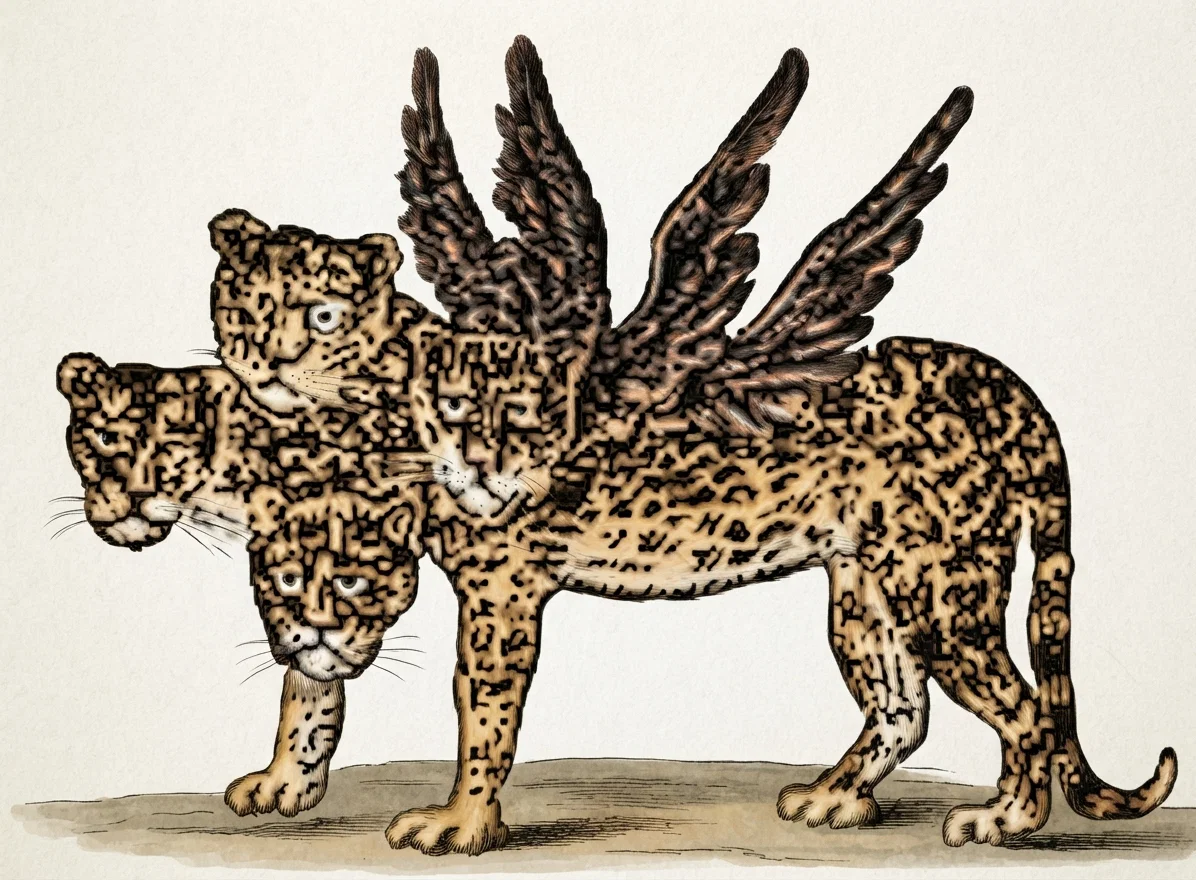
In the second series, of Dan. vii, after the Prophet had seen the bear pass away, he beheld an extraordinary leopard rise in its stead. The beast had four wings of a fowl, and four heads. Verse 6. On this verse, Scott has the following note: “This was the emblem of the Grecian or Macedonian empire, which for the time was the most renowned in the world. It was erected by Alexander the great on the ruins of the Persian monarchy, and it continued in four divisions under his successors. The leopard being exceedingly fierce and swift, represented the kingdom, and especially Alexander its founder; but the swiftness of the quadruped was not an adequate emblem of the rapidity with which he made his conquests, as he subdued nations more speedily than others could march their armies through them. The leopard had therefore four wings of a fowl upon his back. When Alexander died, his kingdom was after many contests among his captains, divided into four parts, Egypt, Syria, Macedonia and Thrace, with some regions of Asia Minor. These were the four heads of this third beast, and under them dominion was given to it, until it was gradually reduced by the next beast.”
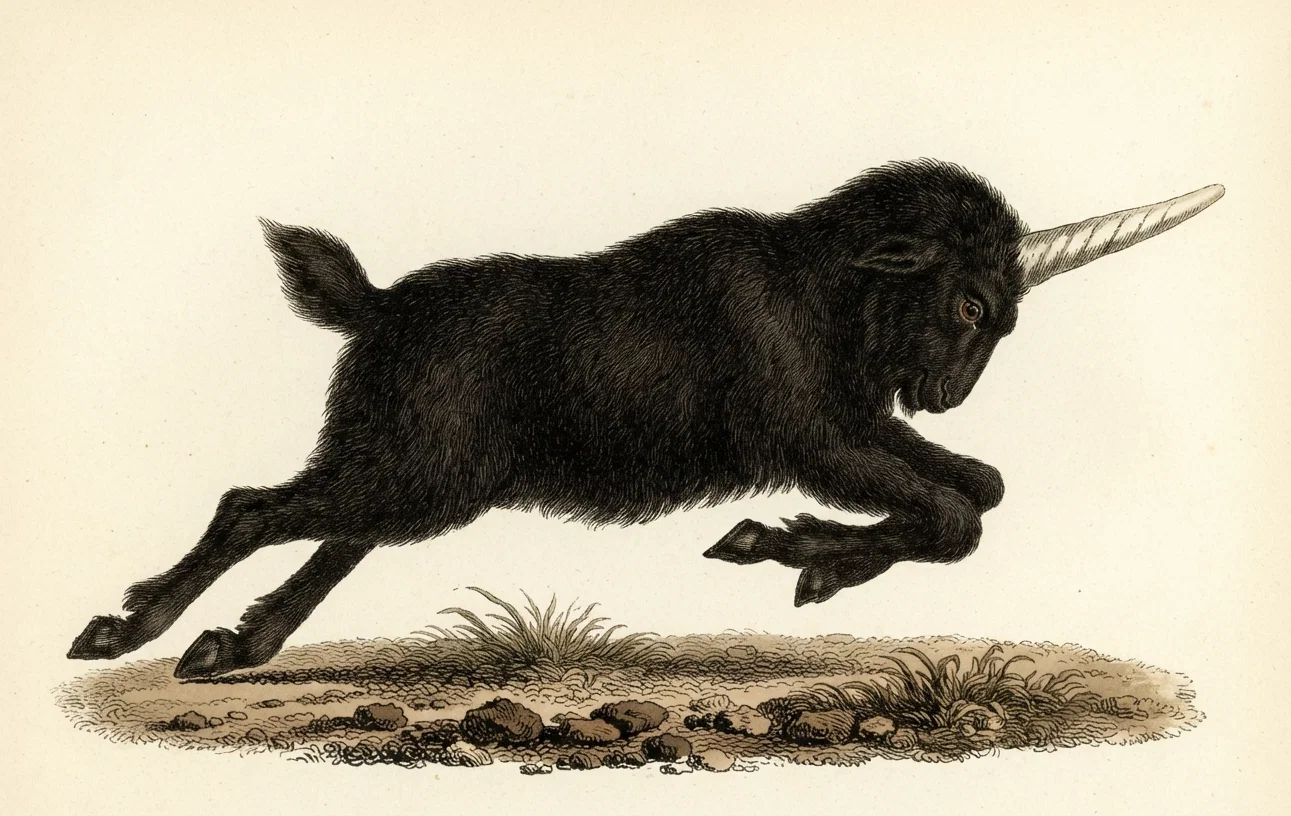
Again, in the third series of symbols, [chap. viii,] as Daniel was considering the ram, he saw a he-goat come from the west on the face of the whole earth, with that swiftness that he touched not the ground; and he had a notable horn between his eyes. He ran into the ram in the fury of his power, smote him cast him down and stamped upon him. He waxed great, his horn was broken, and in its stead came up four notable ones towards the four winds of heaven. This goat is explained in verse 21, to be Grecia, and the great horn, the first king, or Alexander. And whereas, that being broken, four stood up in its place, as shown the Prophet, in fulfillment hereof, that division took place in the kingdom on the death of Alexander, which has been already noticed.
With the following extracts from Prideaux, we take our leave of this he-goat of the west:
“Alexander was not stayed by the death of Darius from still pursuing after the traitor Bessus; but finding at length that he was gotten too far before himto be overtaken, he returned again into Parthia; and there having regulated his affairs in the army, as well as in the province, he marched into Hyrcania, and received that country under his subjection. After that he subdued the Mardans, Arians, Drangians, Aracausians, and several other nations, over which he flew with victory swifter than others can travel, often with his horse pursuing his enemies upon the spur whole days and nights, and sometimes making long marches for several days one after the other, as once he did in the pursuit of Darius, of near forty miles a day, for eleven days together. So that, by the speed of his marches, he came upon his enemy before they were aware of him, and conquered them before they could be in a posture to resist him; which exactly agree with the description given of him in the prophecies of Daniel some ages before; he being in them set forth under the similitude of a panther, or leopard, with four wings; for he was impetuous and fierce in his warlike expeditions, as a panther after his prey, and came on upon his enemies with that speed as if he flew with a double pair of wings. And to this purpose he is, in another place of those prophecies, compared to a he-goat, coming from the west with that swiftness upon the king of Media and Persia, that he seemed as if his feet did not touch the ground. And his actions, as well in this comparison as the former, fully verify the prophecy.”
Again he says, “Never had any man a greater run of success than he had for twelve years and a half together; (for so long he reigned from the death of his father;) in that time he subjected to him all the nations and countries that lay from the Adriatic sea to the Ganges, the greater part of the then known habitable world. And although most of his actions were carried on with a furious and extravagant rashness, yet none of them failed of success. His first attempt upon the Persians in passing the Granicus with only thirty-five thousand men against an army above five times as many guarding the banks of the river on the other side, was what no man else that was well in his wits would have run upon, and yet he succeded in it; and this success creating a panic fear of him through all the Persian empire, made way for all the other victories which he afterwards obtained; for no army after that, though twenty times the number of his, (as was that of Arbela) would take courage enough to stand before him. He was a man of some virtues, but these were obscured by much greater vices. Vain-glory was his predominant folly, and that which chiefly steered him through all his actions.”
In reference to his death, M. Bossuet, Bishop of Meaux, thus speaks: “At thirty-three years of age, in the midst of the grandest designs that ever man formed, and flushed with the surest hopes of success, he died, before he had leisure to settle his affairs on a solid foundation; leaving behind him a weak brother, and children very young, all incapable of supporting the weight of such a power. But the circumstance which proved most fatal to his family and empire, was his having taught the generals who survived him to breathe nothing but ambition and war. He foresaw the prodigious lengths they would go after his death. To curb their ambitious views, and for fear of mistaking in his conjectures, he did not dare to name his successor, or the guardian of his children. He only foretold that his friends would solemnize his obsequies with bloody battles; and he expired in the flower of his age, full of the sad images of the confusion which would follow his death.”
Thus fell this haughty monarch who rose up like a colossus and bestrode the world. And here we leave him till we shall behold him risen again in the resurrection of the unjust.
The history of Alexander's successors, till the reduction of the empire by another power, would involve an extended commentary on a great portion of the eleventh of Daniel. And as this has already been given in the second volume of Prophetic Expositions, by J. Litch, quoted chiefly from Bishop Newton, we refer the reader to that, and pass on to the fourth and last great empire ever to flourish in the drama of this world's history.
And here we would leave with the reader a few suggestions. Daniel as we have seen lived two hundred years and over, previous to the events last mentioned. How did he know that a kingdom would succeed the Babylonian composed of two divisions, and that the more powerful of these divisions would come up last? How did he know that this kingdom would in turn be overthrown by another from the west? How did he know that the conquests of this third kingdom would be accomplished with such speed? It is usual for kings to provide carefully for a successor, that the crown may be safely preserved to their own posterity; how did Daniel know that this king would die without a successor? And how did he know that the empire would thereon be divided into just four parts? Answer: he had his knowledge from that God who rules in the kingdoms of men, and appointeth over them whomsoever he will. Dan. v, 21. From the same source and upon the same authority he has set forth some facts and uttered some prophecies, which have their application in our own day, and concern our own selves, as we shall by and by see. None but an Omniscient mind could have foreseen and inspired the Prophet thus accurately to write of the events of the future: none but an Omniscient mind did; and let us remember continually, while tracing out the fulfillments of his word, that with no less certainty, and no less accuracy, will those things in which we personally, and the whole world have now an interest, be brought to their fulfillment. Every accomplished prophecy is like a record graven in eternal rock, that the Lord Omnipotent reigneth. And while he reigneth, let his saints rejoice.
(To be Continued)