Cuba

7%

Review and Herald Publishing Association · Takoma Park Station, Washington, D. C. · Mar 19, 1914

FromReview and Herald, Vol. 91, No. 12.

Read the full edition

Cuba

think that for about twenty-five hundred dollars they could get a lot and build a little chapel which would serve their purpose very nicely. They also think that they could raise a thousand dollars of this amount on the island, but would need help from the outside for the remainder.
The work in Porto Rico has been signally blessed financially. The tithe from the island last year amounted to over one thousand dollars, and their total income to over seventeen hundred dollars. The work during 1913 was entirely self-supporting, and when the year closed they had several hundred dollars on hand with which to start the new year. With the new workers who are now going to the island we may look for some good reports from that field.
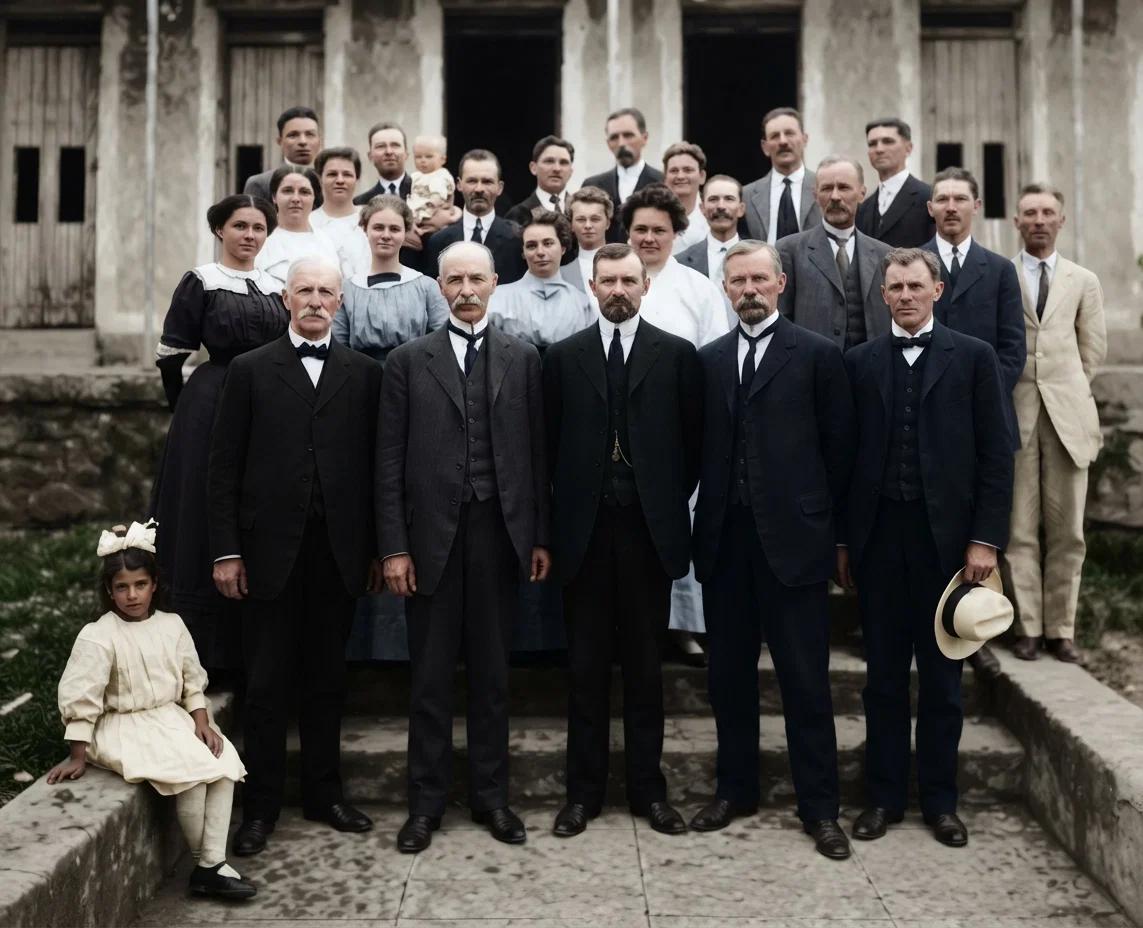
GROUP OF WORKERS AND ASSISTANTS IN CUBA

Cuba

February 3 I sailed from Ponce, Porto Rico, for Santiago, Cuba, arriving in Santiago the morning of the sixth. Elder A. J. Haysmer had arrived the same morning from Jamaica, and he and Elder Allen met me at the boat. As it was Friday, we spent the Sabbath with the company in Santiago.
A native Cuban took great interest in going over the ground with us and describing the charge of Colonel Roosevelt and his rough riders when they took the fort on San Juan hill. We visited also the large ceiba tree under the shade of which a treaty of peace was signed.
We were interested in those historic places, but we were more interested in the plans for carrying the gospel of peace to Santiago by our colporteurs and Bible workers.
There are about half a dozen in Santiago keeping the Sabbath. We were kindly entertained at the home of one of our native brethren. Sunday morning we took the train for Las Tunas, where Brother and Sister J. E. Anderson have been conducting a day school during the past four years. The Lord has blessed them in this work, and they have had a good influence among the people in the town. However, as conducting a day school in Latin countries seems to be a very slow process in winning people to the truth, Mrs. Anderson will probably close her school for good at the end of this term, and will unite with Brother Anderson in evangelical work in the city of Havana.
From Las Tunas we went to Las Minas. Four or five years ago Brother Guy Holmes located in this place with the plan in mind of opening a school. He was later joined by Brother Charles Franz. Although these brethren have not been able to do very much in direct school work, they have had a good influence in the American colony where they are located, and also in the village of Minas. Mrs. Ida Fischer-Carnahan and her daughter are at present conducting a day school in the town. Mrs. A. F. Burgos has also been engaged in Bible work in Minas for some time, and a nice little company has been brought into the truth. The brethren have erected in the town a little chapel that will seat about fifty people. It is free from debt. I had the privilege of speaking to the native brethren in this chapel the night we were there, while Brother Haysmer spoke in English in the church in the American colony.
From Las Minas we went to Santa Clara, the headquarters of the Cuban Mission, where Brother Allen had made arrangements for the workers' institute. He had secured a large, old-fashioned, Spanish house located on a hill just outside of Santa Clara, from where we had a fine view of the city. About thirty workers and brethren and sisters gathered for this meeting, which began February 12 and continued for one week.
We were glad to see that in Cuba as well as in Porto Rico native young men are being developed to do successful colporteur work. Four of these who had been doing good work during the past year were present at the Cuban meeting. The Lord came very near to us in our institute work, and the brethren expressed their determination to push the work during the coming year more vigorously than ever before. During 1913 the colporteurs sold over $9,000 worth of literature in Cuba. They have set their stakes at $15,000 for 1914. The tithe and offerings in Cuba during 1913 amounted to $1,877.54, a gain of more than $300 over the previous year.
As the members of the Cuban Mission Committee were present at this meeting, plans for future work were considered. Brother H. A. Robinson, who has been in the office during the past several months, will again go to the field to take charge of the colporteur work. Mrs. Burgos will locate in the city of Santiago to engage in the Bible work. Brother J. E. Anderson will engage in the evangelical work in the city of Havana. Pedro Cruz, a native licentiate, has an interest in Las Cruces, in the interior. Earnest evangelical effort is Cuba's greatest need.
The brethren in Cuba are very desirous to have a mission training school started on that island. This matter was carefully considered during the meeting, but as they have not the money in hand for such an enterprise, it was advised that they first make an effort to see what funds can be secured before undertaking anything definite, in harmony with the policy of the General Conference not to incur debts in our missionary operations.
February 17 I sailed from Havana, reaching New York the evening of the twentieth. Let us not forget to pray for the work and workers in these Spanish Catholic fields. N. Z. T.