Central China Mission

6%

Review and Herald Publishing Association · Takoma Park Station, Washington, D. C. · Mar 19, 1914

FromReview and Herald, Vol. 91, No. 12.

Read the full edition

Central China Mission

R. F. COTTRELL
As we reach the close of 1913 and look back over the providences of God in Central China during the past year, our hearts are filled with deepest gratitude.
For eleven months, Elder J. J. Westrup has been alone in the province of Honan. Famine conditions, with attendant poverty and distress, have been on every hand. Some money has been given to the poor, especially to those of the household of faith, and if the funds were only available, much more would be done to help the needy. For months, parts of this district have been terrorized by bandits, and in one of their attacks on a small town where we have an outstation, one of our colporteurs was shot through the hip. He was afterward carried to the central station, where his wound was dressed and cared for, and at last reports he had quite recovered. These conditions have retarded the canvassing work considerably; and because of the dangers, the American consul has requested our workers to do no itinerating among the outstations.
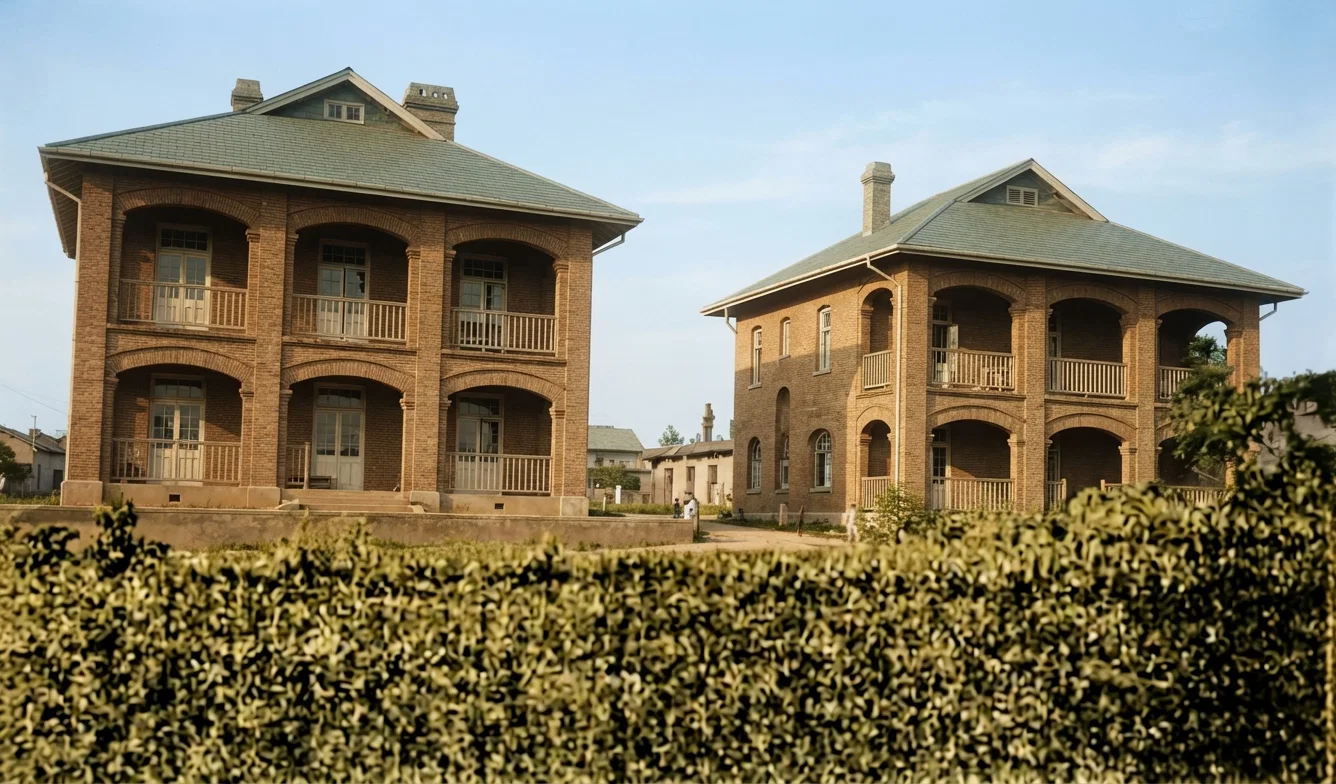
Despite all these adversities, the work has been onward. Our Honan headquarters, which were at Cheo Chia Keo, forty miles from the railroad, have been moved to the railway town of Yen-cheng. Here, on an elevated site overlooking the river, the mission has purchased about one acre of land; buildings for native school and provincial headquarters have just been completed; and during the summer two foreign houses were erected. [A picture of these cottages will appear next week in connection with an article from Honan by Brother Westrup.]
COTTAGES OCCUPIED BY S. G. WHITE AND FREDERICK LEE AT HANKOW, HUPEH
Brother Westrup is conducting a Bible school at this place during the winter months, and Brother and Sister Frederick Lee, of Hankow, will soon join him in school work for a few weeks. At the close of this school, a number of new native laborers will be taken into the employ of the mission. Sixty-eight have been baptized in Honan during the year, and the future gives promise of a large fruitage of souls.
In the province of Hupeh, the mission headquarters are located at Hankow. In the suburbs of this city a plot of land was purchased last spring, following which two neat mission cottages were built. These are occupied by Brother and Sister Frederick Lee and Brother and Sister S. G. White, who moved into them Dec. 1, 1913. Dr. A. G. Larson, treasurer of the Central China Mission, still resides in the foreign concession of Hankow, and is thus more easily enabled to conduct the business affairs of the mission.
Since the burning of our chapel in Hankow, at the time of the revolution, the mission has had no suitable house of worship. About two months ago, however, the mission rented a new large compound in a good location, which will serve as chapel, school, and native rendezvous for the province. Although the rent is high, the advantages for aggressive evangelical work appeared to fully warrant the expense. The work in Hupeh is onward; the church membership has doubled during the year, and urgent calls for the living preacher are coming from numerous places throughout the province.
In Chang-sha, the capital of Hunan, our principal station has for the past two and a half years been located in rented quarters on an unfrequented street at one side of the city. Heretofore we have spent much time in looking for a more favorable place to rent or purchase, but those found were either unsuitable or too expensive. Recently, our attention was called to a compound on a prominent street in the heart of the city. A chemical factory that had been operating there failed in business, and the city magistrate ordered the property sold to pay off the creditors. The price, including fees, was a little over thirty-five hundred dollars, which seemed almost beyond our reach, but after much consideration and prayer, we decided to secure it. For evangelistic work, we could hardly find a better place in the city. The deed was stamped about two weeks ago, thus giving the mission a legal title to the property. At present, we are in the midst of altering and repairing the compound, which work will cost an additional two hundred dollars; this expense, however, will be more than met by the native offerings in Central China. Reports from all the stations have not yet been received, but from those alreadyin hand, we feel justified in making this statement. The annual offering in Hunan will be three or four times as large as it was last year.
During Christmas week, I paid a visit to one of our outstations. At that place, the native church has just purchased about one quarter of an acre of land in their little city, worth two hundred and fifty dollars (U. S. gold), and have deeded it to the General Conference corporation. They hope soon, with some help from the mission, to erect church and school buildings on this site. During my stay at this place, nine candidates were buried with their Lord in baptism in the beautiful Ning Siang River. Including these, it has been my privilege during the year to administer this sacred rite to one hundred and forty-four precious candidates. About one third of these were in Hupeh; but whether of one province or another, with rare exceptions the converts are, under God, the fruit of the native workers' efforts. During 1913, two hundred and seventy persons have been welcomed to church fellowship in Central China through baptism, about three fourths of whom came to us directly from heathenism.
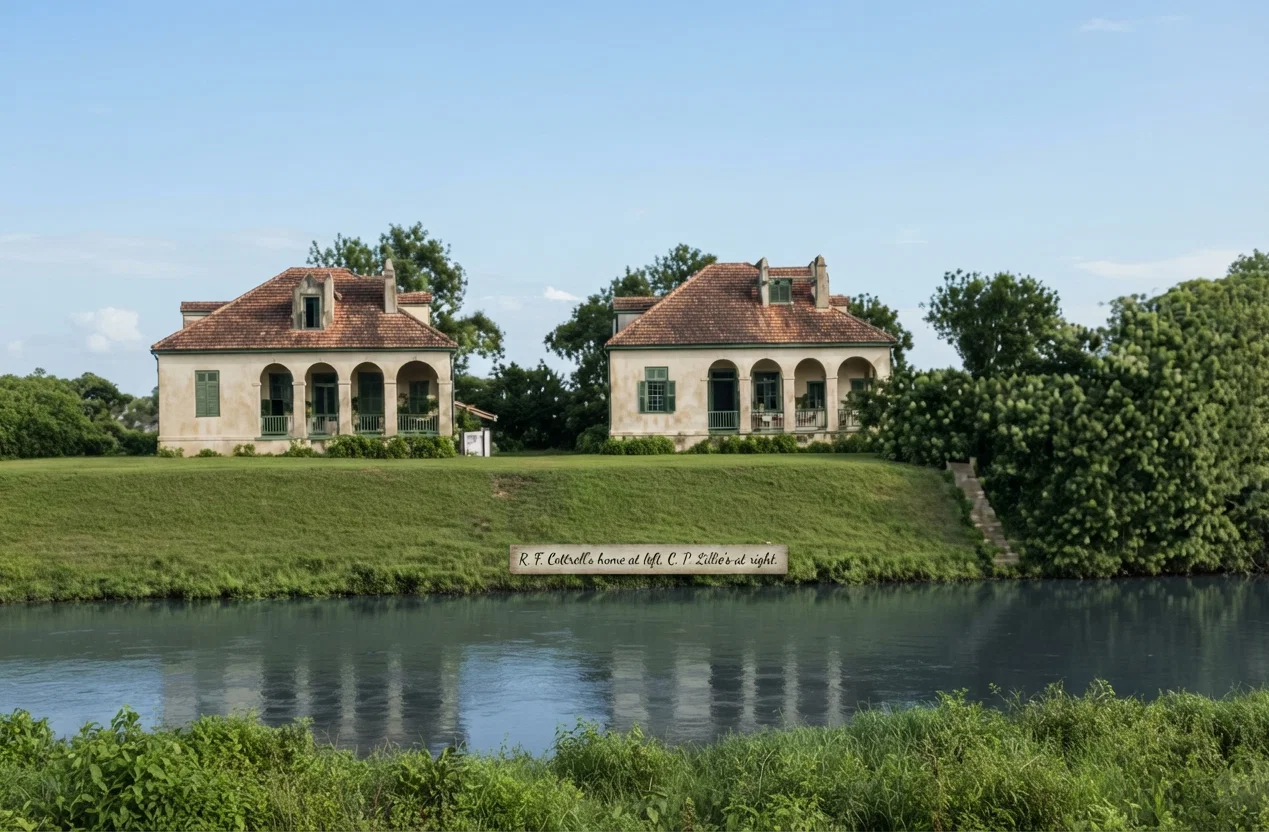
THE CHANG-SHA, HUNAN, COTTAGES
Brother C. P. Lillie has made two trips—one in the spring and one in the autumn—through southern Hunan, visiting our stations in that district. Gradually, the people are getting a more intelligent conception of the gospel and of the requirements of Christian living. At most of the places, baptismal services were held. Owing to the distance from this center and the differences in dialect, it seems a pity that we do not have one or two families to locate in that section.
As we consider the many providences of God during the year just closing, our hearts are filled with cheer and thanksgiving. The three provinces of Central China already entered are now supplied with two mission homes each, for foreign workers. At two of our central stations, the mission is provided with its own native headquarters, chapel, and school buildings; and at the other, a most suitable place is rented. We know that many of the brethren and sisters in the homeland have made large sacrifices and liberal offerings that we might be thus equipped, and we hereby express our heartfelt appreciation.
While the missionary enterprise costs, we can likewise assure you that it pays. The heathen who has forsaken his superstition and fears, to become a new creation in Jesus Christ, will look up with glowing, thankful face, and tell you that the undertaking pays. The humble laborer who has toiled hard on his farm or in his shop, and has been self-denying that he may give generously to the work of God, ever testifies that the triumphs of the cross more than repay him. The person who has left the comforts and associations of his native land to turn the heathen from idolatry to the living God, will tell you that in true joy and satisfaction no other pursuit in this world yields so heavy a dividend. And the angels in their songs on high affirm in melody and praise that the priceless Gift of heaven, and all the sacrifices of earth, are none too precious for the redemption of the lost.
The missionary outlook in this field was never brighter; and as we take up the duties of the new year, it is with the consciousness that he who led Israel in ancient times is today guiding and directing the movements of his church in the final struggle which is so soon to terminate in eternal triumph and rejoicing.