Stanborough Park Sanitarium

6%

Review and Herald Publishing Association · Takoma Park Station, Washington, D. C. · Mar 26, 1914

FromReview and Herald, Vol. 91, No. 13.

Read the full edition
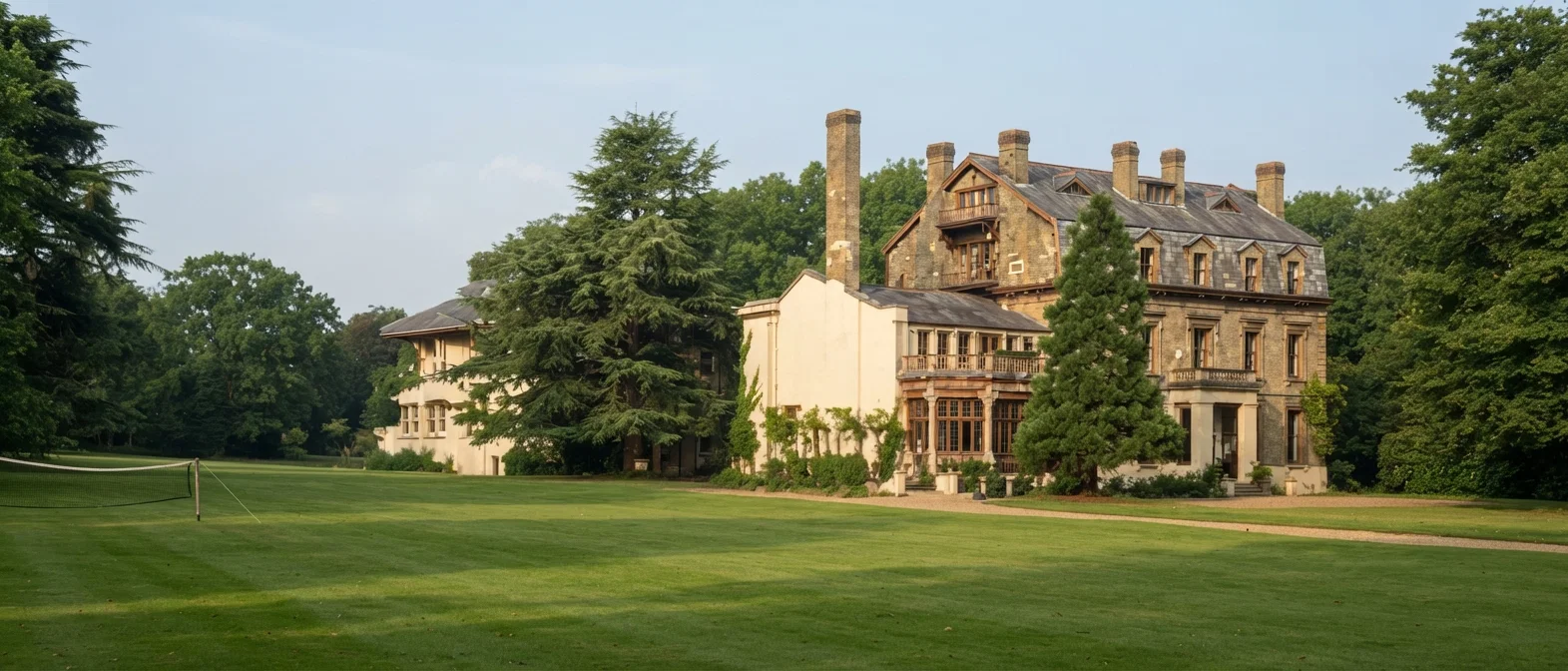
STANBOROUGH PARK SANITARIUM, WATFORD, ENGLAND

Stanborough Park Sanitarium

THIS institution is situated seventeen miles north of the heart of London. It occupies the most prominent position in Stanborough Park. The estate, composed of nearly seventy-five acres, located in the most healthful part of Hertfordshire, is entirely owned by the British Union Conference. The sanitarium is surrounded by woodlands containing some of the finest specimens of English oak, and the front lawn contains a few majestic California redwood pines and some beautiful spreading cedars of Lebanon. Certainly, no better spot in England could have been chosen for the relief and care of the sick.
The building has a capacity for thirty-five patients, but by a few changes forty can be accommodated. A very pleasant, well-ventilated and -lighted bathroom adds much to the success of the institution. The electrical department contains the latest machines in high frequency and diathermy, and an X-ray apparatus is shortly to be installed. A small but fully equipped operating theater is also an added feature.
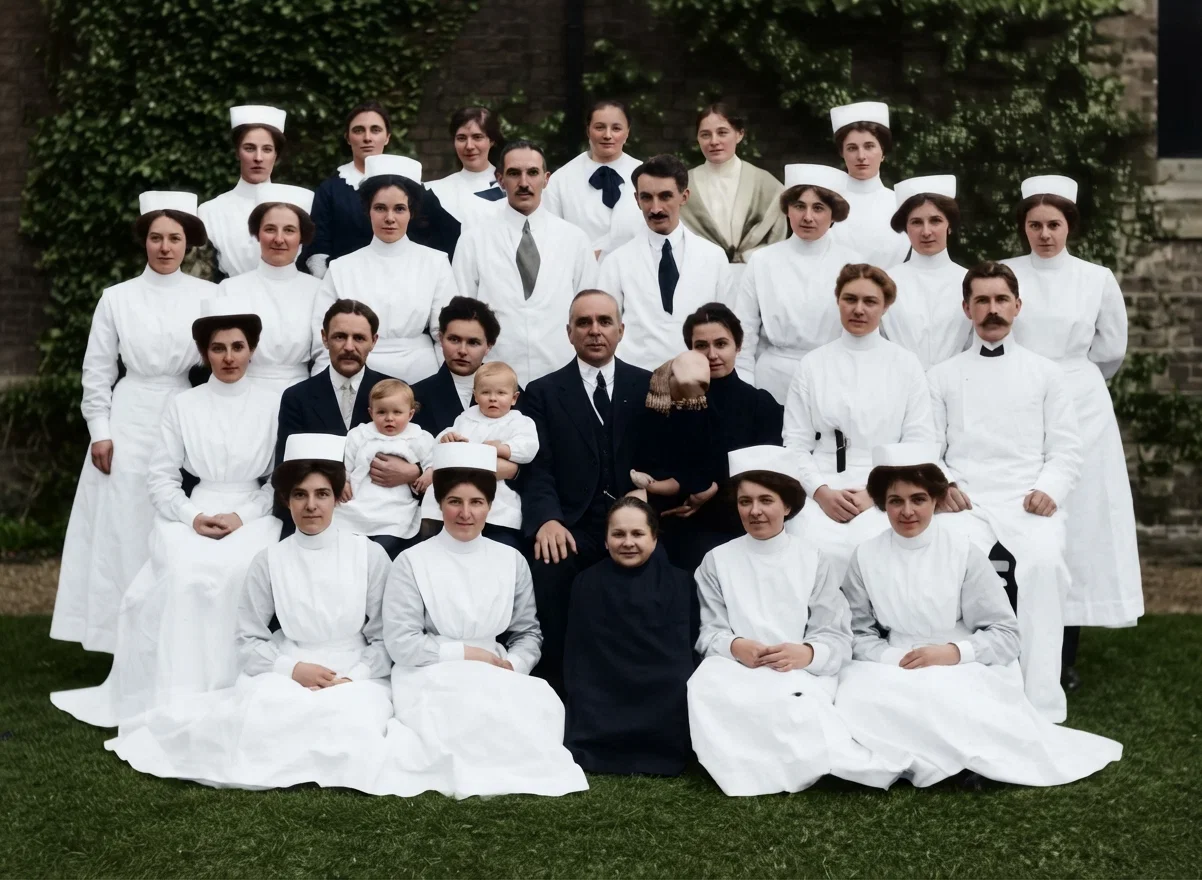
The doctor, the matron, three graduate nurses, the secretary, the cook, and an occasional charwoman constitute the paid staff, while fifteen bright and intelligent young people in training complete the working staff.
STAFF OF STANBOROUGH PARK SANITARIUM
There are two endowed beds in the institution, supported by the British Union Conference and the International Tract Society, respectively. These beds are open to all Seventh-day Adventists in this field who are in good and regular standing and need medical or surgical attention, but cannot afford to pay even the price charged our own people, who are allowed fifty per cent discount from the regular rates. For a small sum a week the occupants of these beds receive a full course of treatment, with every care and attention, nursing included. If they are unable to pay this amount, the church has a fund from which to draw the expense. This permits our people to come to the sanitarium free instead of going to other hospitals. During the year 1913 twenty-six Seventh-day Adventist patients availed themselves of these beds, with an average of four and one-half weeks' residence each.
Altogether there were seventy-four Adventist patients in attendance during 1913, out of a total of two hundred and seventy-three.
We believe that our sanitariums should make every provision for the treatment and care of our own sick. We have found our people who come to the sanitarium most helpful to the institution, and we take every means to secure their patronage. They mingle with the other patients, and, if tactful, have many opportunities of speaking a word in season to those who are weary. We find that the religious services of the institution are better attended by other patients when our people attend. We have found our own people charitable when others are not. We have found them loyal and fully in harmony with the truth, and we find the sanitarium most successful when we have their hearty support, their cooperation, and their prayers. We believe that our sanitariums are established to be an important factor in the dissemination of the third angel's message, and that our people should come into closer touch with them.
The patients leave the institution feeling very grateful for the help which they have received both spiritually and physically, and many are the expressions of gratitude and thankfulness for the truths they have heard. The sanitarium staff feel very grateful to God for the many blessings obtained last year, and all have expressed themselves as determined to reconsecrate their lives more fully to his service.
C. H. HAYTON, M. D.
COMMENT.—The above article concerning Stanborough Park Sanitarium, sent us by Dr. C. H. Hayton, the superintendent, presents an item worthy of special notice,—that concerning the relation of the institution to Seventh-day Adventists, and, in turn, their attitude to it. This, the newest of our sanitariums, seems to have found the right plan of dealing with this question.
We have much instruction that makes clear the mutual responsibility of the institution and of churches or conferences for the care of our sick. It was never intended, in the original establishment of our sanitarium work, that the burden of this expense should be on the sanitarium. At the same time, it was intended that these institutions should afford a means whereby Seventh-day Adventists could obtain proper care and medical treatment.
The relation of mutual interest and support mentioned in the above article should, and evidently could, be seen in connection with every one of our sanitariums, and would mean much in real blessing to all concerned. It is a question worthy of careful thought on the part of our sanitarium boards of management. A number of our institutions have provision for meeting the needs of our own sick, and are doubtless doing all they can afford to do. This is to be appreciated by the people.
Our sanitariums need the support of our people. Our people need the benefits to be had at our sanitariums. Let us do our utmost to meet both needs. It can be done. It should be done.
L. A. H.