Dāc'tyl-ŏl'ō-ǵy, n.
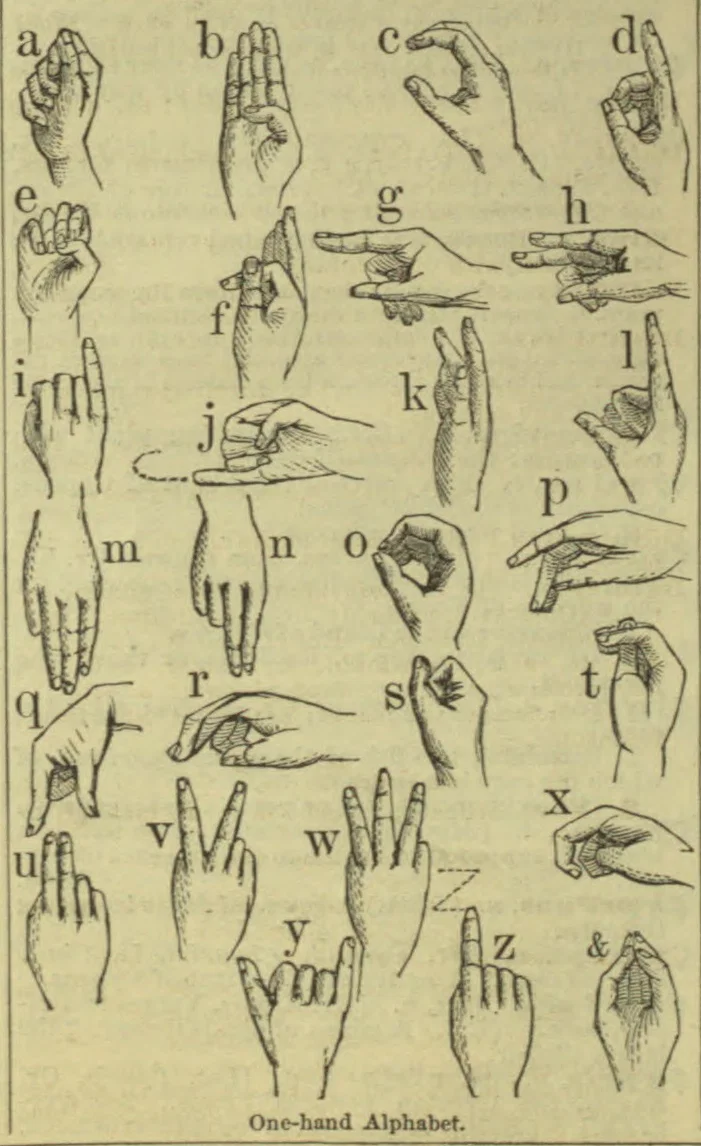
n. [Gr. δάκτυλος, finger, and λόγος, discourse.] A method of communication which employs what is called a manual alphabet, or finger alphabet, that is, certain positions and motions of the hand and fingers answering to the common written alphabet. It thus serves in the place of speech, and is used chiefly among the deaf and dumb.
☞ There are two different manual alphabets, the one-hand alphabet, which was perfected by the Abbé de l'Épée, who died in 1789, and which is used in France and America, and the two-hand alphabet, almost as ancient, used in England and Germany.