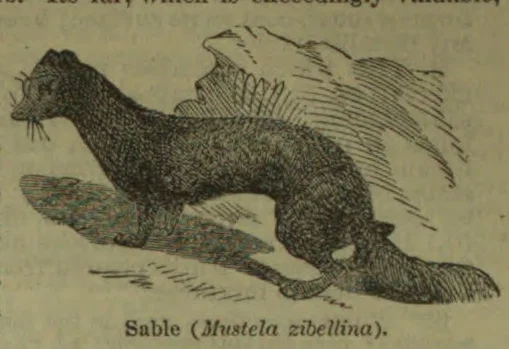
Sā'ble1, n.
n. [O. Fr. sable, N. Fr. zibeline, Pr. sebelin, sembelin, Sp. & Pg. cebellina, zebellina, It. zibellino, L. Lat. sabellinus, sabellum, zibellinus, zebellinus, D. sabel, Dan. sabel, zobel, Sw. sabel, sobel, Ger. zobel, Russ. sóbolj. This word and the animal were probably not known to the Greeks and Romans till a late period. Jornandes mentions the sending to Rome, in the 6th century, of saphilinas pelles — sable skins; and Marco Polo calls them zibelines and zombolines.]
Sense 1. (Zoöl.) A carnivorous animal of the weasel family (Mustela zibellina), found in the northern latitudes of Europe and Asia.
☞ The sable resembles the marten, but has a longer head and ears. Its fur, which is exceedingly valuable, consists of a downy under-wool, with a dense coat of hair overtopped by another still longer. This upper covering will lie in any direction, backward or forward; and a skin is valued in proportion as this coat is abundant, black, and glossy. The American sable is the M. Americana, or pine-marten.
Sense 2. The fur of the sable.
Sense 3. A mourning garment; a funeral robe. “Sables woven by destiny.” Young.
Sense 4. (Her.) The tincture or color black; — represented by vertical and horizontal lines crossing each other.