THE TESTIMONY OF HISTORY TO THE TRUTH OF THE WORDS OF JESUS
Page 1
Signs of the Times
Jun 2, 1898
Pacific Press Publishing Company · Oakland, California · Jun 2, 1898
THE TESTIMONY OF HISTORY TO THE TRUTH OF THE WORDS OF JESUS.
By X
Among the prosperous, busy towns of teeming Galilee nineteen centuries ago was Capernaum. Here it was that our Lord made His earthly home for a little while, and it is therefore called in the Gospel (Matt. 9:1) “His own city.” This one fact alone would make it of interest.
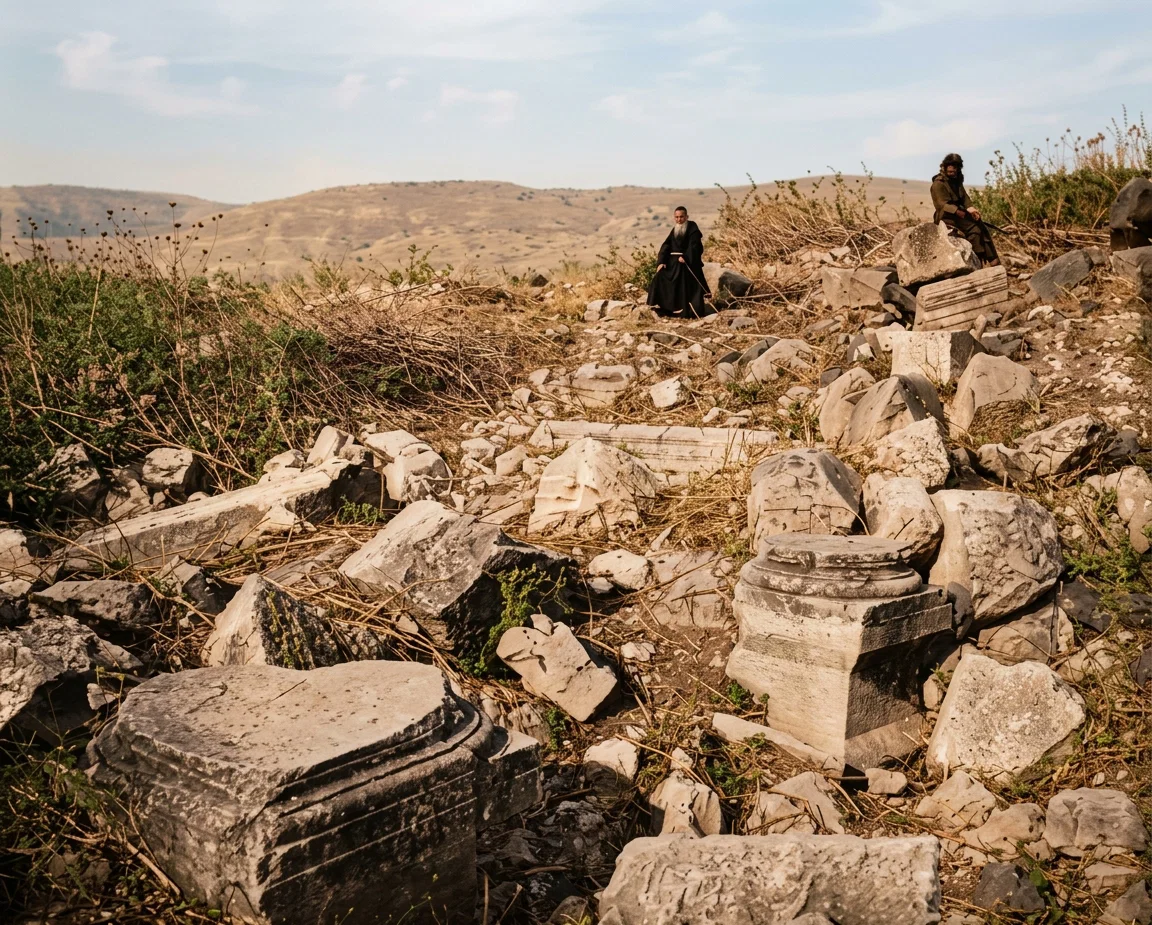
RUINS OF CAPERNAUM.
“And thou, Capernaum, which art exalted unto heaven, shalt be brought down to hell; for if the mighty works, which have been done in thee, had been done in Sodom, it would have remained until this day.”
Capernaum was on the west side of the Sea of Galilee, and near its northern end. It was situated in the midst of a densely populated and wonderfully fertile country. Close by were the towns of Chorazin and Bethsaida. It was inhabited by a mixed population of Jews and Gentiles; and a freer intercourse existed between them than in Judea. One incident reveals this, that of the centurion whose servant Jesus healed of the palsy, and of whom the leading Jews said “that he was worthy for whom He should do this; for he loveth our nation, and he hath built us a synagog.” The centurion’s faith Jesus greatly commended.
Capernaum was near to the great thoroughfare between Jerusalem and Damascus, and hence became a stopping-place of pilgrims, a commercial center, a great news bureau, from which were carried the tidings of the Man of Galilee, as well as the news of the remarkable doings of the day. It was therefore a city of great importance in our Lord’s work, not only as needing the Gospel for the sake of its people, but as a radiating center for the multitudes of Galilee, and for the travelers on the great Damascus road. It was, so to speak, a strategic point in the Gospel warfare, and in it is a lesson for the Lord’s servants.
In this city and vicinity Jesus performed some of His most noted miracles. In the eighth chapter of Matthew we have recorded the miracles of the healing of the centurion’s servant by a word; the raising up of Peter’s wife’s mother, who had been stricken with a fever; and “when the even was come, they brought unto Him many that were possessed with devils; and He cast out the spirits with His word, and healed all that were sick; that it might be fulfilled which was spoken by Esaias the prophet, saying, Himself took our infirmities, and bare our sicknesses.” Not far away He stilled the tumultuous waters of Galilee. A little later on He healed the soul and body of one incurably sick of the palsy. Matt. 9:1-8.
At Capernaum Jesus found Matthew, the tax gatherer, or publican, who left his profitable calling of collector of customs, and cast in his lot with Jesus. Here was wrought the miracle by which Peter paid his tribute money (Matt. 17:24-27); and near the favored city were fed many of its people by a miracle, and here He stilled again the sea. Following these came the wonderful teaching of John 6:17-59. Living also in Capernaum was the nobleman whose son Jesus healed. John 4:46-54. Here Jesus met and by His power compelled the submission of the angels of darkness. Here He wrought other miracles and taught many wonderful lessons; and here, too, was exhaled the lasting fragrance of His own personal, blameless life.
Truly, Capernaum was a favored city. But special tokens of divine grace mean greater responsibility. Greater light means a clearer pathway and less halting steps. Greater riches mean the clothing of more poor, the helping of more needy. Greater blessing means corresponding service. The former came to Capernaum. “The people which sat in darkness saw great light; and to them which sat in the region and shadow of death light is sprung up.” See Matt. 4:13-16. But Capernaum did not heed the light nor appreciate the presence and blessings of Israel’s King. The sunlight of heaven develops tares as well as wheat, weeds as well as grain; and busy, wealth-getting, pleasure-loving Capernaum rejected both Jesus and His forerunner with opposite excuses, as fickle as the children in the market-places. Matt. 11:16-19. Her sins and her Saviour were both revealed. She repented not of the former, and rejected the latter.
The Doom of Capernaum.
Hear the sorrowful words of doom: “And thou, Capernaum, which art exalted unto heaven, shalt be brought down to hell; for if the mighty works, which have been done in thee, had been done in Sodom, it would have remained until this day. But I say unto you, That it shall be more tolerable for the land of Sodom in the day of judgment, than for thee.” Matt. 11:23. In our illustration is the fulfilment of Christ’s words. Capernaum is gone. The ruins in our picture (Tell Hum) are all, save the lesson, that is left of the once proud and busy city. For a long time (and even now, to a little extent) its very site was unknown. It is but a “ruinous heap.” Remains of a few houses, of the great synagog built by the rich Roman, are silent2yet mighty witnesses to the truth of the words of Jesus.
It was no arbitrary visitation of wealth which ruined the proud city. No earthquake swallowed it up. No flood swept it away. The city died because it rejected its Life. Its inhabitants trusted themselves instead of God; and God left them to themselves. Decay and destruction followed.
God’s blessings perverted prove curses. God’s life perverted proves death. God’s presence ignored results in His absence. Capernaum but reaped the fruit of her own doing.
God has recorded the lesson for all after times. Look at the countries and cities of earth where once shone the light of the Gospel, that was rejected. What marks them now but decay, desolation, ruin? Call the roll! Palestine, Jerusalem, Egypt, Rome. Mark the nations and cities which rejected the Gospel of the Reformation. Witness Rome, Italy, Spain, France, and the colonies of these countries. Contrast them with Germany, England, Scotland, and America.
The Last Reformation.
Once more: God has another reformation. The great threefold message of Rev. 14:6-14 is to go to earth’s remotest bounds. The churches are to be called from the fear of man to the fear of Jehovah; from giving glory to man to giving glory to God; from the worship of the creature, the beast and his image, to the worship of the Creator of heaven and earth; from the creeds and confusion and fall of Babylon to the law and the Gospel and the building up of the Word of God; from the folly of the dreams of Babylonian builders to the solemn realities of the judgment; from the mark of the beast, the stamp of the church united to the world, the pago-papal Sunday, to the seal of the living God, of the believer’s union with Him, the Sabbath of the Lord; from all that is earthly, sensual, and devilish, to all that is good and pure and true, to the hope which culminates in the glad fruition of Christ’s second coming.
The men who reject that message reject their life. The churches which reject it will as veritably come to naught as did the Capernaum synagog. The cities and nations which fail to heed Christ’s words will bear witness to their truth in their own utter ruin, even as did Capernaum. God has given the lesson; will they heed its solemn import? Will we? X.
TELL IT TO JESUS.
By C. F. Ladd
WHAT a sweet privilege!
My brother, my sister, do you avail yourself of this God-given privilege?
In the midst of life’s cares and sorrows how blessed is the thought there is One to whom we can go and pour out our soul and receive from that One, loving sympathy and words of cheer!
The erring one who goes to Him finds no word of reproof. Excuses are unnecessary. Honest confession is all that is required of all that desire to avail themselves of such a golden opportunity.
In the face of great trial we can tell it to Jesus, and the word of cheer is at once forthcoming.
If a grievous mistake has been made, and, altho it has caused the tears to flow and the heart to be pained and torn, if we are heartily sorry, and go to Him, humble and penitent, all is immediately forgiven, and we are sent our way rejoicing, with words of comforting assurance.
To tell it to Jesus is indeed a privilege.
Dear one, are you carrying a heavy burden? Does the load seem more than you can bear? Is it slowly but surely pressing you toward the grave?
Why not tell Him about it? It is your right, your duty. He is the great Burden-bearer. He longs to help you, to ease the heavy load, to give you peace and rest for your weary soul.
Will you not let Him? Do you not find times in your life when it seems that you must confide in some one?
“Tell it to Jesus, tell it to Jesus,
He is a Friend that’s well known;
You have no other such friend or brother—
Tell it to Jesus alone.”
Tell it, and thank God for the opportunity.
He will never betray your confidence. He will never turn you away with words of impatience, but He will say to the troubled waves that are beating about you, “Peace, be still,” and then there will indeed be a great calm.
This experience can be yours if you but wish.
How can you longer delay? Why will you insist on bearing the burden alone?
Tell it to Jesus.
Do it now.
C. F. LADD, Evangelist.Jersey City, N. J.
GOD’S CHOSEN PEOPLE. No. 2.
By Ellen G. White
“Thou art an holy people unto the Lord thy God; the Lord thy God hath chosen thee to be a special people unto Himself, above all people that are upon the face of the earth. The Lord did not set His love upon you, nor choose you, because ye were more in number than any people; for ye were the fewest of all people; but because the Lord loved you, and because He would keep the oath which He had sworn unto your fathers, hath the Lord brought you out with a mighty hand, and redeemed you out of the house of bondmen, from the hand of Pharaoh king of Egypt. Know therefore that the Lord thy God, He is God, the faithful God, which keepeth covenant and mercy with them that love Him and keep His commandments to a thousand generations; and repayeth them that hate Him to their face, to destroy them; He will not be slack to him that hateth Him, He will repay him to His face. Thou shalt therefore keep the commandments, and the statutes, and the judgments, which I command thee this day, to do them.”
These words were spoken by Christ when enshrouded in the pillar of cloud, and were given to Moses for the chosen people of God. The Lord has not left the world without witness. He has His loyal, chosen people. They do not make this world their home, but they are here to witness for God; and as long as probation lasts, a living witness will be borne by these faithful messengers. Satan and his angels confederate with evil men against God’s people, the champions of righteousness. They strive to counteract their testimony, and to destroy them. So Christ was treated. The Prince of Life came to His own, but they refused to receive Him. Though rebellion against His law had become widespread, He came on an ambassage of mercy, to save, not to condemn the world. He called upon all to behold Him, the Lamb of God, which taketh away the sin of the world. But He was scorned as a deceiver, and hunted from place to place as a pretender.
Christ has ascended on high, but before leaving this earth, He said to His chosen people: “If the world hate you, ye know that it hated Me before it hated you. If ye were of the world, the world would love his own; but because ye are not of the world, but I have chosen you out of the world, therefore the world hateth you. Remember the word that I said unto you, The servant is not greater than his Lord. If they have persecuted Me, they will also persecute you; if they have kept My saying, they will keep yours also. But all these things will they do unto you for My name’s sake, because they know not Him that sent Me.” Many, because of their faith, will be cut off from house and heritage here; but if they will give their hearts to Christ, receiving the message of His grace, and resting upon their Substitute and Surety, even the Son of God, they may still be filled with joy.
We may all know, if we wish, of the provision which has been made for the salvation of every one that lives on the earth. But there is a serious question for each one to answer: Have you personally accepted that salvation? A mere assent to the theory of truth is of no value to you. Your name may be enrolled on the church books, but do you love the truth of God’s Word? Do you regard it as a privilege to be able to gain an experimental knowledge of the truth? Do you associate with those who are faithful and true, who believe and practise the truth? In the sixth chapter of John is recorded Christ’s lesson on the bread of life, spoken that His children might have an understanding of the terms of salvation. Read and understand the truth as it is here presented. Cling to the truth of Christ’s Word, eating His flesh and drinking His blood.
By the mighty cleaver of truth, God has separated a people from the quarry of the world, and brought them into His workshop. Here the Master Worker can successfully hew them with ax and chisel, and polish them for a place in His kingdom. No longer are they like the mass from which they were taken. They stand like noble pillars, to be used for God’s glory.
The future glory of the adopted sons and daughters of God is not now discerned. By the world God’s people are scorned and despised. But they have the sympathies of a better world than this, even a heavenly. “Behold, what manner of love the Father hath bestowed upon us, that we should be called the sons of God; therefore the world knoweth us not, because it knew Him not. Beloved, now are we the sons of God, and it doth not yet appear what we shall be; but we know that, when He shall appear, we shall be like Him; for we shall see Him as He is. And every man that hath this hope in Him purifieth himself, even as He is pure.” He has that faith which works by love and purifies the soul. The Spirit of God brings every faculty, every organ of the body, into conformity with right. Even the thoughts are brought into obedience to Christ. In every habit and practise, the desire to be like Jesus is cherished. The aspirations are upward; the heart is filled with joy at the anticipation of the future; for he looks “for a city which hath foundations, whose builder and maker is God.”
Through bigoted religionists, Satan has sought to uproot the vine of the Lord’s planting. But the roots strike deep, and can not be torn up. The husbandman cares for his own vineyard, watching over the precious plants. If these plants will receive the nourishment God offers them, they will grow and bring forth much fruit to His glory.
The Word of God, just as it reads, is the ground of our faith. That Word is the sure word of prophecy, and it demands implicit faith from all who claim to believe it. It is authoritative, containing in itself the proof of its divine origin. “We have not followed cunningly-devised fables, when we made known unto you the power and coming of our Lord Jesus Christ, but were eye-witnesses of His majesty.” “He that believeth on the Son3hath everlasting life; and he that believeth not the Son shall not see life; but the wrath of God abideth on him.”
The only evidence the world can have that God’s people believe His Word is to see them practising that Word and following Christ’s example in all things. Those who do not practise the truth in true piety and godliness, who shun the reproach that always comes to the true believer, will never enter the kingdom of heaven. For us the Redeemer endured the contradiction of sinners against Himself. There was not one iota of suffering that was not borne in our behalf, that we might be justified before God. Every pang of distress and anguish endured by Him was to secure deliverance for us. Could Satan have led Christ to commit one sin, the serpent would have bruised the head of the Seed of the woman. Satan would have triumphed in the fact that he had succeeded in overcoming our Saviour. The world would have become his property. But Christ did not yield in one instance, and He says to us, “Be of good cheer; I have overcome the world.” “Forasmuch then as the children are partakers of flesh and blood, He also Himself likewise took part of the same; that through death He might destroy him that had the power of death, that is, the devil.” With one hand Christ holds fast to humanity, while with the other He grasps the throne of the Infinite.
What are we who claim to be one with Christ?—“Ye are laborers together with God.” Between the true believer and the unbeliever there will ever be the same conflict that there was between Christ and those who rejected Him. Those who are partakers with Christ in His sufferings, will also be partakers with Him in His glory. But those who evade the cross here, deny Him who has bought them at an infinite price, and in the day of judgment they will be denied. Many, many, are misrepresenting and denying Christ by their low standard of Christianity. Those who truly believe in Christ will show their faith by a well-ordered life and godly conversation. By working in Christ’s lines, they will show that they have been adopted into the family of heaven. Of all such God says, “I dwell in the high and holy place, with him also that is of a contrite and humble spirit, to revive the spirit of the humble, and to revive the heart of the contrite ones.”
MRS. E. G. WHITE.
The Development of Babylon
By C. L. Emerson
HEATHENISM. No. I.
The Development of Babylon.
The gods of the nations were, as has been already said, but the deification of the evil propensities of man. As man is very weak in moral virtue as a rule, so this weakness was surprisingly manifested in the character attributed to several of their gods.
Jupiter and Venus and the sun were worshiped by all these nations under different names, but always with the most licentious rites. In some places one had to apologize for modesty if they were modest, and in Babylon it was compulsory for each woman to sacrifice her virtue once at least before the shrine of Venus. This corrupt practise was carried to such frightful excess that much of the religious exercises consisted of this. Remembering man’s natural weakness on this point, we can see where he would drift to when licentiousness was set before him not as a privilege, but a religious duty.
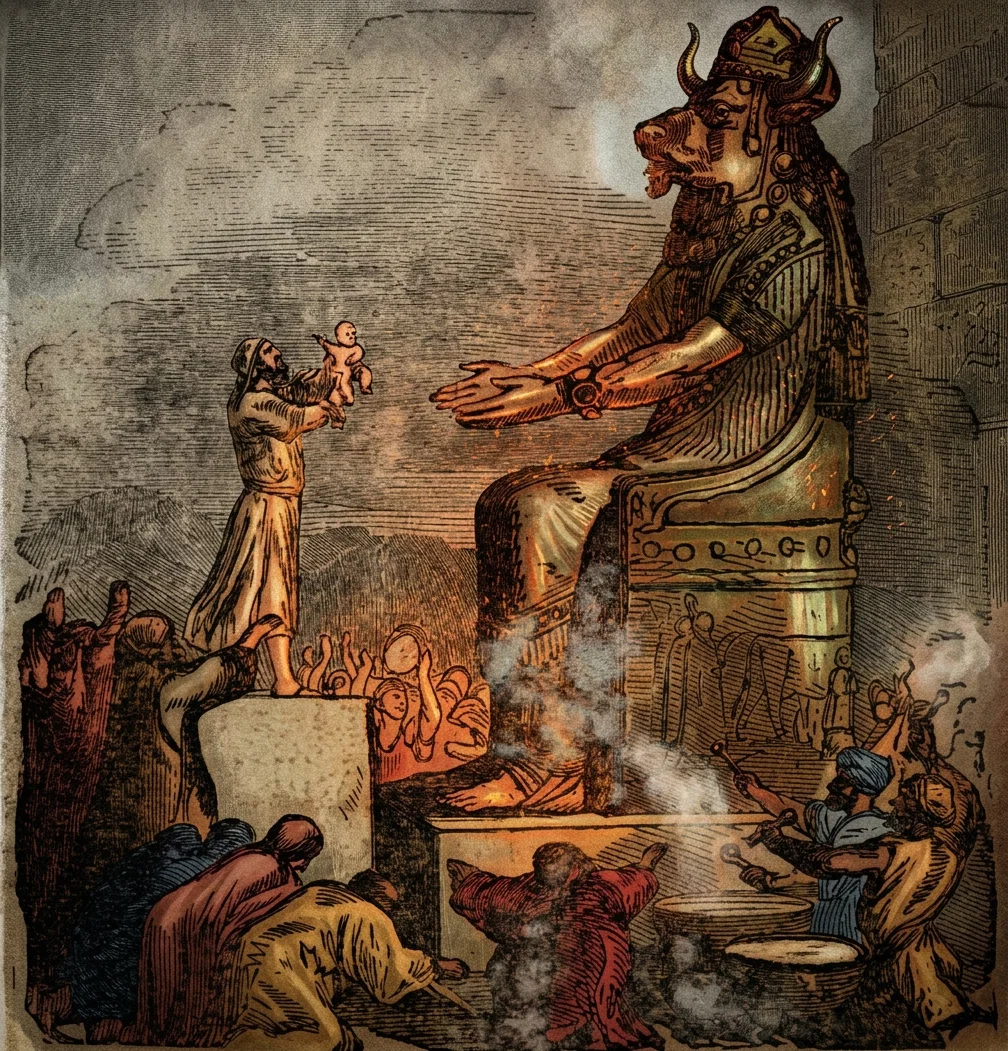
The next noteworthy feature of this religion was the offering of human sacrifices. In those countries where Molech was worshiped, children, and at times adults, were burned alive to appease his anger. Says one writer:— This religion silenced all the best feelings of human nature, degraded men’s minds to a superstition alternately cruel and profligate, and we may seek in vain for any influence for good it could have exerted on the nation. The moral character of the people is well illustrated by their religion. They were usually unruly and at the same time servile, gloomy, and cruel, corrupt and ferocious, selfish and covetous, implacable and faithless.
The heartlessness of Molech-worship was so great that it is almost incredible. We read that great worth was attached to the sacrifice of children if the parents were but heartless enough to see their own flesh burn to ashes without a sigh or a tear. If, however, the parent was not cruel enough to see his child tortured without being affected by the horrible sight, the god was displeased. So when one had entirely divested himself of natural affection, he had gained a high degree of virtue.
This sacrifice of human beings was not practised in every country where heathenism held sway, but it was known in Phœnicia, Palestine, Carthage, Egypt, and Ionia in early times. But its equivalent was practised in countries the most exalted in culture and civilization. “Plato taught the expediency and lawfulness of exposing children; and Aristotle, also, of abortion.” Is there a possibility that this doctrine crept in to counteract the fruits of their systematic religious prostitution?
The worship of Molech. The image of the god was said by the rabbins to be of brass, and in his superheated arms, infants were placed.
If the greatest minds of antiquity,—those men whom the Christian world has denominated the forerunners, as it were, of the Gospel,—taught that such vices were virtues, what better could we expect of those who were far below them in mental ability, and who were led by them? But this was not the worst of it. We read that “it was enacted” that certain infants should be killed or exposed. This not only gave permission to do this but compelled it. “At Athens, the great seat and nursery of philosophers, it was enacted that infants which appeared to be maimed, should either be killed or exposed.”—Horne’s Introduction, vol. I, chapter I.
Note another step. In “Words and Their Uses,” by W. Matthews, LL.D., page 70, we read: “One of the most formidable obstacles which the Christian missionaries have encountered in teaching the doctrines and precepts of the Gospel to the heathen, has been the absence from their language of a spiritual ethical nomenclature. It is in vain that the religious teachers of a people present to them a doctrinal or ethical system inculcating virtue, and addressed to the faculties whose very existence their language, and consequently their conscious self-knowledge, of the people do not recognize.”
How does it happen that any people have a language that does not express to them real morality?—The reason is that the words which should express holy ideas were used to express unholy things, and so if one would use words that in the beginning of the language would have expressed holy thoughts, they would after the language was corrupted express only evil ideas. This was carried on so long that those who used the language could not understand anything good; for nothing could be expressed that to them seemed good.
We can better understand this by taking a word that was thus perverted. In the common version of the Bible there is a word that is always translated “sodomite.” “This word does not denote one of the inhabitants of Sodom or their descendants, but in the A. V. of the O. T. equals one who practised as a religious rite the abominable and unnatural vice from which the inhabitants of Sodom and Gomorrah have derived their lasting infamy. The Hebrew kadesh is said to be derived from a root katash, equals to be pure, and hence to be holy or consecrated. This dreadful ‘consecration,’ or rather desecration, was spread in different forms over Phœnicia, Syria, Phrygia, Assyria, and Babylon.”—Smith’s Bible Dictionary, art. “Sodomite.” Thus we see that the more terribly wicked they became, the more pure and holy they counted themselves. What an abyss has man dug for himself by giving up God’s Word! C. L. EMERSON.
WHAT MUST I DO TO BE SAVED?
By W. N. G.
“Believe on the Lord Jesus Christ, and thou shalt be saved.” Acts 16:30, 31. Why then are not all men saved?—It is because they do not believe. “He that believeth on the Son hath everlasting life; and he that believeth not the Son shall not see life; but the wrath of God abideth on him.” John 3:36. The whole question of salvation or condemnation hangs on individual belief or unbelief in the Lord Jesus Christ. The Lord is “not willing that any should perish, but that all should come to repentance.” 2 Peter 3:9. Moreover, “He is able also to save them to the uttermost that come unto God by Him, seeing He ever liveth to make intercession for them.” Heb. 7:25. But “he that cometh to God must believe that He is, and that He is a rewarder of them that diligently seek Him;” and “without faith it is impossible to please Him.” Chapter 11:6.
Yet the skeptical mind, even when convinced of sin, even after conceding the fact, is often inclined to make excuse. He will insist on knowing certain things before exercising faith which can only be known through faith. The wisdom that he seeks is in the Word of God, and therefore can not be gained without a belief of the Word. Spiritual things are always the opposite of natural things; therefore, “the natural man receiveth not the things of the Spirit of God; for they are foolishness unto him; neither can he know them, because they are spiritually discerned.” 1 Cor. 2:14. In natural things we must understand before accepting; that is natural. But in spiritual things belief comes first. The Gospel of Christ is “the power of God unto salvation to every one that believeth; to the Jew first, and also to the Greek. For therein is the righteousness of God revealed from faith to faith; as it is written, ‘The just shall live by faith.’” Rom. 1:16, 17.
From belief comes obedience; Christ “became the Author of eternal salvation unto all them that obey Him.” Heb. 5:9. Through obedience comes the understanding of spiritual things; the psalmist says, “A good understanding have all they that do His commandments.” Ps. 111:10.
The apostle Paul says, “Let the Word of4Christ dwell in you richly in all wisdom.” Col. 3:16. Then “all wisdom” is in the Word, so that all knowledge of spiritual things must come through implicit belief of God’s Word, looking for understanding to come afterward. From this standpoint, and this alone, may the unbeliever find answer to many of his skeptical questions. For instance:—
How can I know that there is a God?—“The heavens declare the glory of God; and the firmament showeth His handiwork.” Ps. 19:1. “No man hath seen God at any time; the only-begotten Son, which is in the bosom of the Father, He hath declared Him.” John 1:18. Again, “The invisible things of Him from the creation of the world are clearly seen, being understood by the things that are made.” Rom. 1:20. The Gospel record, which is the Word of God, being indicted by the Holy Spirit, was “written, that ye might believe that Jesus is the Christ, the Son of God” (John 20:31), and “blessed are they that have not seen, and yet have believed” (John 20:29).
How can I get the Holy Spirit?—“Ask, and it shall be given you. . . . If a son shall ask bread of any of you that is a father, will he give him a stone? . . . If ye, then, being evil, know how to give good gifts unto your children; how much more shall your heavenly Father give the Holy Spirit to them that ask Him?” Luke 11:9–13. “Repent, and be baptized every one of you in the name of Jesus Christ for the remission of sins, and ye shall receive the gift of the Holy Ghost.” Acts 2:38.
How can I know that I have the Holy Spirit?—By its fruit. “The fruit of the Spirit is love, joy, peace, long-suffering, gentleness, goodness, faith, meekness, temperance.” Gal. 5:22, 23. “For they that are after the flesh do mind the things of the flesh; but they that are after the Spirit, the things of the Spirit.” Rom. 8:5.
How can I know that my sins are forgiven?—“He that covereth his sins shall not prosper; but whoso confesseth and forsaketh them shall have mercy.” Prov. 28:13. “If we confess our sins, He is faithful and just to forgive us our sins, and to cleanse us from all unrighteousness.” 1 John 1:9. “What things soever ye desire, when ye pray, believe that ye receive them, and ye shall have them. And when ye stand praying, forgive, if ye have aught against any; that your Father also which is in heaven may forgive you your trespasses. But if ye do not forgive, neither will your Father which is in heaven forgive your trespasses.” Mark 11:24–26.
There are many other questions that unbelievers desire to have answered to their satisfaction outside of the Word of God; but their curiosity never can be gratified. There is but one road to true wisdom,—the knowledge of God, which is eternal life (John 17:3),—and that is through belief of His Word.