Your ShelfYour Projects

Review and Herald, Vol. 87, No. 32.

A PRAYER

Review and Herald

Aug 11, 1910

Review and Herald Publishing Association · Takoma Park Station, Washington, D. C. · Aug 11, 1910

A PRAYER

Two thousand years to learn of Thee, O Christ! Thou man of Galilee; And, blinded still, we cry aloud Of visions that we never see.
With facile tongue we name Thy name; With ready phrases we proclaim That Thou art Master, Thou art Lord, Whose life our own doth daily shame.
We tread Thy steps — on polished floor; We bear Thy cross — in golden ore; A single gem of those we wear Would clothe the beggar at our door.
Have mercy, Lord, we humbly pray, And patience, that Thy children may Yet learn the heart of Him to whom A thousand years are as a day.
—Mary Lawson Neff, in the Craftsman.

The “Hay-Making” Number of Life & Health

THE NATIONAL HEALTH MAGAZINE
“There is little question,” says one of the readers of Life and Health, “that the September number of Life and Health is a little nearer the ideal of what a health magazine really ought to be than any previous issue. It certainly ought to prove a ‘hay-making’ number for the agents and dealers, and a health-making number for every reader.”
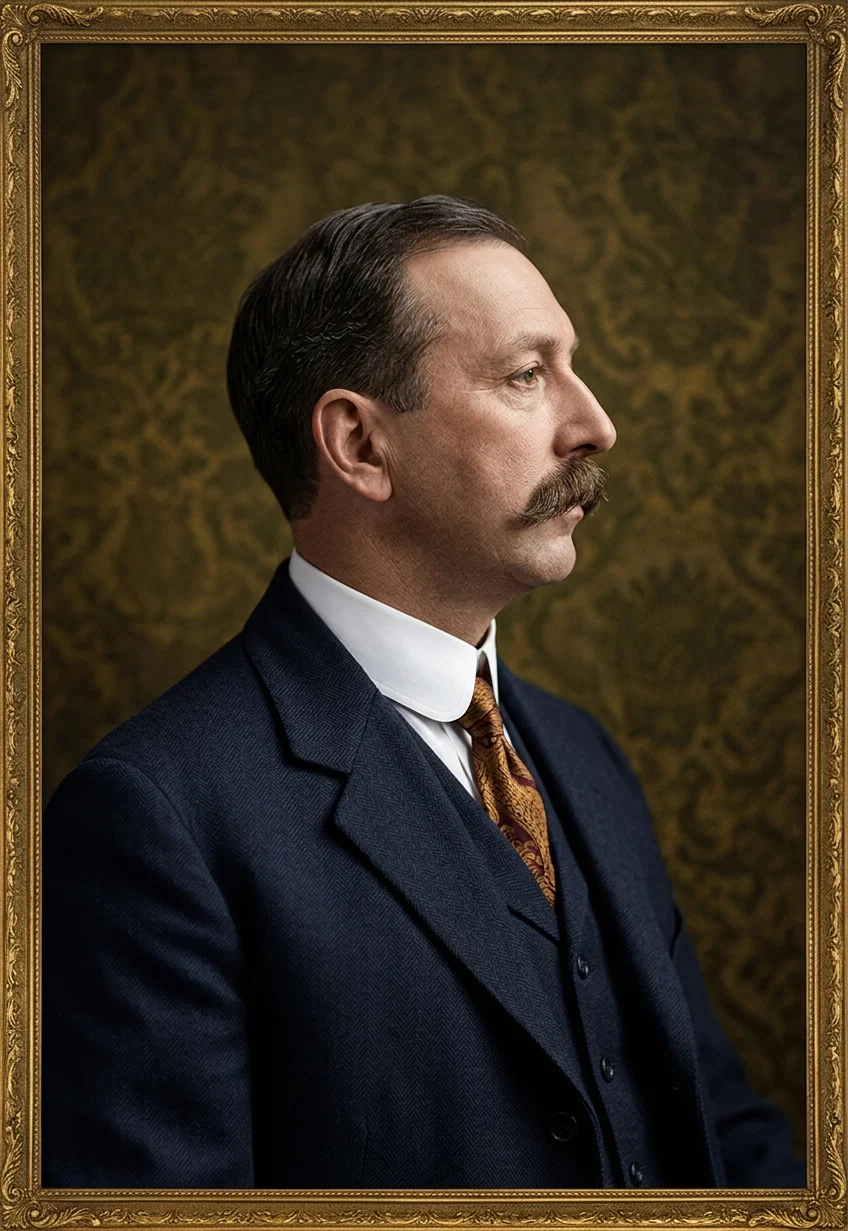
Prof. C. E. A. Winslow

Make Hay While the Sun Shines

Agents, everywhere, do not fail to order a good supply of this great issue. People are just getting back from their vacations. They are getting ready to read solid, earnest, serious facts. You will find they have a greater interest in health building than ever before. And you will find the September Life and Health just the magazine to satisfy and stimulate that interest, directing it into the right channels, and incidentally creating an interest in the welfare of the soul as well as that of the body.
Frederick L. Hoffman
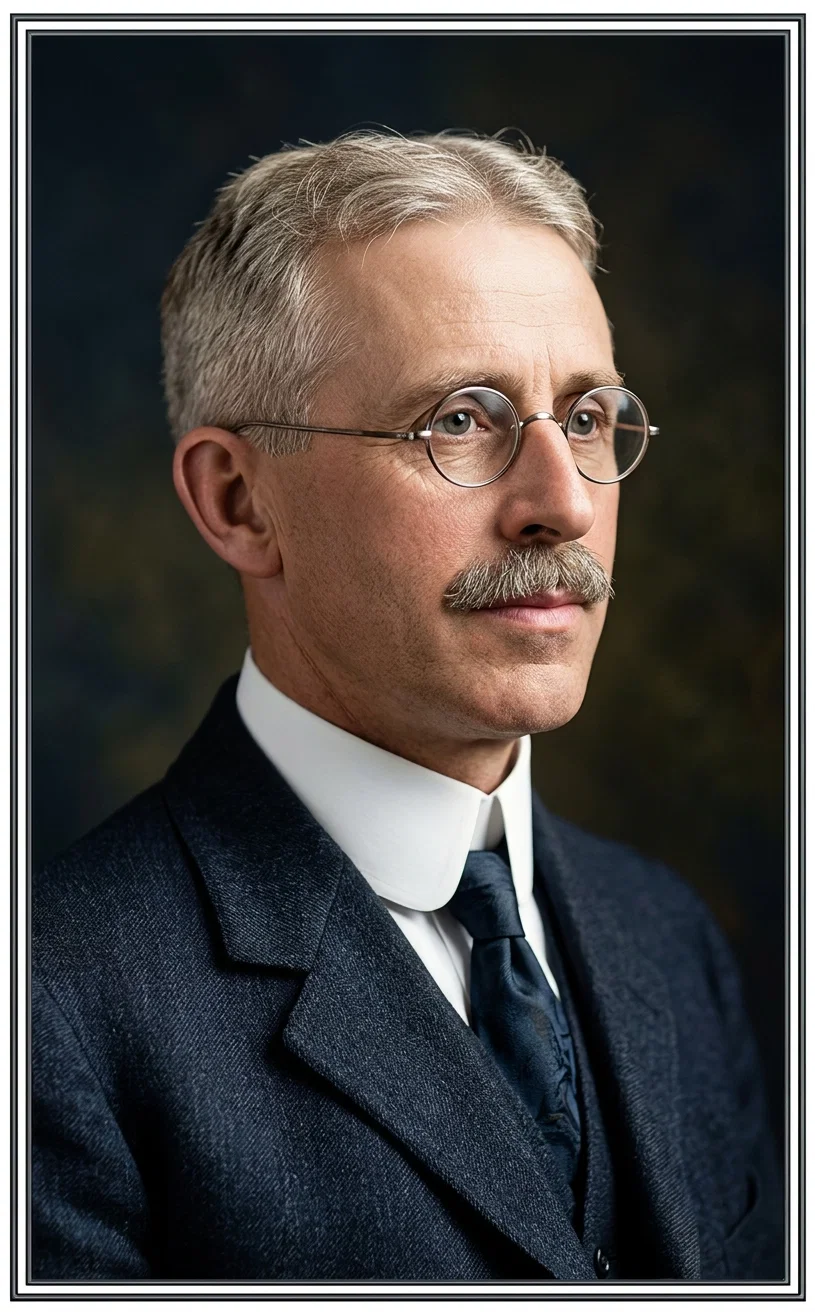
Get hold of a copy the first thing, yourself, and read it through from cover to cover. Read the papers by Gulick, Goler, Winslow, and Hoffman at the great Schenectady meeting. These are names of earnest thinkers, and their articles and portraits will sell many copies. Read Dr. James’s out-of-door article, the most inspiring appeal for the out-of-door life that has been printed this summer. Read the articles by Musselman, Wagner, and the editor. Then double the order you intended to give, and send it in by the first mail. You will find the September number a ready seller.
Dr. George W. Goler
Dr. George W. Goler

The September Number of “Life and Health” Will Sell Itself

Get your orders in early. “Make hay while the sun shines.”
Be sure to order through your tract society.
LIFE AND HEALTH Washington, D. C.

Asking to Give

MRS. E. G. WHITE
CHRIST was continually receiving from the Father, that he might communicate to us. “The word which ye hear,” he said, “is not mine, but the Father’s which sent me.” “The Son of man came not to be ministered unto, but to minister.” Not for himself, but for others, he lived and thought and prayed. From hours spent with God he came forth morning by morning, to bring the light of heaven to men. Daily he received a fresh baptism of the Holy Spirit. In the early hours of the new day the Lord awakened him from his slumbers, and his soul and his lips were anointed with grace, that he might impart to others. His words were given him fresh from the heavenly courts, words that he might speak in season to the weary and oppressed. “The Lord God hath given me,” he said, “the tongue of the learned, that I should know how to speak a word in season to him that is weary: he wakeneth morning by morning, he wakeneth mine ear to hear as the learned.”
Christ’s disciples were much impressed by his prayers and by his habit of communion with God. One day after a short absence from their Lord, they found him absorbed in supplication. Seemingly unconscious of their presence, he continued praying aloud. The hearts of the disciples were deeply moved. As he ceased praying, they exclaimed, “Lord, teach us to pray.”
In answer, Christ repeated the Lord’s prayer, as he had given it in the sermon on the mount. Then in a parable he illustrated the lesson he desired to teach them.
“Which of you,” he said, “shall have a friend, and shall go unto him at midnight, and say unto him, Friend, lend me three loaves; for a friend of mine in his journey is come to me, and I have nothing to set before him? And he from within shall answer and say, Trouble me not: the door is now shut, and my children are with me in bed; I can not rise and give thee. I say unto you, Though he will not rise and give him, because he is his friend, yet because of his importunity he will rise and give him as many as he needeth.”
Here Christ represents the petitioner as asking that he may give again. He must obtain the bread, else he can not supply the necessities of a weary, belated wayfarer. Though his neighbor is unwilling to be troubled, he will not desist his pleading; his friend must be relieved. At last his importunity is rewarded, and his wants are supplied.
In like manner the disciples were to seek blessings from God. In the feeding of the multitude and in the sermon on the bread from heaven, Christ had opened to them their work as his representatives. They were to give the bread of life to the people. He who had appointed their work, saw how often their faith would be tried. Often they would be thrown into unexpected positions, and would realize their human insufficiency. Souls that were hungering for the bread of life would come to them, and they would feel themselves to be destitute and helpless. They must receive spiritual food, or they would have nothing to impart. But they were not to turn one soul away unfed. Christ directs them to the source of supply. The man whose friend came to him for entertainment, even at the unseasonable hour of midnight, did not turn him away. He had nothing to set before him, but he went to one who had food, and pressed his request, until the neighbor supplied his need. And would not God, who had sent his servants to feed the hungry, supply their need for his own work?
But the selfish neighbor in the parable does not represent the character of God. The lesson is drawn, not by comparison, but by contrast. A selfish man will grant an urgent request, in order to rid himself of one who disturbs his rest. But God delights to give. He is full of compassion, and he longs to grant the requests of those who come unto him in faith. He gives to us that we may minister to others, and thus become like himself.
Christ declares: “Ask, and it shall be given you; seek, and ye shall find; knock, and it shall be opened unto you. For every one that asketh receiveth; and he that seeketh findeth; and to him that knocketh it shall be opened.”

The Long and Short of It

A. T. ROBINSON
The writer has just returned from the regular Sabbath forenoon service at a certain church, and is in the mood for writing under the above caption.
I am aware that we sometimes make the unfortunate mistake of wearing out the patience of our audiences by preaching long sermons; but I wish to point out that the credit for lengthy and tiresome Sabbath services is not always due to the preacher. In the case under review the writer had traveled more than a hundred miles to preach to one of our large churches, which he had not visited for several months. The theme chosen, as fitting the occasion, was “The Finishing of This Message in all the World.”
A little before the time for the morning services to begin, a gentle reminder was given by the elder of the church that the preaching service would be at eleven o’clock, and that the people like to have the service close at twelve o’clock. I told him I felt sure that if the service began at eleven, I should have ample time to present what I had outlined, closing at twelve.
The Sabbath-school class-work continued till four minutes past eleven. After a few minutes occupied by the children’s classes coming in, the superintendent delivered a short “sermonette” concerning several things connected with the conduct of the Sabbath-school. The church elder then had “just a few remarks” concerning the relations that should exist between the church and the Sabbath-school. Then, after “just one word more” by the superintendent, which he had omitted in his first speech, and the closing song, it was exactly sixteen minutes past eleven. The usual time elapsed while places were being taken by the congregation, when the organ played a short selection, which was the signal for the ministers to enter the desk. Following the opening song, the elder announced a long list of appointments and notices, which he emphasized at several points; then, for fear all might not be remembered, he repeated the whole, closing with another double-headed sermonette concerning, first, the importance of the members being faithful in attendance at all the services of the church; and, second, the need of a large collection that day, as it was for church expenses, which were behind. After the collection was taken, by capturing the time of the usual second hymn, the preacher was enabled to begin his sermon at just twenty-two minutesbefore twelve, and with several important omissions, the service closed at eight minutes past the hour. Whose fault was it that it ran over?
I would not ask space in our good church paper for this protest if the case herein referred to were an isolated one. But the fact is that this sort of program is getting to be quite common in many of our larger churches. I think that, as a rule, the Sabbath morning service should be over by twelve o’clock, beginning as it does at ten o’clock; but the service will be much less wearisome and more profitable if the time is more equally divided between the church services and the Sabbath-school exercises. I write this in the hope that Sabbath-school and church officers will remedy this matter.
Hastings, Neb.

W. S. CHAPMAN

Writing for the Press—No. 2

W. S. CHAPMAN

In my article last week I explained at some length the difference between a newspaper story and a story for a magazine. A few additional suggestions will not be out of place.
If you are compelled to use a pencil, employ a very soft, black lead, and write legibly. Illegible writing discourages an editor, and wastes the time of the compositor.
Whenever you give the name of an individual, or of a place, be certain that it is spelled correctly, and write it very plainly. Better still, print it; so also any unusual word.
Do not abbreviate words when it can be avoided. Each paper has its style in this respect, however. Study the practise of the paper you write for. Some papers allow the names of States to be abbreviated, as well as names of months; others write them out in full. In case you abbreviate a word and find that it should be spelled out in full, draw a circle around it. Always place a period after an abbreviated word. When you use a pen or pencil, always draw a circle around the periods at the end of sentences. This is done to distinguish them from commas.
Avoid making corrections on the finished copy. Where a lengthy interlineation is attempted, do not place it between the lines, and never in the margin. That space belongs to the copy readers. Cut the sheet in two and paste in the extra matter, or, better still, rewrite the whole page.
Divide words at the end of syllables, and never divide a word at the end of a page. Crowd the last few lines so as to get the whole in on the page. Do not begin a paragraph at the bottom of a page. The copy reader will be obliged to copy that line onto the succeeding page, as the sheets of one article may be divided among different compositors.
In newspaper work, the unwritten law for paragraphing is, Never allow a paragraph to exceed two hundred words; also, make a new paragraph on the introduction of each new point, and at every change of speakers in a dialogue. Do not be afraid of making too many paragraphs. Your fault will be more likely to lean the other way.
Do not use italics. Do not use words which require their use. It is bad taste. Some large offices have discarded italics, because usually linotype machines do not contain them.
Use no foreign word where a good, plain English one will answer. Write nothing that evinces a desire to ventilate learning. The greater the scholar, the more simple the language used in which to clothe his thoughts.
Never use quotation marks, enclosing one or more words, in an effort to make your writing impressive. Nothing is more offensive to an editor than this mistake. Such a use of quotation marks is a sure sign of verdancy. Try so to write that the reader will gather the correct impression from the way you group your words into sentences and paragraphs. Still, sometimes, as, for instance, in printing strange words, where the sense is not clear, the use of quotation marks has to be tolerated. As a rule, employ quotation marks only to enclose the actual words used by a speaker or writer.
In writing, when you have occasion to mention yourself as the author, always use the personal pronoun “I,” never “we,” “your humble servant,” “the writer,” etc. These old forms are dropping out of use. Avoid all obsolete words, odd phrases, and everything incongruous. Write naturally, as you would talk. Be brief, terse, clear, and laconic in forming your sentences, expunging every useless word, yet not sacrificing clearness for brevity. Remember that with a printer every useless word is a serious mistake. Space is money.
Avoid long, complicated sentences containing parentheses. Better divide your matter into two short sentences, and so dispense with their use.
When quoting words or passages, use the double quotation marks. When you employ a quotation within a quotation, use the single marks. If a third quotation should occur within the other two, use again the double quotation marks; as, “The incorrectness of the despatches led Bismarck to declare, ‘It will soon come to be said, "He lies like the telegraph."’”
Avoid the use of the third quotation whenever possible. When any expression divides a quotation, use quotation marks at each end of the quotation; as, “I would rather be right,” said Clay, “than be president.”
For the use of single quotation marks where another person interrupts a conversation, or several take part in it, study conversations as presented in the public press. Particularly study the style of the papers you wish to write for.

In the Flesh

L. A. HANSEN
Ask the average Bible student to quote Gal. 2:20, and almost invariably there will be omitted the three words that make the whole verse so precious. The omission may be because the weight of importance is given to other parts of the text; but much of their value for practical application is lost when we fail to note that the life spoken of is to be “in the flesh.”
The verse reads: “I am crucified with Christ: nevertheless I live; yet not I, but Christ liveth in me: and the life which I now live in the flesh I live by the faith of the Son of God, who loved me, and gave himself for me.” The oversight of the words “in the flesh” may not be a serious thing when making a quotation, but it is most serious when it comes to a matter of practise.
There is much in the text from which to form a most beautiful theory for contemplation or discourse; but it also contains that which is intensely practical. Christianity is too much regarded as a matter of theory,—something to be enjoyed on a plane somewhere above the ordinary every-day life. Perhaps it is looked upon as a sort of mental state of ecstacy, an extraordinary elevation of the spirits, rather than an actual experience to be realized in and amid the surroundings and conditions of our common existence.
Christ found people where they were, and Christianity reaches us just where we are. Of necessity this must be so. We are in the flesh, sinful flesh, and shall be till the day of our death or translation. It is while we are in the flesh, that we need help. In the weakness of the flesh lies our great need.
Read Rom. 8:3: “For what the law could not do, in that it was weak through the flesh, God sending his own Son in the likeness of sinful flesh, and for sin, condemned sin in the flesh.” While the battle-ground of sin is in the flesh, it is here that the victory over sin has been won. It is here that we must claim the victory in order to realize the power of the gospel. This power is seen in its manifestation of the Christ life while the individual is still in “mortal flesh.” See 2 Cor. 4:11.
May we ask, Where else would you live the Christian life but in this veryflesh? With what members could you all serve God but these same fleshly members that before have been instruments of unrighteousness unto sin? Rom. 6:13.
This same mouth that was “full of cursing and bitterness,” this tongue that “used deceit,” and these lips that hid “the poison of asps,” must now speak the praises of God, and tell of his wonderful goodness. These feet that were “swift to shed blood” are now to be “shod with the preparation of the gospel of peace.” So with all the members of the body; while they at one time have served sin, now they are to be yielded “as instruments of righteousness unto God.”
“Christ is to live in his human agents, and work through their faculties, and act through their capabilities. Their will must be submitted to his will; they must act with his spirit. Then it is no more they that live, but Christ that lives in them.”—“Mount of Blessing,” page 128.
“Let not sin therefore reign in your mortal body, that ye should obey it in the lusts thereof.” Rom. 6:12.
Takoma Park, D. C.

In the Secret of Thy Presence

HARRIETTE A. YERGIN, M. D.
In the secret of thy presence, In the chambers of thy love, In the vaults of thy pavilion,— From temptation thou'lt remove.
Thou wilt hide the hearts that love thee, Thou wilt shelter from the blast; From the cruel powers of warfare Cover o'er till storms are past.
From the pride of man thou'lt keep them; From the tongues of strife thou'lt hide; Marvelous kindness thou wilt show them Though the wicked all deride.
In the secret of thy presence, In thy strong pavilion's tower, Blest is he who firmly trusts thee, Safely hidden by thy power.
Chicago, Ill.

Present Worth

S. H. CARNAHAN
BONDHOLDERS, knowing the value of an investment drawing interest for the future, will pay more than a dollar for one dollar’s worth of bonds (face value), because of the benefit that will accrue to them later. In this matter the children of this world appear to be wiser than the children of light; for they are willing to make a present sacrifice for the sake of future gain. How often have we felt that if we could, at this present time, be sure of an eternal life of bliss at the resurrection by laying down our burdens and trials, even life itself, with all our possessions, we would gladly make the exchange. Should we be less wise than the worldly business man? Ought not we to make sacrifices now, in order to prepare for the future? Should we not ask our own hearts the question, “What shall it profit a man, if he shall gain the whole world, and lose his own soul?” The best way to insure the future is to send our goods beforehand to the heavenly treasury, as well as to send our sins beforehand to judgment.
Some of our pioneer workers on the frontier are suffering for necessary comforts, while many in the home land do not realize their condition, and sacrifice nothing for their sakes. Such should remember the words of the Lord Jesus, “Inasmuch as ye have done it unto one of the least of these my brethren, ye have done it unto me.” Our adversary would have us postpone this important duty and privilege until it is too late. “Behold, now is the accepted time; behold, now is the day of salvation.”
The situation is such that we ought to see that the present worth of money put in the cause just now is far above par. The truth may be proclaimed in all countries far more easily now than a little way in the future, when it must be given under circumstances of the greatest difficulty. At that time the money that we have selfishly held for ourselves will be a menace to us.
Knowing these things, and the truths for this last generation, shall we not strive to follow the example of our blessed Lord, and give our money, our time, and our talents to save souls, that we may at last have the joy of seeing them in the kingdom of God?
Cabanas, Cuba.

Hold Fast, Brother

FAITH PERRY
“Hold that fast which thou hast, that no man take thy crown.” Surely a simple injunction, an easy admonition to follow. Just hold fast. Do not try to go ahead. Do not worry over what lies behind you. You may have made mistakes in the past, but they have been forgiven: do not worry any longer about them; just hold fast where you are. Neither is the future yours to borrow trouble over. Your orders may change, and the command come to “press forward.” There will be time to worry over that when it comes; all you have to do at the present moment is to “hold fast.”
That charge reaches every one of us at some stage in our progress. Weary mission worker, toiling in a foreign land, ignorant of the language, labor barren of all results to human sight, be of good courage, and hold fast to the end; overburdened mother, struggling with household cares too heavy for your strength, there is One who knows all about it, and he says, “Hold fast, child, hold fast;” tired teacher, your pupil may be careless, idle, unmindful of heavenly opportunities, but you are not to give up, saying your task is vain.
“Hold fast,”—it sounds so easy, it means so much. If, with a rush and a flourish, we might invade the enemy’s country, surprising and confusing them, and shouting “Victory!” the thrill of exultation and joy would carry us far toward another conquest; but here, in this out-of-the-way corner in which we stand with no hope of any decisive battle, no way of knowing how goes the day, it takes courage of a high order simply to stand firm, face the foe, and yield not an inch,—pressed hard, but not discouraged, roughly buffeted, but not defeated,—just holding fast.
There is a promise in the admonition, but we have hardly time to think of that; the crown, seen through the smoke of battle, seems faint and far away; the glittering of its jewels is obscured by the clouds between it and us; we are holding fast, but sometimes we almost forget the crown. But let us keep our eyes upon it more; for, as we keep it in sight, it will grow more precious to us, more worth fighting for, its stars will gleam more brightly, its radiance give us light to see through the darkness; and when, “life and sorrow done, heaven and rest are won,” we shall be all the happier in the possession of that crown whose jewels are everlasting joy, infinite peace, and eternal life.
Kelso, Wash.

Princes Indeed

A. W. SPAULDING
ALONG a muddy road a short time ago, a lady whom I knew overtook me in a carriage and invited me to ride. We fell to talking of the needs of the mountain people. She herself, native-born but highly educated and cultured, has taken a great interest in helping poor mountain girls. She spoke of the results from one of the large schools in Asheville, a school that is widely recognized as an influence in industrial education for the mountaineer. The girls’ part of the school is located in the city, with big buildings and modern conveniences. “But they don’t fit the girls for the life they must lead,” she said. “With electric lights and steam heat, with finely equipped kitchen and a steam laundry, they lead them away from their former life; but when the many go back to thelog cabin, to cook in a stone fireplace, and do the washing at the spring, with an iron kettle for a boiler, they are at a loss to know how to transform the life into anything better. A Swedish man, one of my neighbors, who had taken one of the girls from this school to help in his family, complained to me, ‘I sendt to them for a saarvant, and they sendt me a preencess!’ Though such schools have done some good service, somehow they don’t reach the core of the mountain needs.”
“We must train them,” I suggested, “under the conditions they have to live under.”
“Yes, but how?” she exclaimed. I told her more of our plan of school work,—of the family instead of the institutional life, of the small farm schools established in many places instead of one central institution, of the family and the teacher living in the needy community,—and she highly approved. “If you succeed in doing that,” she said, “you will go a long way toward solving the problem that a hundred years of effort have not yet solved.”
To Seventh-day Adventists, God gives these great opportunities. We not only know that we have the truth which must be given to the world, but we are able to know, if we will study, how to give it. “Yes, but how?” is the question that echoes in the minds and hearts of many of the world’s philanthropists. We are to answer it; not merely as a people, as institutions, but as families and as individuals. This work must be done, not by one or two schools, but by hundreds of consecrated families. The influence of the regular, industrious, frugal, self-sacrificing Christian family will be a greater factor in giving the truth than many sermons. “In the South there is much that could be done by lay members of the church, persons of limited education. . . . Let Sabbath-keeping families move to the South, and live out the truth before those who know it not.”—“Testimonies for the Church,” Vol. VII, page 227. There are in the way difficulties, privations, and obstacles undreamed-of by many; but the love of God in the heart will overcome all these. We can not come as princes; we must come as servants; but to serve as the Master served is to be princes indeed.
Naples, N. C.

A Little While

GEO. W. HOWARD
A little while—take courage, brother pilgrims, Soon this dark night of weeping will be gone; 'Tis always darkest just before the morning, We know the glory soon will on us dawn.
A little while to preach the gospel message, To warn the world of its approaching doom; He who proves true unto his heavenly calling, Will gather sheaves for that eternal home.
A little while to labor for the Master; Let us be strong and at our troubles smile; Trusting in Jesus, we shall brave each danger, And rest at home in just a little while.
A little while, and he will come in glory; A little while, then I shall see my Lord; A little while,—proclaim to all the story,— That Jesus comes the faithful to reward.
No time to wait, improve the passing moments, The little while grows shorter day by day; God's work demands that every soul be earnest, To seek for lost ones who have gone astray.
Then he who goeth forth with weeping, Shall doubtless come again with joy erelong, Bringing the sheaves that he has gathered with him, To join the reapers in the harvest song.
Kesar Falls, Maine.

A Sound Mind

JOHN N. QUINN
“WHY talk to the inmates of an insane asylum on the topic, ‘Fools’?”
The pastor of a New York City church, a man prominent in the religious world, had concluded the Sunday morning service, the subject of his sermon being “Fools,” based on the text of Scripture, “The fool hath said in his heart, There is no God.” His audience had given marked attention, and he had the feeling which comes to the servant of God when the word spoken has been in the power and demonstration of the Spirit. In the audience was the superintendent of an insane asylum, attracted there by the topic. He was pleased with what he heard, and waiting until the pastor was almost alone in the building, he requested that the sermon be repeated before the inmates of the institution of which he was superintendent. The request was so peculiar that it led to the question at the head of this article.
The superintendent assuring him that the inmates of the asylum would follow his line of thought attentively, and that this was an opportunity for the pastor to give at least an hour’s enjoyment to these unfortunates, he reluctantly accepted the invitation. The lecture-room was well filled, and all the assurances of the superintendent were verified. As the pastor came to his first characteristic of the fool, he was startled to see fingers pointed in all directions. This occurred each time he emphasized some peculiarity of a fool, and at last the meaning of the pointed fingers dawned upon him. These insane people could readily see the fool in the other insane one, but as not a finger was pointed inward, no one saw the fool in himself. There came to the pastor a new revelation of the characteristics of the fool.
Are all the people of unsound mind in the asylums?— If one applies the above test, the answer must be in the negative. How easy it is to apply some searching truth to others rather than to ourselves; how quick we are to discern the flaw in another’s character, yet with what hesitancy we acknowledge our own. At times it may become necessary to obey the instruction of the Word, and ‘rebuke . . . with all long-suffering and doctrine;’ but before so doing, how careful we should be that we are free from the failing we rebuke.
Did Jesus Christ denounce the spirit of covetousness and oppression which devoured widows’ houses, and for a pretense made long prayers?— He himself was absolutely void of the least taint of covetousness. Did he rebuke the impurity of the leaders of his time, and in the sand write their iniquity?— He could stand before them with the challenge, ‘Which of you convinceth me of sin?’ And in the infinite holiness of his being, he could speak the word which imparted the purity of his life to the defiled one in penitence at his feet. Did Christ in unmistakable terms assail the spirit that would place heavy burdens upon the shoulders of men?— He could invite them to come to him for rest, his yoke being easy, his burden light.
The mote may exist in the brother’s eye; but who would commit, to one whose sight is much impaired, the work of extracting from that delicate organ something very small? We are promised eye-salve, and when it is applied, the beam becomes more prominent than the mote. ‘God has given us the spirit of a sound mind’ (2 Tim. 1:7), the evidence of which is the turning of our gaze inward, inviting God to set our secret sins in the light of his countenance. This removes the fretful spirit, the feeling of annoyance, at the failings of others. Eph. 4:23; Rom. 12:2.

Victory After Eighty-Eight Years' Warfare

E. L. CARDEY
For the benefit of those who may be struggling with a bad habit, or who may have friends that are, I here give the following experience: Late in November of 1909 the writer started a course of meetings in the Seventh-day Adventist church building at Sawtell, Cal. In this city is a national soldiers' home, containing at present over three thousand old soldiers. From the first the meetings were well attended, and at the close eighteen persons signed the covenant to keep all the commandments of God. A number of old soldiers were among this company, and it is about one of these that I wish to write. The brother in question will be ninety-three years old next April. During these meetings he attended every night, coming a number of times through rain and mud from the home half a mile distant. When I first met him, he told me how long he had used tobacco, and that he could give up bread more easily than that. At the age of five he was given his first taste of the filthy weed, but it did not make him sick. Since that time he had used it continually for eighty-eight years. He had spent twenty-three years in the service of his country, and in that time passed through the Mexican, Indian, and Civil wars. He was sixteen years old at the time of the falling of the stars, and that wonderful night seems to him but as yesterday.
At the close of the meeting he presented himself for membership with those who are keeping the commandments of God. I showed him the importance of leaving off his tobacco, and he at once said, “I am willing to give up whatever is necessary in order to win eternal life.” We had special prayer as a church in his behalf, that he might have the help of the Lord in overcoming the tobacco habit. Once before he had tried to give up tobacco, but his stomach became so weak that the doctors advised him to resume its use. That trial lasted two weeks. This time he has felt no bad effects from leaving it off, and the desire for it has been largely taken away. He claims complete victory through the power of God. It took first a determined mind; then the Lord added his blessing, and the victory was gained.
It does not matter to the Lord whether a man has used tobacco one year or a hundred years; he can give overcoming grace in one case as well and as easily as in the other. First there must be the willing and determined mind; then the Lord can work. This brother is almost a century old, yet able, through the strength of the Lord, to gain victories over the mighty powers of darkness.
Brother, there is help for that besetting sin, no matter how long it has been with you. We serve a God who is able to do things for his people.
Santa Monica, Cal.

Abide God's Time

F. M. WILCOX
Abide God's time. Fret not to choose thy way; He knoweth best. To-day Hear thou his voice. Delay Not answer, nor say nay; Choose thou his rest.
Abide God's time. Our sorrow and our pain Are hard to bear. Both heart and brain Cry out in woe. We fain Would be relieved. Not vain Shall be our prayer.
Abide God's time. Let him adjust the wrong In his own way. Be strong To bear. Let praise and song Ascend. ’Twill not be long Till dawning day.
Abide God's time. Upon his power above Our faith depends. His love Entwines our lives. We prove His word. As gentle dove His grace descends.
Abide God's time. Await the morning light, Which soon will come. The night Shall cease. To our glad sight Shall open glory bright And heaven our home.
Takoma Park, D. C.
Continue reading: MRS. I. H. EVANS